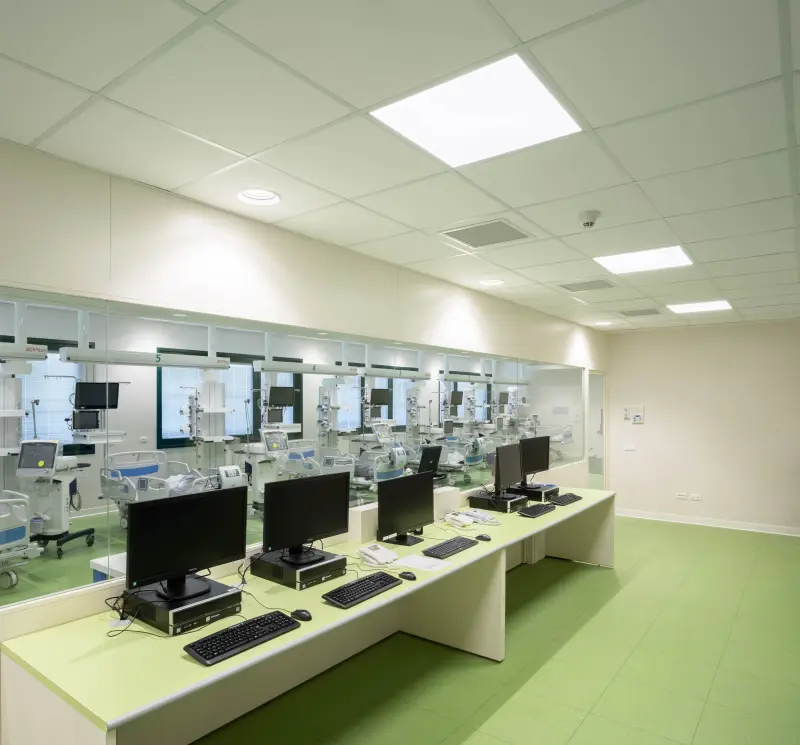
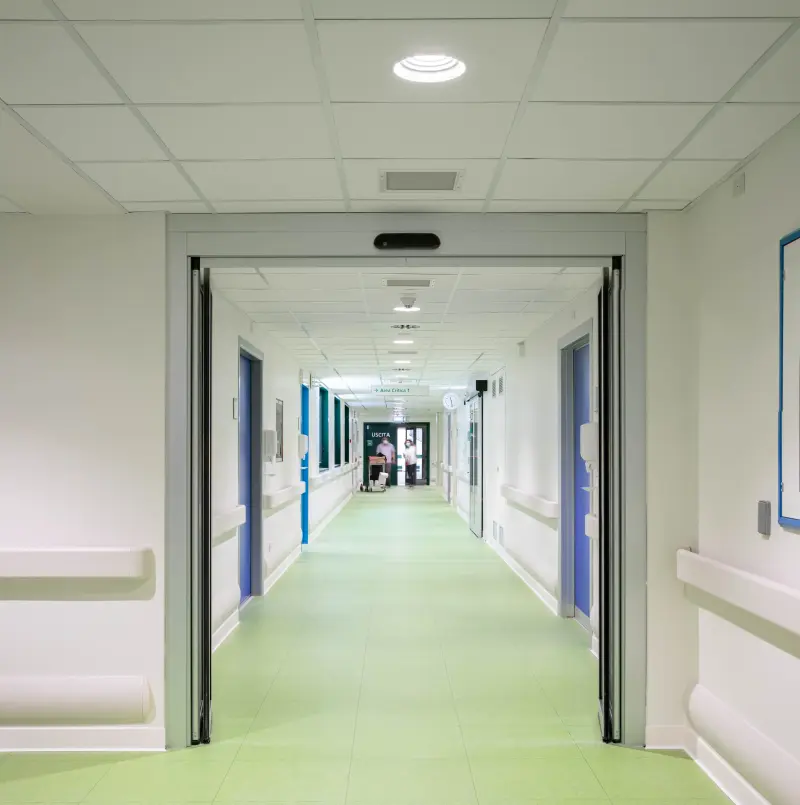
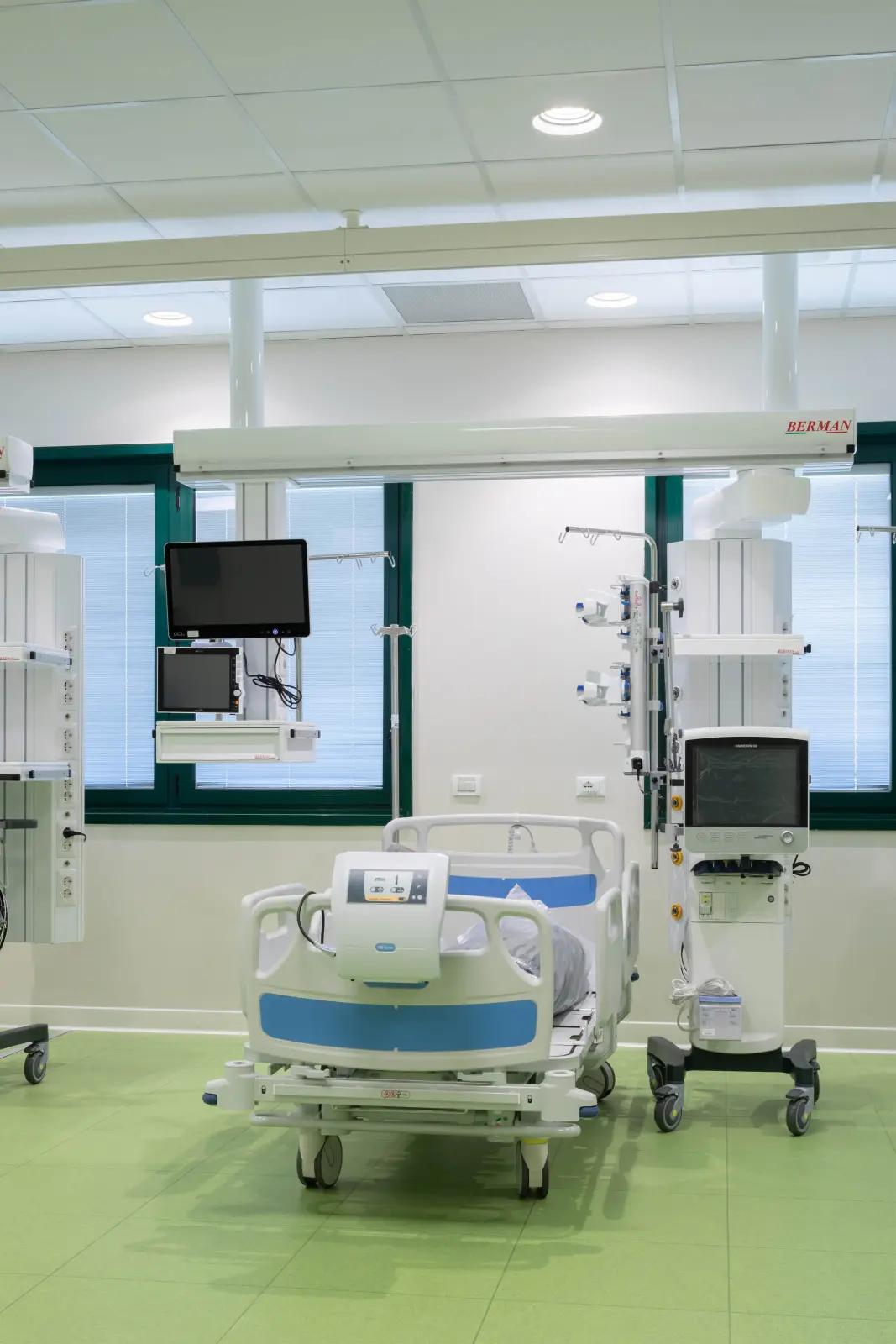
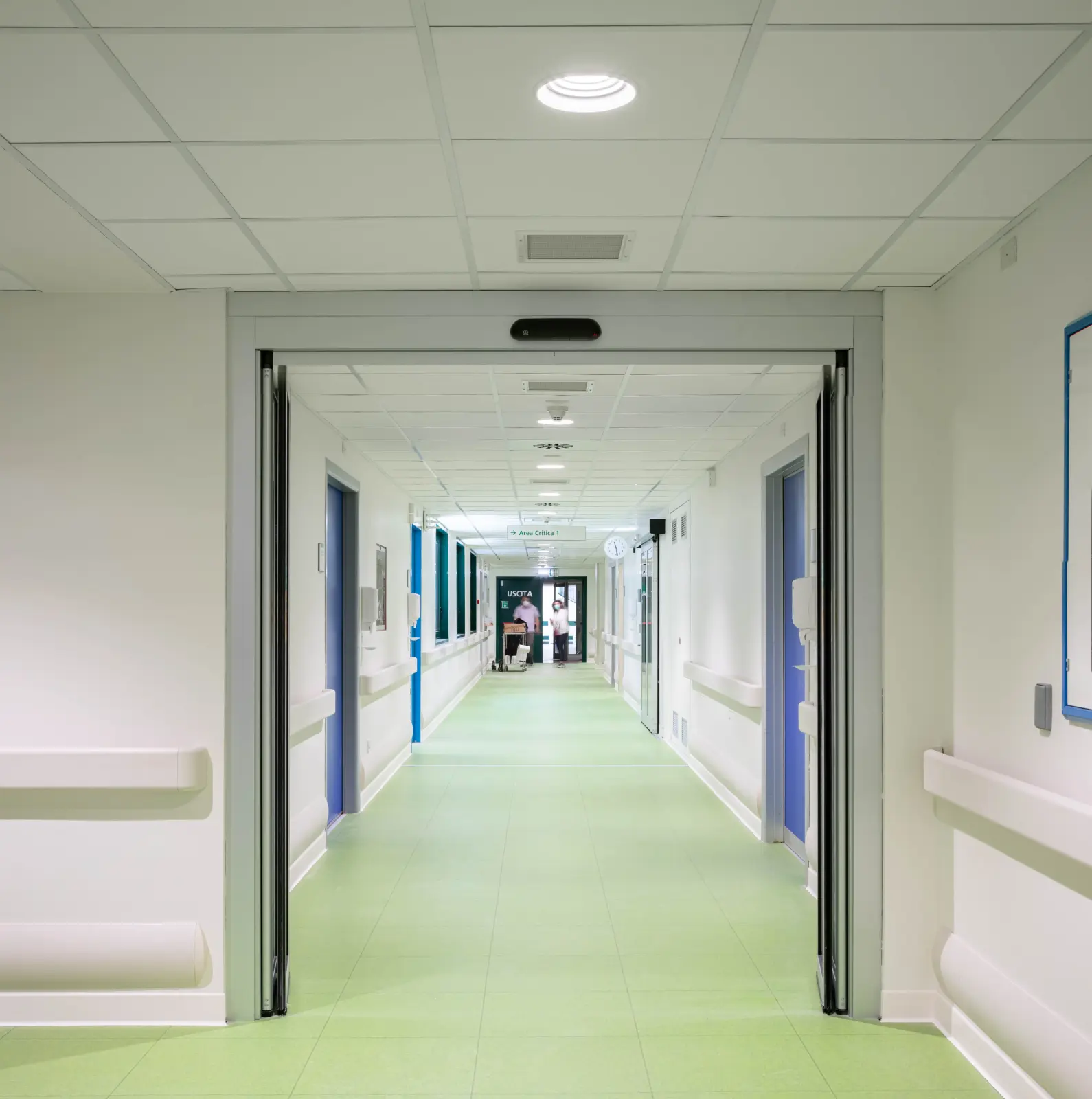
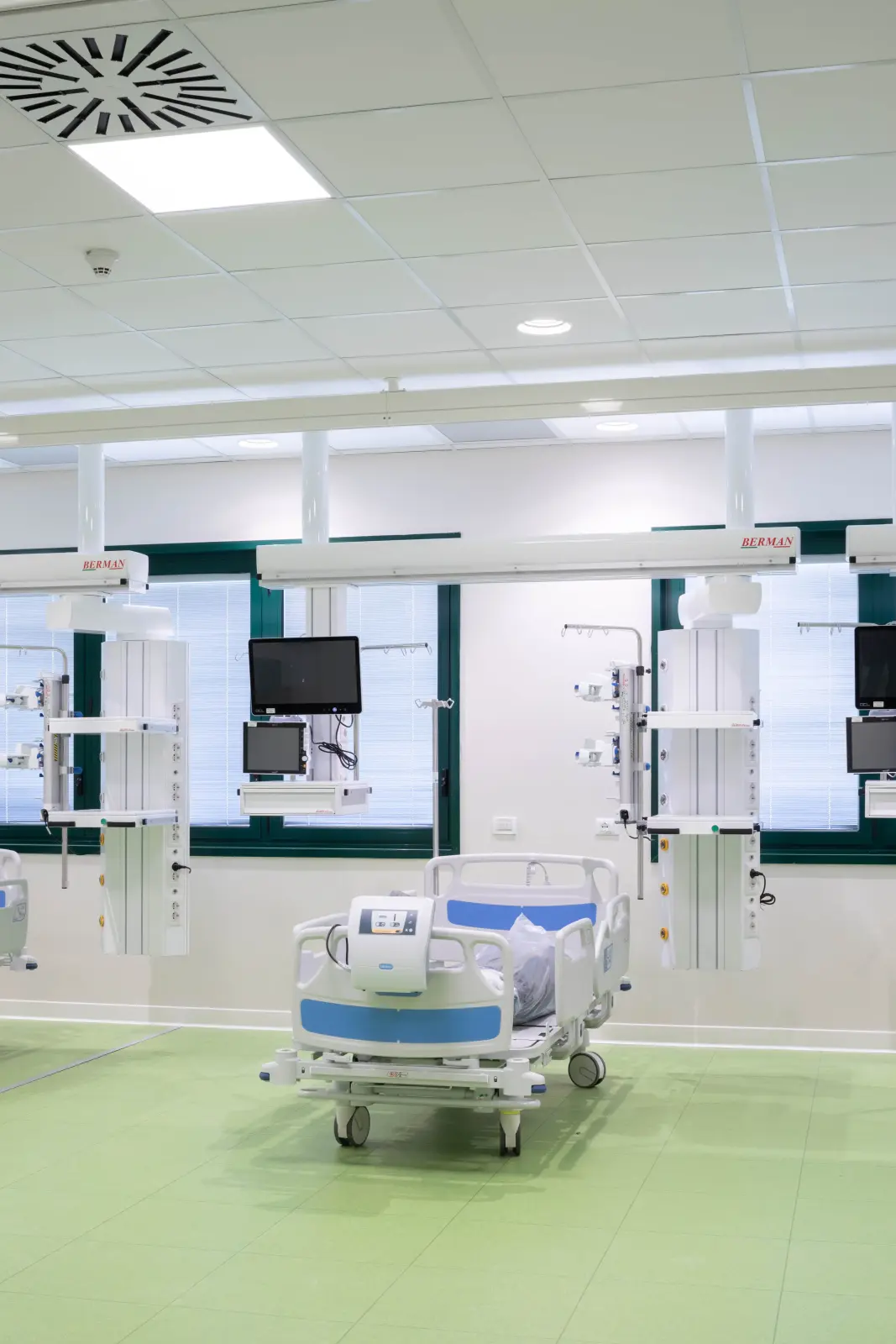
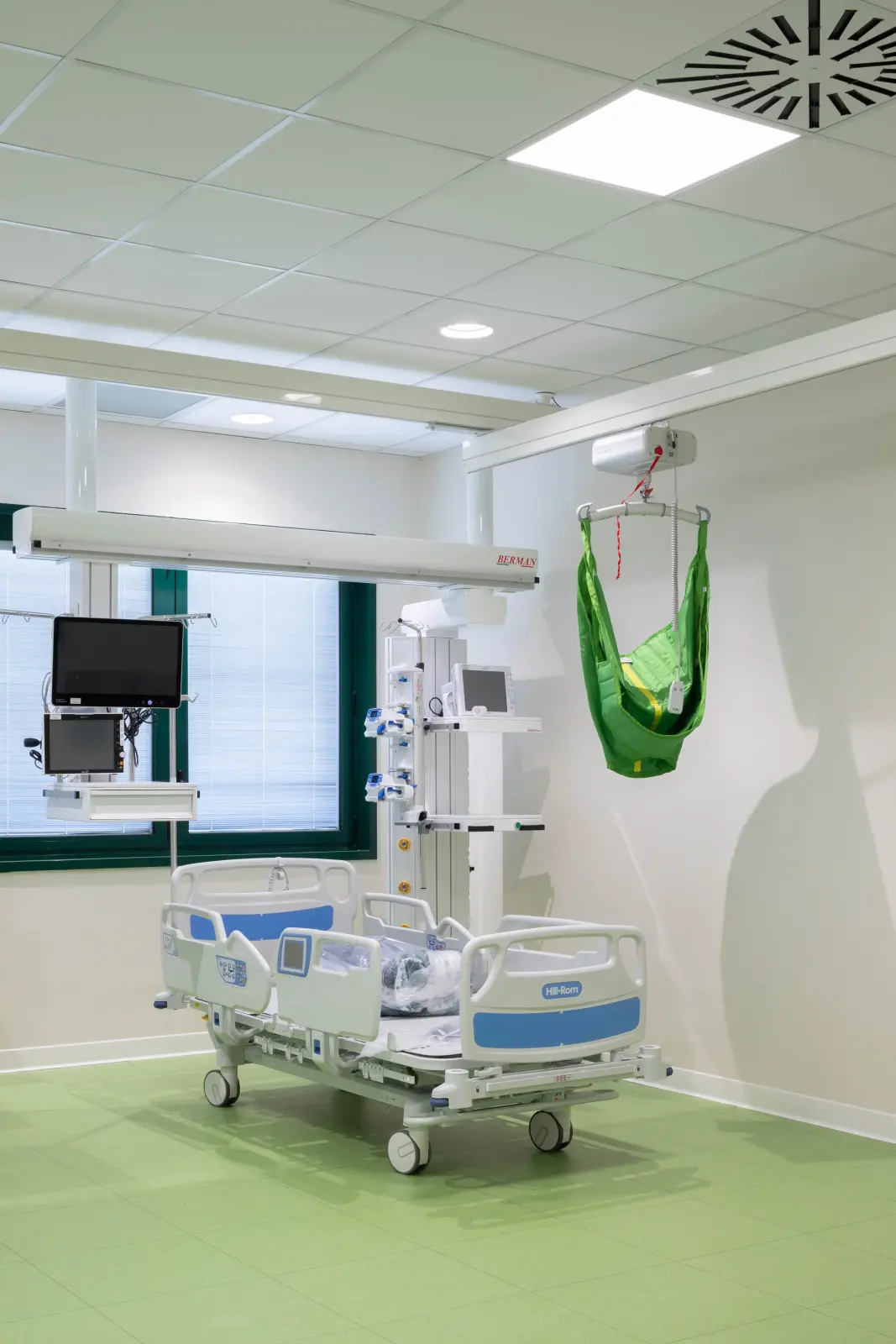
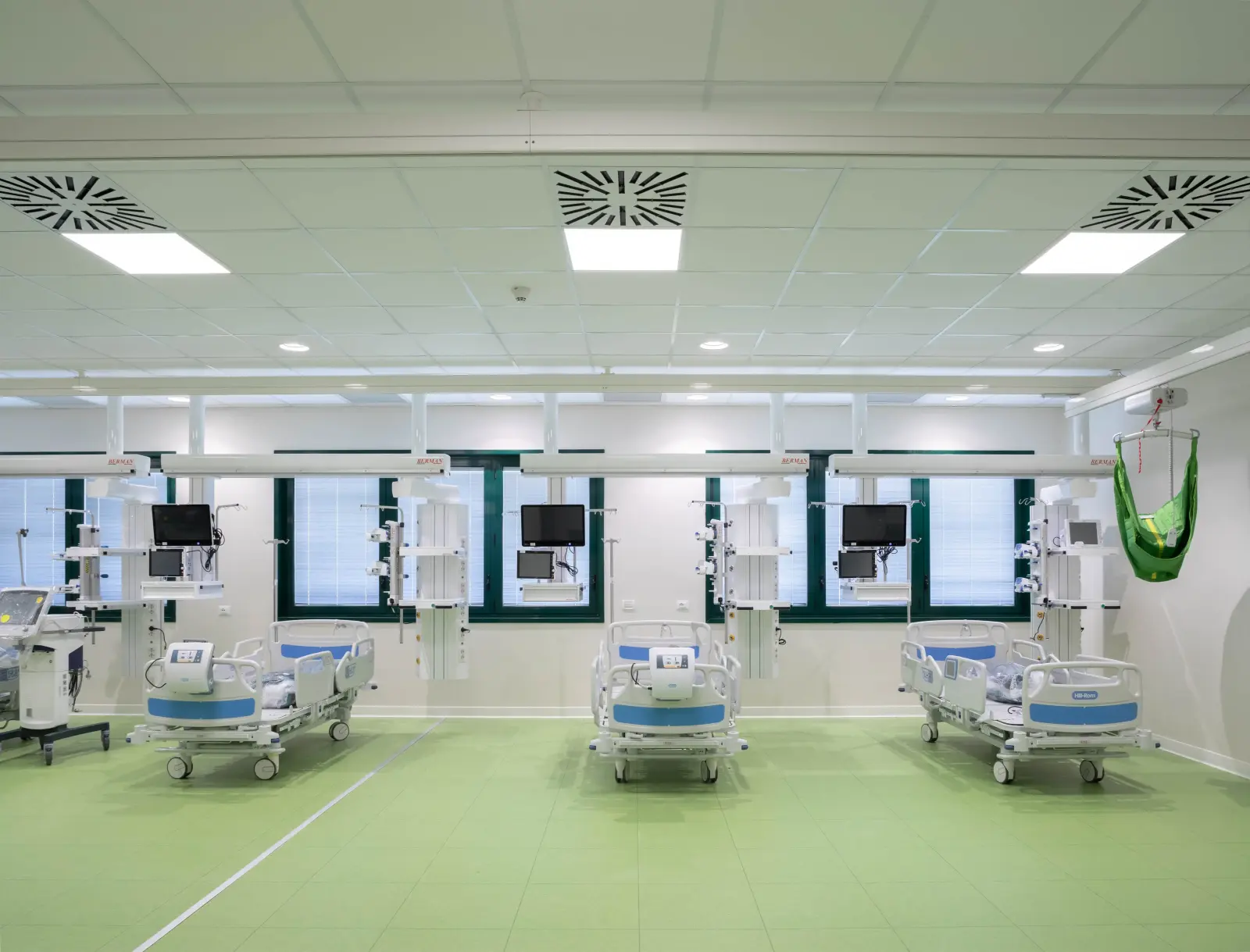
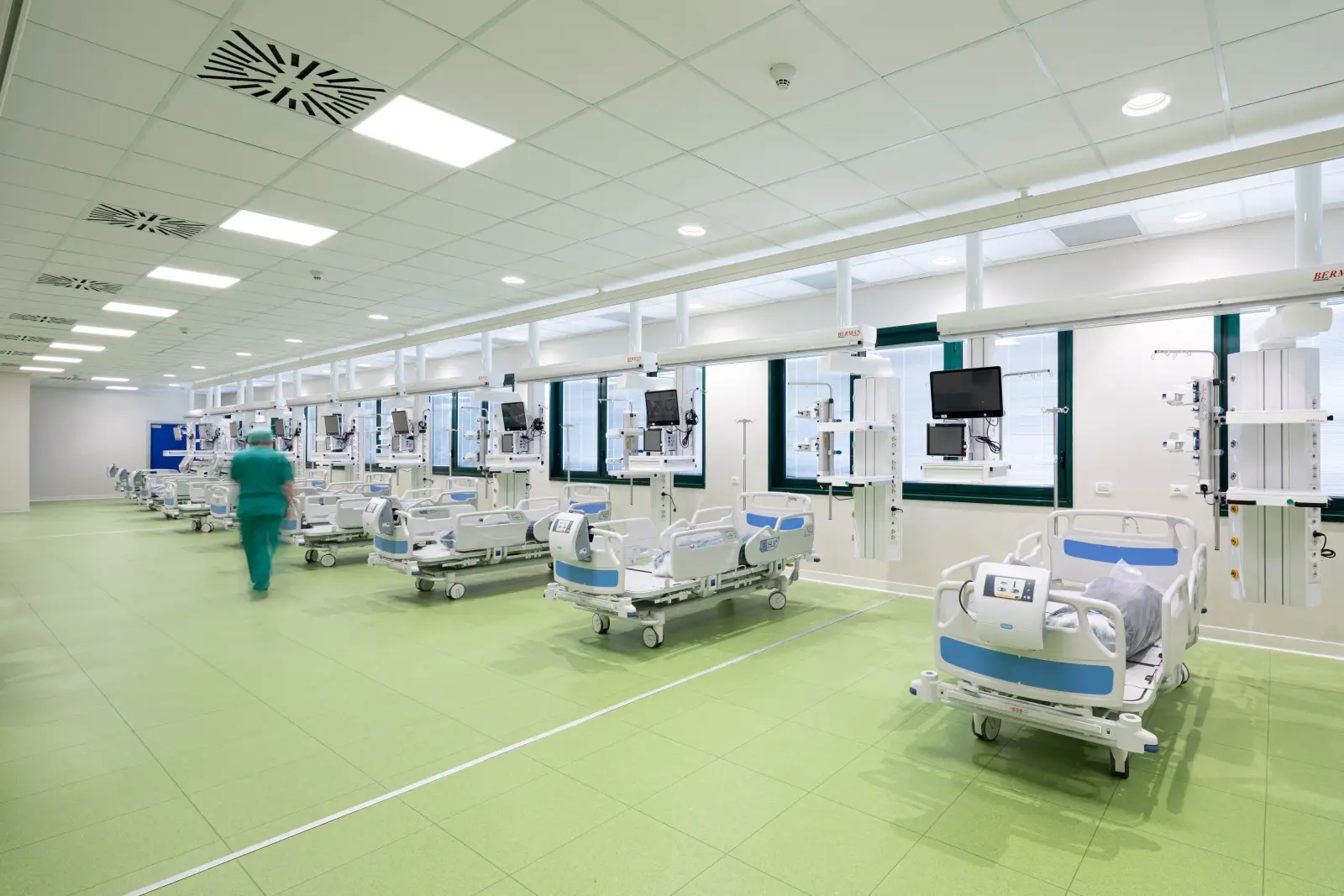
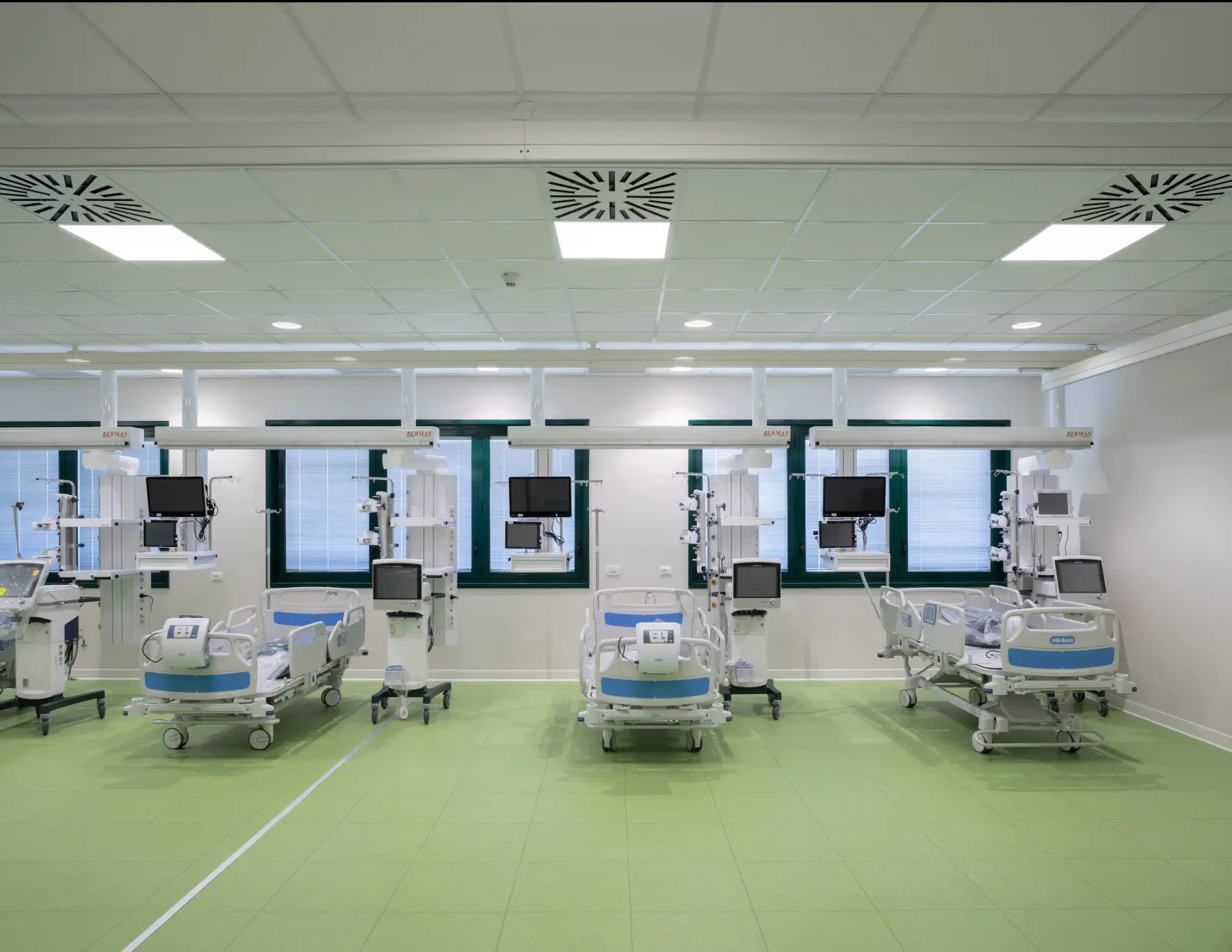
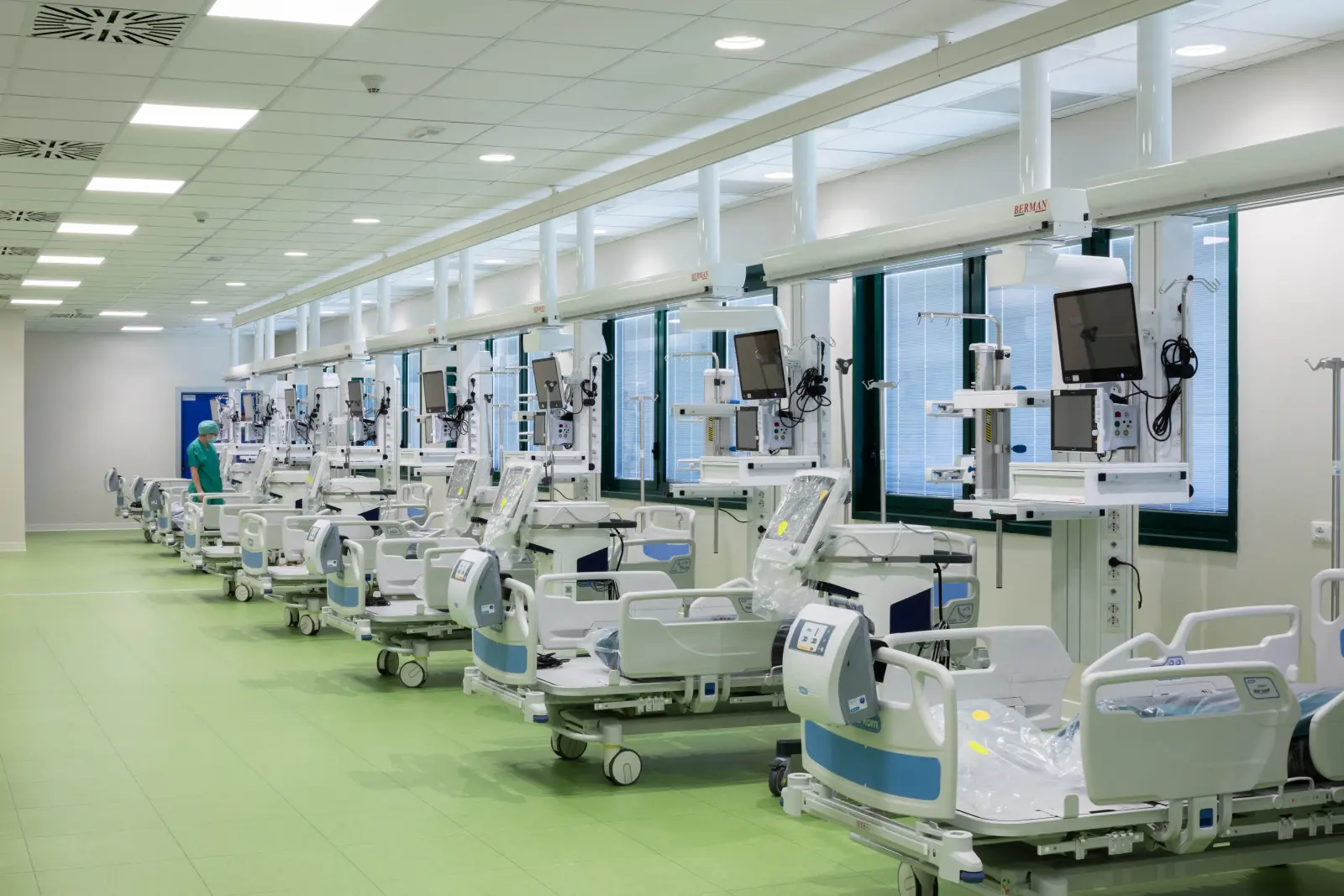
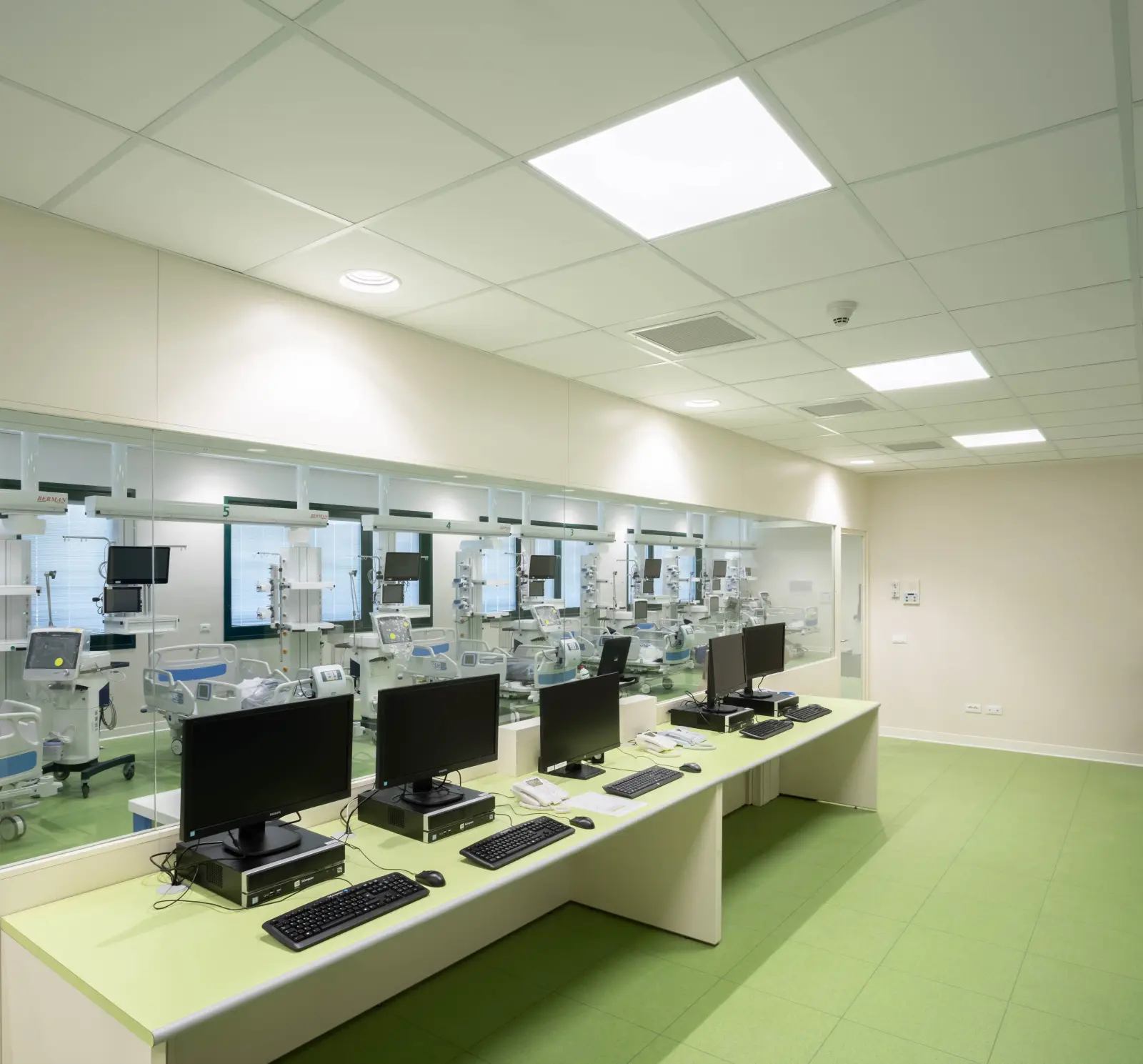
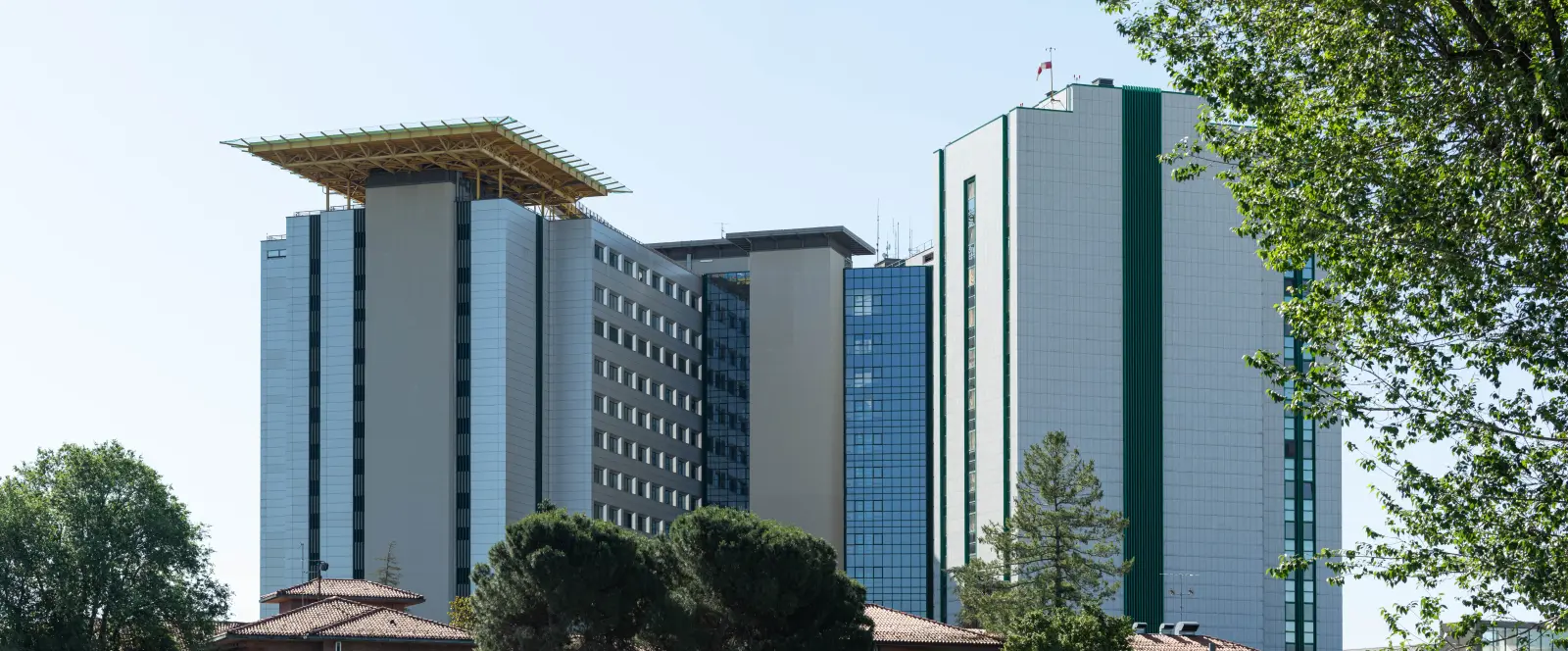
During the health emergency, every day mattered. At Bologna’s Ospedale Maggiore “Carlo Alberto Pizzardi”, the urgent need to increase intensive-care capacity led to the creation of a new ward dedicated to Covid patients, as part of the wider regional distributed Covid Hub project.
Built on the hospital’s twelfth floor, the new facility provided 34 additional intensive-care beds and was completed in just 40 days. An exceptionally short timeframe, dictated by the seriousness of the situation and the need to respond immediately to rising admissions.
In such a delicate context, every design decision had to help create an environment that was safe, efficient and fit for purpose for both patients and healthcare staff working continuously on the ward. Lighting became part of this response, with 3F Filippi solutions selected to ensure high performance, visual comfort and flexibility.
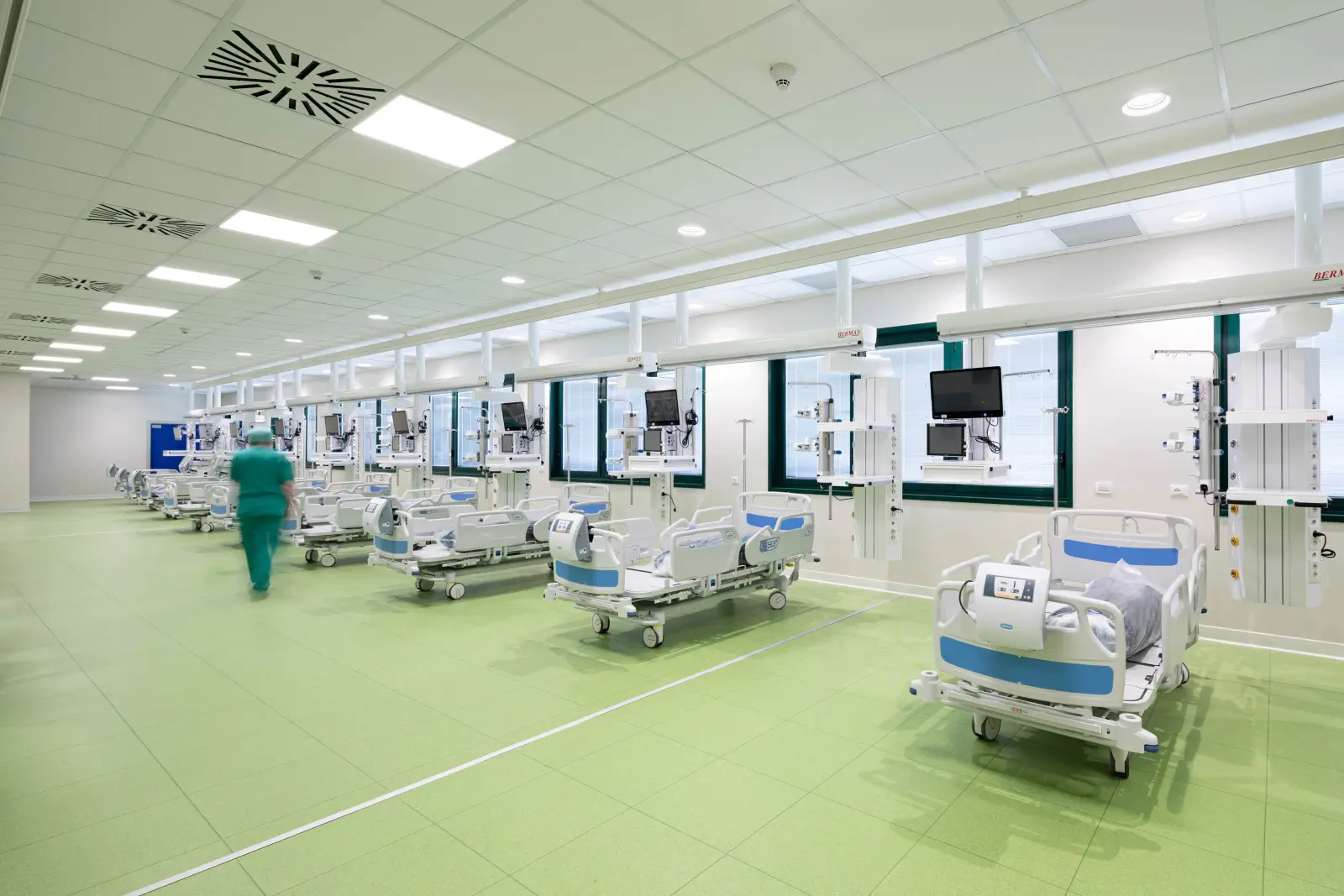
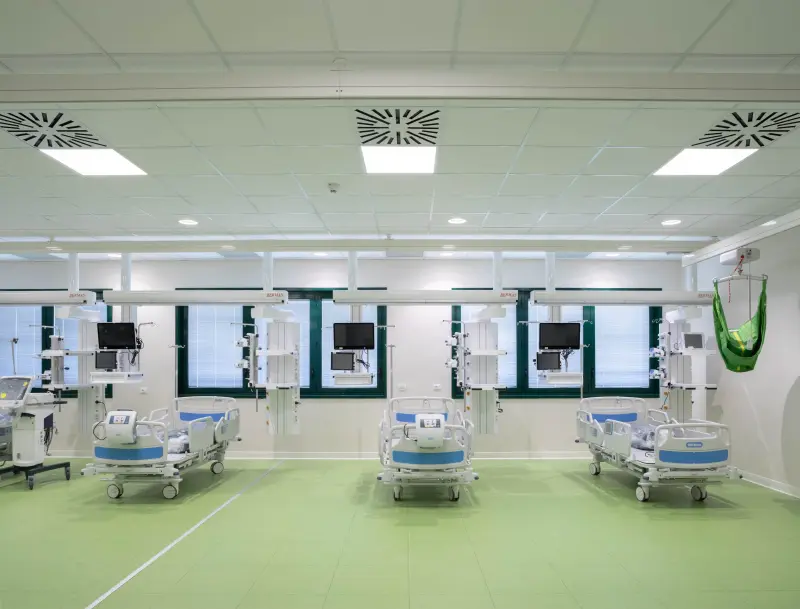
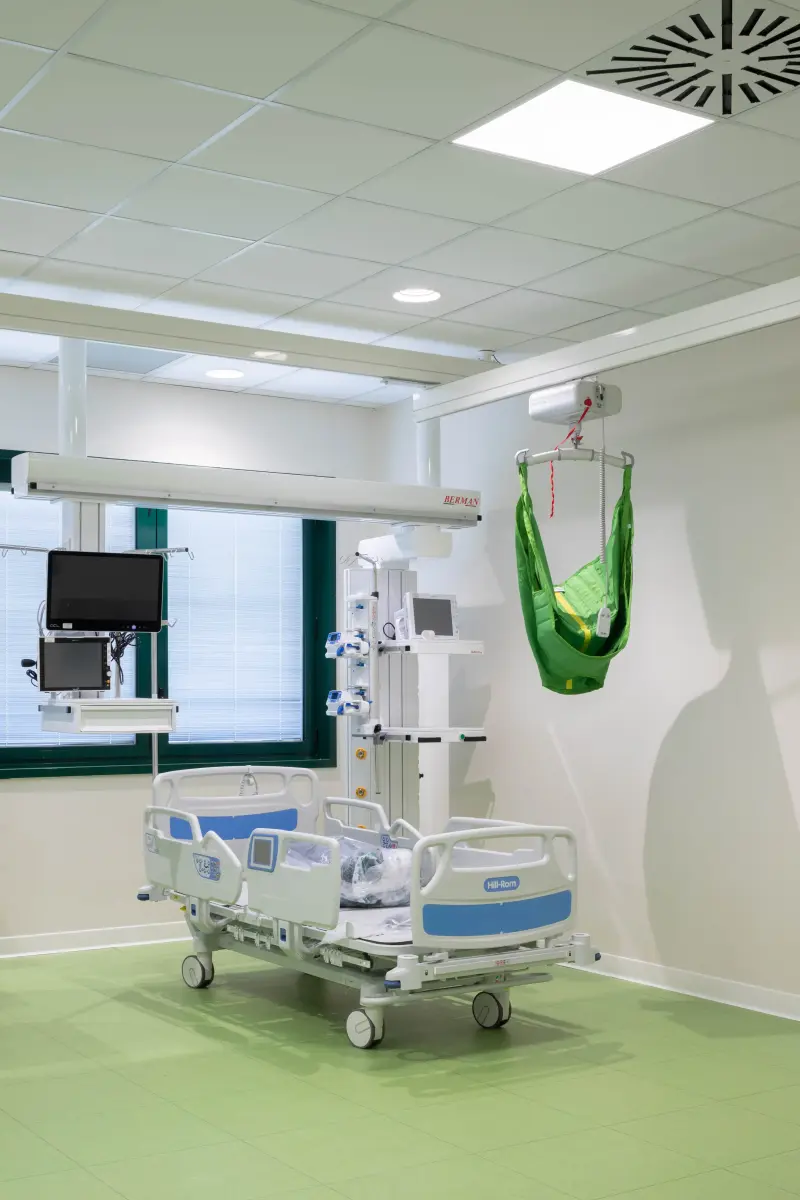
Lighting an intensive-care unit means dealing with needs that change continuously throughout the day. For doctors and nurses, light must make it possible to observe patients accurately, read instruments and monitors, and work under optimal visual conditions.
For patients, by contrast, it is essential to avoid overly intrusive lighting, especially during prolonged stays. The design therefore called for high performance, reaching 500 lux at the bedside during examinations with a colour temperature of 4000 K.
The challenge was to find the right balance between clinical precision and comfort, providing strong illumination when needed and a gentler atmosphere when patients needed to rest.

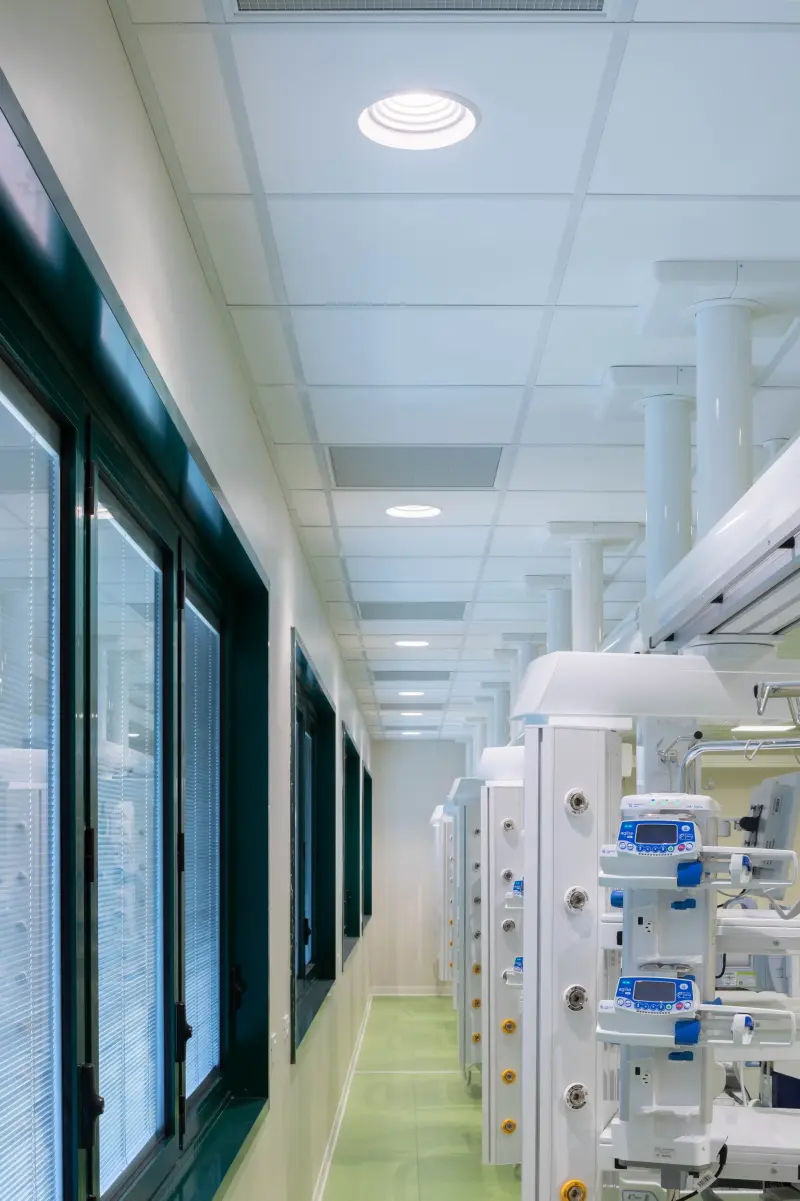
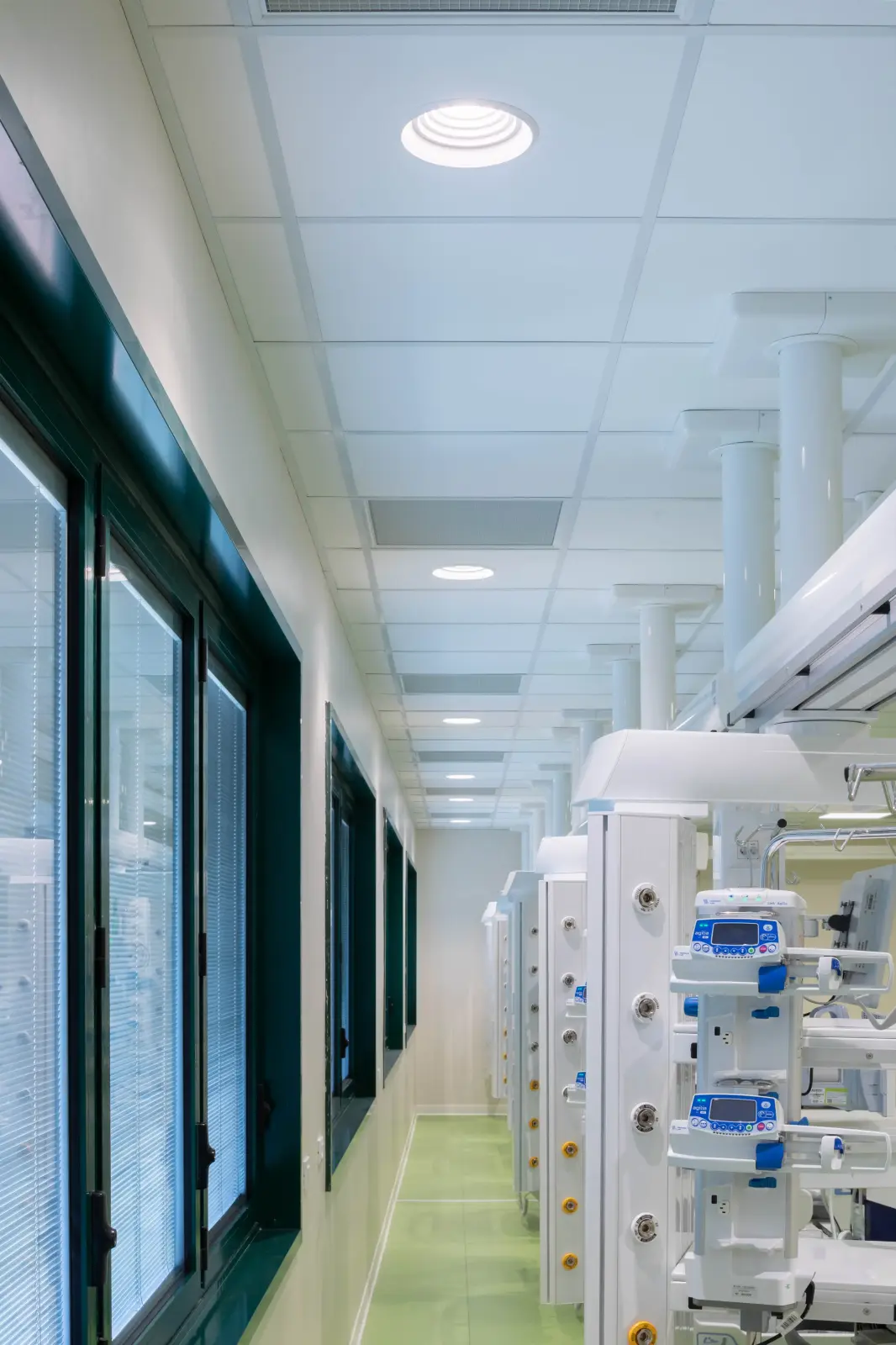
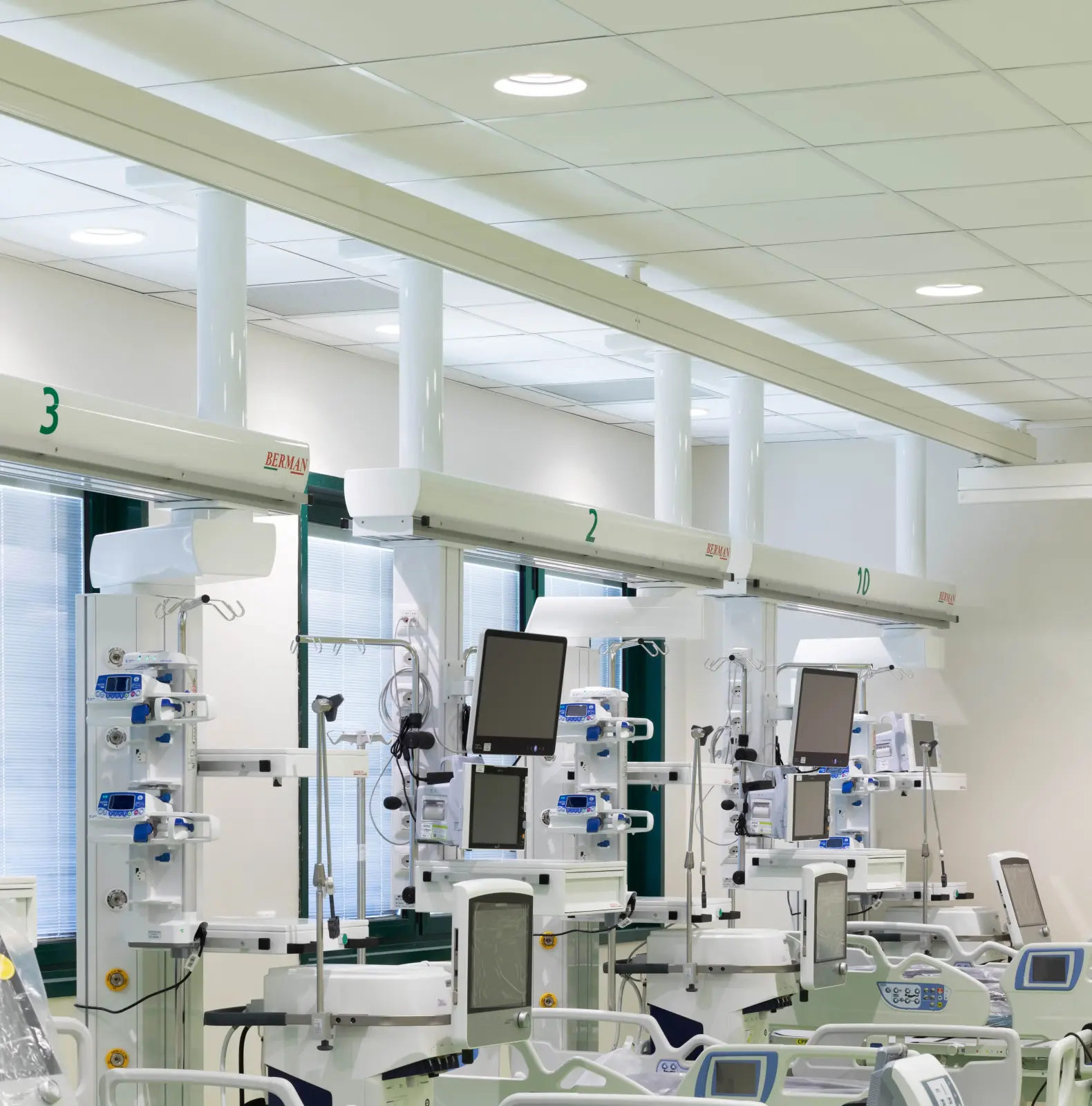
Within the ward, 3F Reno plays a central role wherever precise, controlled lighting is required. Its optical system is designed to reduce luminance and glare significantly—an important feature for patients who may spend many hours lying down with their eyes naturally directed towards the ceiling.
The scheme is completed by L 340, a recessed diffused-light luminaire designed to provide an even and comfortable distribution. Its LGS microprismatic screen and opal filter help control luminance and create a more uniform light output.
Two different solutions with the same objective: ensuring that the necessary amount of light is always available without becoming a source of visual fatigue for those who live and work in the ward.

In intensive care there is no single ideal lighting condition. During an examination or medical procedure, high illuminance levels are essential; during rest periods, the light needs to become softer and less intrusive.
For this reason, the project specified luminaires dimmable via the DALI protocol, allowing staff to adapt the lighting to different tasks and different times of day.
Special attention was also paid to photobiological risk: the ward required luminaires classified as RG0. Technology therefore becomes an indirect tool for care, creating the right conditions for medical staff to work accurately while giving patients a more considerate environment.

The Ospedale Maggiore project also tells another story about lighting design: the ability to respond quickly when circumstances demand it.
Completing the ward in only 40 days placed extraordinary pressure on design, construction and product availability. In this context, 3F Filippi contributed to the new ward by supplying its lighting solutions during an unprecedented healthcare emergency.
The result is an environment where technical performance, light control and reliability work together to support healthcare activities and improve patients’ conditions. Light that is there with precision and discretion exactly when it is needed most.
Do you have a similar project?