Integrated sensing: the advantage lies in the system
An occupancy sensor can detect whether a zone is being used and
adjust lighting according to the activity taking place.
A light sensor can measure the available daylight and allow the
system to reduce output when full power is not required.
The advantage, however, is not simply having a sensor.
With 3F Rover, sensors and control nodes can be integrated directly
into the luminaire, turning each light point into an active element of the
system.
This makes it possible to create intelligent installations without
necessarily modifying the existing electrical infrastructure or adding new
communication backbones.
This is particularly valuable in existing buildings, where reducing
interventions, cabling and complexity can mean less downtime and easier
integration.
Greater efficiency because light works only when needed
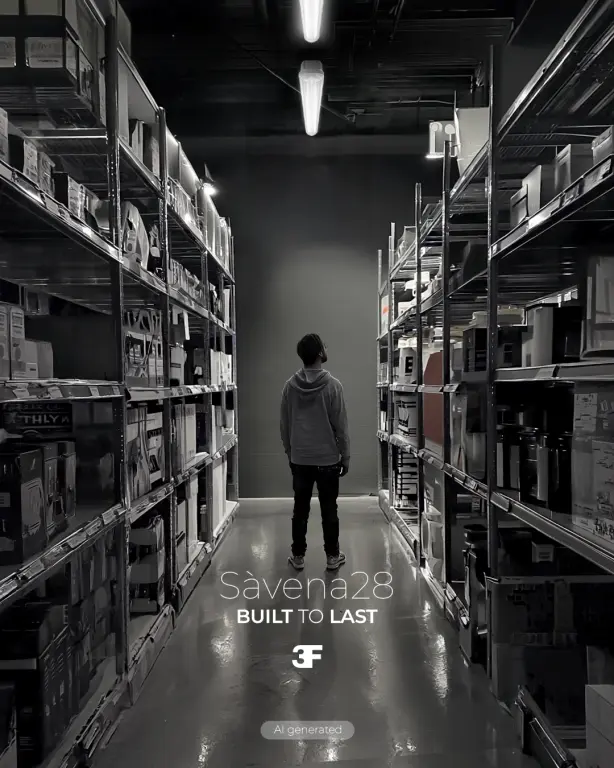
In a warehouse, an aisle may remain empty for several minutes. In a
factory, some areas may be used only during specific shifts.
Keeping the entire installation at full output does not take these
differences into account.
Sensing technologies make it possible to create more efficient
operating logics: light can be reduced in unoccupied zones and quickly return
to the required level when presence is detected.
Likewise, artificial lighting can be adjusted according to the
amount of daylight available.
Efficiency therefore depends not only on the lumens per watt of the
luminaire, but also on the system’s ability to provide the right amount of
light exactly when it is needed.
A system that can evolve over time
One of the most interesting aspects of IoT applied to lighting is
the possibility of building systems that become progressively more advanced.
Management can begin with simple local occupancy and dimming logics
and later expand to supervision, centralised control and integration with
broader building management systems.
The installation therefore does not start as a closed solution. It
can grow together with the needs of the facility.
This ability to evolve makes 3F Rover particularly suitable for
industrial and logistics environments undergoing digital transformation.
Smart also means easier maintenance
Technology must be advanced, but also easy to manage.
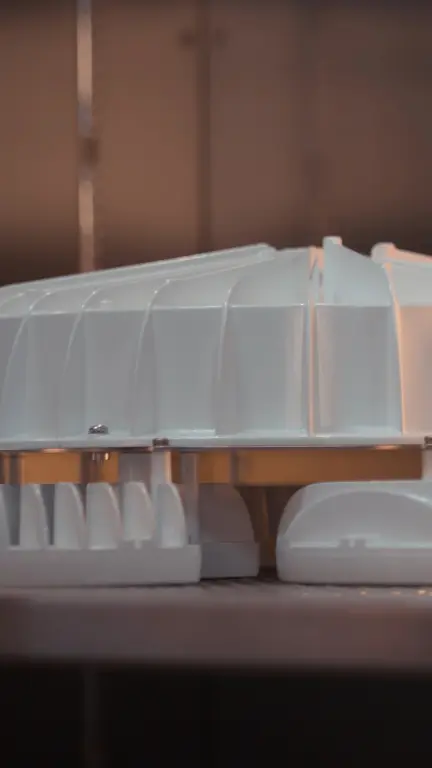
For this reason, in 3F Rover the electronics and IoT connectivity
devices are housed in a dedicated, protected technical compartment that remains
accessible even when the luminaire is installed.
This simplifies inspection and maintenance operations, an especially
important advantage when luminaires are installed at high mounting heights or
in areas where operational continuity is essential.
Intelligent design is therefore not only about how the system works.
It is also about what happens after installation.
3F Rover: more control, less complexity
IoT sensing changes the role of the luminaire.
From a simple light source, 3F Rover becomes part of a system able
to read the space, adapt to activities and use energy more effectively.
The real advantage is not having more technology. It is using
technology to achieve more control, greater efficiency, more flexibility and
less complexity in system management.
A facility becomes truly smart when innovation does not complicate
the system, but makes it easier to use and evolve.
Discover 3F Rover and explore the possibilities of connected
industrial lighting.