From light
that is simply on to light that responds
An
occupancy sensor allows the system to understand whether a specific area is
actually being used.
A
light sensor can measure the contribution of daylight and allow luminaires to
modulate their output according to real environmental conditions.
The
principle is simple: provide light when it is needed, where it is needed and in
the amount required.
In
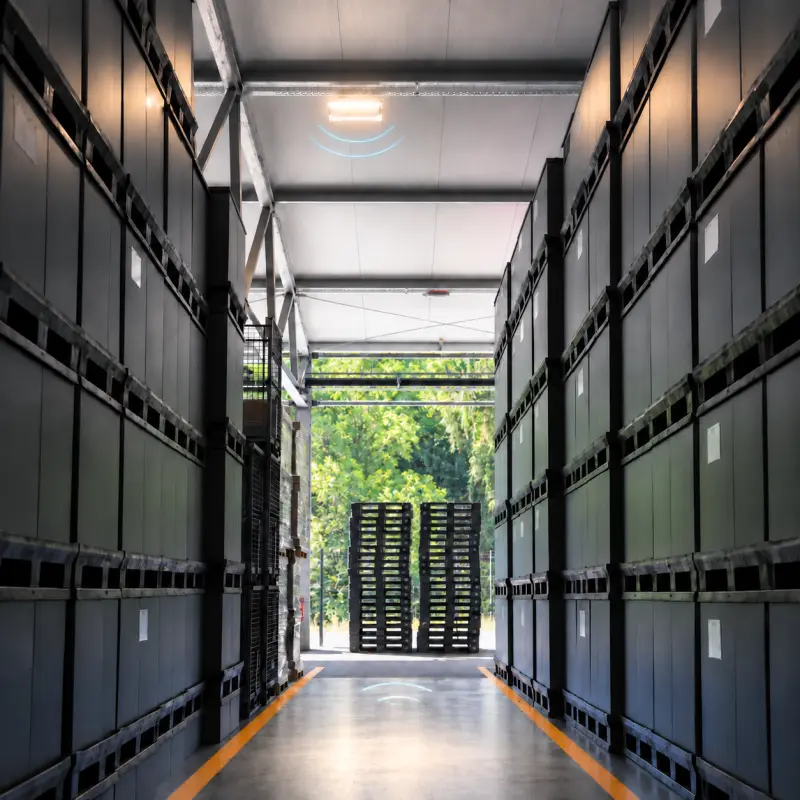
a facility, for example, a logistics aisle used only occasionally can operate
at a reduced light level and automatically increase illumination when people or
vehicles pass through. A production area close to a skylight can reduce the
artificial-light contribution when sufficient daylight is available.
Why this
makes an industrial facility more efficient
Reducing
light output or avoiding full-power illumination in unused areas helps limit
waste and makes the installation more consistent with actual operating cycles.
But
the value of an intelligent system goes beyond energy savings. Automated
management can adapt lighting to different work shifts, manage facility zones
independently, reduce unnecessary operating hours, improve infrastructure
control and create the foundations for greater digitalisation of the production
environment.
Lighting
thus becomes an integral part of the transition towards Smart Industry.
3F Rover: a
luminaire designed for connected industry
3F
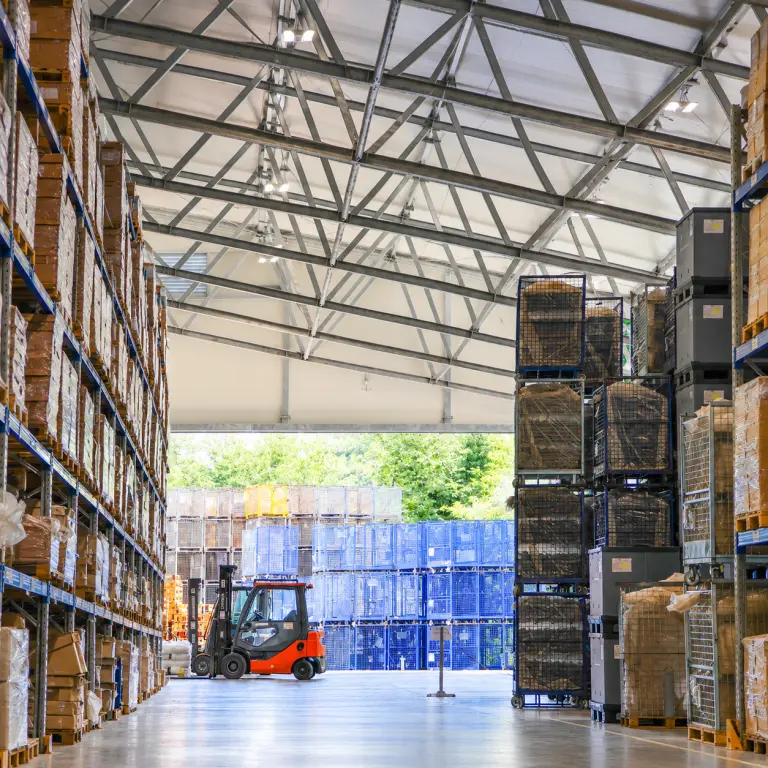
Rover was developed precisely with this evolution in mind, as a lighting system
for warehouses, logistics centres and industrial applications.
Its
IoT Ready architecture allows sensors and control nodes to be integrated
directly into the luminaire. This makes it possible to create advanced,
connected systems without modifying the existing electrical infrastructure or
adding new dedicated communication backbones.
This
approach simplifies the adoption of advanced management systems even in
facilities that are already operational, supporting energy efficiency, space
monitoring and installation digitalisation.
It
is no longer simply a network of luminaires executing commands, but a system
that can observe what is happening in the space and respond accordingly.
A system
designed for long-term management
Electronic
components and IoT connectivity devices are housed in a dedicated, protected
and easily accessible technical compartment. Access is possible while the
luminaire remains installed, preserving its degree of protection while reducing
intervention times and operating costs.
In
an industrial facility, where stopping a production area can have significant
operational consequences, easy access to components also contributes to the
overall efficiency of the installation.
Lighting as
part of the intelligent facility
They
are one of the tools that allow an installation to become more aware of what is
happening in its environment and to use resources more effectively.
3F
Rover interprets this evolution by bringing connectivity, sensors and lighting
management directly into the luminaire.
The
result is a solution designed not only to illuminate industrial environments,
but also to help transform them into more efficient, flexible and intelligent
spaces.
Discover 3F Rover and explore solutions for connected industrial
lighting.