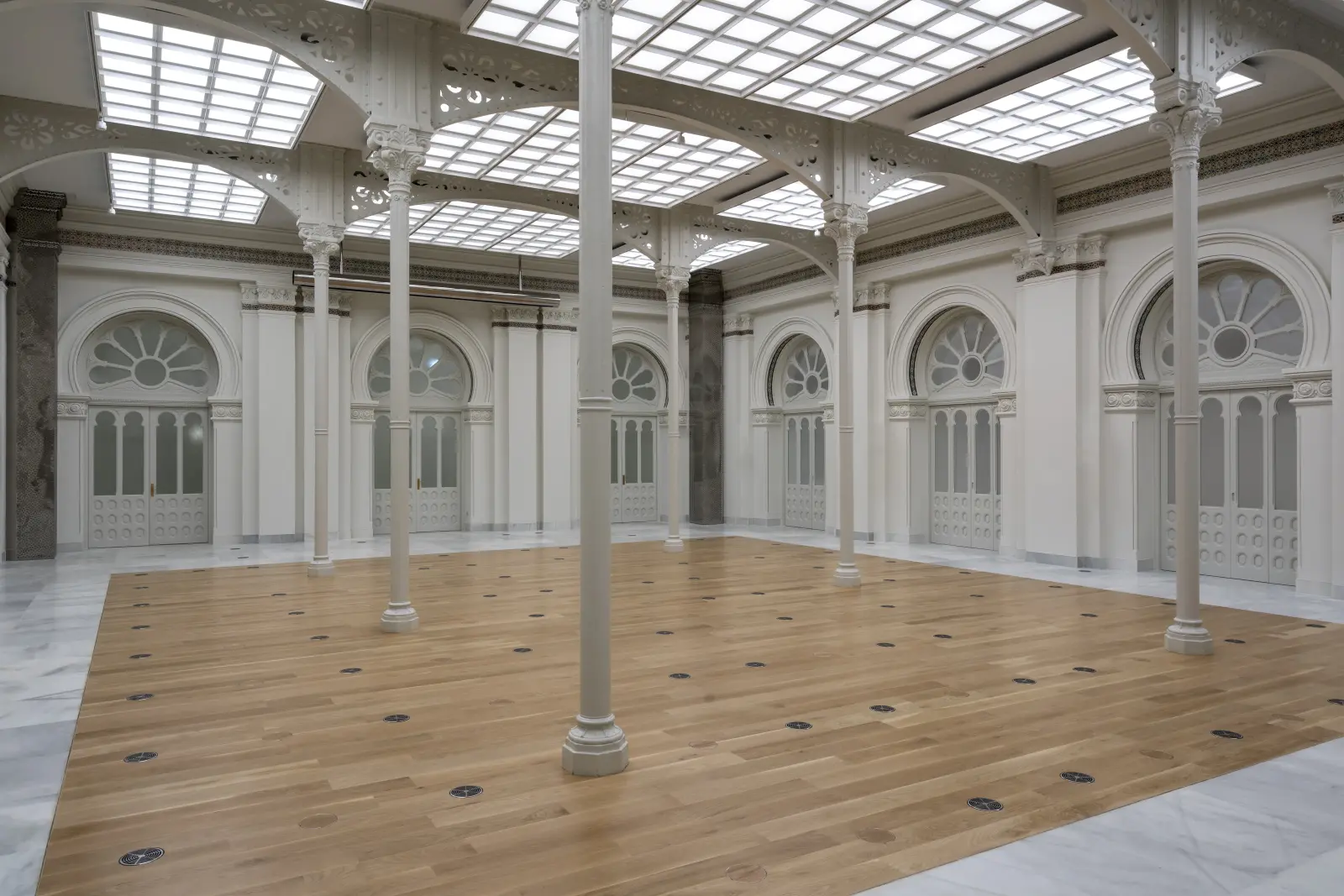
In the heart of Madrid, overlooking Plaza de Cibeles, the historic headquarters of the Banco de España is a building where architecture, art and technical innovation have coexisted for more than a century. Inaugurated in 1891 and designed by Eduardo de Adaro and Severiano Sainz de la Lastra, it is one of the landmarks of Spanish eclectic architecture and has been listed as a Site of Cultural Interest in the Historic Monument category since 1999.
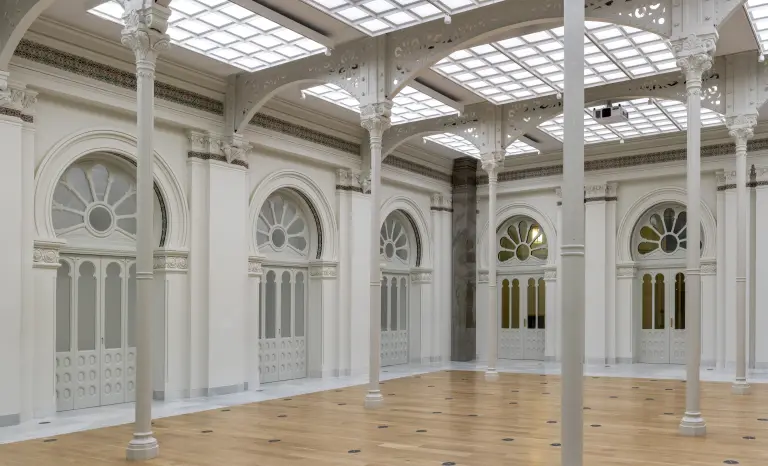
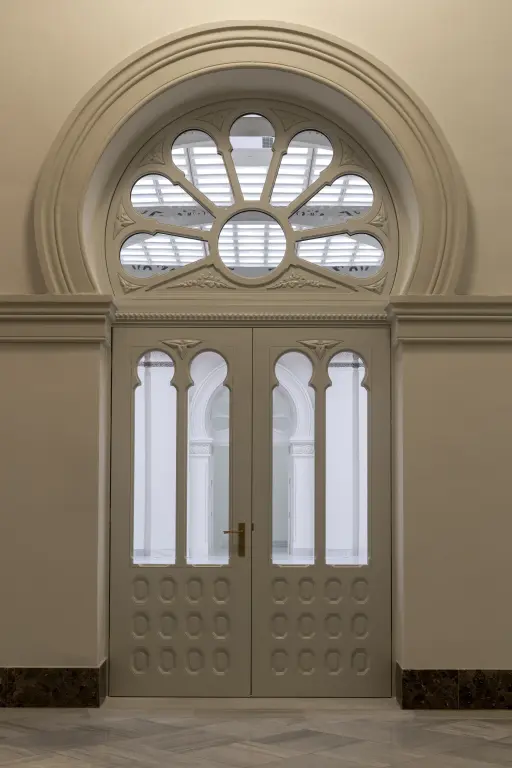
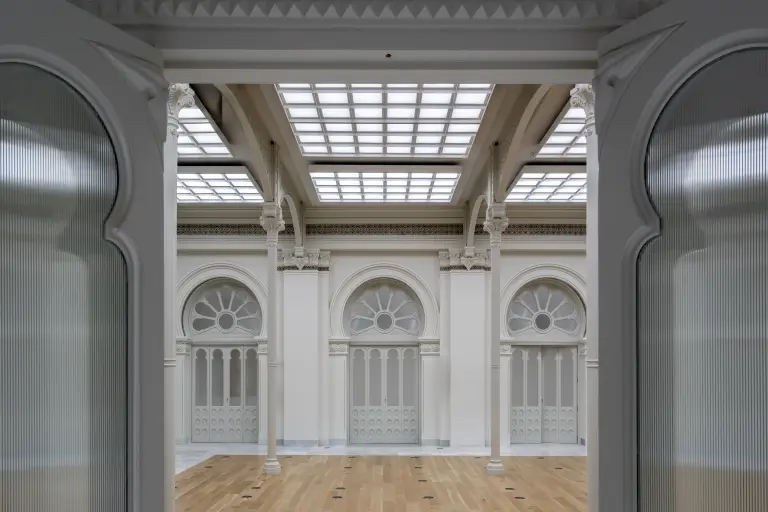
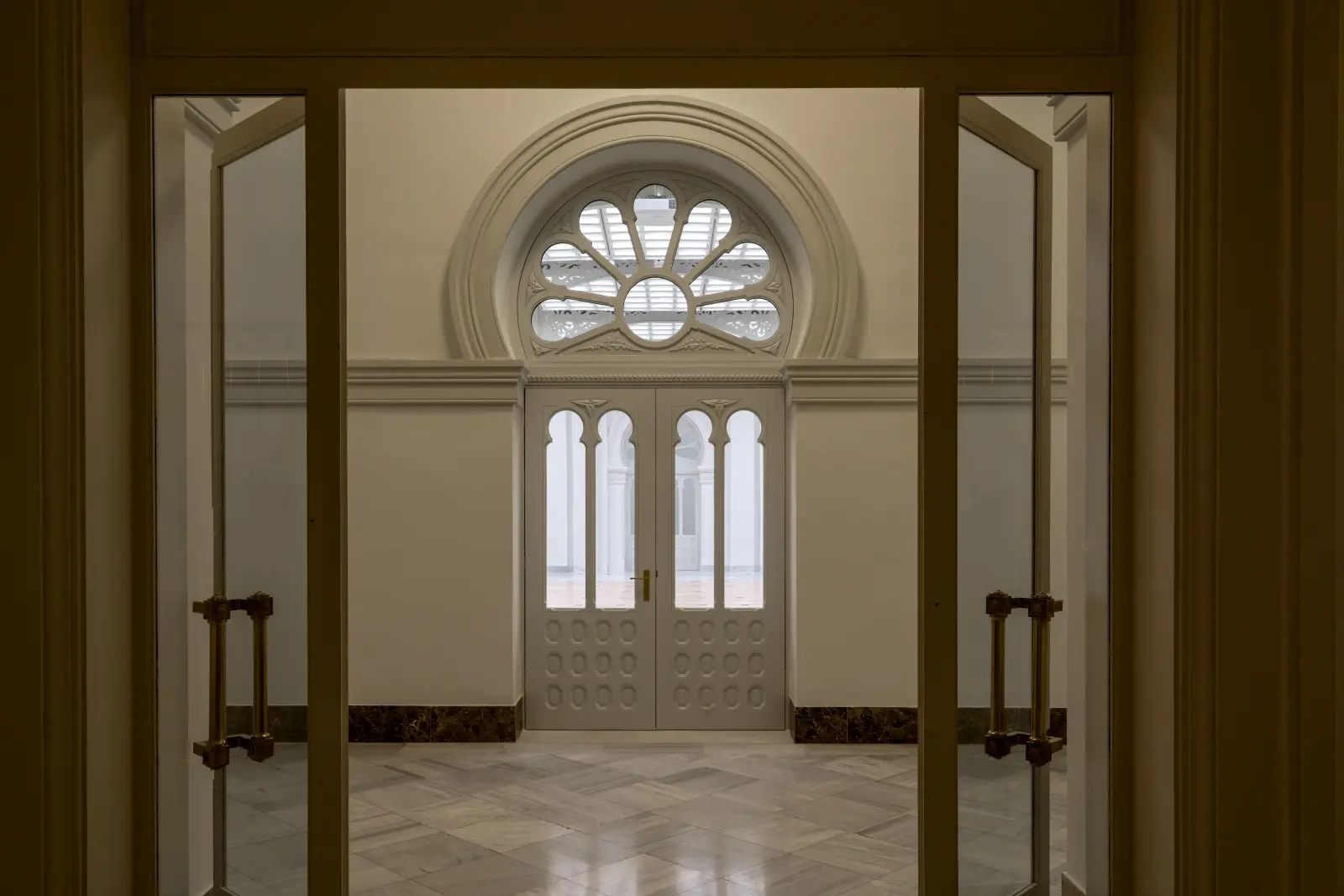
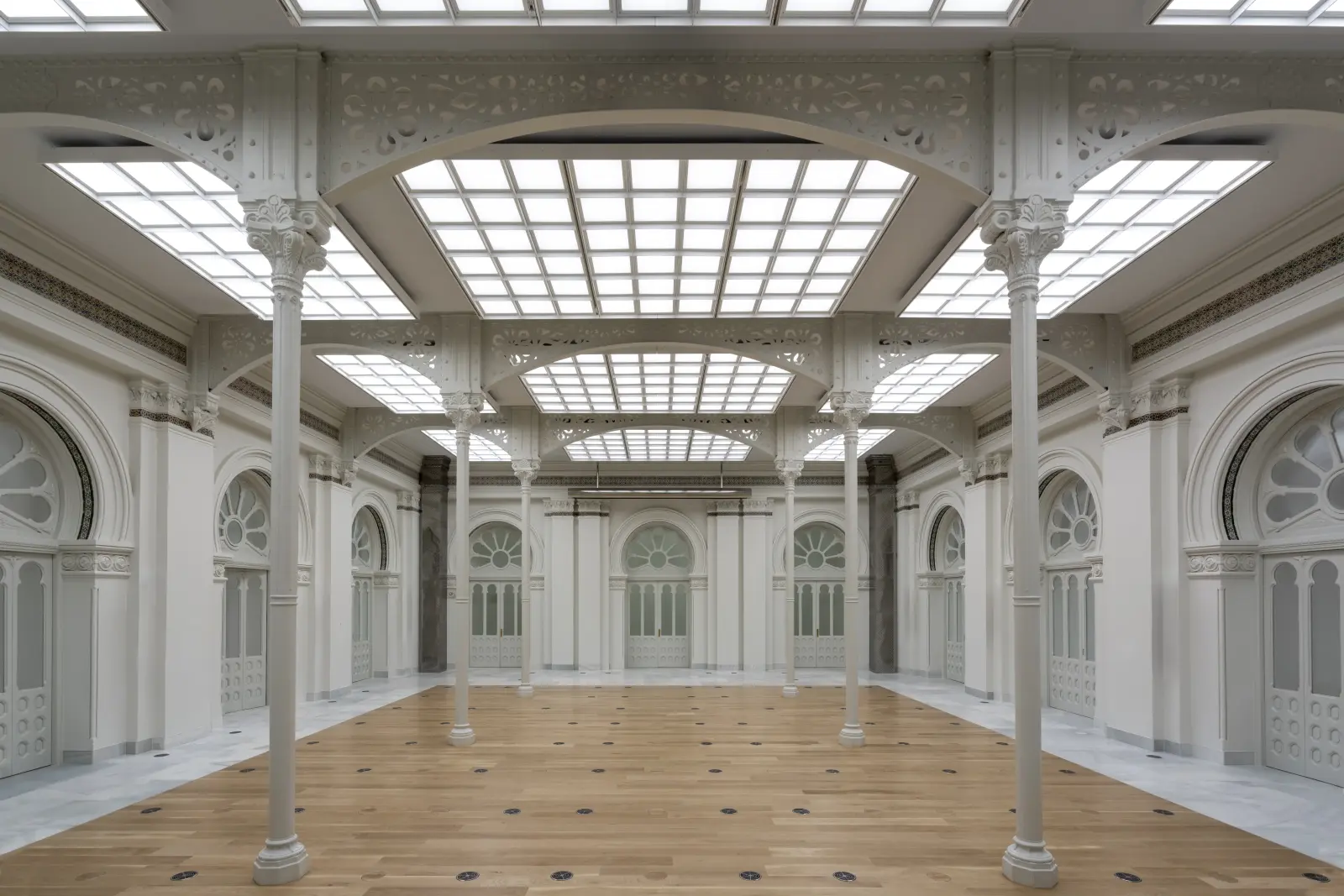
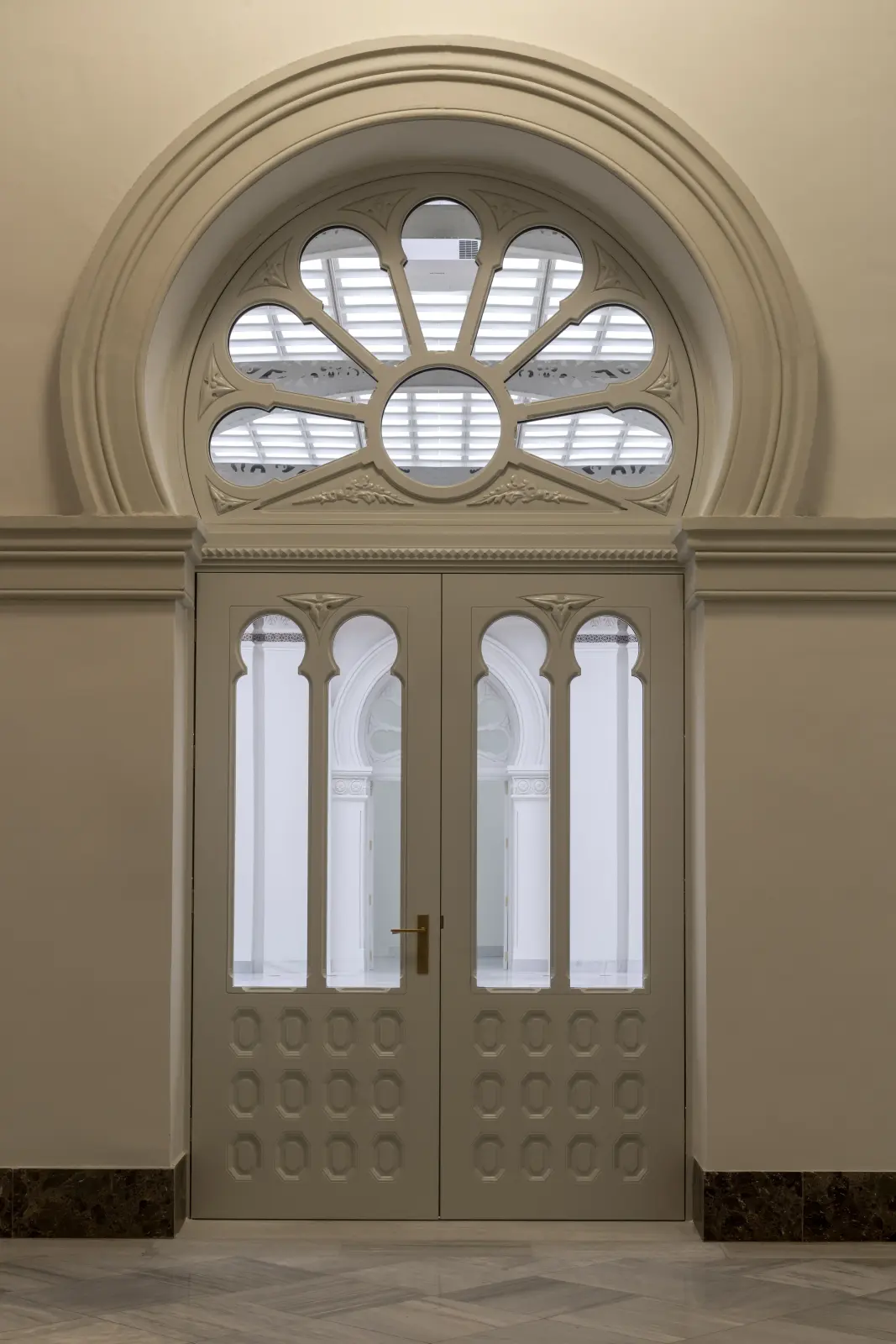
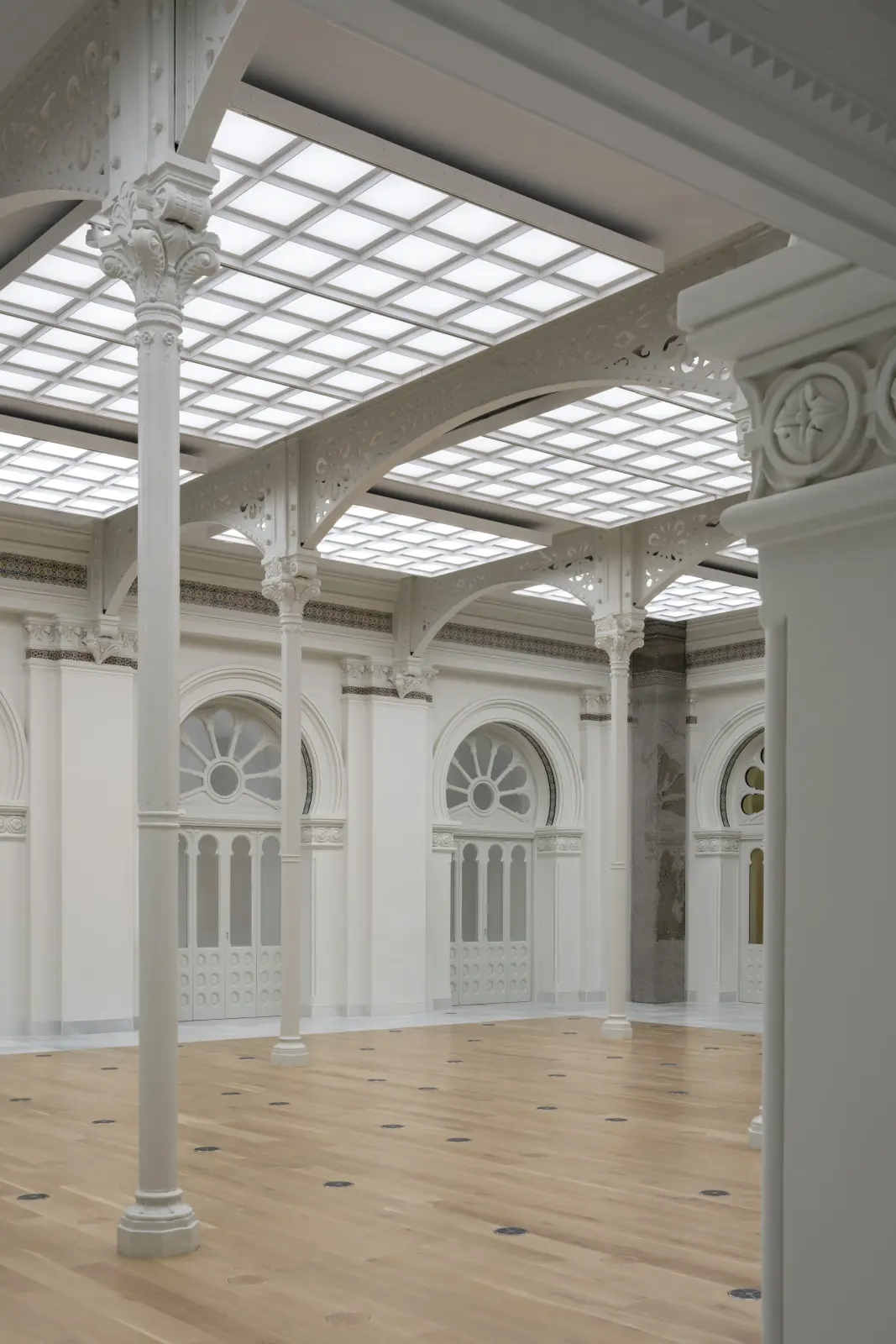
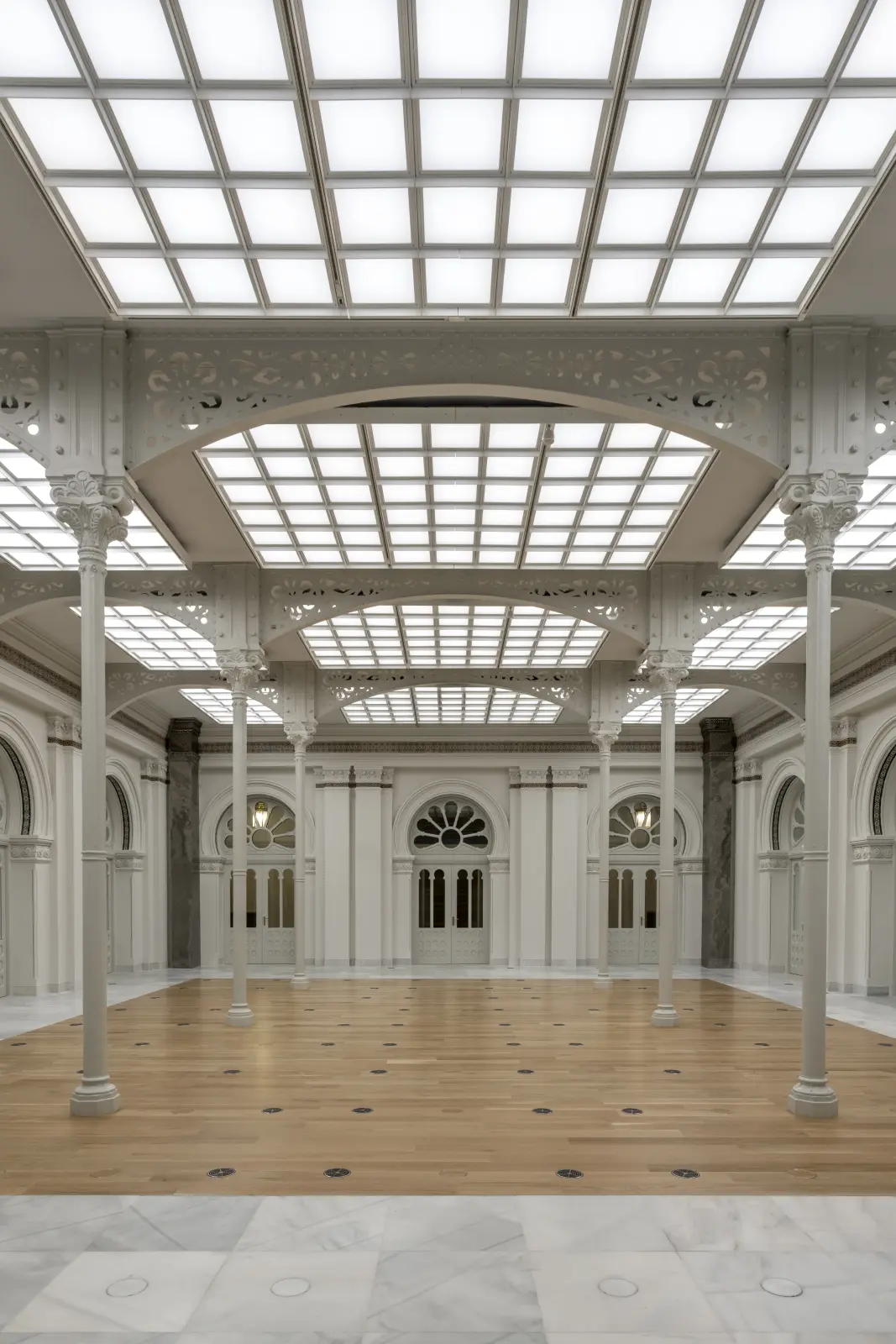
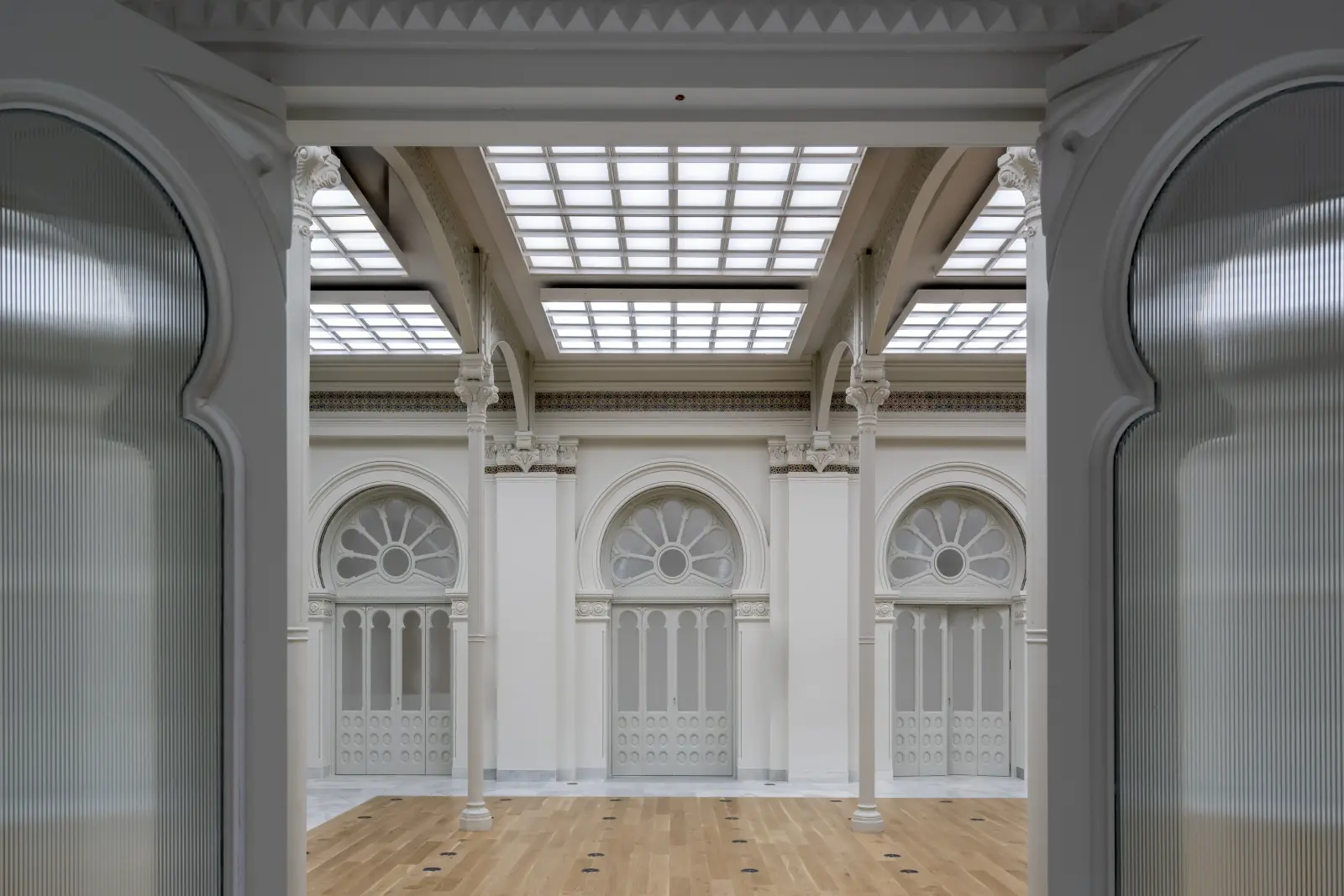
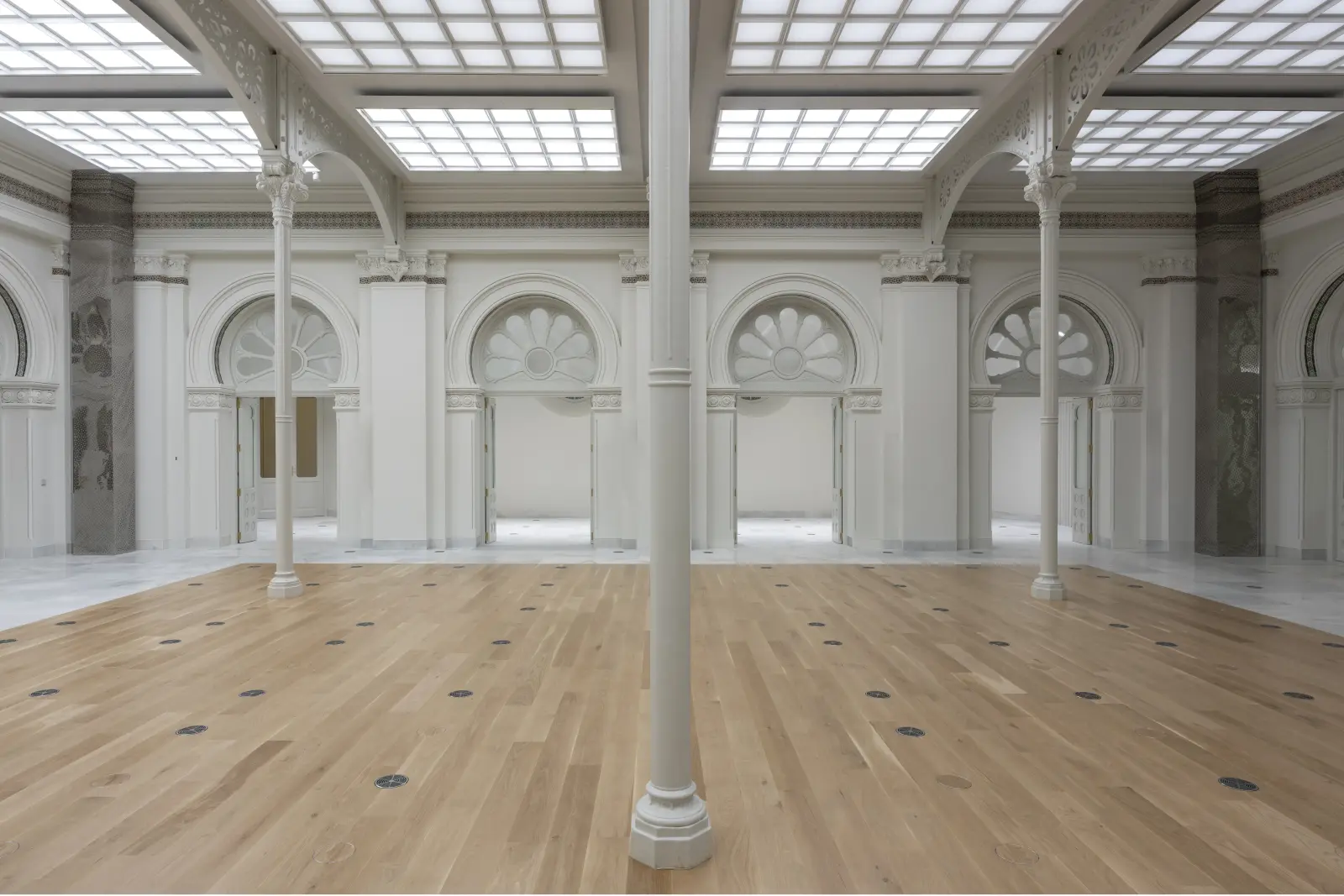
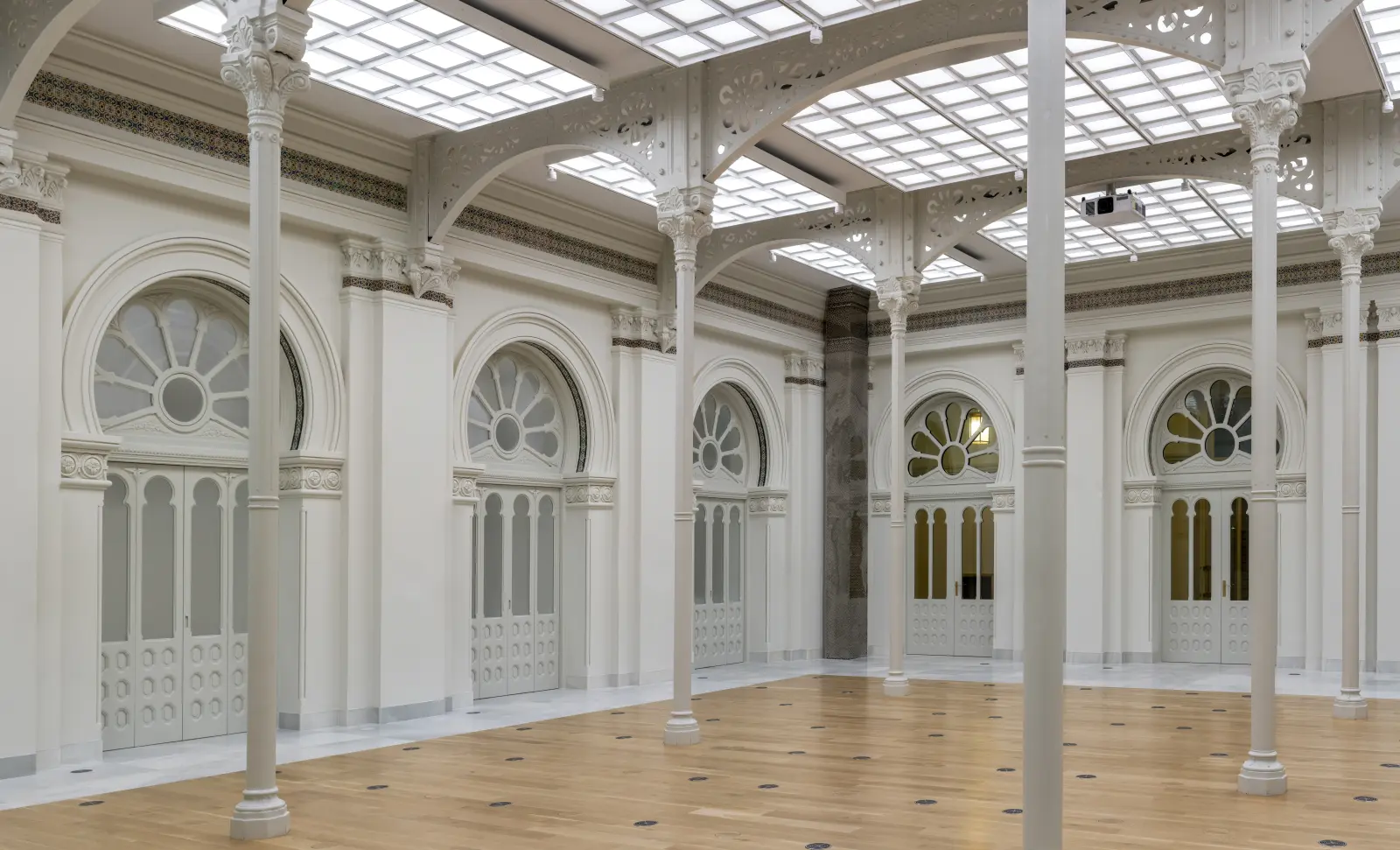
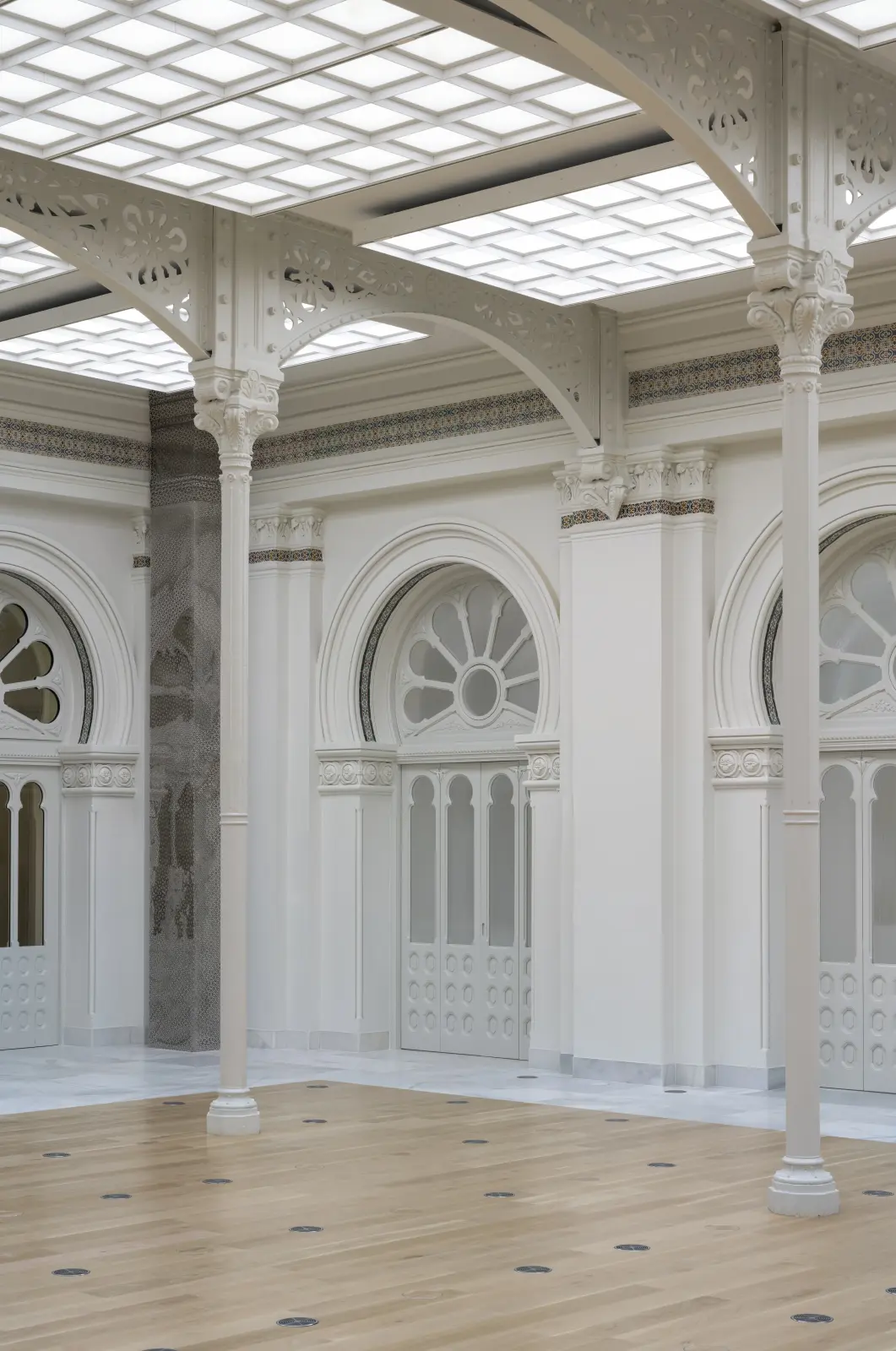
Inside, beneath the former Patio de Efectivo – now the Library – lies the Salón de Cobradores. Here, the original design brought together two late-nineteenth-century architectural languages: Moorish Revival decoration, with horseshoe arches and geometric tiles rooted in Andalusian tradition, and an iron structure expressing the industrial construction culture of the period.
The refurbishment completed in 2025 by Paredes Pedrosa Arquitectos begins with the rediscovery of this identity and the ambition to give new life to one of the most distinctive rooms in the historic headquarters.
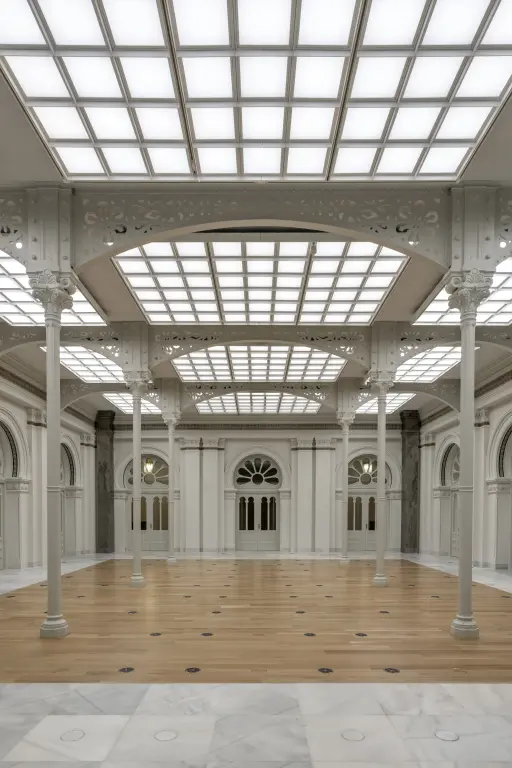
In the original design, light and architecture were closely connected. A translucent ceiling supported by the metal structure allowed natural light from the space above to reach the Salón de Cobradores. Light from above therefore connected the two levels not only functionally, but also perceptually and symbolically.
During later transformations of the building, the former glazed ceiling was demolished. The room consequently lost one of the features that most strongly defined its atmosphere: a broad, diffuse and seemingly natural zenithal light.
The contemporary refurbishment faced a precise challenge: to restore that sensation without literally reconstructing what no longer existed. The answer was to reinterpret the skylight through artificial light.
This is where 3F Filippi’s contribution becomes central. For the Salón de Cobradores, selecting a standard luminaire was not enough: the project required a solution capable of becoming part of the architecture and restoring the perception of the large luminous surface that historically defined the ceiling.
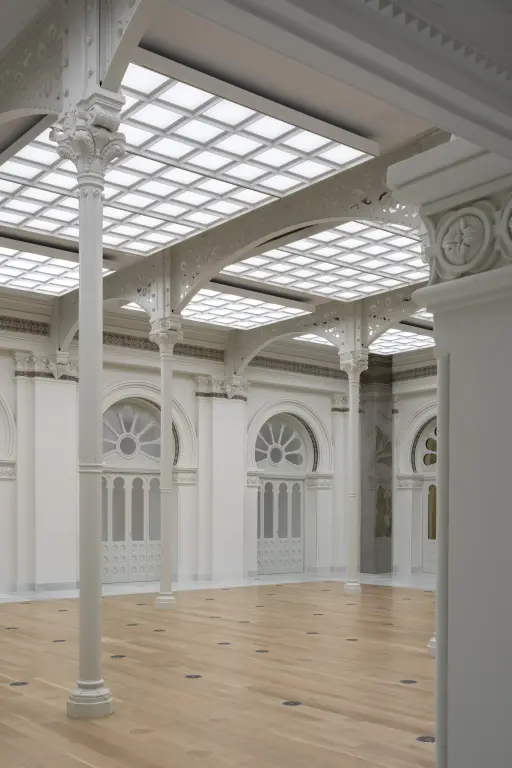
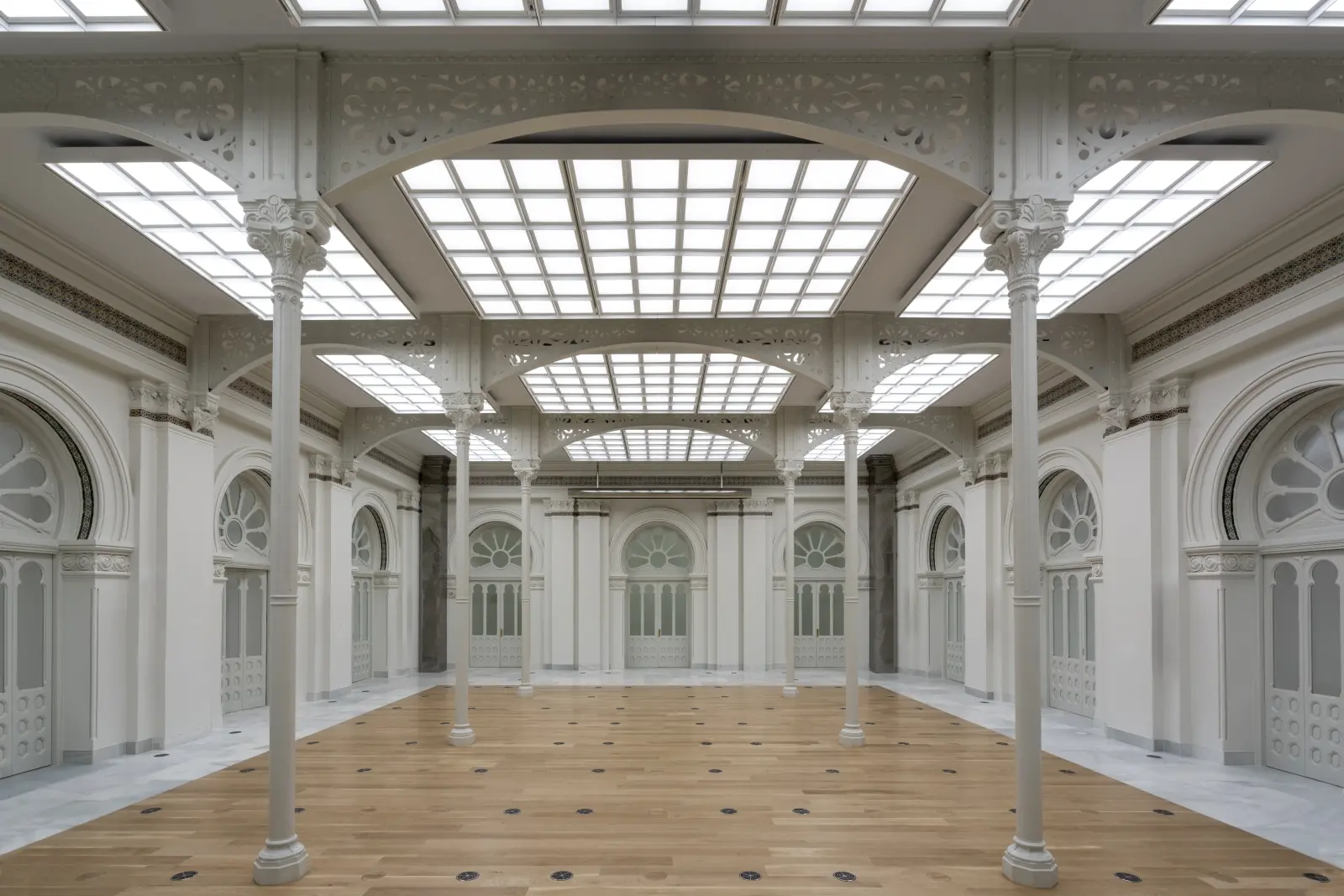
3F Filippi therefore developed a custom product specifically for the project, conceived to generate broad, uniform and diffuse light and recreate the feeling of standing beneath a large skylight. The aim is not to perceive a sequence of luminaires, but a continuous luminous surface that spreads light from above and restores depth to the space.
The contemporary solution does not reconstruct the skylight as an object; it recovers its most immaterial effect. Light becomes architectural matter, ideally occupying the void left by the former translucent ceiling. Not to rebuild the skylight, but to rebuild the sensation of its light.
The luminous reinterpretation also performs another role: it reveals and enhances the historic riveted iron structure, previously concealed. The new intervention can therefore evoke the original zenithal light while making visible construction elements that now become part of the experience of the room.
It is a delicate balance. Light must not compete with the horseshoe arches, geometric tiles and historic mouldings, but support their legibility. The new technical elements follow the same logic: four polished stainless-steel columns introduce reflections that visually extend the decorative bands and reinforce the dialogue between past and present.
Light thus becomes a mediating element: it makes the heritage legible without turning it into scenery and allows the contemporary intervention to assert its presence respectfully.
The recovery of the Salón de Cobradores is more than a conservation project. Originally used for payment and collection operations, the room has been transformed into a multipurpose venue for conferences, international seminars, meetings, media activities and exhibitions.
Light must therefore respond to two dimensions at once. On one side is memory, with nineteenth-century architecture to be understood, respected and enhanced. On the other is the present, with a space brought back to life and required to host contemporary functions.
The custom product developed by 3F Filippi sits precisely between these two dimensions. It does not attempt to reproduce a vanished object, but recovers its perception through light. The project shows how custom design can go beyond technical product adaptation: it means understanding architecture, interpreting its history and developing a solution that did not previously exist.
Do you have a similar project?