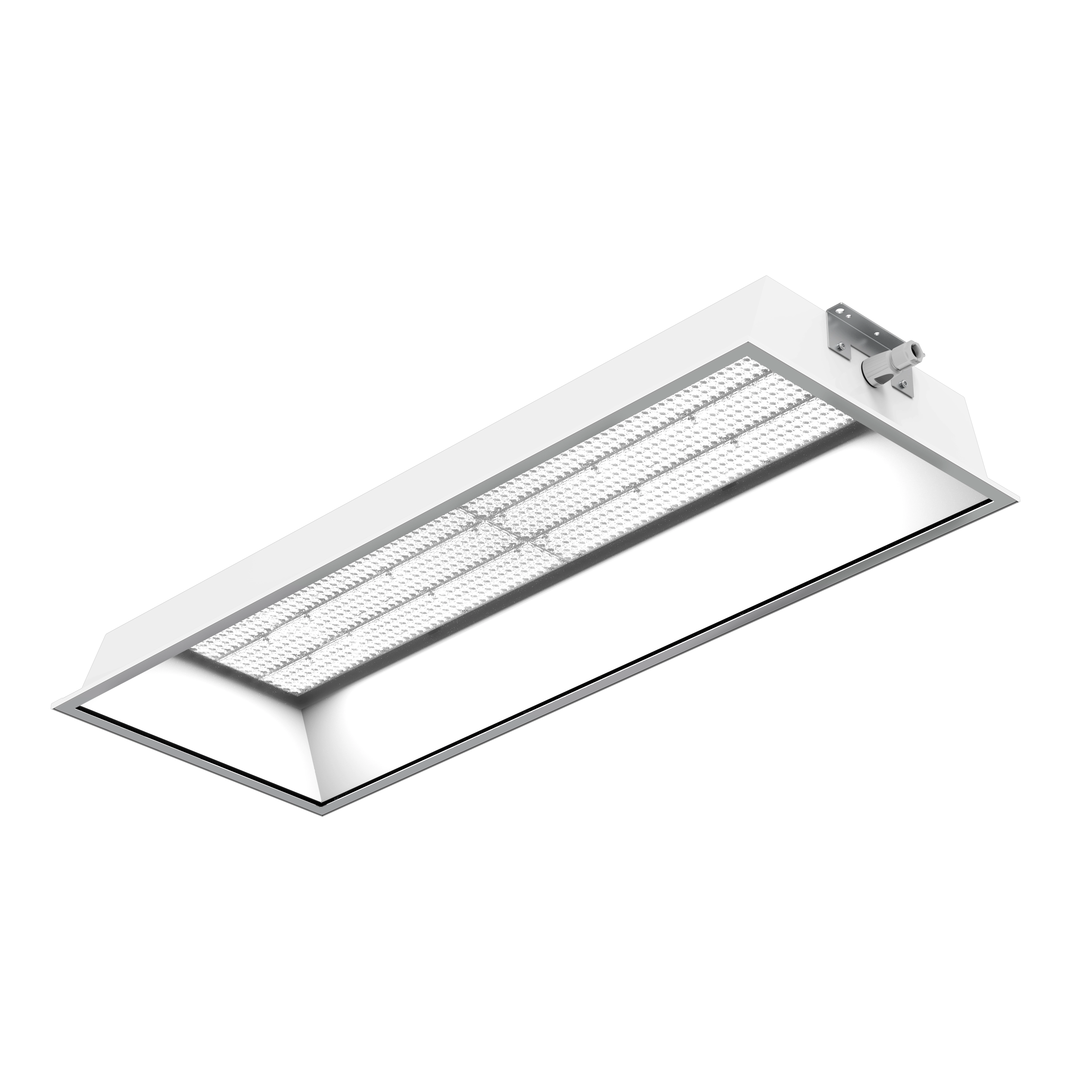
A data center is designed so that everything keeps running when something breaks: dual power feeds, uninterruptible supplies, redundant cooling. Light usually stays out of that reasoning, and yet it is the first thing a technician needs when entering a rack aisle at three in the morning to replace a drive. A data center lighting installation must be conceived with the same logic as the infrastructure it serves: continuity, reliability, efficiency and no intervention that requires opening a ceiling above a live rack.
Then there are three specifics no other industrial environment has together. The geometry: narrow aisles between rows of cabinets over two metres tall, where vertical illuminance is needed on the rack faces, not on the floor. The heat balance: every watt of light is a watt the cooling has to remove, and it weighs on the PUE. The schedule: the hall is occupied for a few minutes a day, but in those minutes the light must be full and instant.
This page follows those three specifics area by area. For plant rooms and the general rules of industrial environments the reference is the industrial lighting page; for controls and building-automation integration, the smart lighting for industry page.
EN 12464-1 covers plant rooms and control rooms; for server halls the industry references (TIA-942 and operators' practice) converge on 500 lux measured on the vertical plane of the racks, one metre above the floor. The table brings together the values and design attention for each area.
| Data center area | Ēm (lux) | Max UGR | Design attention |
|---|---|---|---|
| Server halls: cold aisles (rack front) | 500 vertical | 22 | Luminaires aligned on the aisle centreline, narrow-aisle optic, no shadows on the front panels |
| Server halls: hot aisles (rack rear) | 300–500 vertical | 25 | Ambient 35–45 °C: luminaires qualified for high ta, cabling and connectors at the rear |
| Contained aisles (hot/cold containment) | 500 vertical | 22 | Compact luminaires inside the containment, sensor per aisle, out of the airflow |
| Control rooms, NOC, operator stations | 500 | 19 | Screens everywhere: UGR ≤ 19, dimming for the monitoring stations |
| UPS rooms, batteries, switchboards | 200 | 25 | Working space in front of the panels; emergency versions; battery-room ventilation |
| Plant rooms, CRAC units, chillers | 200 | 25 | IP54 or higher for humidity and condensation, resistance to machine vibration |
| Technical corridors, controlled passages | 100–150 | 28 | Presence sensors, EN 1838 emergency along escape routes |
| Maintenance areas, staging, spare-parts store | 300–500 | 22 | Light on the bench for cabling and markings, colour rendering for cable colours |
The value that decides the quality of the design is the vertical illuminance on the rack faces: status LEDs, port labels and markings are read 1–2 metres above the floor, from the side, with the technician's head casting a shadow. A luminaire above the rack lights the cabinet roof; one on the aisle centreline, with a narrow-aisle optic, lights both faces. The second point is the maintenance factor: in a room with filtered, dust-free air you can design with a high factor and fewer luminaires, but the temperature of the hot aisles shortens driver life and must be compensated in the selection.
Three requirements born of continuity, the heat balance and rack geometry.
A data center's light must not depend on a single circuit. 3F Filippi luminaires are available with an integrated emergency inverter compliant with EN 60598-2-22 and can be fed from UPS-backed lines, so the aisle stays lit during a load transfer or a blackout. Switch-on is instant at 100% — no restrike time, no warm-up — and the drivers are qualified for continuous operation.
Declared L80 lifetime and components from −30 to +70 °C: in hot aisles, where the air leaving the racks exceeds 35–40 °C, choose the version with the appropriate maximum ambient temperature.
Every watt drawn by the light becomes heat the CRAC units must remove, with an additional energy cost the PUE measures. High-efficiency LEDs — above 150 lm/W — cut the lighting heat load to a fraction of that of fluorescent lamps, and per-aisle sensors switch off empty rows: in a hall occupied a few minutes a day, permanently lit luminaires are almost entirely wasted.
Colour rendering CRI ≥ 80 and SDCM 3 tolerance, neutral 4000 K to read markings and cable colour codes; no flicker, for surveillance cameras and for technicians working hours in front of the panels.
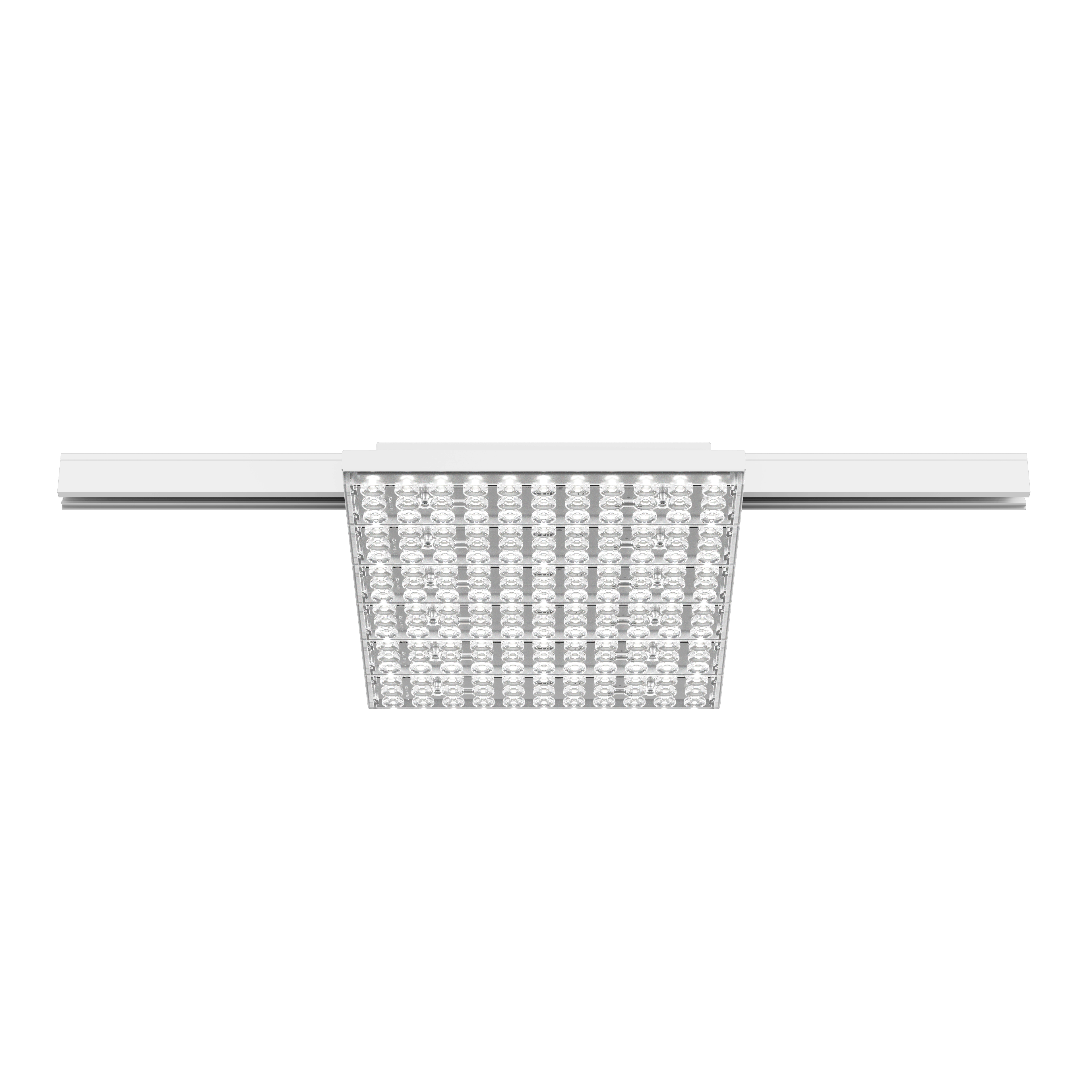
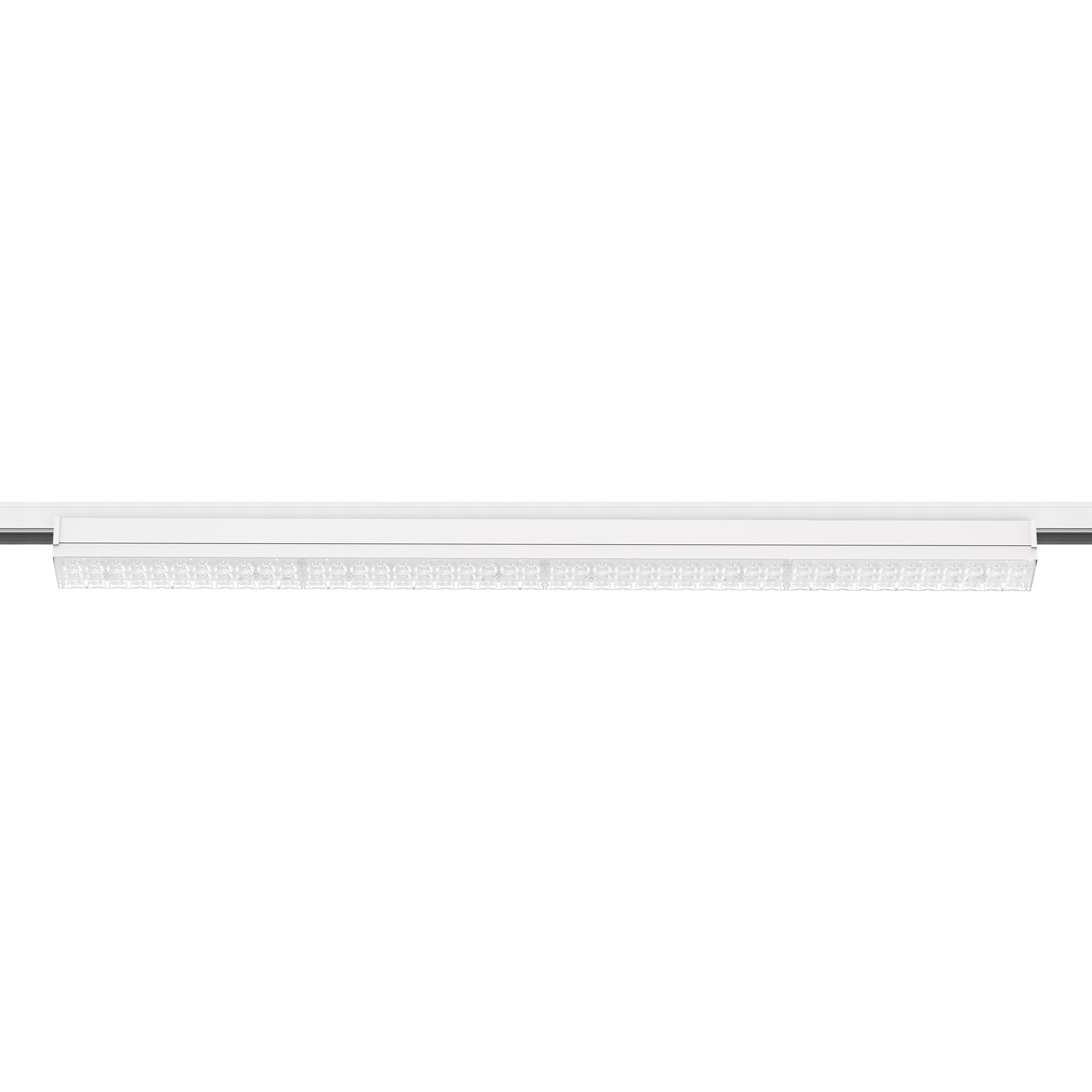
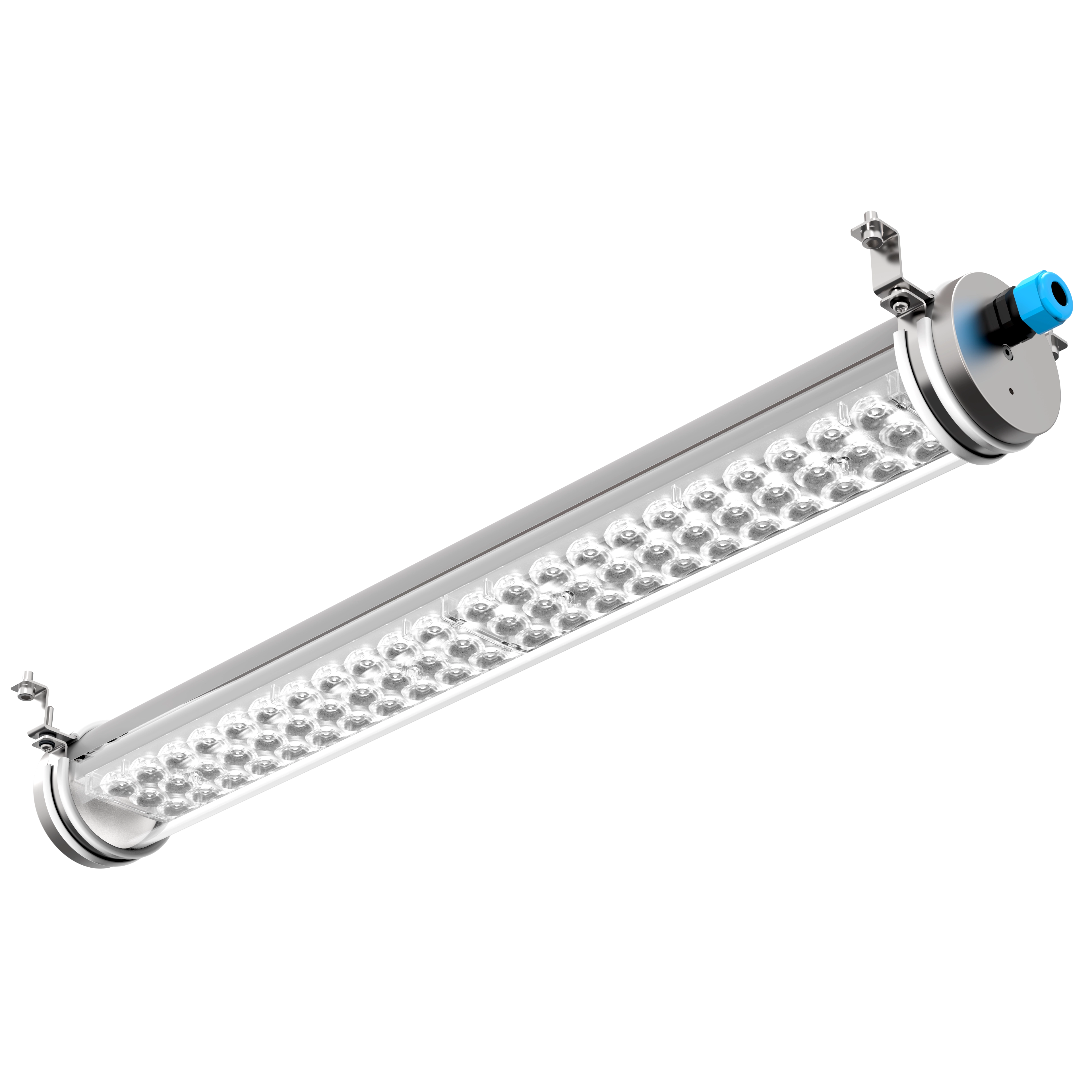
Linear luminaires with narrow-aisle optics mounted on the aisle centreline, also inside containment systems, compact and out of the airflows. DALI versions with BMS/DCIM integration via gateway: the aisle light switches on with the badge, a luminaire fault appears on the same console as the plant alarms, consumption is read per zone.
Compliance with EN 12464-1 and EN 60598-1, CE and ENEC marking, IP54 or higher protection in plant rooms. No maintenance that requires opening ceilings above live racks: drivers replaceable in place.
The four results a data center facility manager asks of the light.
Luminaires designed for 24/7 operation without performance drops, with integrated emergency and UPS-backed supply: the technician entering the hall during an event finds light, not a dark aisle with the rack LEDs as the only illumination.
In a high-consumption facility like a data center, lighting is a small item but an entirely removable one: high-efficiency LEDs and per-aisle sensors cut lighting energy and heat load by more than 80% compared with a permanently lit fluorescent installation, with a direct effect on the PUE.
Uniform, stable light on the cabinet faces, without shadows or flicker: inspection, cabling and component replacement are carried out in correct conditions, and errors due to a misread label — the most expensive in a data center — decrease.
Centralised control via DALI and BMS: scenes for maintenance and visits, badge-triggered switch-on, luminaire diagnostics on the same console as the plant. Light becomes a monitored subsystem like the others — details on the smart lighting for industry page.
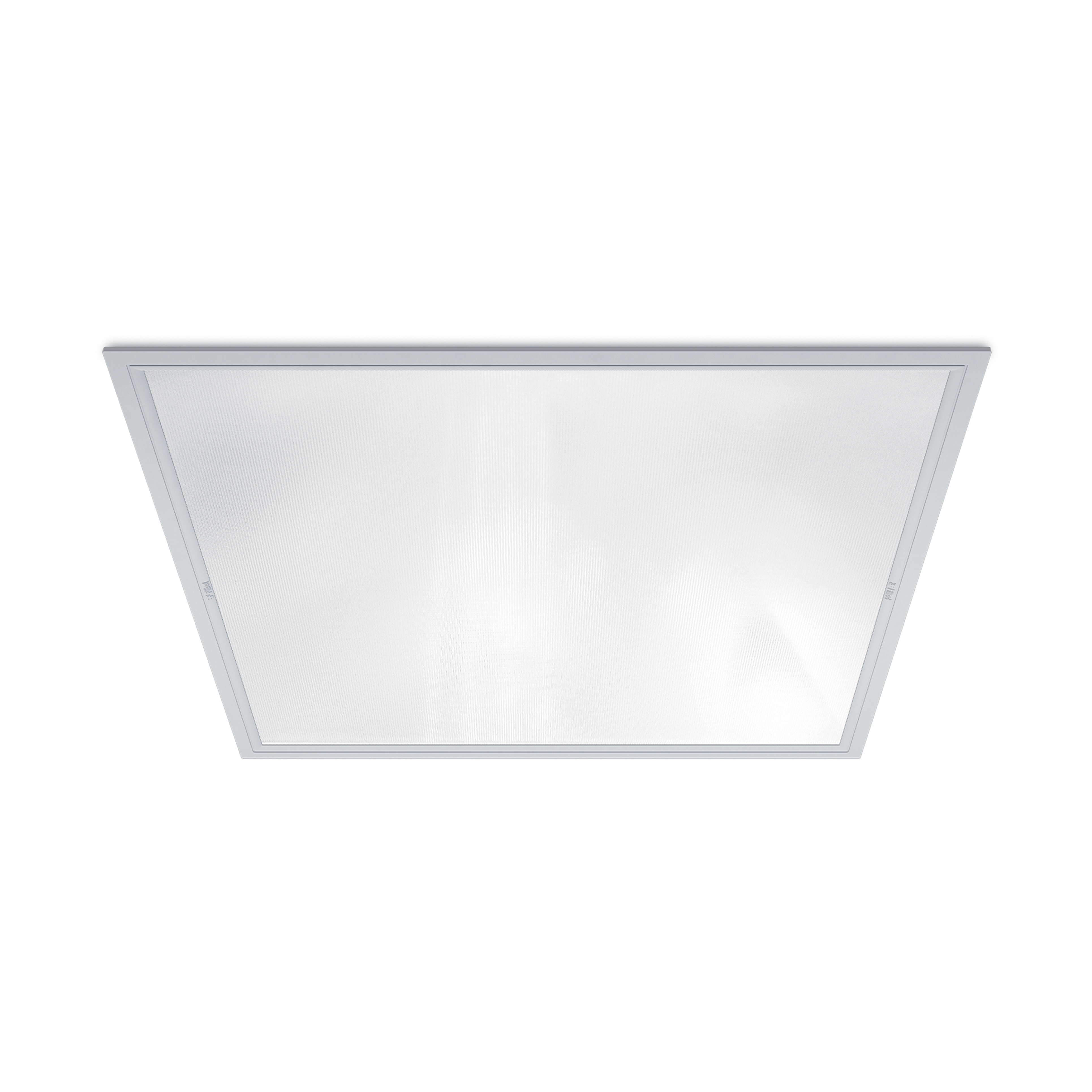
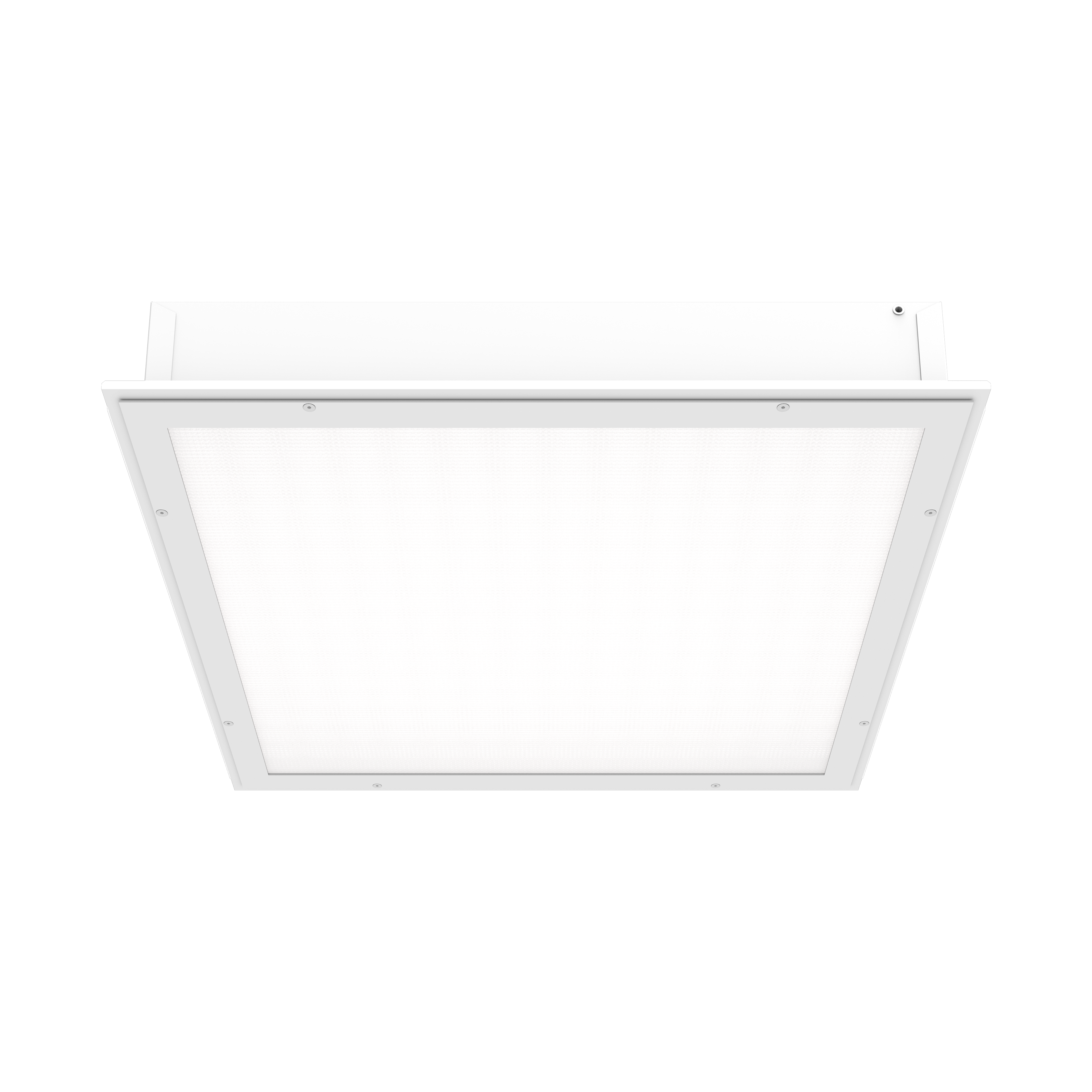
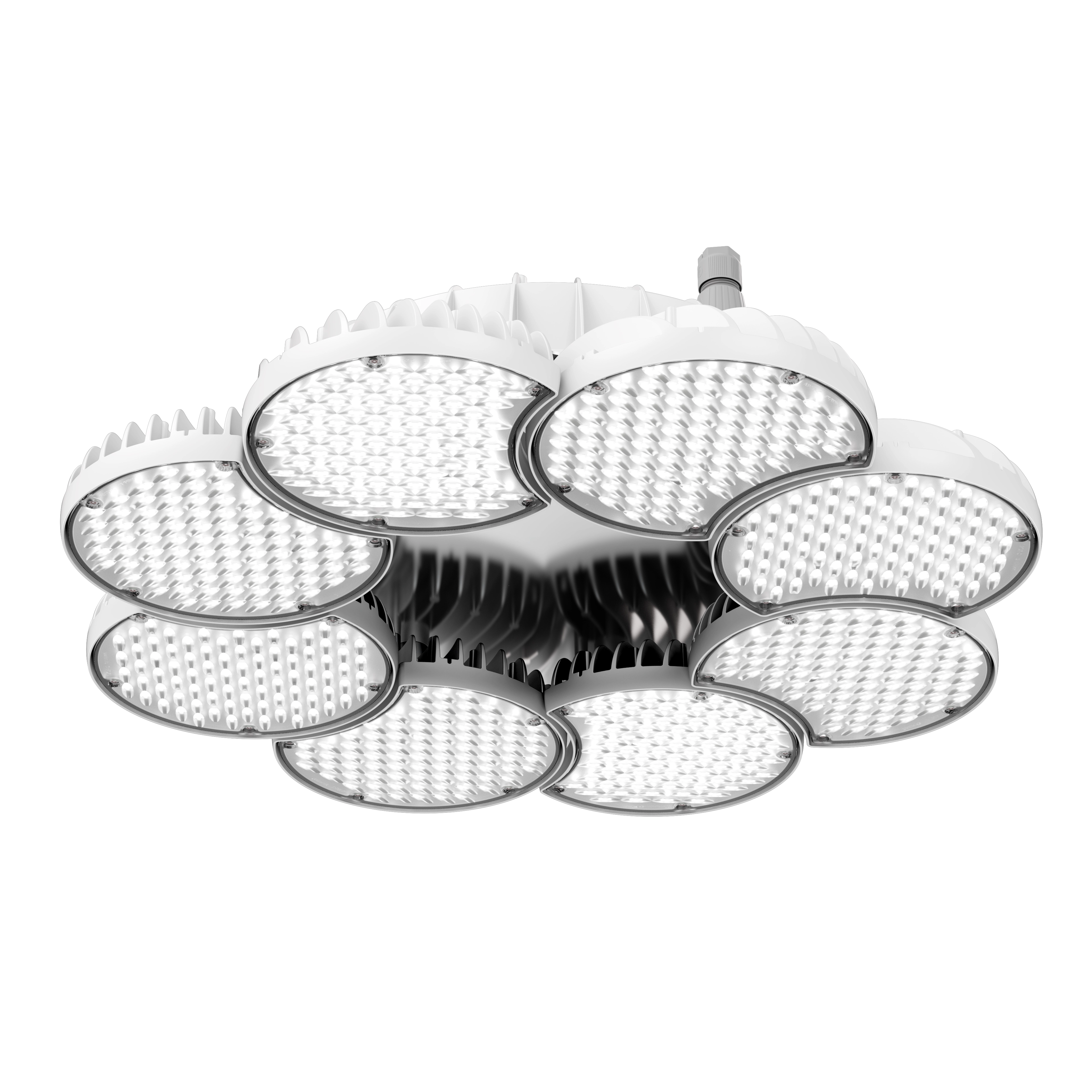
Linear luminaires with narrow-aisle optics and DALI versions for server halls, weatherproof luminaires for plant rooms, controlled-UGR panels and recessed luminaires for NOC and offices, all available with integrated emergency. Each range page lists maximum ambient temperature, photometric distributions and calculation files.
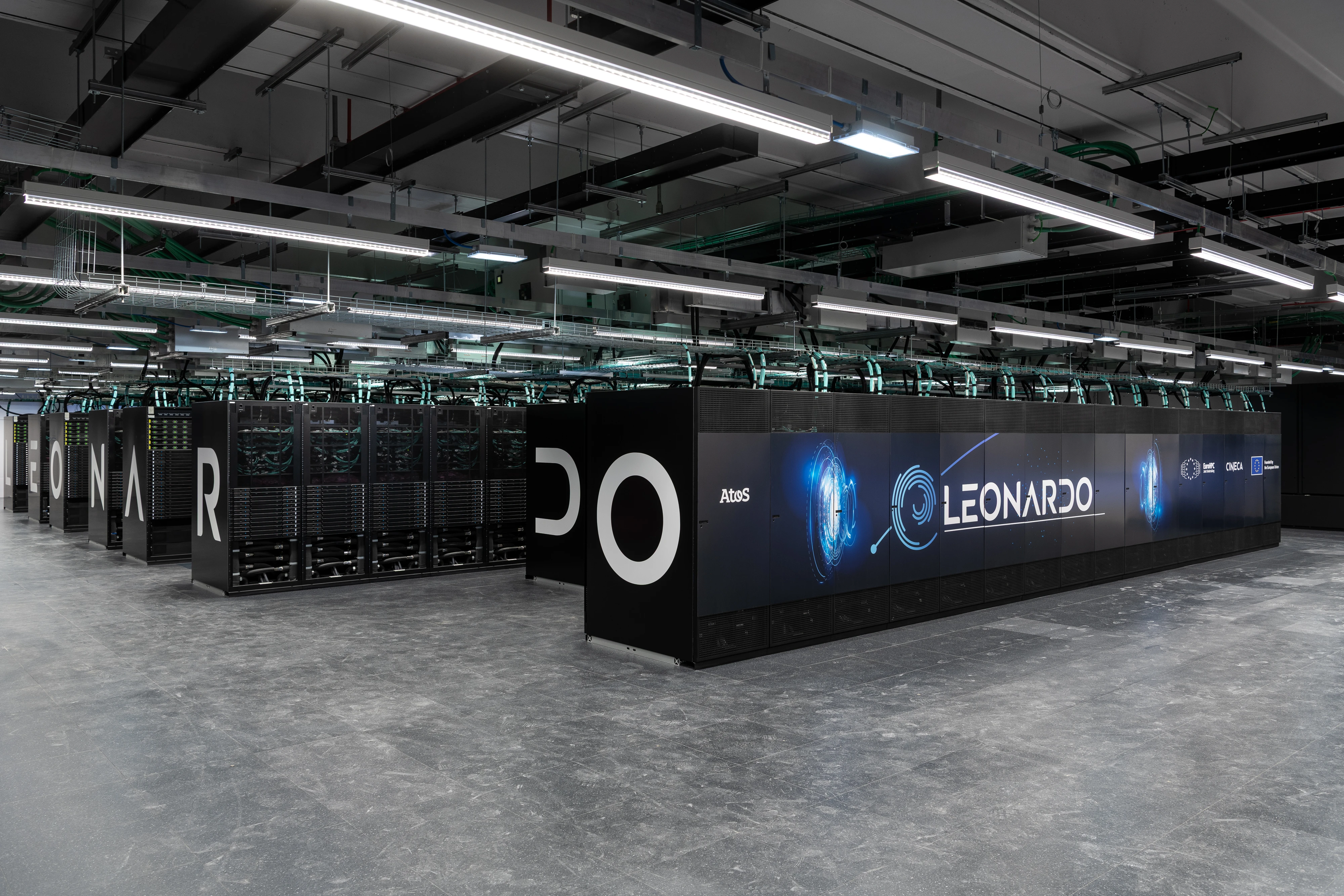
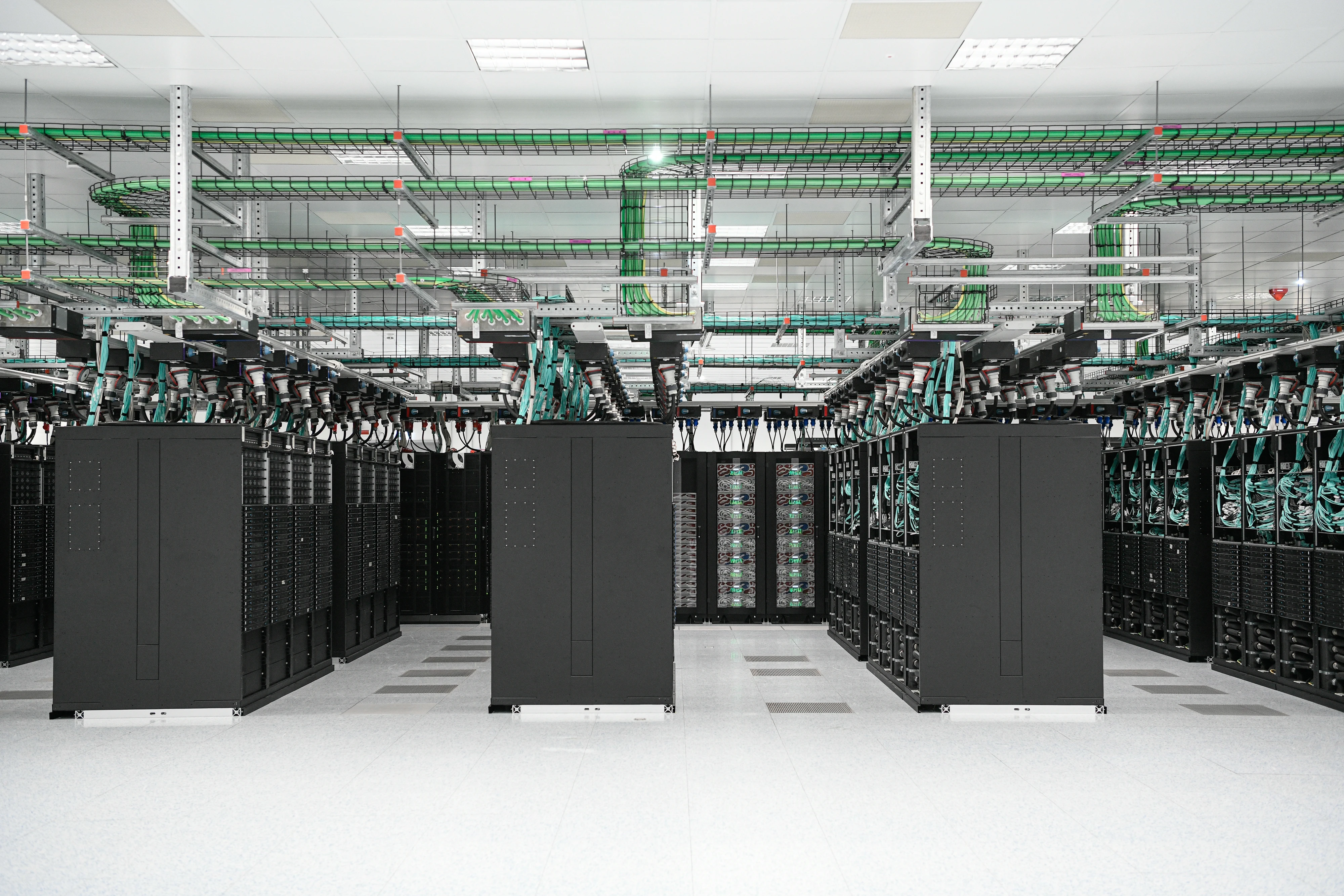
The European supercomputing centre Leonardo: rows of racks, contained aisles and continuous operation.
Because it must guarantee operational continuity, staff safety and constant reliability like every other subsystem of the infrastructure. Even brief interruptions or performance drops affect management and maintenance activities: a technician who has to replace a component in a dark aisle, or read a label by phone light, works more slowly and makes more mistakes. That is why the installation must be designed with integrated emergency, UPS-backed supply and instant switch-on.
Yes. 3F Filippi LED luminaires are designed for continuous operation, with declared L80 lifetime, qualified drivers and stable output over time. In data centers, however, the best strategy is not to keep the light on 24/7 but to have it available 24/7: per-aisle sensors switch it on instantly when a technician enters and off when they leave, so the installation is always ready while consuming and heating only for the minutes of actual presence.
Certainly. 3F Filippi solutions integrate with BMS systems and DCIM platforms via DALI and gateways, allowing centralised monitoring, control and optimisation: aisle switch-on from badge or work order, scenes for visits and scheduled maintenance, luminaire fault reporting on the same console as the plant alarms, per-hall energy readings.
Little in absolute terms, but it is one of the easiest items to eliminate. PUE relates total energy to that of the IT equipment alone: light enters the numerator twice, as direct consumption and as heat the cooling must remove. A permanently lit fluorescent installation in a 1,000 m² hall can weigh 10–15 kW between lighting and cooling; with high-efficiency LEDs and per-aisle sensors the same hall drops to an almost zero load for most of the day. It is a PUE improvement achievable without touching the IT infrastructure.
With linear luminaires mounted on the aisle centreline and a narrow-aisle optic, which sends light symmetrically onto both rack faces. The value to verify is the vertical illuminance one metre above the floor on the cabinet face — 500 lux is the industry reference — because that is where status LEDs, labels and port markings are read. In aisles with hot/cold containment, luminaires must be compact, installed inside the containment and out of the airflow, with high-temperature versions in the hot aisle.
By designing it so that maintenance is almost never needed. Long-life luminaires, drivers replaceable in place without dismounting the body, no lamps to change and remote diagnostics via DALI: interventions are scheduled in maintenance windows and do not require opening ceilings or bringing ladders above live cabinets. Versions with integrated emergency also avoid a second installation of emergency lamps to be maintained separately.
With the hall plan, the rack layout and the containment systems our technical department calculates the vertical illuminance on the faces, the choice of luminaires for hot and cold aisles, the emergency lighting and the BMS integration. No obligation.