Category

Industrial lighting

Industrial LED luminaires for factories, departments, warehouses and logistics areas: outputs up to 65,000 lumens, protection ratings up to IP66, components that work from −30 to +70 °C. Designed to last as long as the plant.

Request a lighting calculation

What makes industrial lighting different

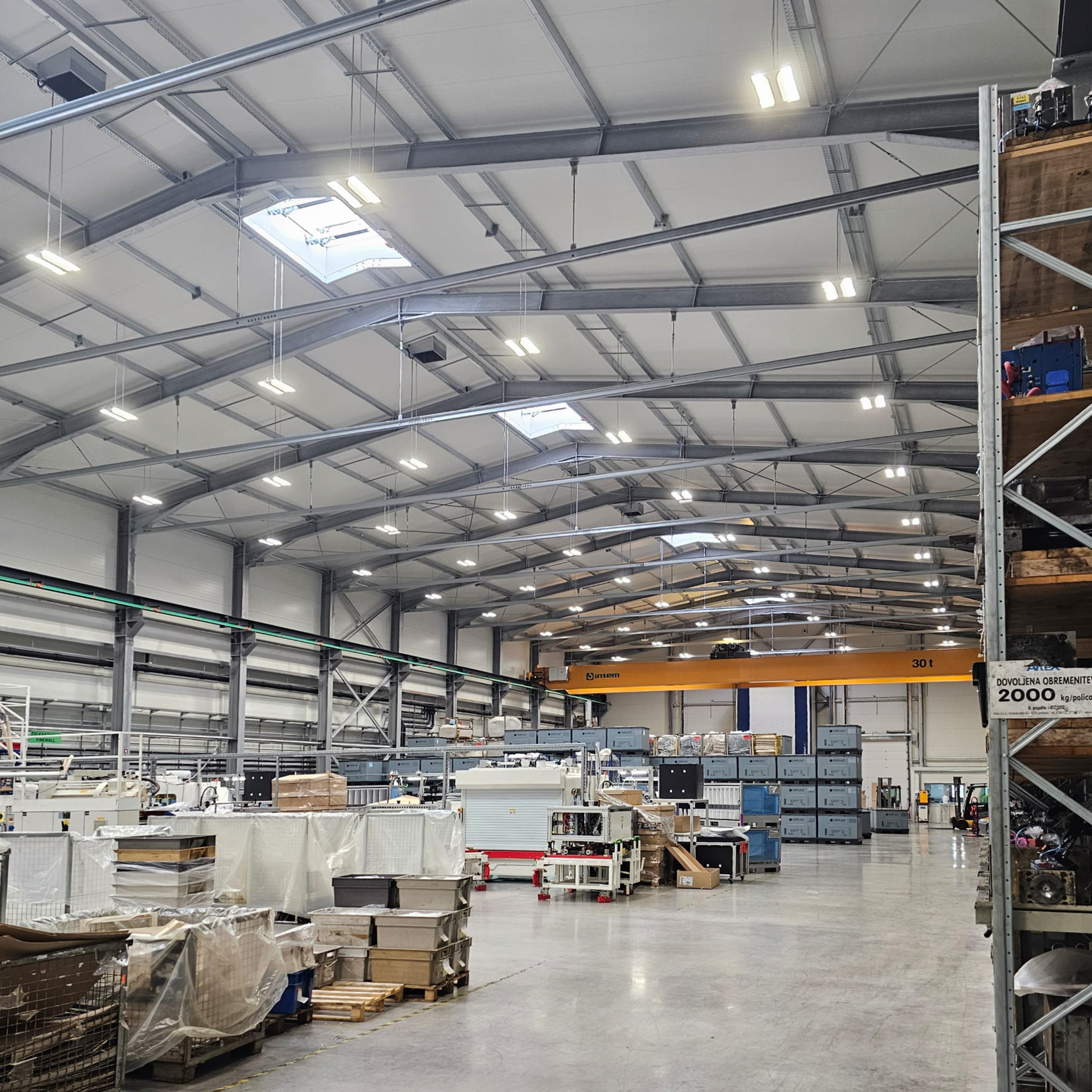
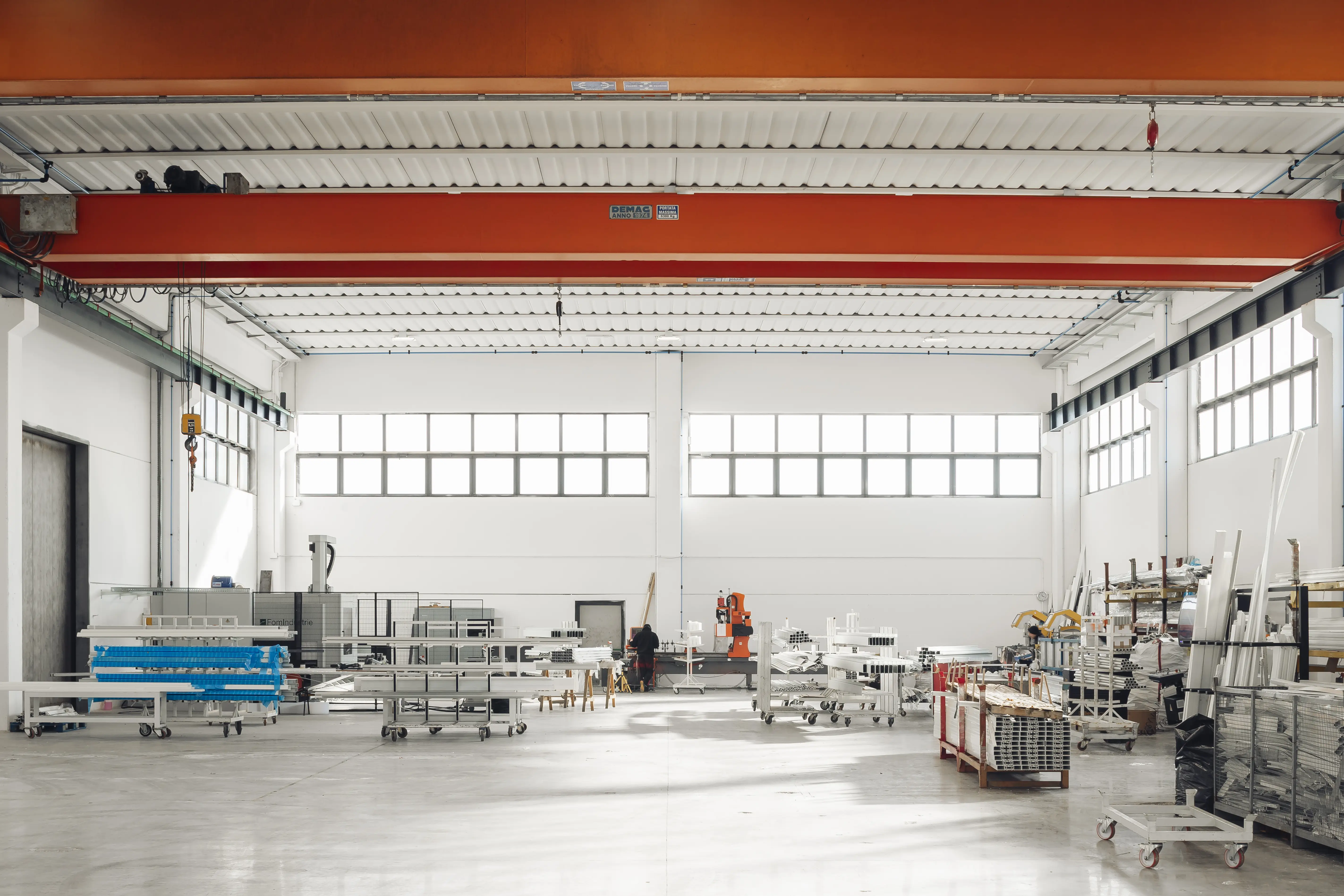
Three things, and none of them is the quantity of light. The first is height: in a factory the luminaires sit at 6, 10, 15 metres, where nobody climbs to clean or replace them — every job at height means a lift, two people and a line stopped. The second is the environment: dust, oil mist, vapours, humidity, impacts, temperatures from the cold store to the foundry. The third is continuity: many departments run three shifts, and a luminaire burning 6,000 hours a year ages in two years as much as an office one in five.

That is why good industrial lighting is recognised by things that do not matter in offices: the IP and IK ratings, the thermal management of the LED, the optic chosen for the height, the replaceability of components without dismounting the luminaire. And, as everywhere, by the values EN 12464-1 sets for each task.

This is the starting page. From here you go into detail: LED technology for industrial environments (efficiency, lifetime, replacing discharge lamps), design department by department in manufacturing plants, lighting for warehouses and logistics areas, harsh environments, data centers, smart lighting for industry and the relamping of existing installations.
Design values for industrial tasks

EN 12464-1 assigns each activity a maintained illuminance Ēm, a glare limit UGR and a minimum colour rendering. In industry the table is long because the activities are many: here are the most common ones, covering most factory floors. The rule is always the same — the finer the task, the more light it needs and the less glare is tolerated.

Activity or department Ēm (lux) Max UGR Min Ra
Rough assembly, heavy work 200 25 80
Medium assembly, welding 300 25 80
Medium machining (tolerances ≥ 0.1 mm) 300 22 80
Fine assembly, precision machining, grinding 500 19–22 80
Precision assembly, scribing, quality inspection 750 19 80
Continuously manned process plants 300 25 80
Dispatch, packing, handling 300 25 60
Warehouses and stores (100 lx if unmanned) 100–200 25 60
Internal traffic routes with vehicles 150 25 40

Two things the table does not say. The illuminance is on the task area, which in a factory is not the floor but the working plane — the bench, the spindle, the conveyor — and must be calculated there, at its height. And the standard also sets a cylindrical illuminance (at least 50 lux at 1.2 m above floor where people move) because in a department you need to see faces and obstacles, not only the workpiece: it is the value that narrow-beam high-bay luminaires risk missing, and the reason the calculation must use real photometry.

How to read a 3F Filippi industrial luminaire

The three data-sheet items that, in a factory, make the difference between an installation that lasts and one that gets replaced.

Source, output and thermal management

High-efficiency LEDs — above 150 lm/W in the latest ranges — with outputs from a few thousand up to 65,000 lumens per luminaire, colour rendering CRI ≥ 80 and colour tolerance SDCM 3. Colour temperatures from 4000 K, the most used in departments, to 5000–6500 K for inspection and precision benches.

The number that matters more than output is the junction temperature: the die-cast or extruded aluminium body is a heat sink, and its sizing decides whether the LED loses 10% of its output in 50,000 hours or 30% in 20,000. Versions for high ambient temperatures declare it explicitly.

Optics for the height, materials for the environment

The same wattage gives opposite results depending on the optic: wide beam for ceilings up to 6–7 metres with good uniformity, medium or narrow beam for 10–15 metres and beyond, where a wide beam would waste light on the high walls. PMMA or polycarbonate lenses, aluminium reflectors, tempered glass covers where chemical resistance and wash-downs are needed.

Die-cast or extruded painted aluminium bodies, or powder-coated steel sheet. Protection ratings from IP40 for clean departments to IP65–IP66 for dust and moisture, impact resistance up to IK10 where forklifts pass.

Standards, certification and control

Compliance with EN 12464-1 for work places, EN 60598-1 for luminaires up to 1000 V, EN 60598-2-22 for emergency versions. CE marking, third-party ENEC certification and ATEX versions for zones with potentially explosive atmospheres. Electrical and electronic components qualified for operation from −30 to +70 °C.

DALI and Bluetooth versions with presence and daylight sensors: in a factory with rooflights and discontinuous shifts, controls are worth a further 30–40% — the detail is on the smart lighting for industry page.

Four results a factory expects from its light

Not catalogue features: the effects a plant manager sees on the accounts and on safety.

65.000 lm output from a single luminaire for high mounting
−70% less energy than discharge and fluorescent lamps
IP66 protection rating against dust and water jets
−30 / +70 °C operating temperature of the electronic components

Robustness and lifetime in harsh environments

High-strength materials, high IP protection, electronics qualified for extreme temperature swings: the luminaire is designed for the environment it works in, not adapted afterwards. It is the difference between a declared service life and an achieved one.

Energy efficiency with payback in a few years

Up to 70% less energy than fluorescent and discharge systems, on installations that burn 4,000–6,000 hours a year: in industry the LED payback is among the shortest of any sector, and relamping is often the most profitable energy investment available.

Uniform, safe light on the operating areas

Optics and lenses designed for the real height avoid shadow zones between luminaire rows, abrupt contrasts between aisle and workstation, and glare for the forklift driver looking up. Correct uniformity and cylindrical illuminance are first of all a safety measure.

Minimal maintenance, even at height

Long LED lifetime and luminaires designed to be opened and serviced in place: drivers and modules replaceable without dismounting the body, quick connectors, accessories for installation on existing structures. Fewer lift jobs, fewer stopped lines.

Where it applies: industrial environments

  • Factories and production departments — illuminance on the working plane for every task, from heavy assembly to quality inspection. The guide by department.
  • Warehouses and racking — optics for narrow aisles, vertical illuminance on the high shelves, sensors for rarely visited zones. Read more.
  • Logistics areas, docks, picking — goods flows, vehicles in motion, round-the-clock shifts. Read more.
  • Workshops and technical laboratories — colour rendering and no stroboscopic effect on rotating machinery.
  • High- or low-temperature environments — from the cold store to the foundry: qualified components and dedicated thermal management.
  • Environments with dust, moisture, chemicals — IP66, corrosion-resistant materials, ATEX versions. The harsh-environments guide.
  • Loading bays, canopies, yards — outdoor and semi-outdoor luminaires on the same control platform as indoors.
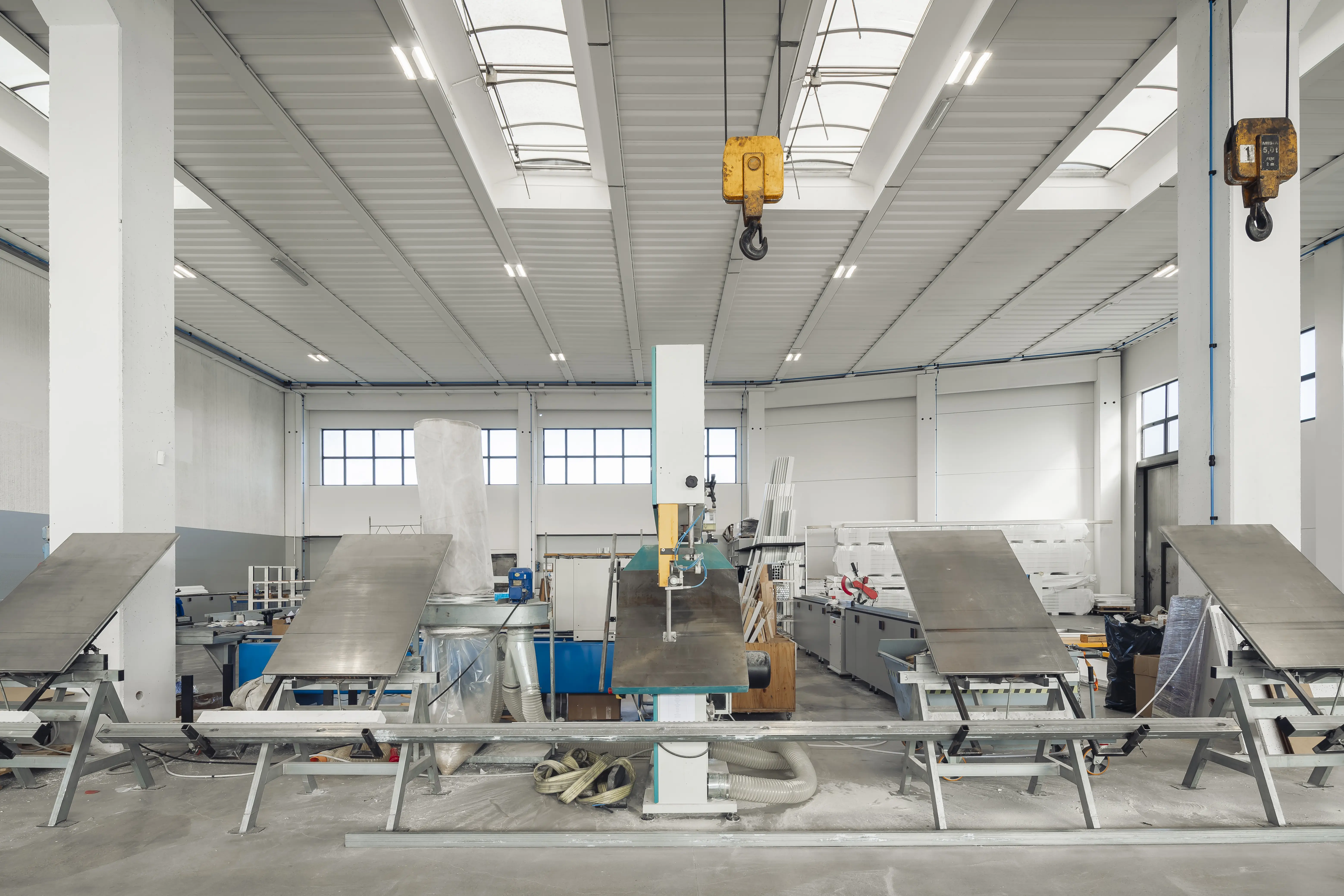
Industrial production department lit with high-efficiency linear LED luminaires mounted at height
MY WOOD: continuous LED lines above the woodworking, with the uniformity required by quality control.

3F Filippi ranges for industry

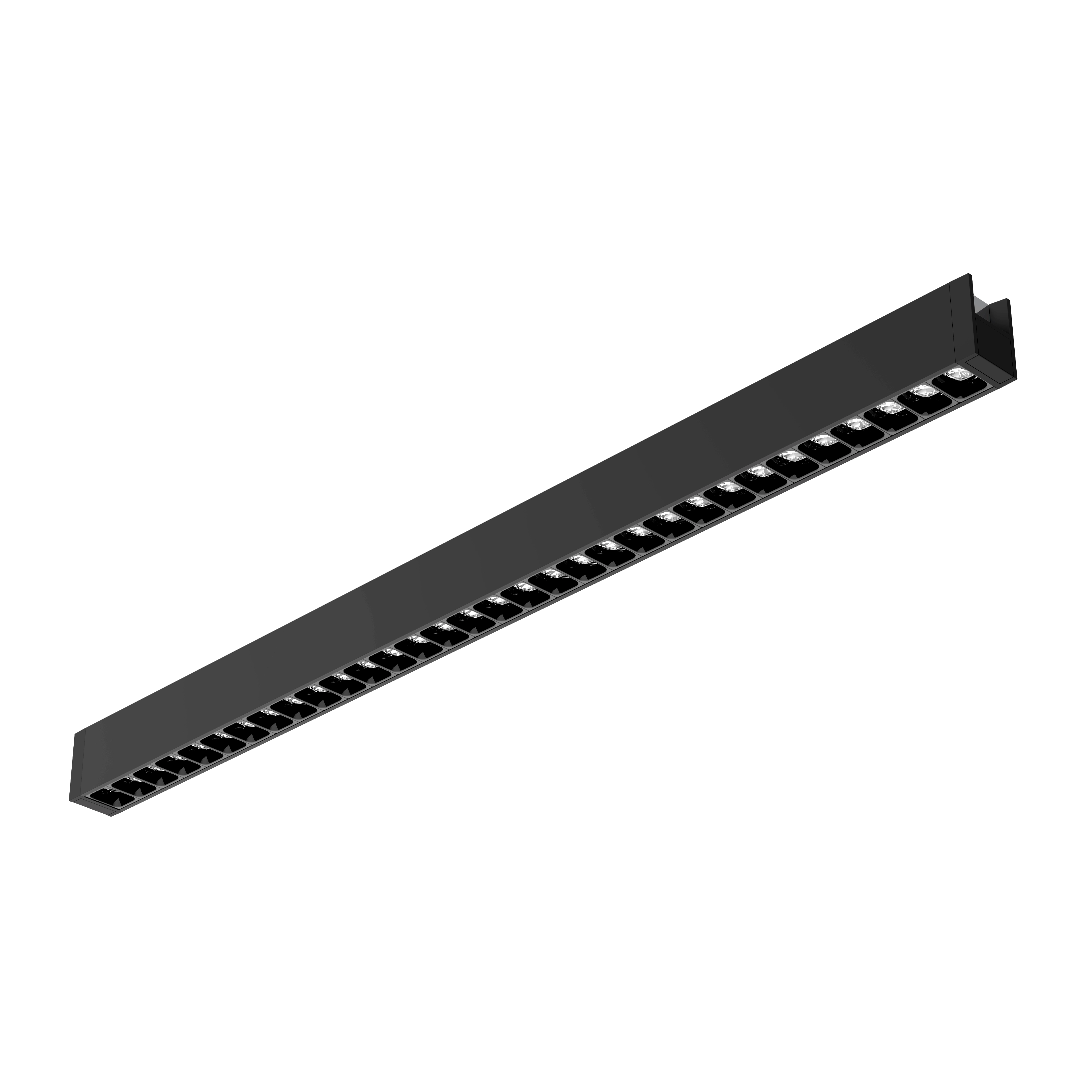
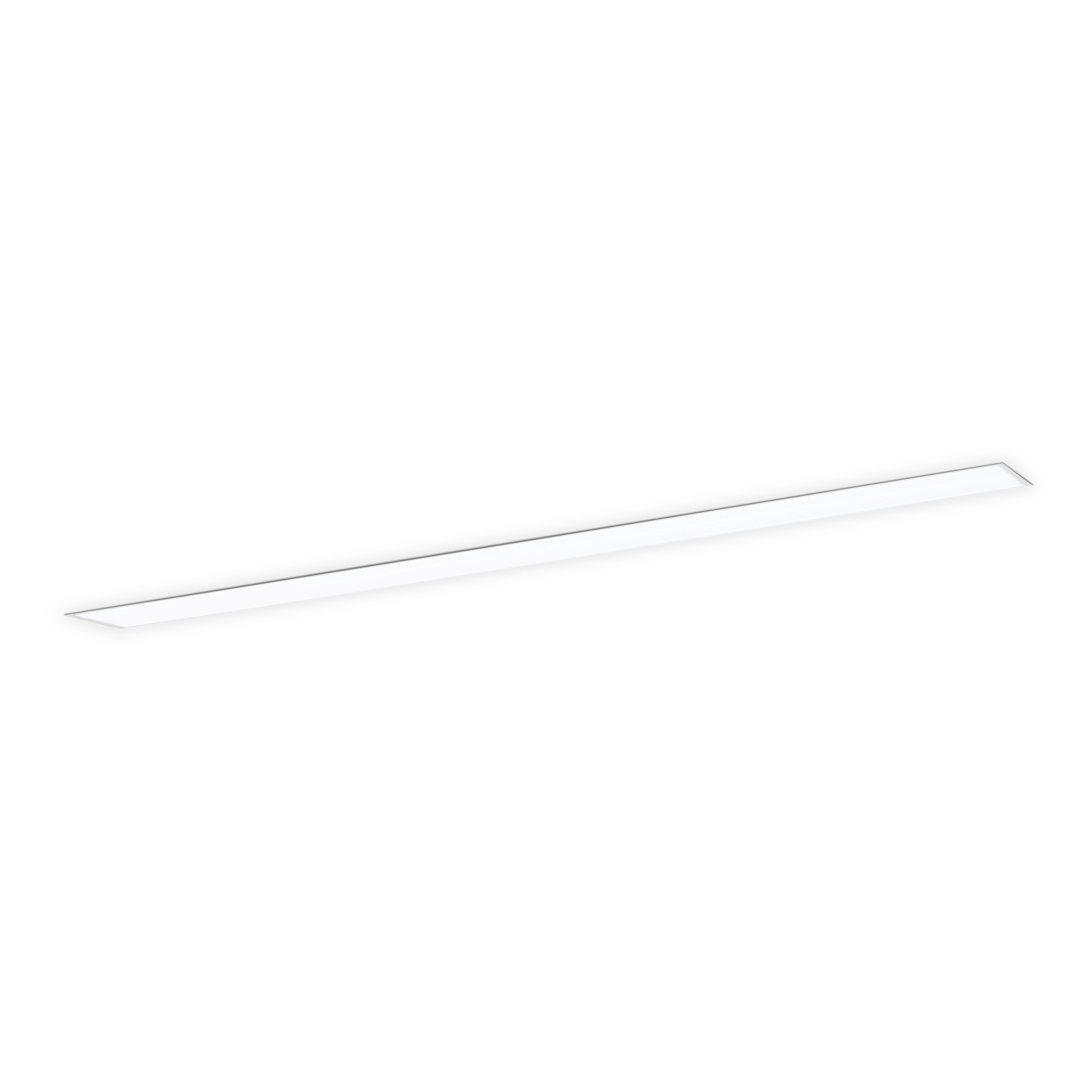
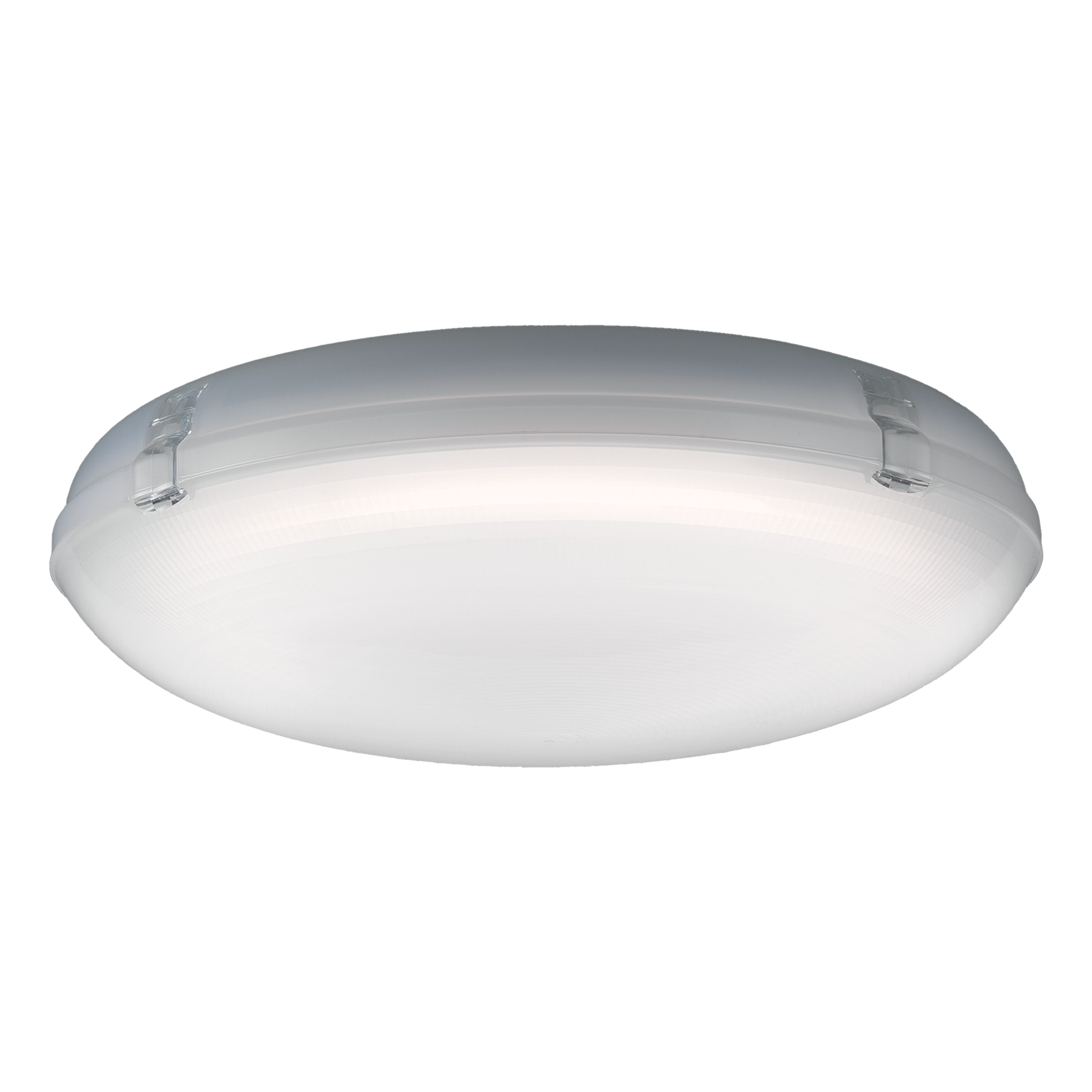
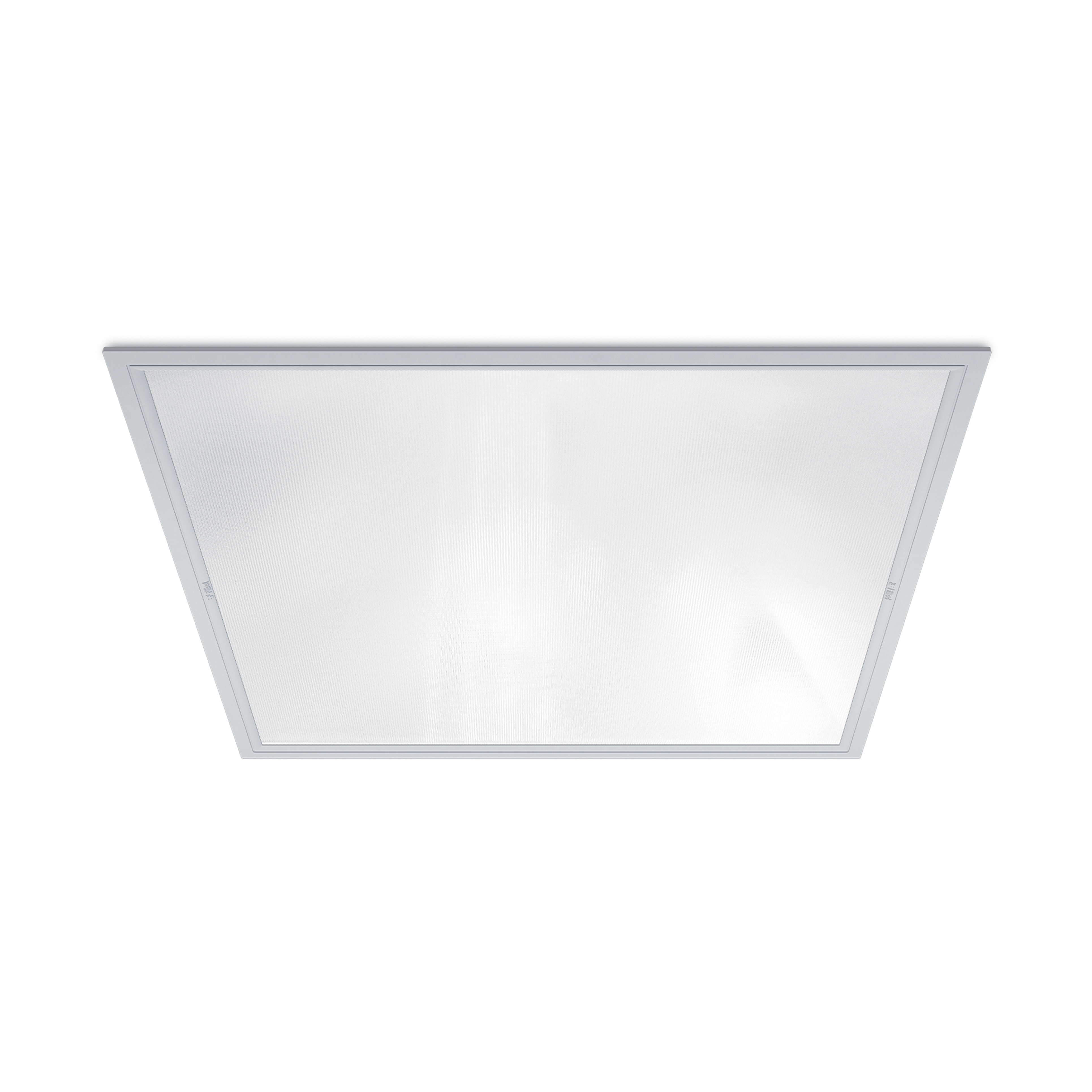
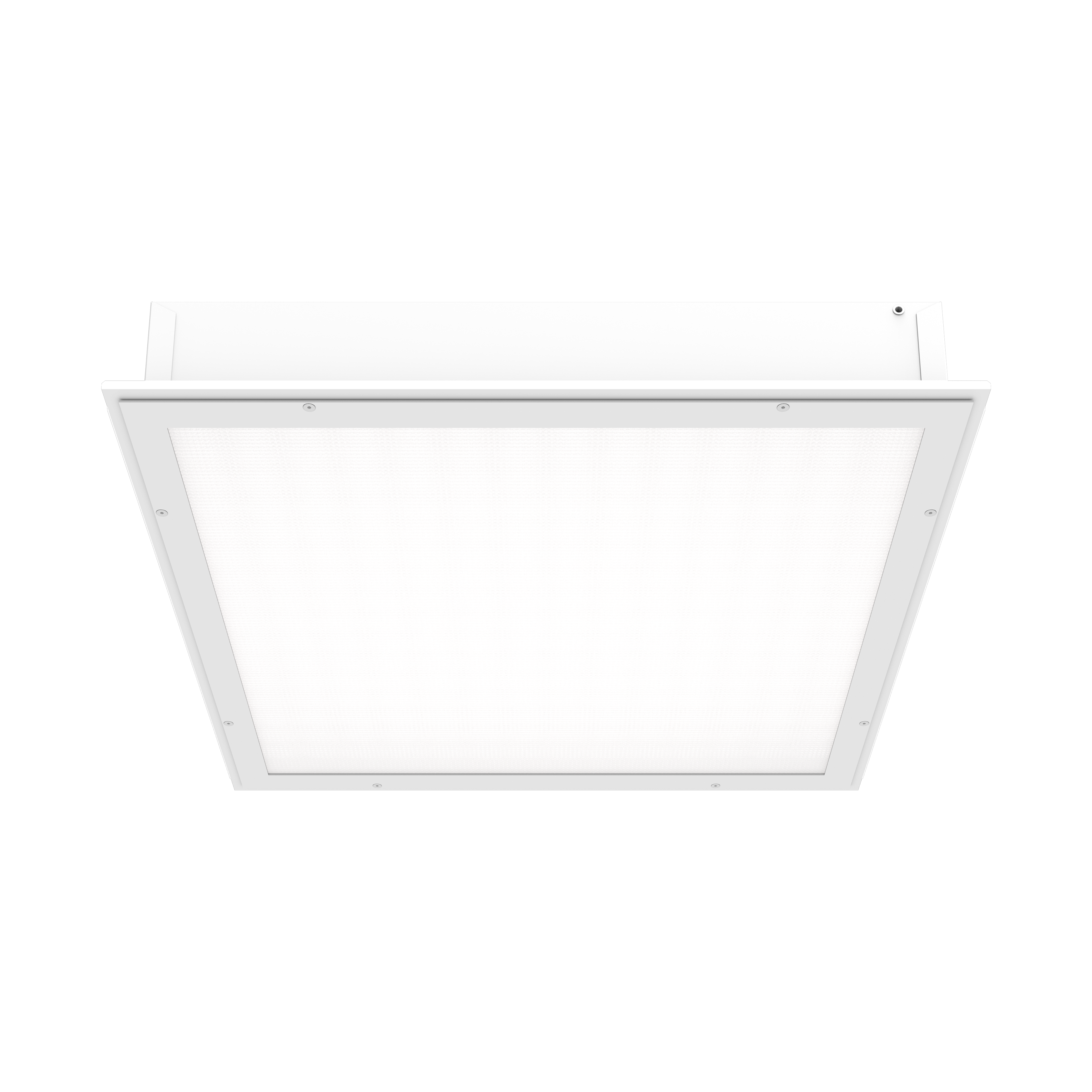
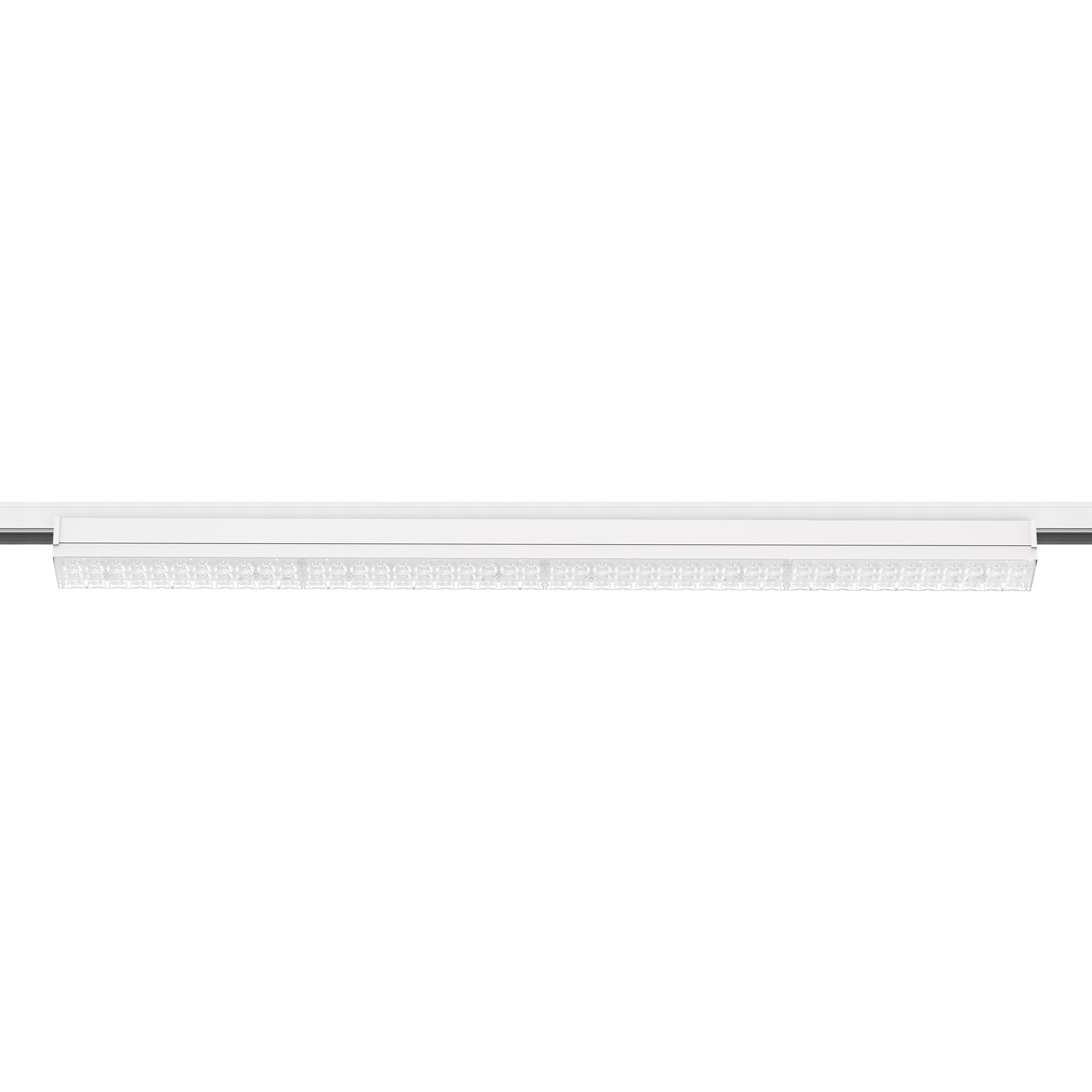
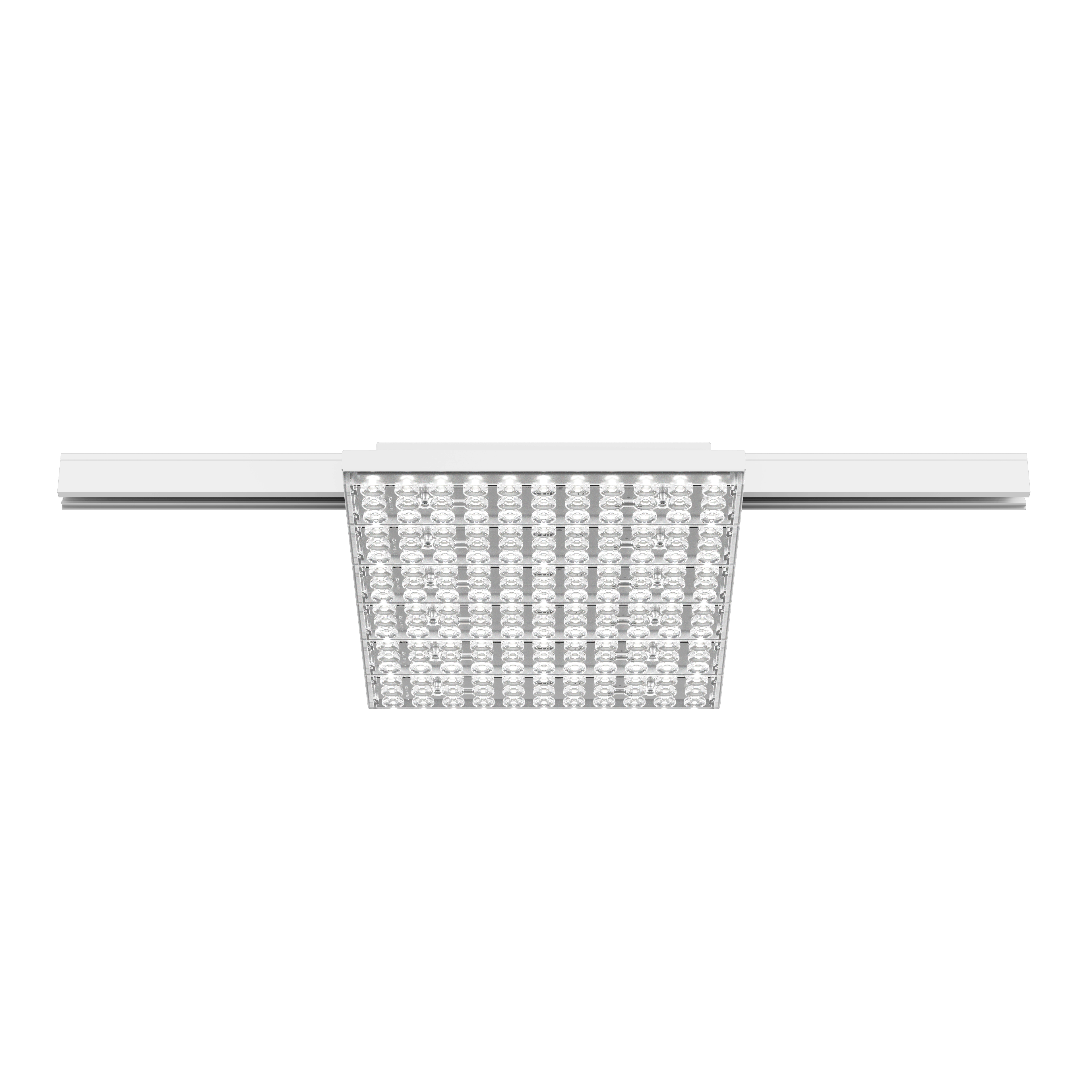
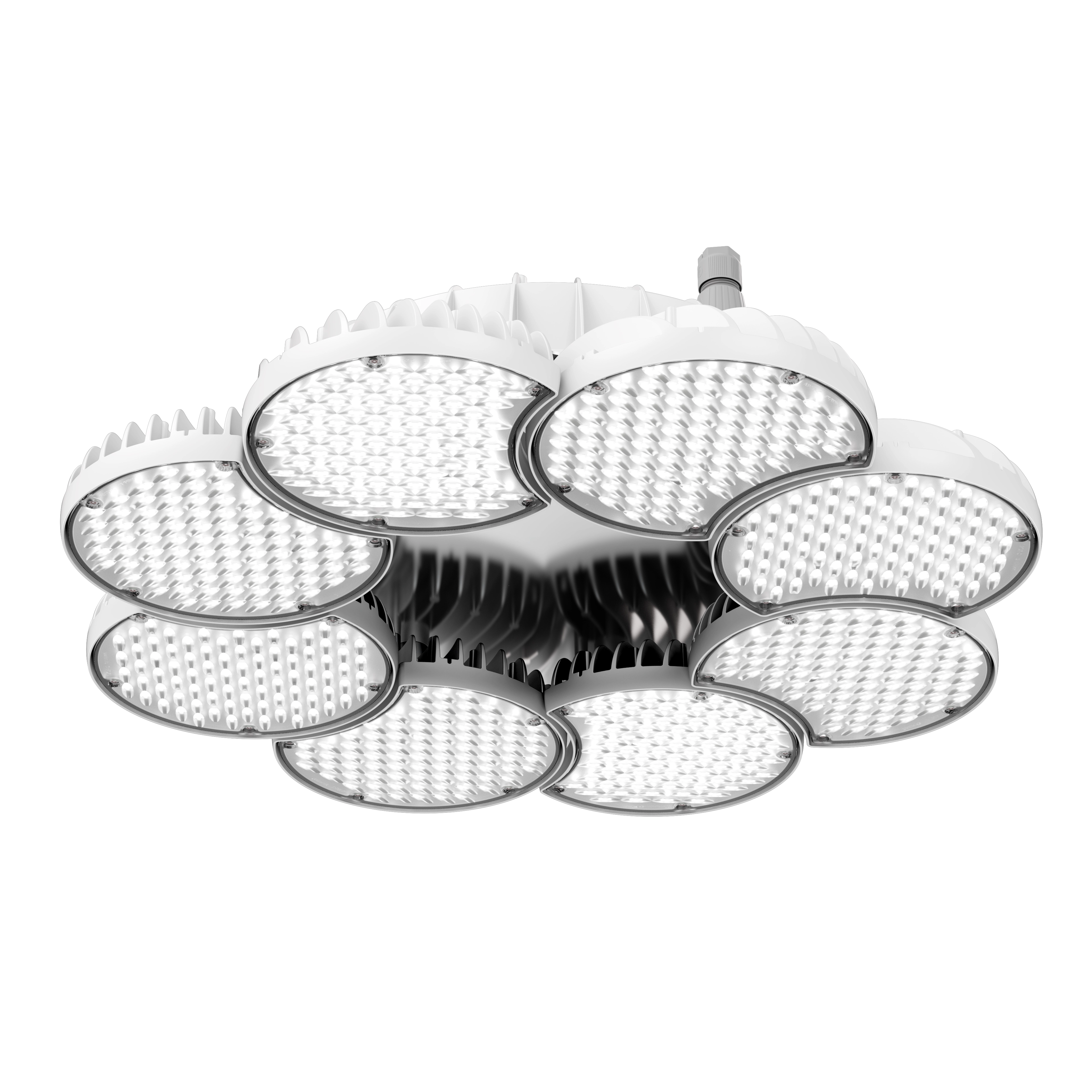
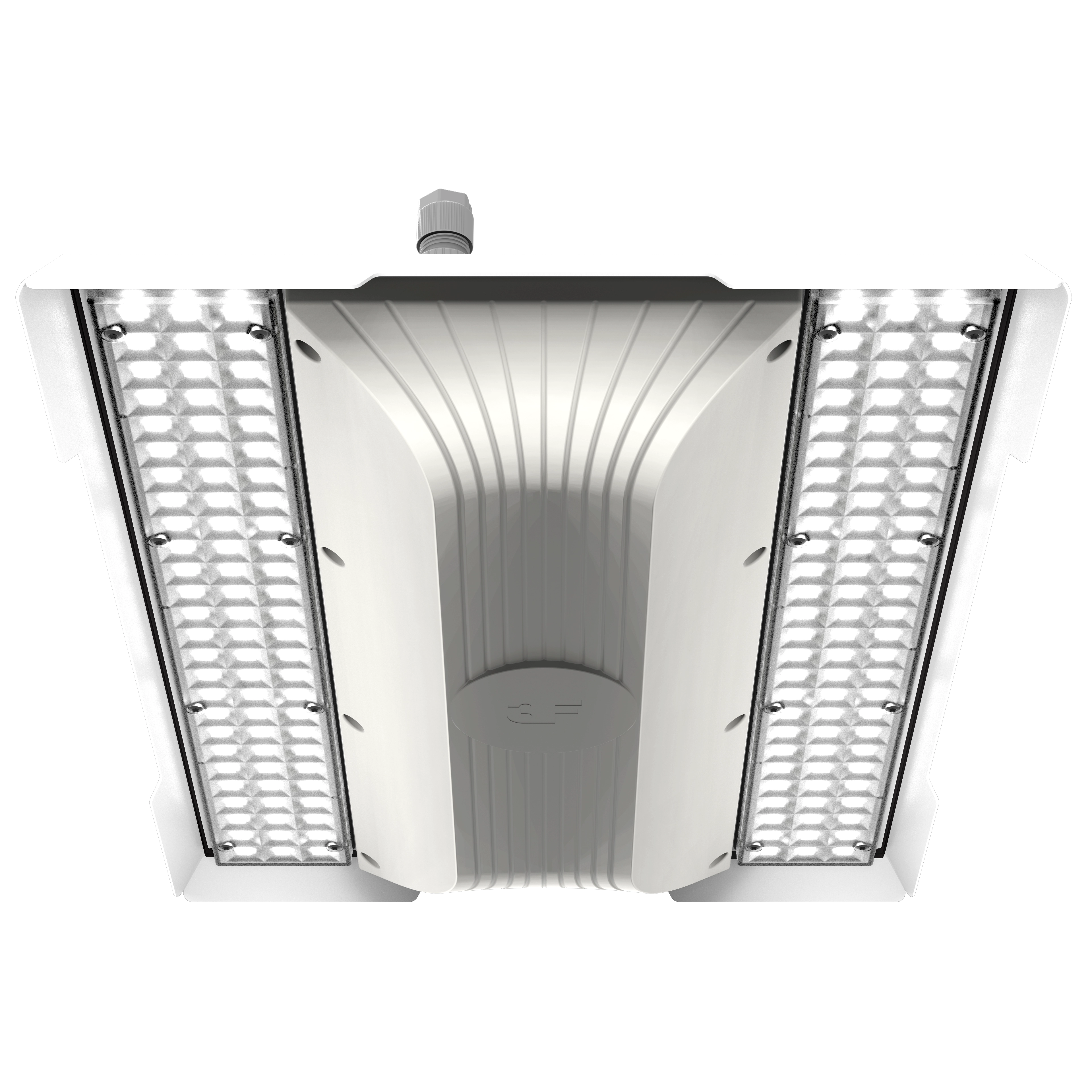
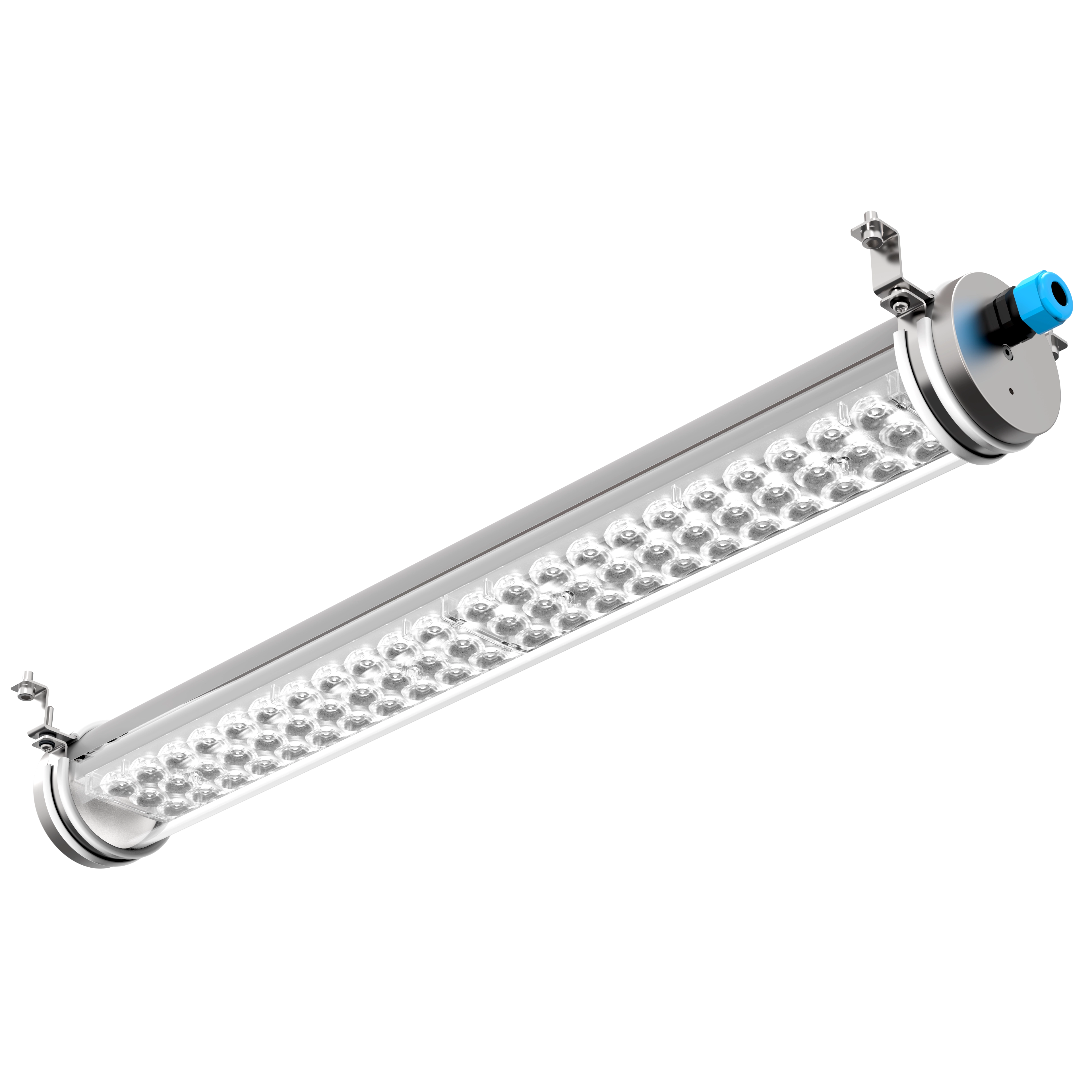
Weatherproof luminaires, linear fittings for high bays, industrial suspensions, track systems and the retrofit families for one-to-one replacement. Every range has its page with photometry, IES and Eulumdat files, IP/IK ratings and operating temperatures.

Browse all ranges

Frequently asked questions about industrial lighting

What are the main characteristics of efficient industrial lighting?

It must provide high luminous flux with an optic suited to the mounting height, uniformity on the working plane, resistance to environmental conditions — dust, moisture, impacts, temperature — and low energy consumption. 3F Filippi luminaires meet all these requirements, with efficacies above 150 lm/W, outputs up to 65,000 lumens and protection ratings up to IP66 and IK10.

Is 3F Filippi lighting suitable for harsh environments or high temperature swings?

Yes. The industrial range includes versions with very high IP and IK ratings and luminaires built with electrical and electronic components that withstand temperature swings between −30 °C and +70 °C: suitable for hot production departments, foundries and cold stores. For the most severe environments — frequent wash-downs, chemicals, explosive atmospheres — see the dedicated harsh-environments guide.

Can industrial lighting be integrated with automatic or smart controls?

Certainly. 3F Filippi LED luminaires are compatible with DALI management systems, presence and daylight sensors and control via Bluetooth or network, to optimise consumption and improve safety. In a factory with rooflights and variable-occupancy departments, controls are worth a further 30–40% saving on top of LED: the figures are on the smart lighting for industry page.

How do you choose the luminaire according to mounting height?

By the optic, before the wattage. Up to 6–7 metres a wide beam gives good uniformity with medium-output luminaires; between 8 and 12 metres you need medium beams and 15,000–30,000 lumens; above 12–15 metres narrow beams and outputs up to 65,000 lumens, otherwise the light is lost on the high walls. The spacing between luminaires derives from the ratio to the height to guarantee the required uniformity: the lighting calculation sets it, not a generic rule.

Which IP and IK ratings are needed in a factory?

It depends on the environment, not the sector. In a clean, dry department IP40 is enough; where there is fine dust or moisture you need IP65 or IP66; with pressure washing you go to IP66–IP69. For impacts, IK08 is the minimum where forklifts and goods pass, IK10 in areas with intense handling or within reach. A rating higher than necessary costs more and adds nothing: the choice is made zone by zone.

Which colour temperature should a production department use?

The reference is 4000 K, the neutral white that supports attention without fatigue. In quality-inspection departments, laboratories and precision work you go up to 5000 K, with CRI ≥ 90 where colours and finishes are assessed. Very cool temperatures (6500 K) make sense only in specific cases, and warm ones (3000 K) stay for offices and rest areas inside the plant.

Let us design the light for your plant

With floor plan, heights and the use of each department our technical department returns the lighting calculation with illuminance, uniformity and UGR verification, the choice of optics for each height and an energy estimate. No obligation.