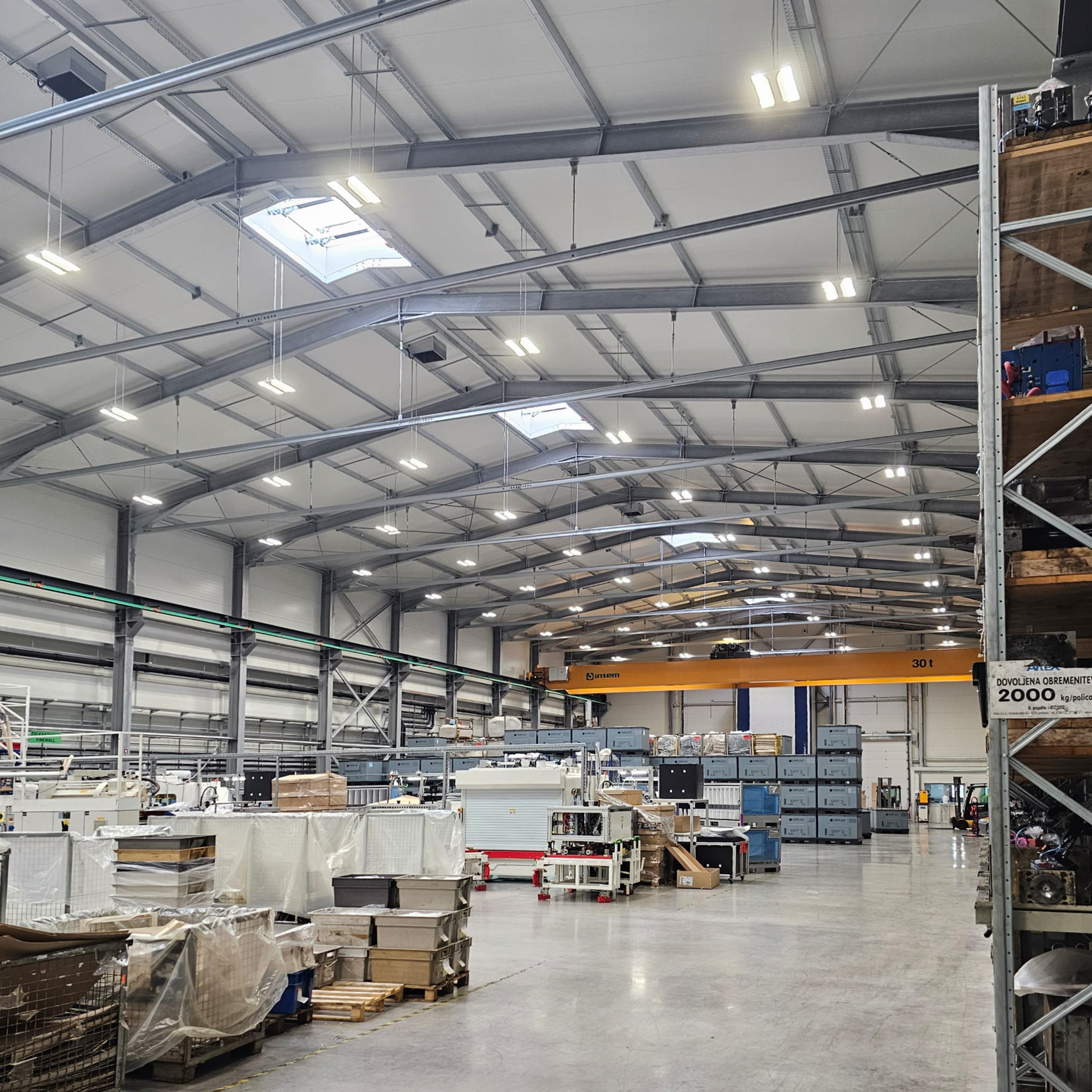
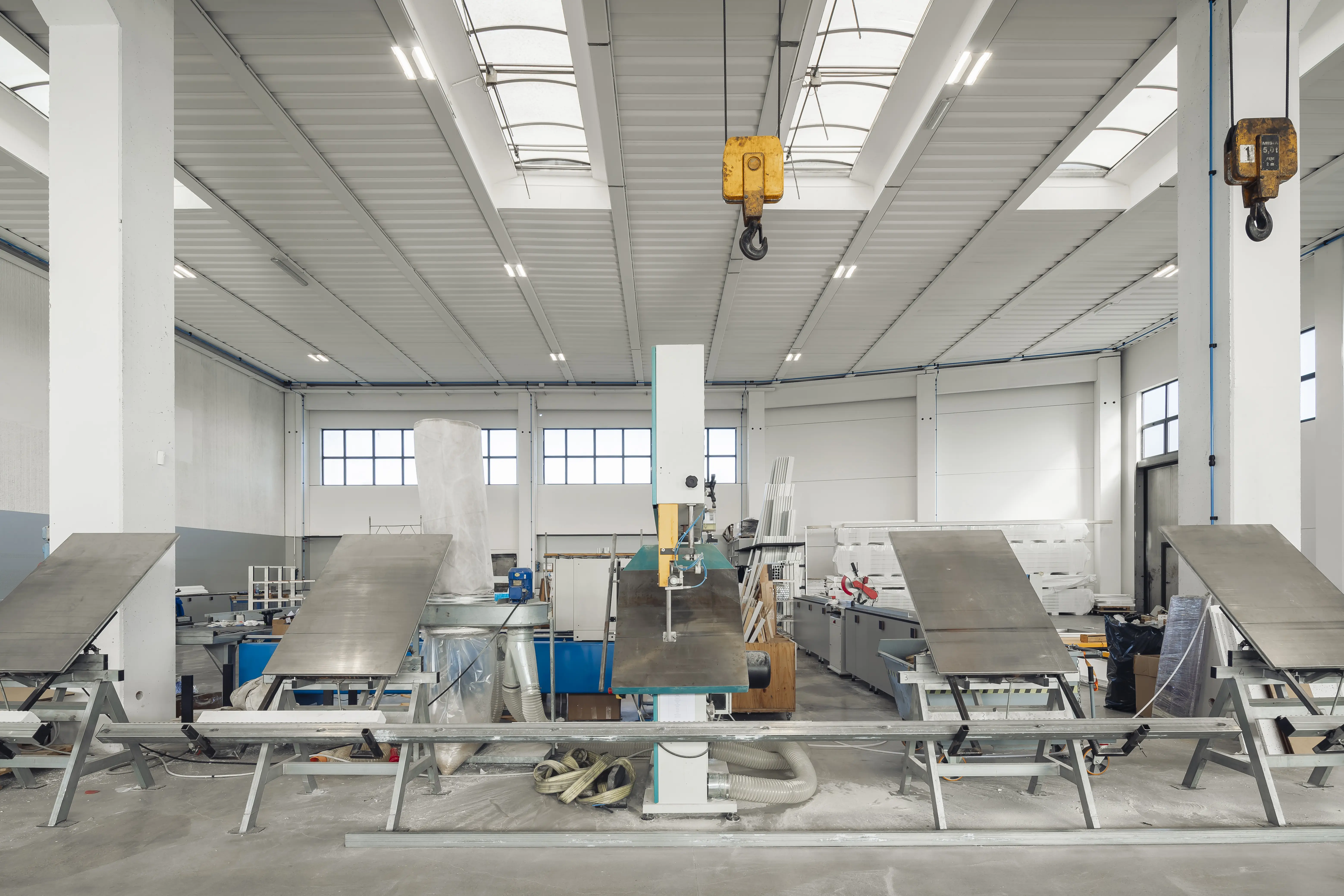
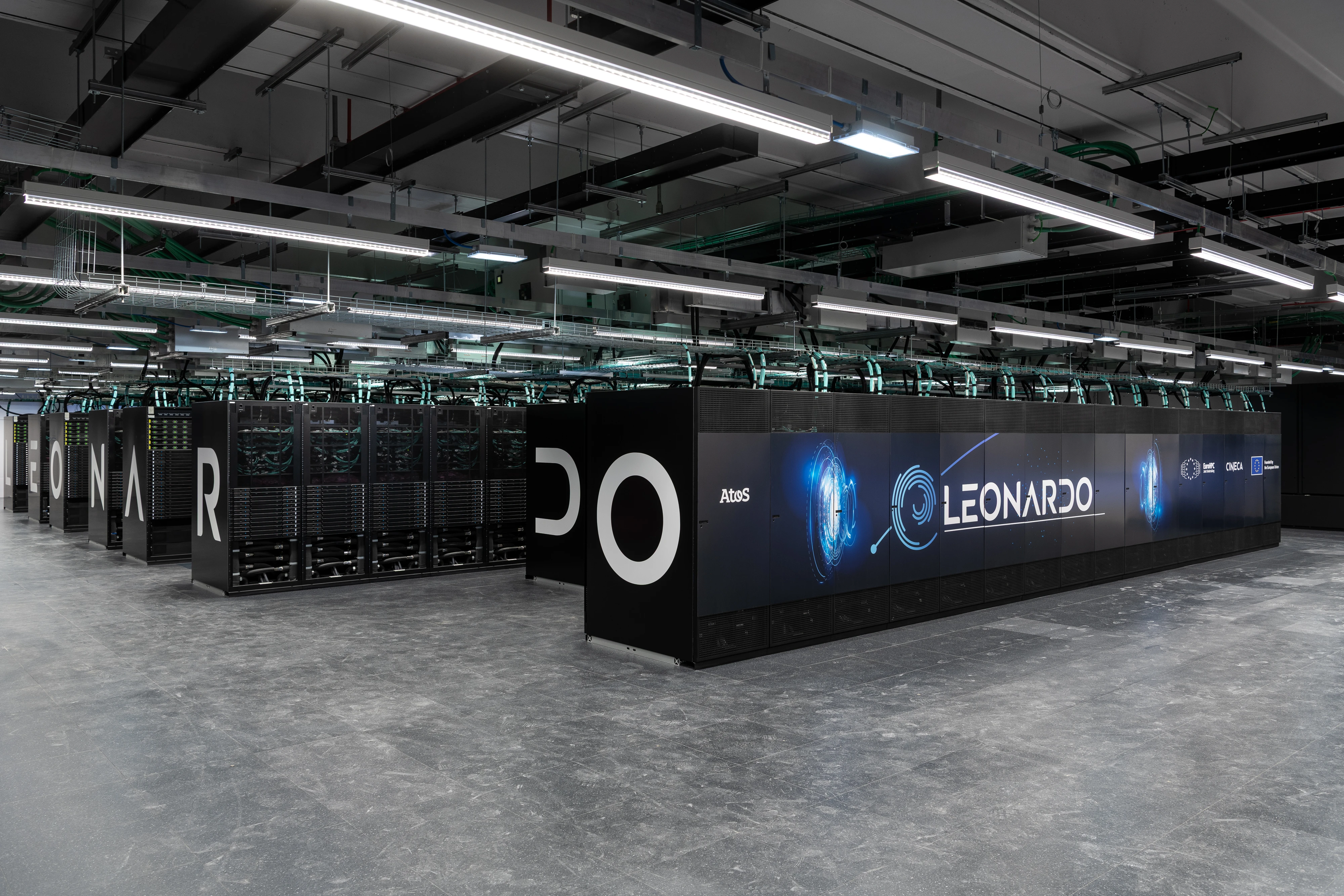
The most common mistake in manufacturing plants is lighting them as if they were a single space: the same luminaire grid, the same wattage, the same colour temperature from the raw-materials store to the test bench. The result is a quality-control department with half the light it needs and a warehouse with twice as much, a consumption nobody decided on, and operators bringing desk lamps from home.
A good design starts instead from the production flow and assigns each stage its visual task: how fine the detail to be seen, how much contrast it has with the background, how long the activity lasts, whether there is machinery in motion. From that follow the illuminance, the glare limit, the colour rendering and — often forgotten — the requirement that the light must not flicker on rotating parts. It is the method of EN 12464-1, which indeed has no «industry» entry but dozens of entries by task.
This page follows that path, stage by stage. The fundamentals of industrial lighting — heights, protection ratings, optics — and industrial LED technology are covered on their own pages; for storage and dispatch there is the guide to lighting for logistics.
The typical stages of a manufacturing plant in the order goods pass through them, with the values EN 12464-1 assigns to each. Illuminance is calculated on the real working plane — the bench, the spindle, the conveyor — not on the floor.
| Stage / department | Ēm (lux) | Max UGR | Min Ra |
|---|---|---|---|
| Goods-in and raw-materials store | 200 | 25 | 60 |
| Rough machining, moulding, forging | 200–300 | 25 | 80 |
| Medium machining (tolerances ≥ 0.1 mm) | 300 | 22 | 80 |
| Precision machining, grinding (tolerances < 0.1 mm) | 500 | 19 | 80 |
| Welding | 300 | 25 | 80 |
| Medium / fine / precision assembly | 300 / 500 / 750 | 25 / 22 / 19 | 80 |
| Painting and finish inspection | 750 | 22 | 90 |
| Quality control, scribing, testing | 750–1000 | 19 | 80–90 |
| Packing and dispatch | 300 | 25 | 60 |
Two details decide the quality of the design. The first is localised lighting: testing at 1000 lux does not require the whole department at 1000 lux, but dedicated luminaires on the inspection stations on top of the general installation (300–500 lux), with a ratio between the two levels no greater than 1:3 to avoid tiring contrasts. The second is the direction of light on machine tools: a luminaire aligned with the machine axis prevents the hand or the tool from casting a shadow on the workpiece, and that is a positioning choice no extra lux can compensate for.
Three families of requirements that change along the production line, and how 3F Filippi ranges cover them.
Lathes, mills, presses and conveyors impose two things: no stroboscopic effect — a driver with residual ripple can make a rotating part look stationary — and resistance to vibration, oil mist and metal dust. 3F Filippi luminaires use drivers compliant with the Ecodesign limits on flicker and stroboscopic effect (PstLM ≤ 1, SVM ≤ 0.4) and die-cast aluminium or painted steel bodies rated IP65–IP66 where needed.
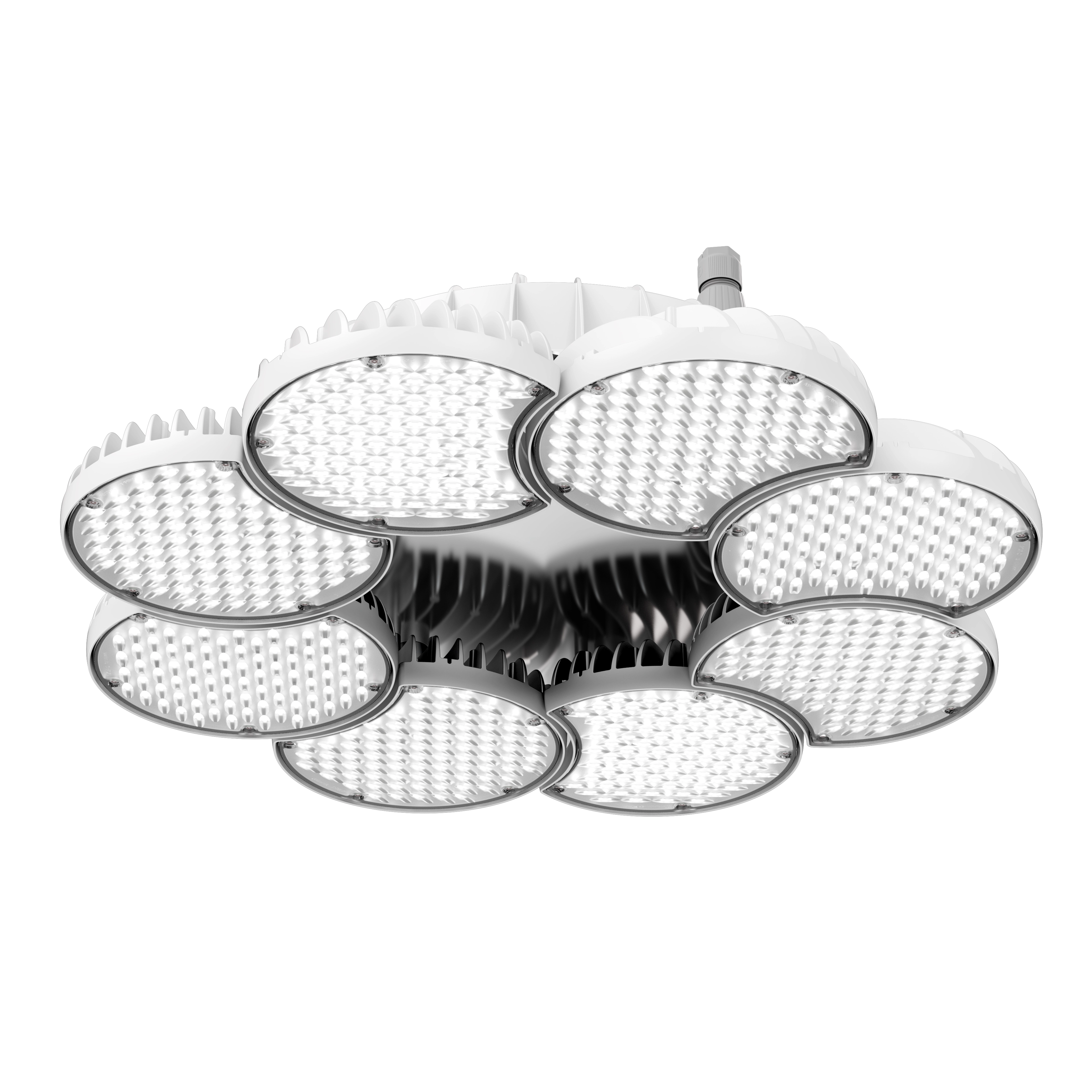
Outputs up to 65,000 lumens and optics for heights from 4 to over 15 metres: the same range covers the high-ceiling moulding shop and the 5-metre workshop.
Here light is a measuring instrument. Colour rendering CRI ≥ 90 in paint shops and wherever finishes are judged, 5000 K colour temperature for quality control, microprismatic or louvred optics to keep UGR ≤ 19 at stations where the operator looks at the part for hours. Colour tolerance SDCM 3, so two adjacent stations show the same colour.
For paint booths and areas with solvents, high-protection versions and — where the atmosphere requires it — ATEX-certified luminaires.
A three-shift plant burns its lights 6,000 hours a year: components qualified from −30 to +70 °C, declared L80 lifetime and drivers replaceable in place reduce maintenance at height to a few visits a year. Compliance with EN 12464-1, EN 60598-1 and EN 60598-2-22 for emergency versions on escape routes, CE and ENEC marking.
DALI and sensor versions: a department on discontinuous shifts and a store crossed ten times a day do not need the same light on all the time — the smart lighting for industry page quantifies the saving.
The four effects production management measures after the intervention.
Quality control that really sees the defect, assembly that tells two same-colour wires apart, painting that recognises a shade: the right light on the task reduces non-conformities and customer returns. It is the hardest benefit to put in a quotation and the first the quality manager notices.
No stroboscopic effect on rotating parts, shadows eliminated on the machine intervention zones, correct cylindrical illuminance in the aisles where forklifts and people pass. Uniformity and the absence of dark zones between departments are first of all accident prevention.
Lighting each department to the level it needs — and not everything to the level of the most demanding one — cuts consumption even before counting LED efficiency, which alone is worth up to 70% against discharge lamps. With sensors in intermittently occupied departments the overall saving exceeds 80%.
Long service life, components replaceable without dismounting the luminaire, instant switch-on after a mains interruption: light stops being a cause of downtime. And the relamping of an existing installation is done department by department, off-shift, without interrupting the line.
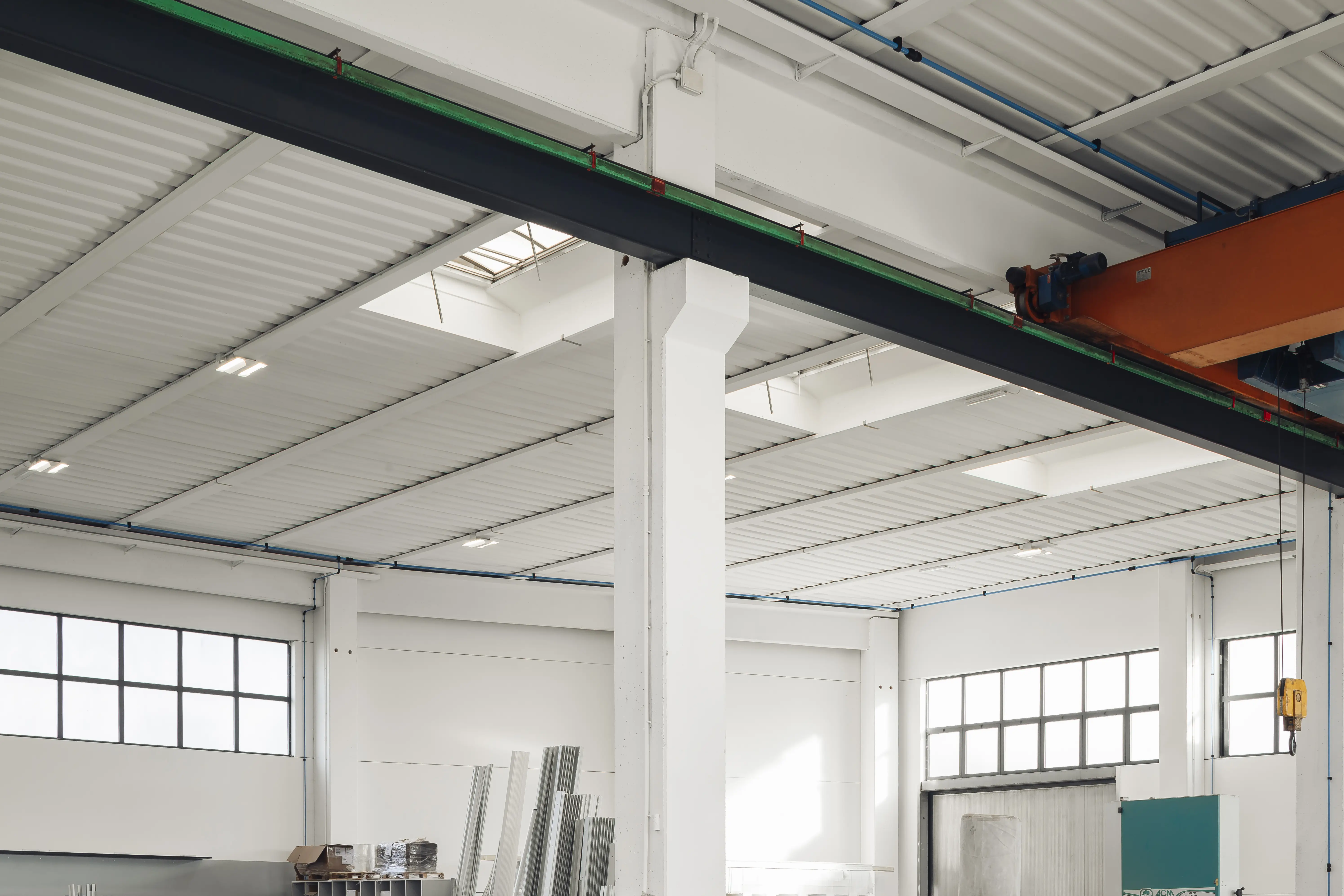
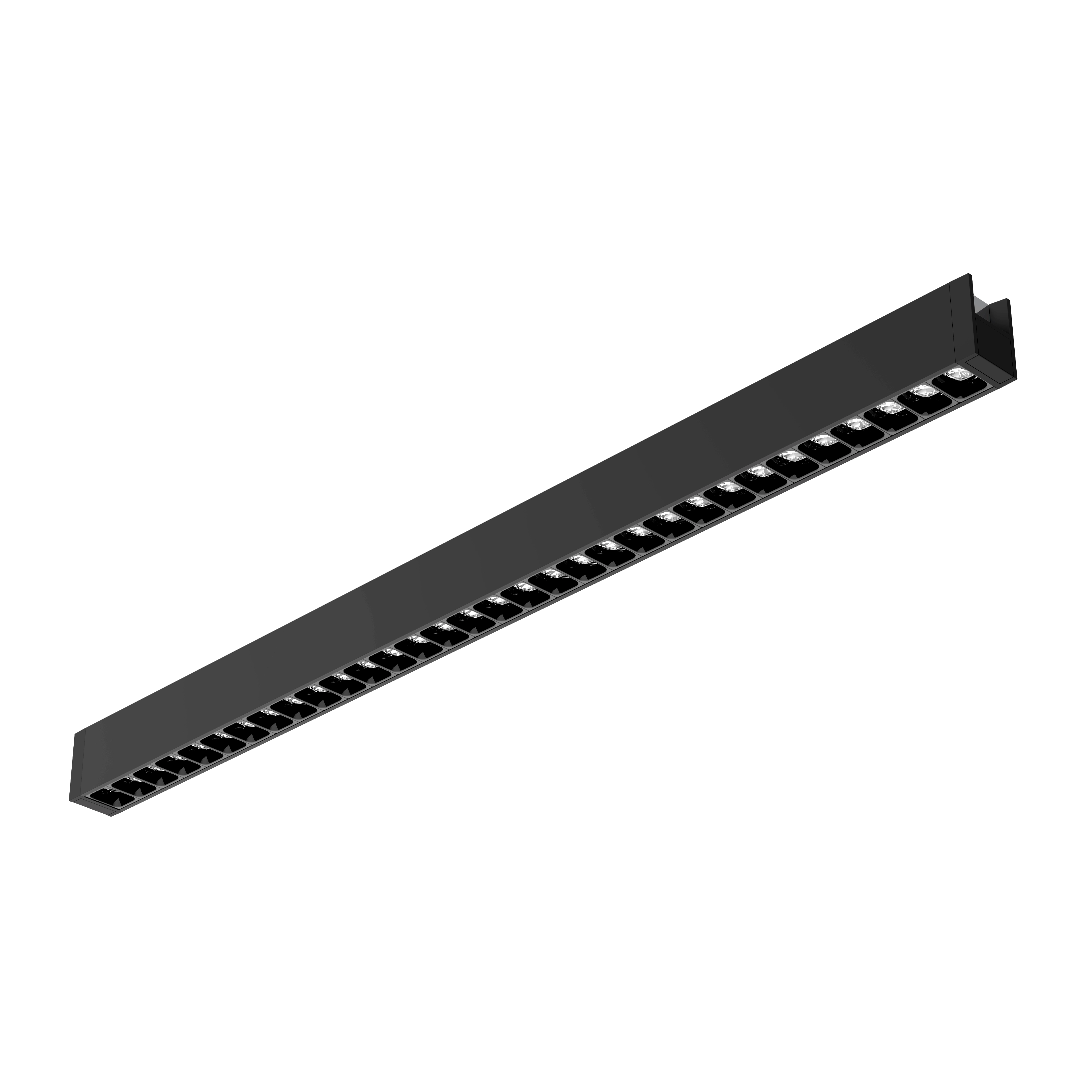
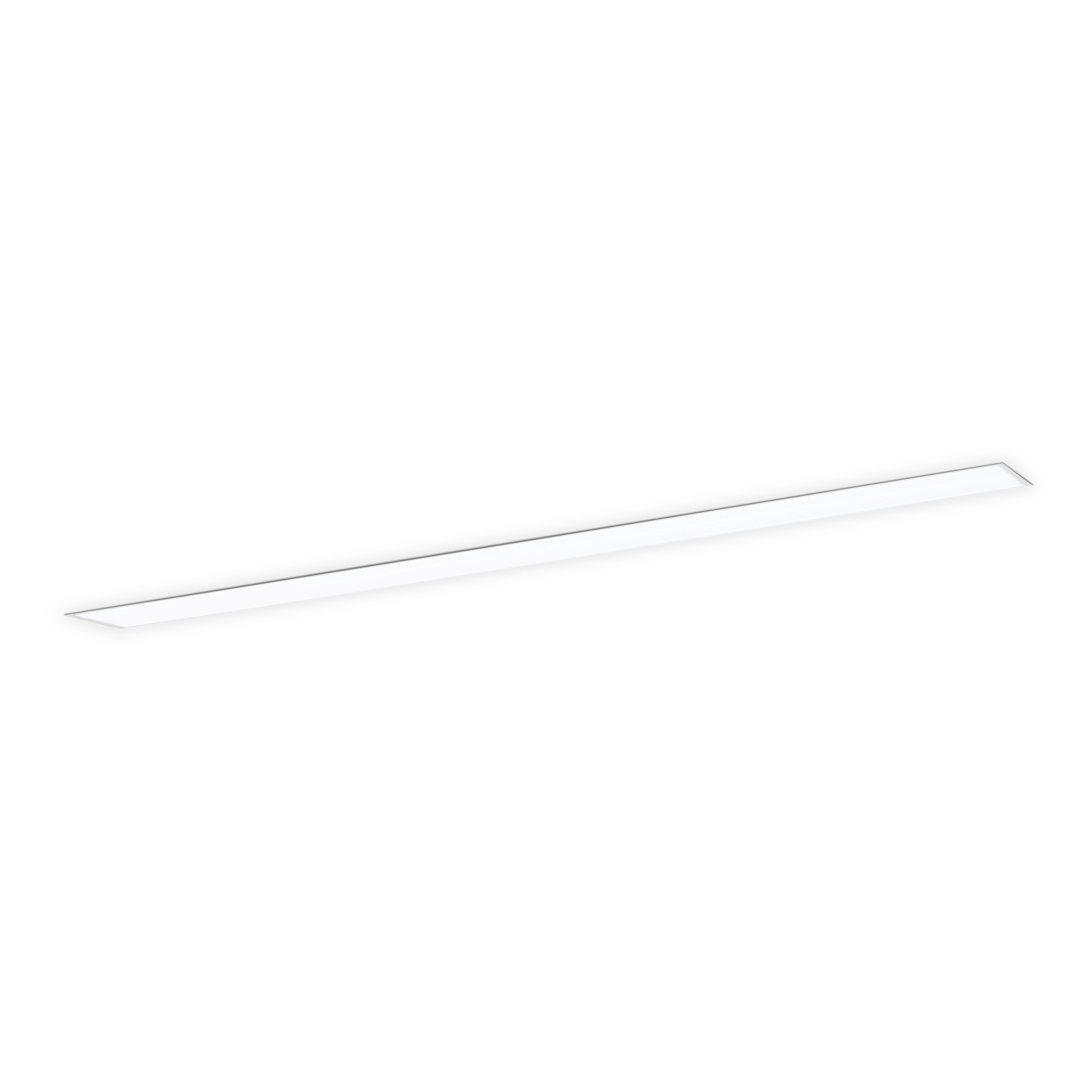
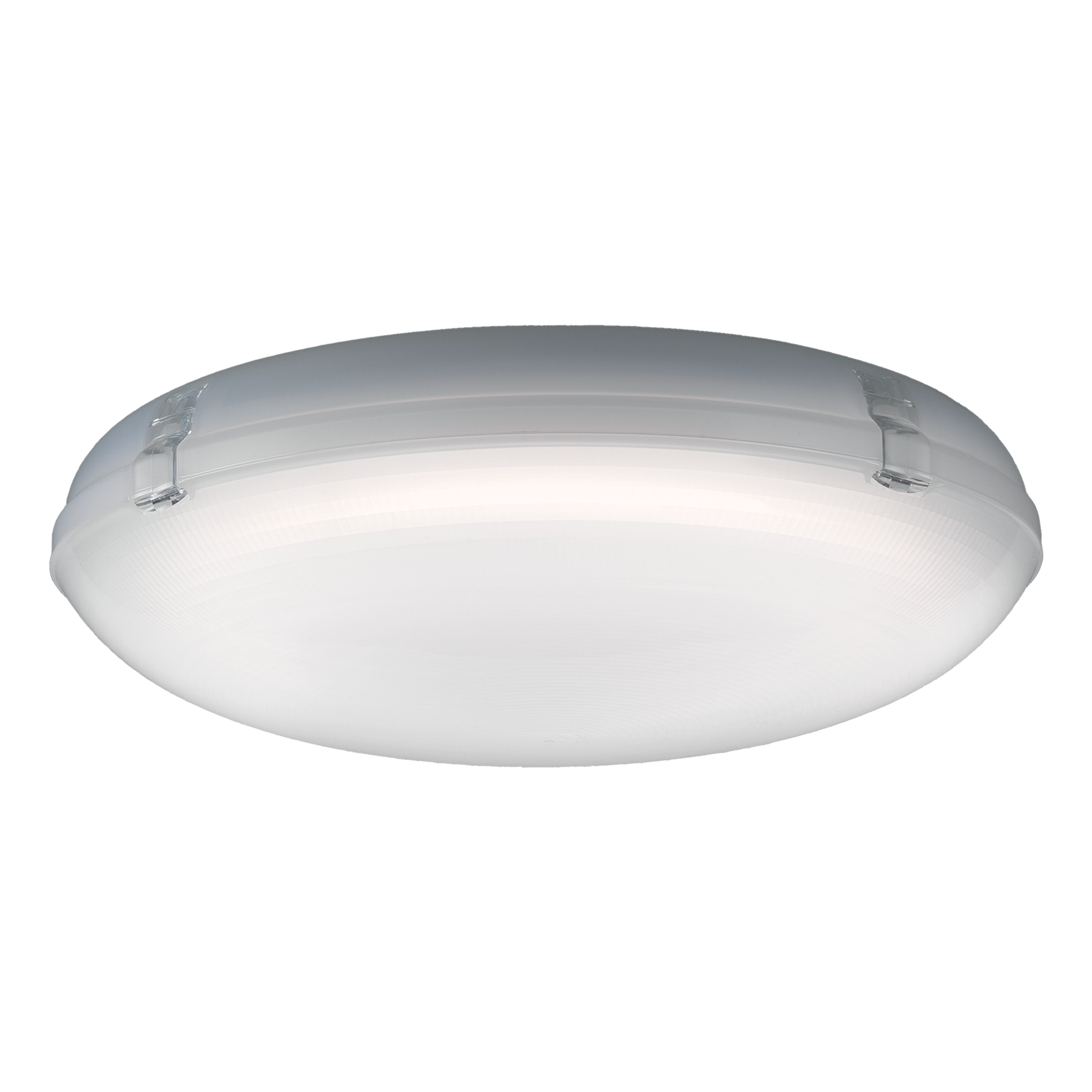
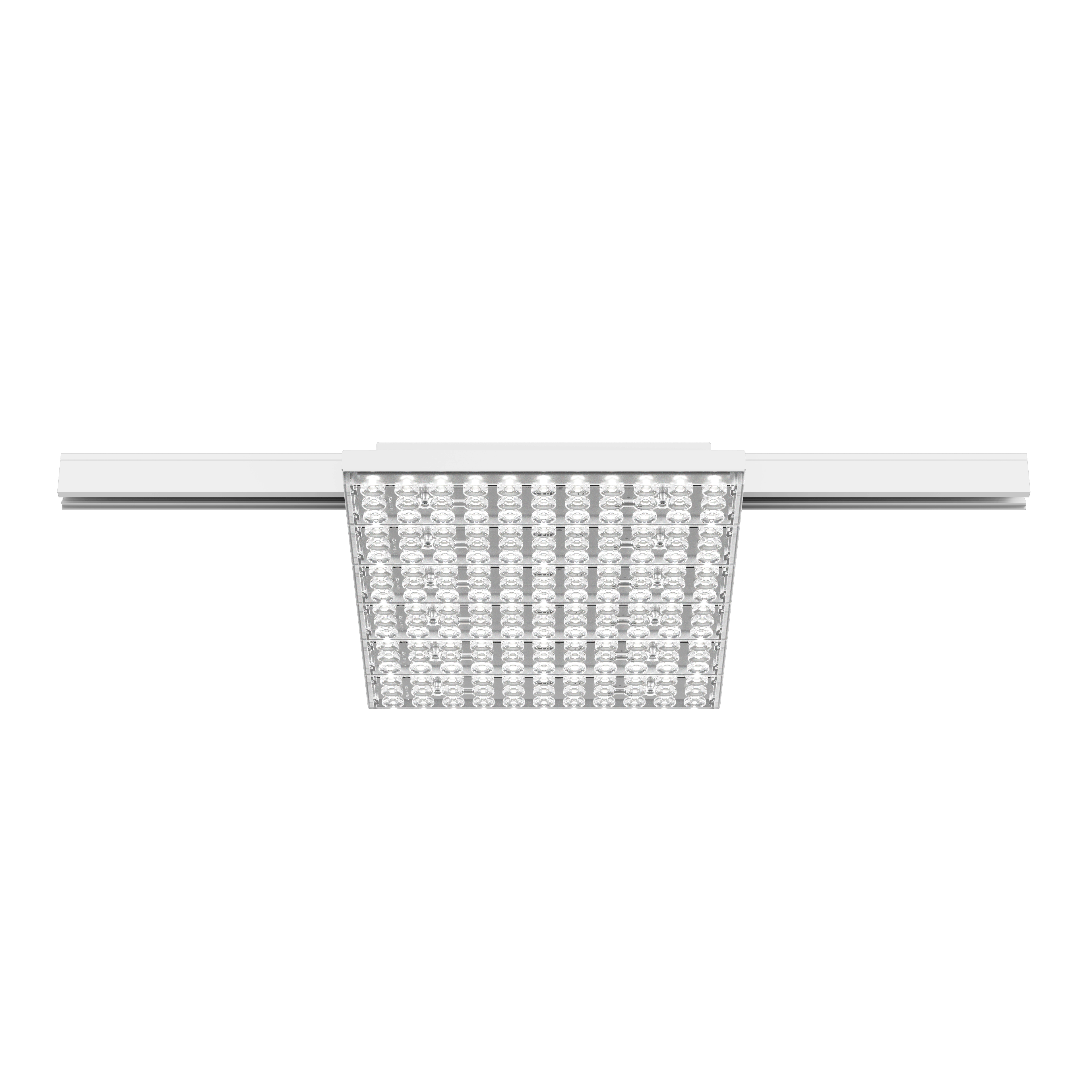
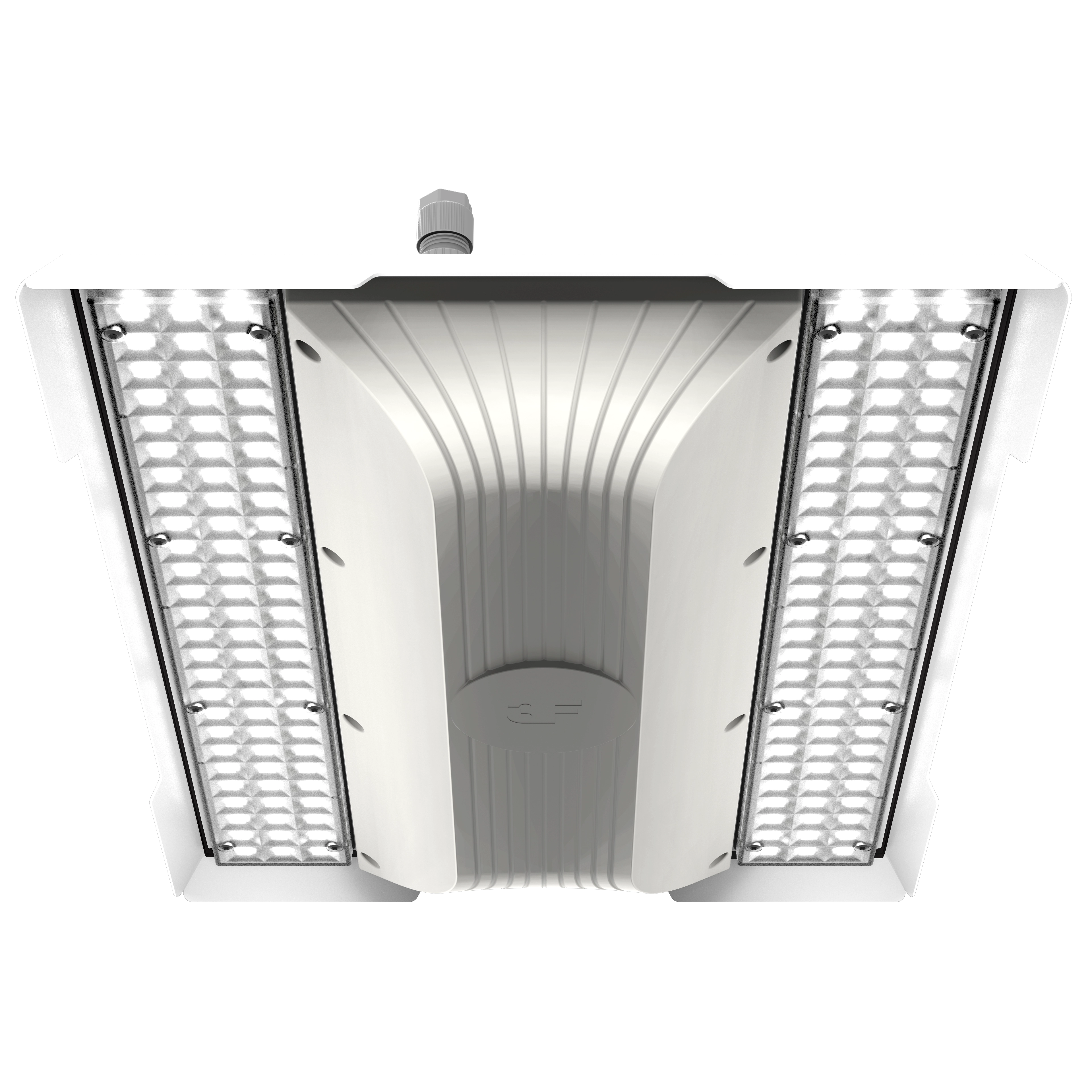
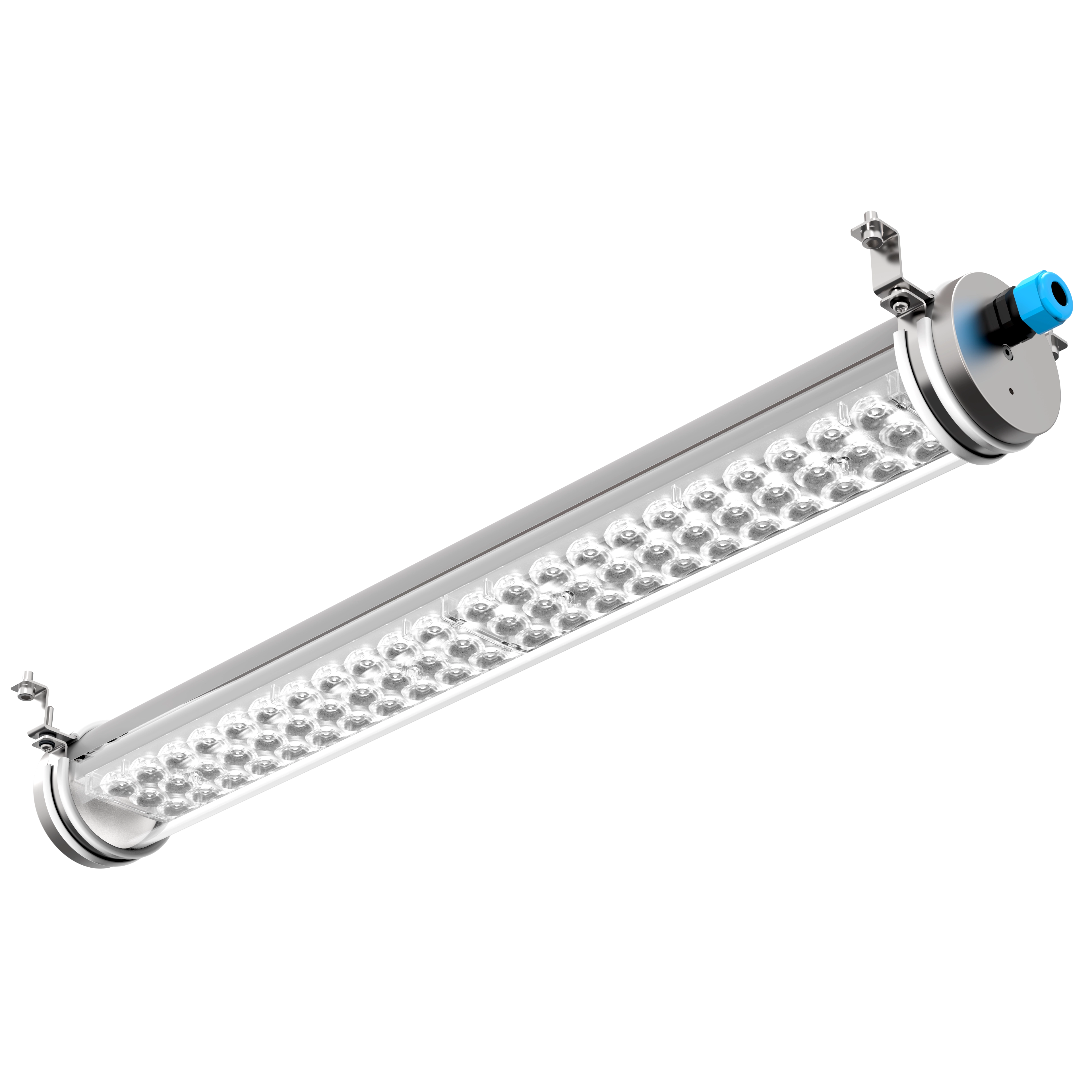
Continuous linear fittings for assembly lines, high-output weatherproof luminaires for moulding and heavy machining, high-CRI luminaires for painting and inspection, track systems for stations that change. Each range page lists photometry, IP/IK ratings, operating temperatures and calculation files.
Other ranges suited to production departments: Beta 500, 3F Linda, 3F LEM, Beta 235, Beta i3F, 3F Cub, 3F Manta, Retrofit Beta A3F-i3F, Retrofit Beta 430, Retrofit 3F Cub, Retrofit 3F Linda.
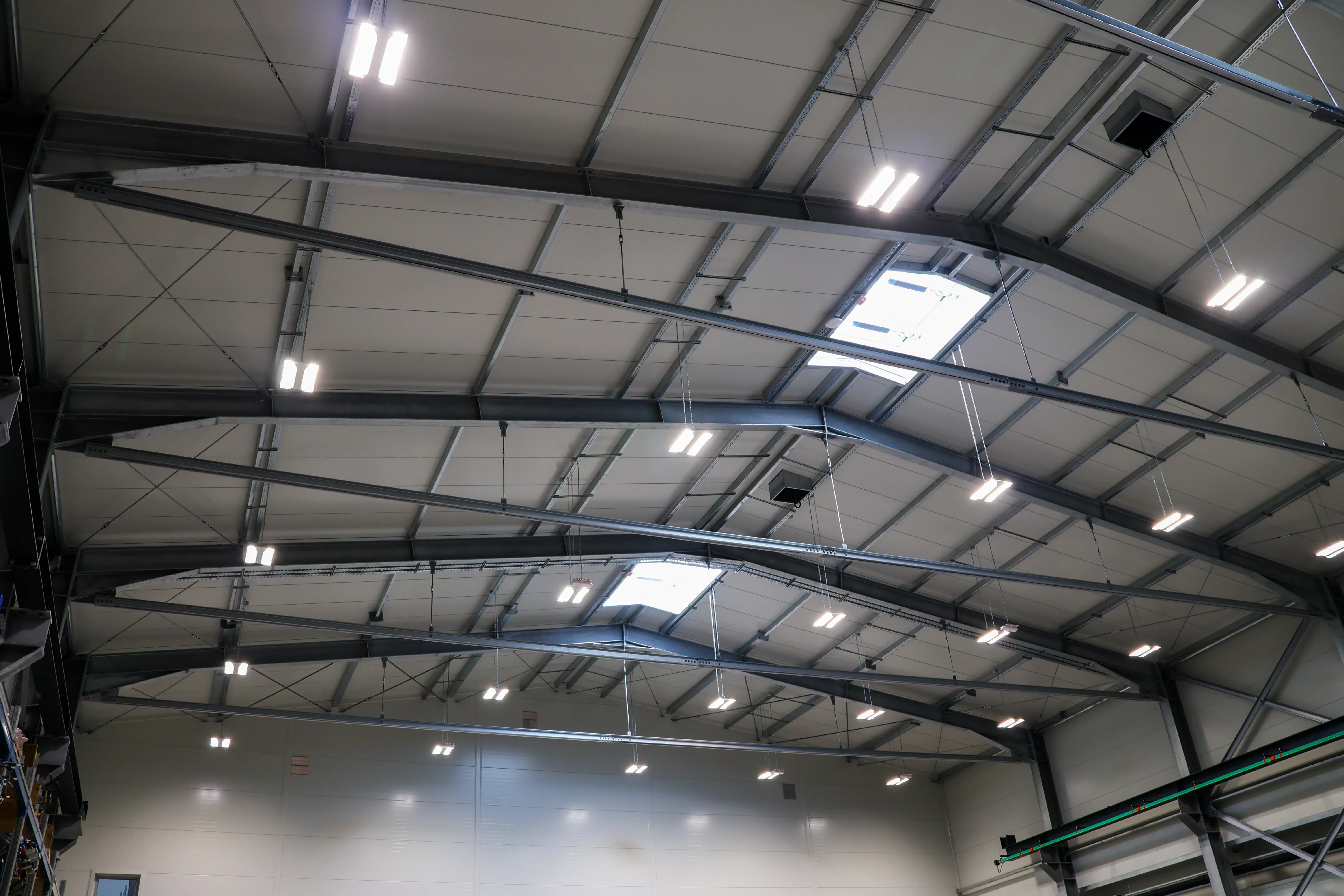
Three production sites where the light was designed following the flow, from raw material to final test.
It must provide illuminance suited to the activity carried out in each department — from 200 lux for rough machining to 750–1000 for inspection and testing — with high uniformity on the working plane, resistance to environmental conditions (dust, vibration, humidity, temperature) and full compliance with EN 12464-1 and safety standards. Correct lighting reduces errors, visual fatigue and operational risks: it is part of the process, not an ancillary service.
Because conditions in plants can be particularly severe: oil mist in machine shops, dust in woodworking, heat in foundries, solvents in paint shops. Luminaires designed for these environments — with IP65–IP66 protection, IK08–IK10 impact resistance and components qualified for extreme temperatures — ensure continuity of operation, reliability over time and fewer stoppages for faults or maintenance. The harsh-environments guide goes into detail.
Yes, on both fronts. Industrial LED solutions improve visibility in work areas, keep performance constant even in continuous operation and cut consumption by up to 70% against discharge and fluorescent lamps. That translates into greater safety for operators — no slow restrikes after a blackout, no stroboscopic effect on machinery — better quality of work and lower plant running costs.
EN 12464-1 prescribes 750 lux for inspection and scribing and up to 1000 lux for colour inspection and fine defects, with UGR ≤ 19 and CRI ≥ 90 where finishes are judged. There is no need to bring the whole department to these levels: localised lighting is used at the stations, on top of a general installation at 300–500 lux, keeping the ratio between the two levels within 1:3 to avoid tiring contrasts.
It is the illusion by which a part rotating at a frequency close to that of the light flicker appears stationary or slow: on machine tools it is a concrete hazard. It is avoided with LED drivers that limit current ripple within the values of the European Ecodesign regulation (SVM index ≤ 0.4 as the reference), like those fitted to 3F Filippi luminaires. In workshops with fluorescent lamps on magnetic ballasts, on the other hand, the effect is present at 100 Hz and is one of the reasons to replace them.
Yes. Relamping is organised by department and by shift: a crew replaces the luminaires of one zone off-hours or during scheduled maintenance, and the line restarts with the new light. 3F Filippi luminaires are designed to reuse existing lighting points and lines; emergency lighting on escape routes is updated in the same pass. The process is described on the industrial relamping page.
With the layout, the tasks and the heights of each department our technical department returns the lighting calculation by stage, the choice of luminaires and optics and an energy estimate. No obligation.