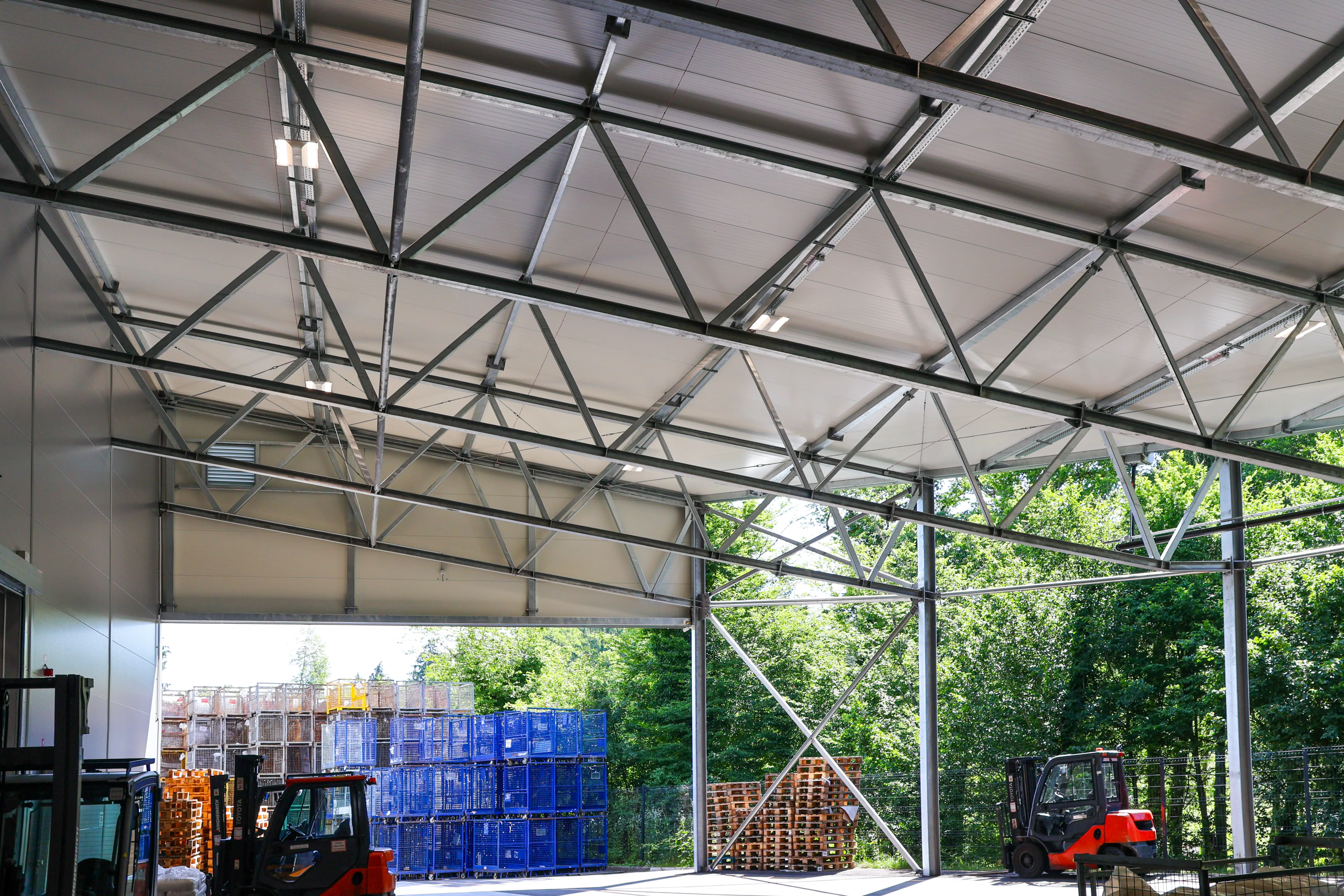
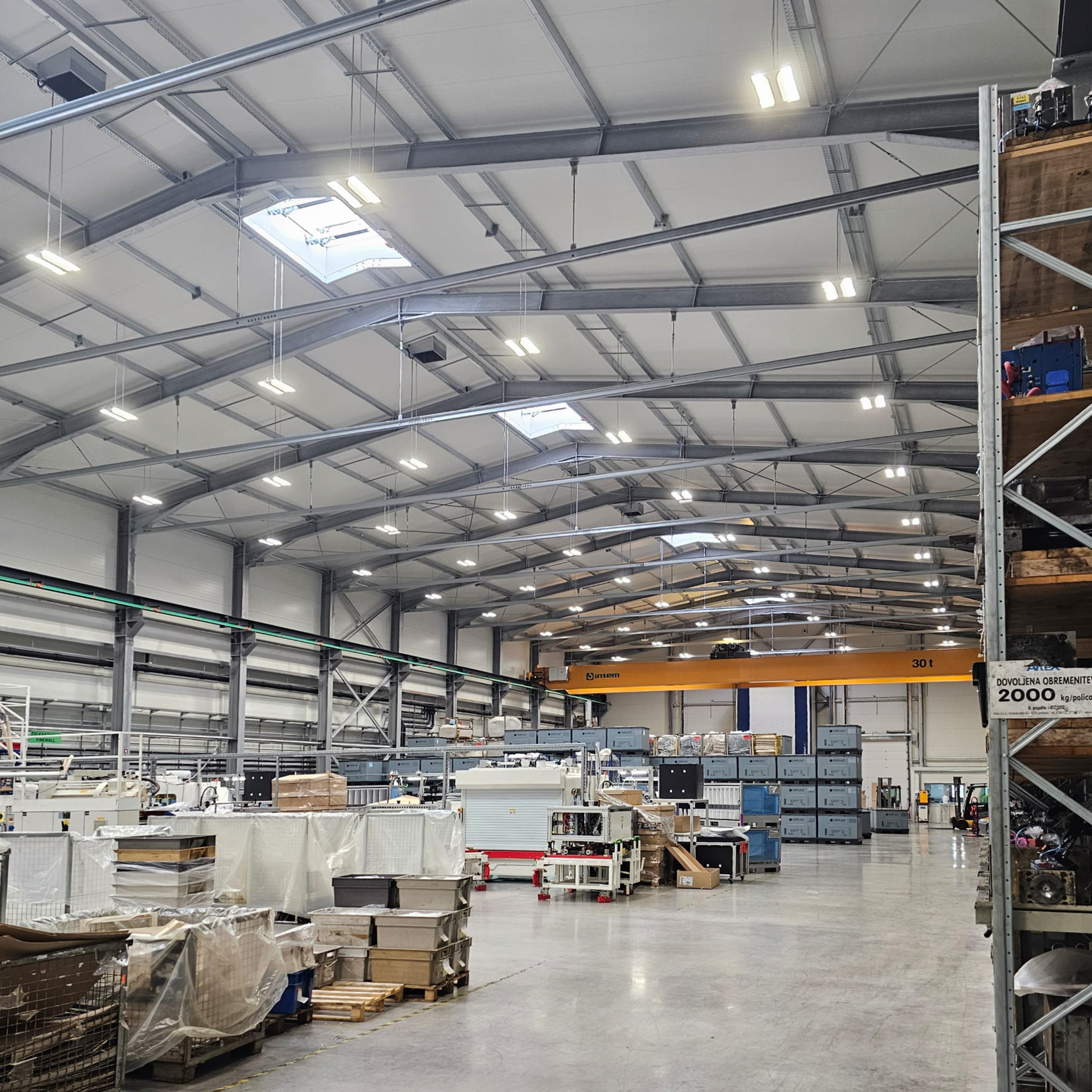
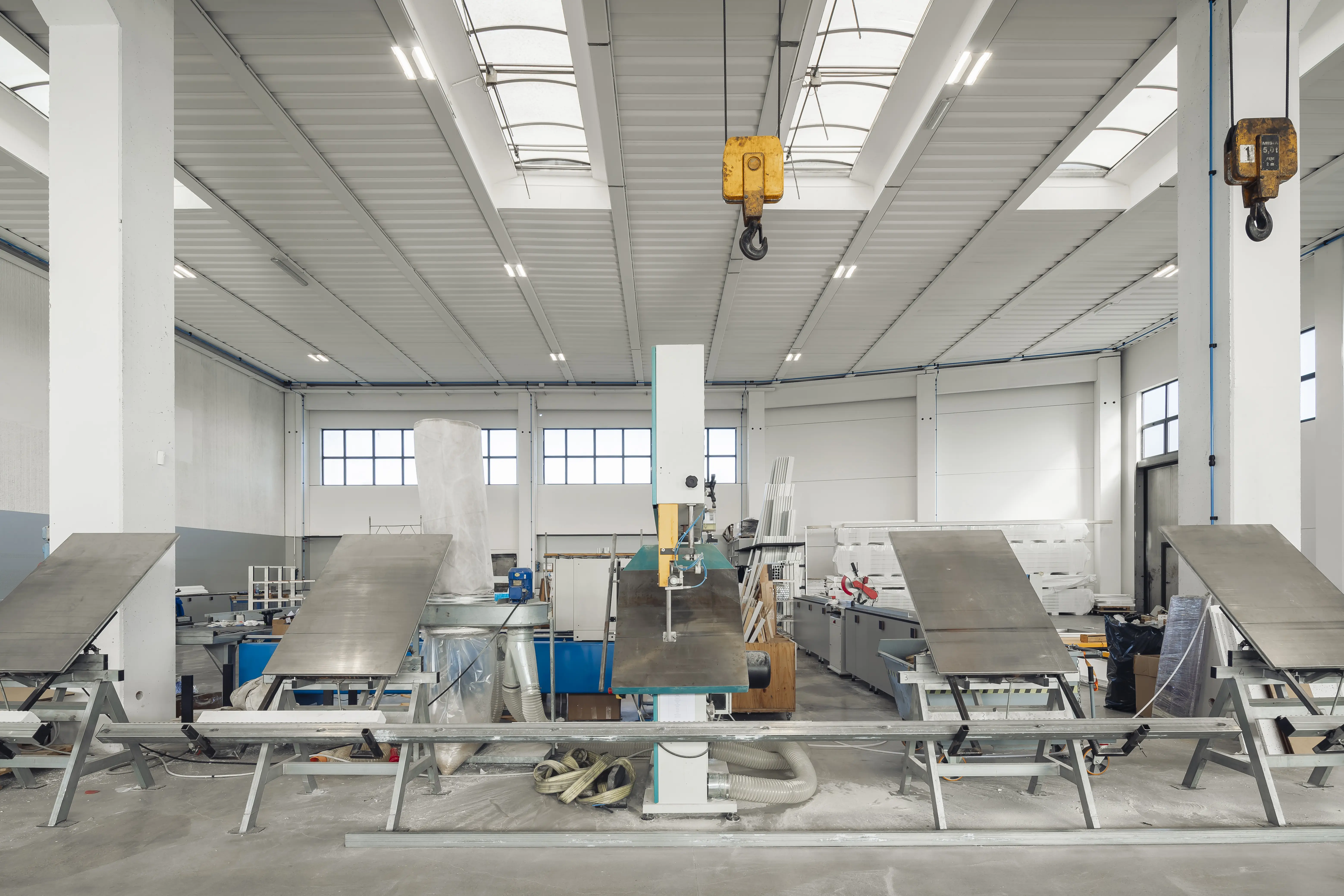
A production hall has fixed workstations; a logistics hub has a route. Goods arrive on a truck, cross the dock, get sorted, stored, picked, packed and leave from another dock — and at every step the visual task, the speed of the vehicles, the people involved and the time of day all change. Designing lighting for logistics means following that route and giving each stretch the light it needs, without paying to light at full power the stretch where nothing is happening.
Then there are three conditions logistics has more than any other sector. Round-the-clock operation, which multiplies every watt and every maintenance hour by 8,000 hours a year. Vehicles in motion — forklifts, pallet trucks, shuttles — that collide, raise dust and demand luminaires that do not dazzle the driver. And the constant transition between outdoors and indoors at the docks, where the eye has to adapt in a few seconds from 50,000 lux of sunshine to a few hundred.
This page follows the flow stretch by stretch. For racking and storage aisles see the guide to warehouse lighting; for cold stores and severe environments the one on harsh environments; the fundamentals are on the industrial lighting page.
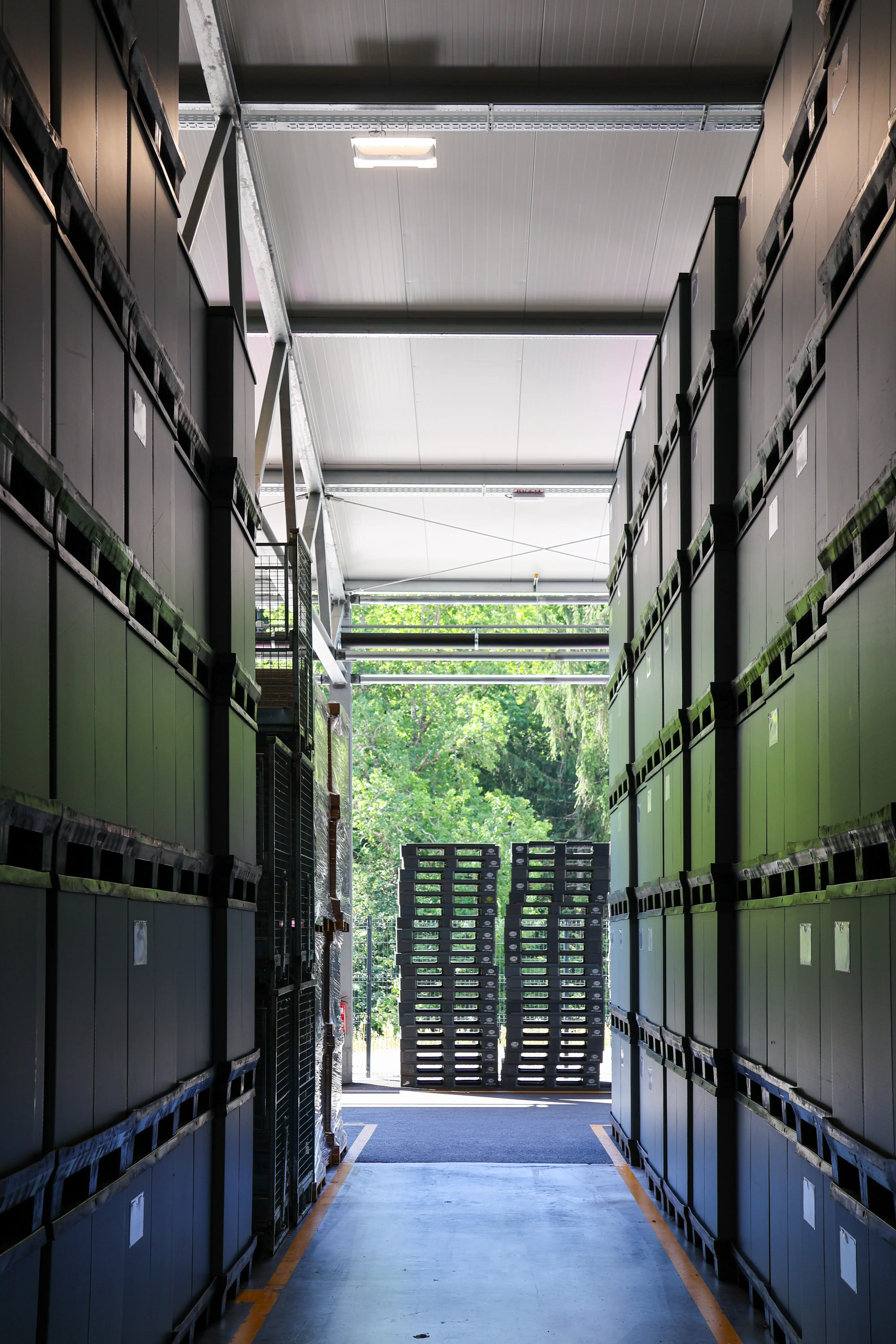
The areas of a logistics hub in the order goods pass through them, with the EN 12464-1 values and the specific design attention each one requires. As always, illuminance refers to the task plane: the dock, the conveyor, the packing bench.
| Logistics area | Ēm (lux) | Max UGR | Design attention |
|---|---|---|---|
| Loading and unloading docks (indoor) | 150–200 | 25 | Outdoor/indoor visual adaptation, IK10 luminaires, no glare towards drivers |
| Yards and ramps (outdoor) | 20–50 | — | Outdoor luminaires, sensor or dusk switching, continuity with the interior |
| Goods-in and inspection | 300 | 25 | Colour rendering Ra ≥ 80 to read documents and labels |
| Sorting and sorters | 300 | 25 | Uniformity ≥ 0.60, no stroboscopic effect on conveyors |
| Racked storage | 100–200 vertical | 25 | Aisle optics, per-aisle sensors (see warehouses) |
| Picking and order preparation | 300 | 25 | Constant illuminance, luminaires above the picking stations |
| Packing, labelling, weighing | 300–500 | 22 | Light on the bench, barcode readers without reflections |
| Dispatch and staging | 200–300 | 25 | Pallet staging zones lit uniformly, transit at 150 lux |
| Cross-docking 24/7 | 300 | 25 | No slow restrike: LED with instant switch-on |
The most critical stretch is the dock: a driver entering from a sunlit yard sees a 200-lux interior as dark for several seconds, and in those seconds they are driving. The standard treats transition zones with higher illuminance near the doors and a gradual reduction inwards; luminaires in the first bays must be chosen with optics that do not glare downwards and with IK10 protection, because they are the ones vehicles hit most.
Three requirements born of continuous operation, vehicles in motion and the variable rhythm of the flow.
Die-cast aluminium or powder-coated steel bodies, IP65–IP66 protection against dust raised by vehicles and moisture from open docks, impact resistance up to IK10 for luminaires within reach of forks and tailgates. Components qualified from −30 to +70 °C for winter docks and refrigerated rooms.
Over 8,000 hours a year the declared L80 lifetime is the parameter that sets the maintenance plan: 3F Filippi ranges state it on the data sheet together with the maximum ambient temperature, and drivers are replaceable without dismounting the luminaire.
A single hub uses different optics: wide beam on sorting and staging areas for uniformity, elongated beam in storage aisles, medium beam at heights between 8 and 12 metres, asymmetric distributions near the doors to grade the light inwards. Outputs up to 65,000 lumens where the height requires it.
Colour rendering CRI ≥ 80 and no flicker: barcode readers, sorter cameras and people reading labels all work better with stable, neutral 4000 K light.
The logistics flow has a rhythm: docks full for an hour and empty for two, aisles crossed in waves. 3F Filippi luminaires with integrated sensor follow that rhythm without additional wiring; DALI versions allow zones, per-shift scenes and energy monitoring, integrable with the warehouse management system.
Compliance with EN 12464-1, EN 60598-1 and EN 60598-2-22 for emergency lighting on escape routes, CE and ENEC marking. Details on controls on the smart lighting for industry page.
The four results the logistics manager measures after the intervention.
Uniform light on transit routes, gradual transition at the docks, no glare towards drivers and cylindrical illuminance to see people on foot: in a hub most accidents involve a vehicle and a pedestrian, and light is the first preventive measure.
LED is worth up to 70% less than discharge lamps; sensors on variable-rhythm areas — aisles, staging, docks on quiet shifts — take the total beyond 80%. On an installation running all year round, payback often falls below two years.
IP65–IP66 and high IK against dust, impacts and vibration from vehicles; low-temperature versions for cold rooms and winter docks. The luminaire is designed for the hub, not adapted afterwards, and its service life covers the horizon of a logistics contract.
Long service life, instant switch-on after a mains interruption, drivers replaceable in place and remote diagnostics on DALI versions: interventions are scheduled in low-traffic windows instead of stopping a dock mid-shift. The relamping of an existing hub follows the same logic, bay by bay.
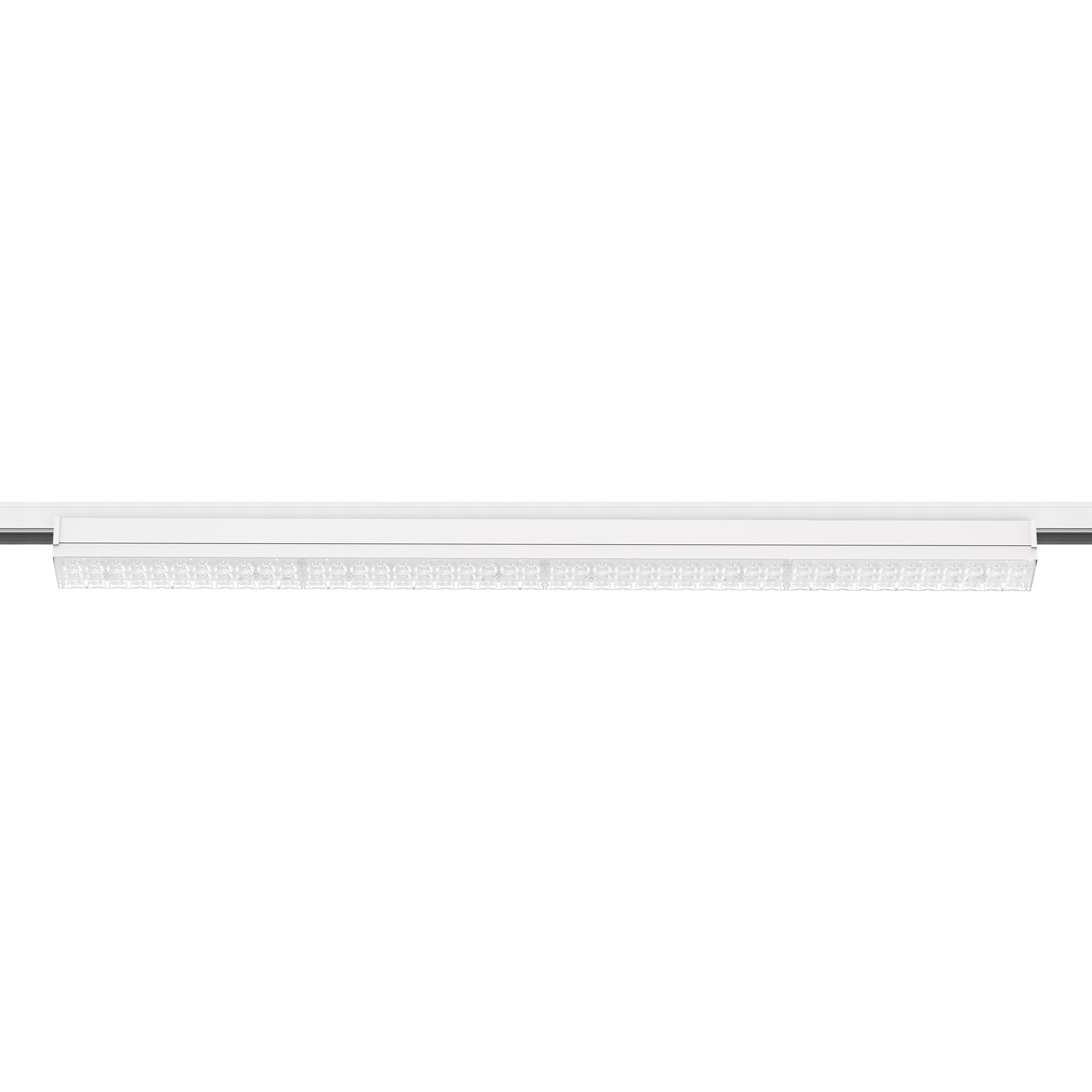
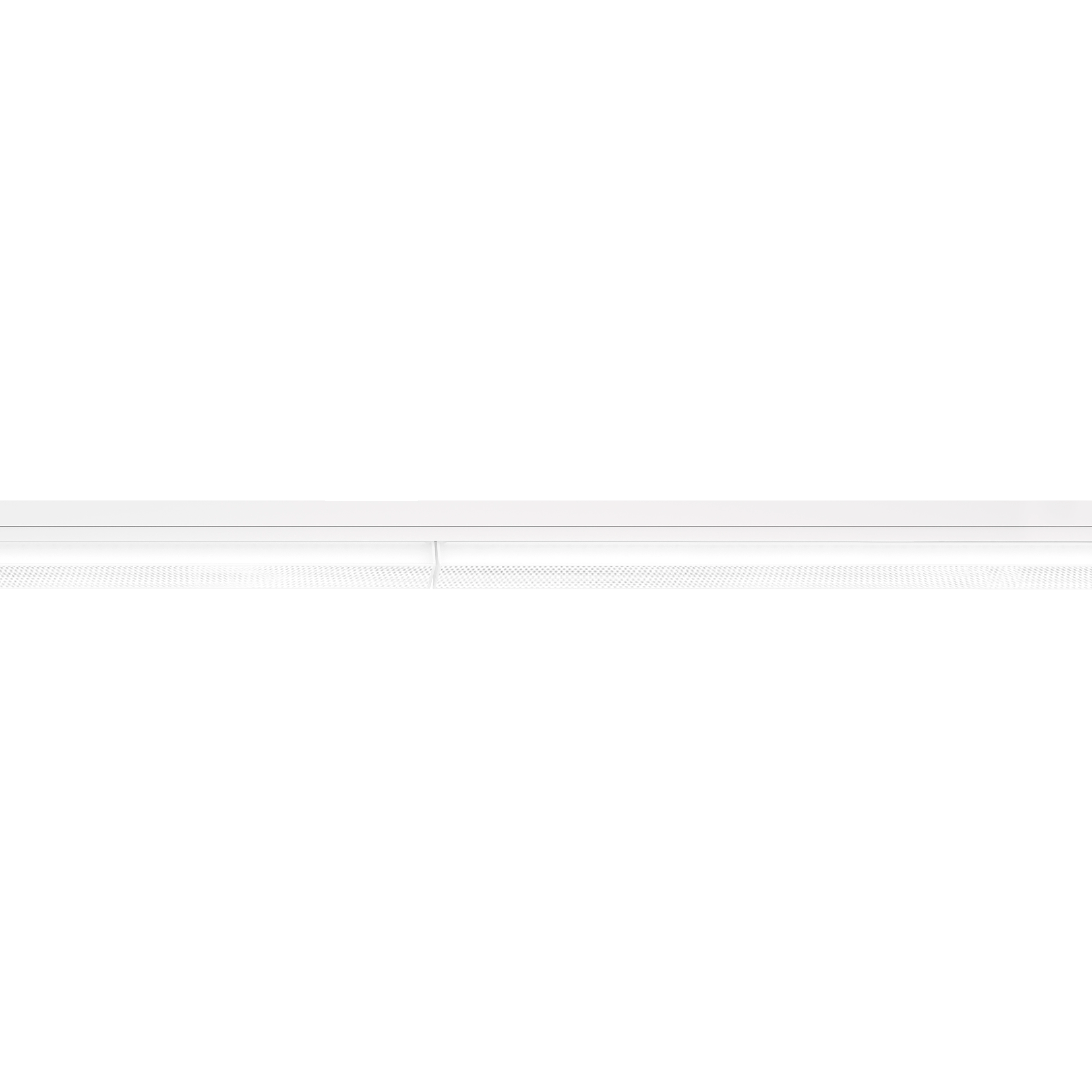
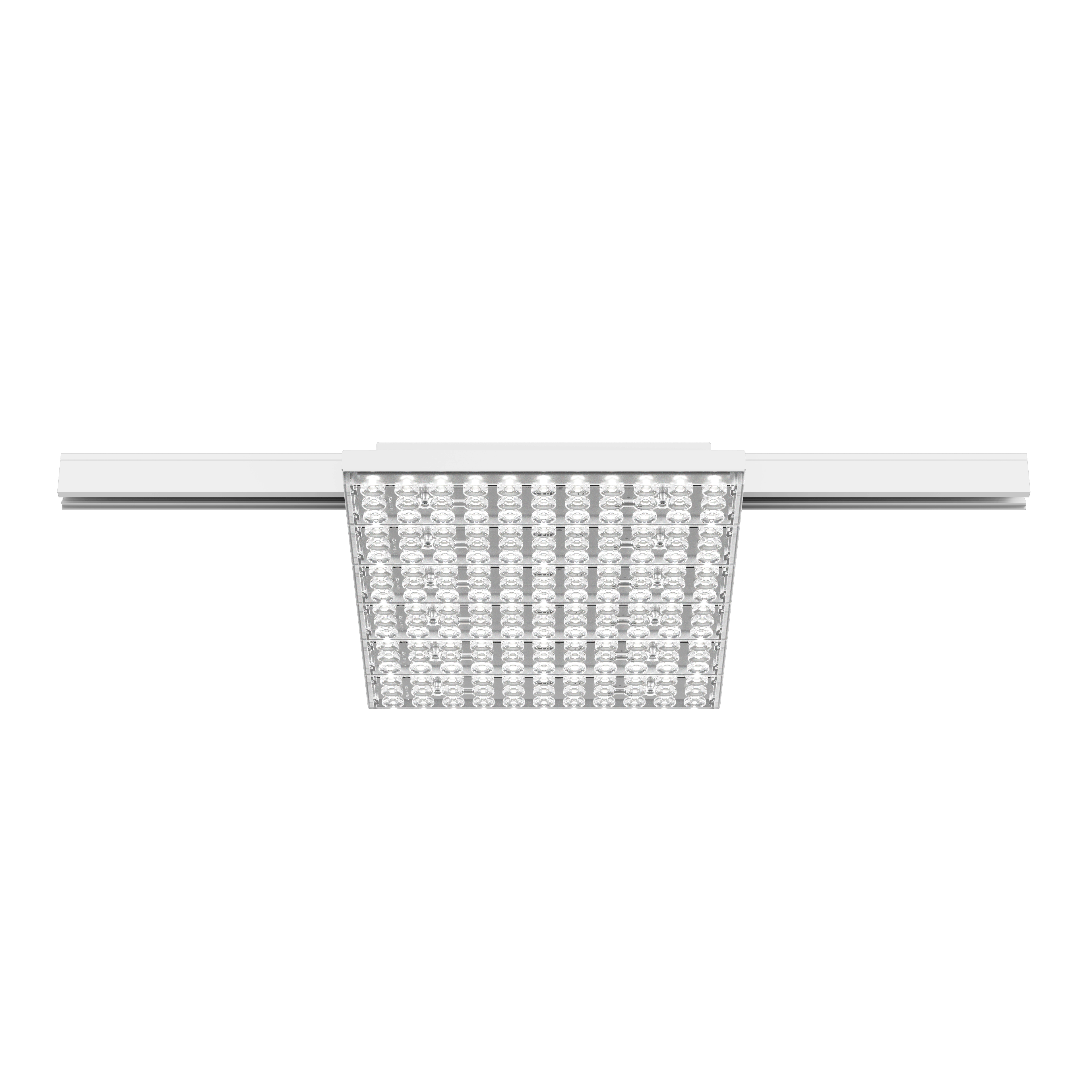
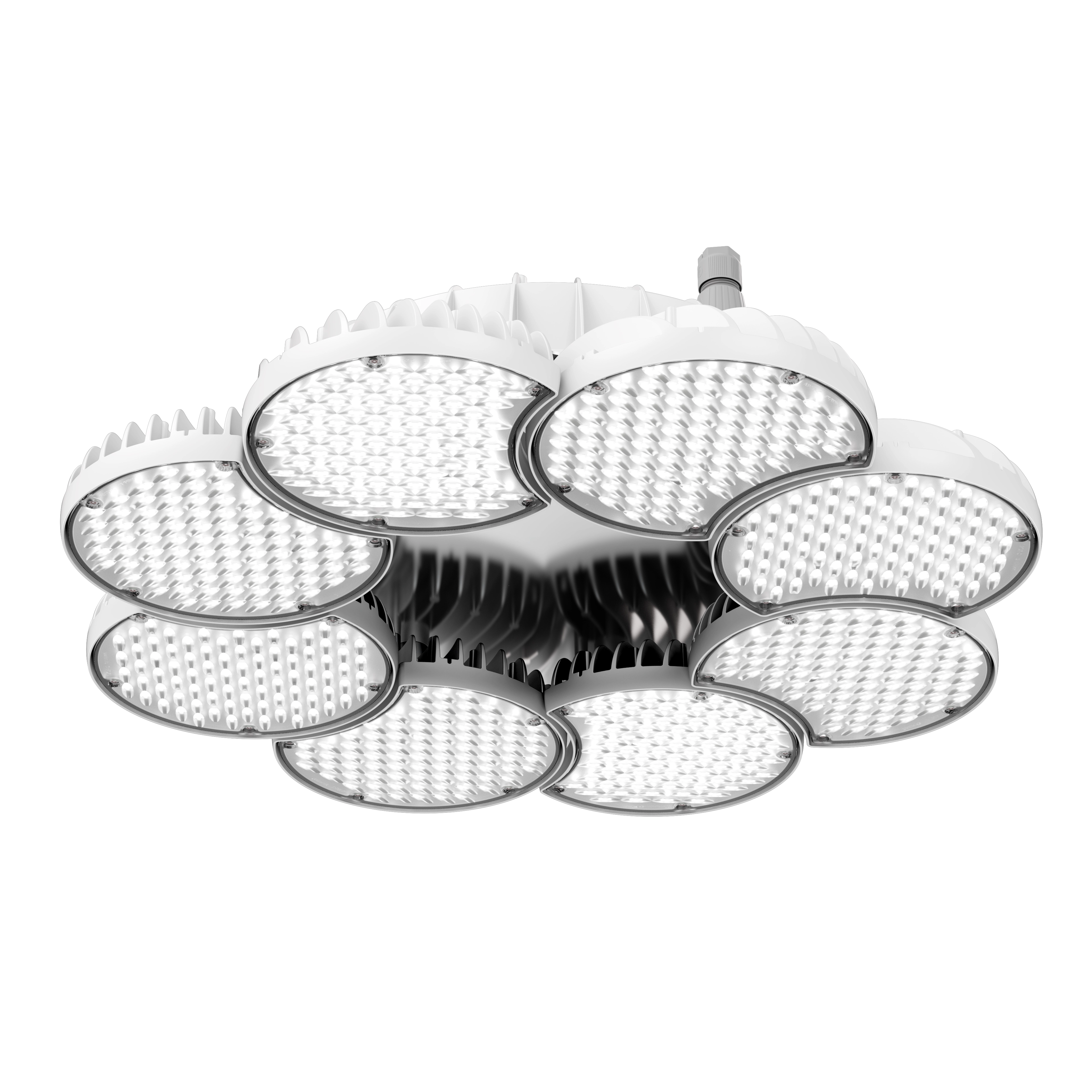
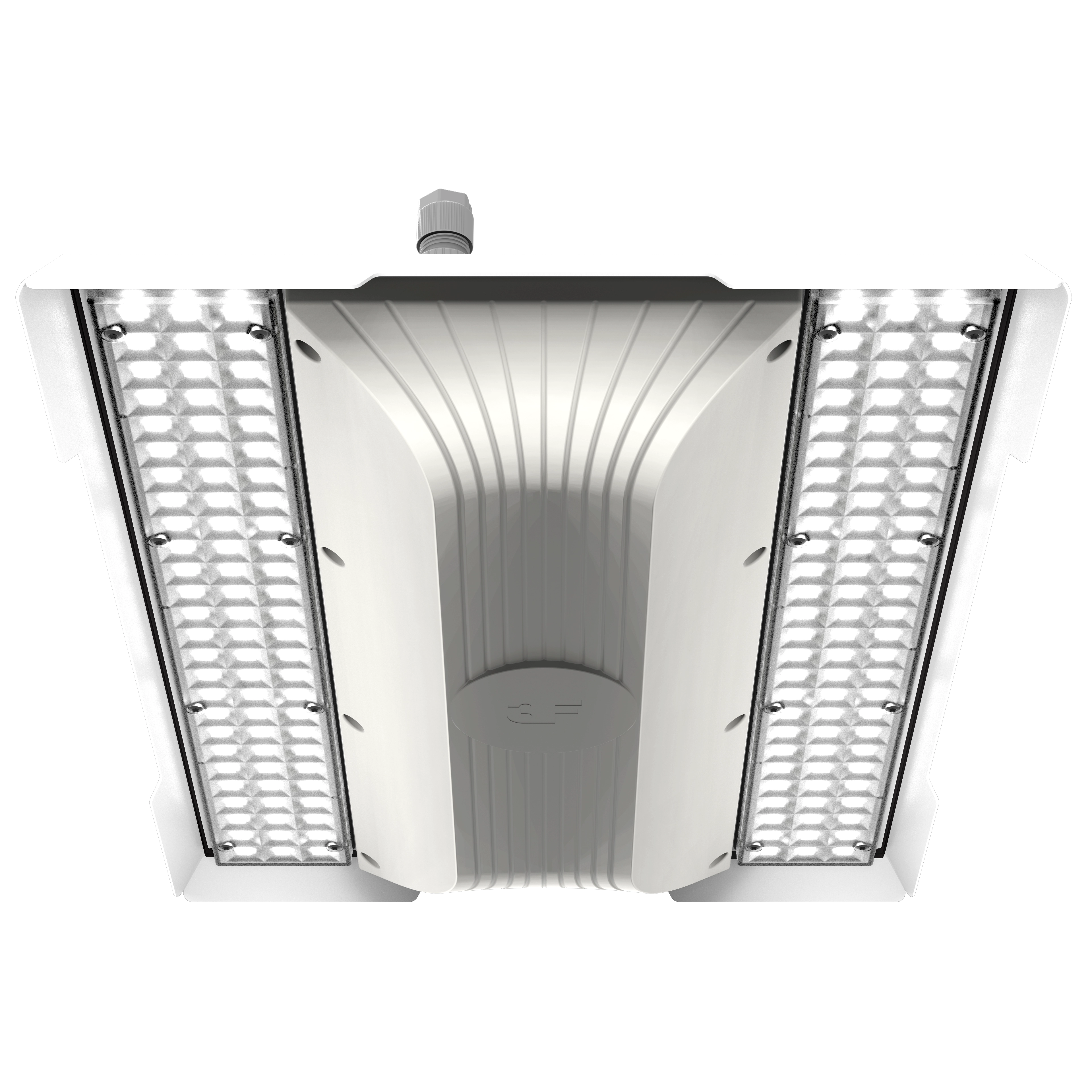
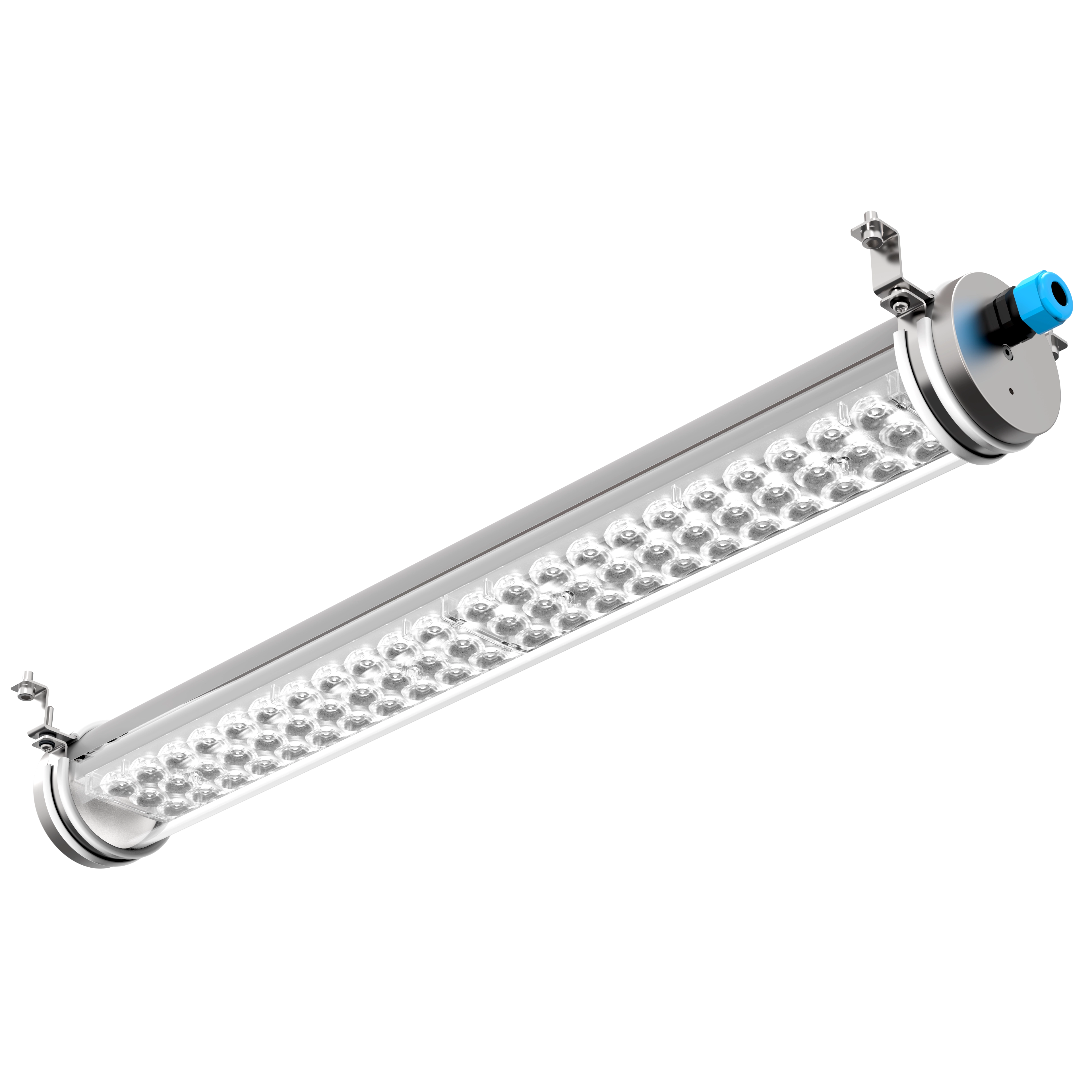
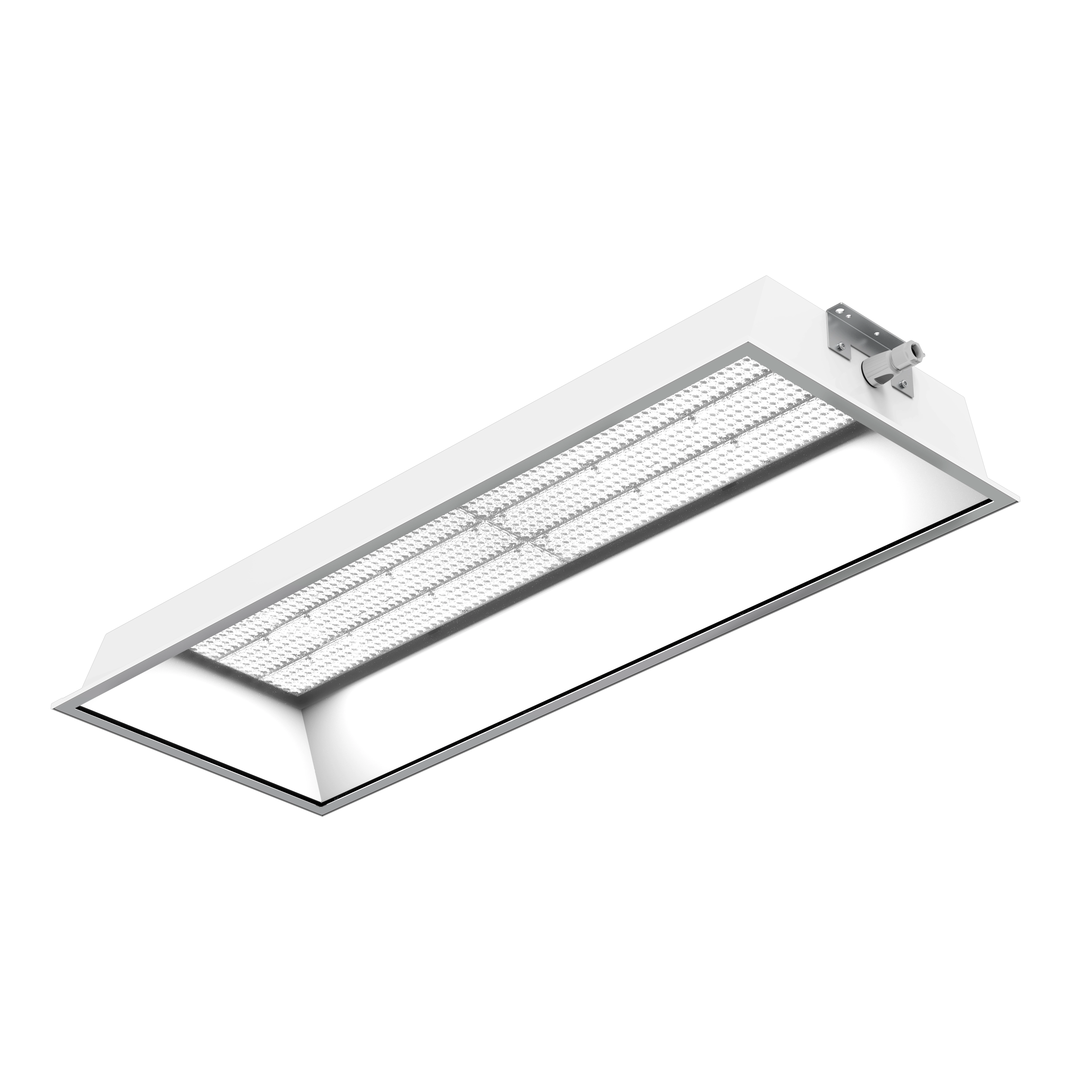
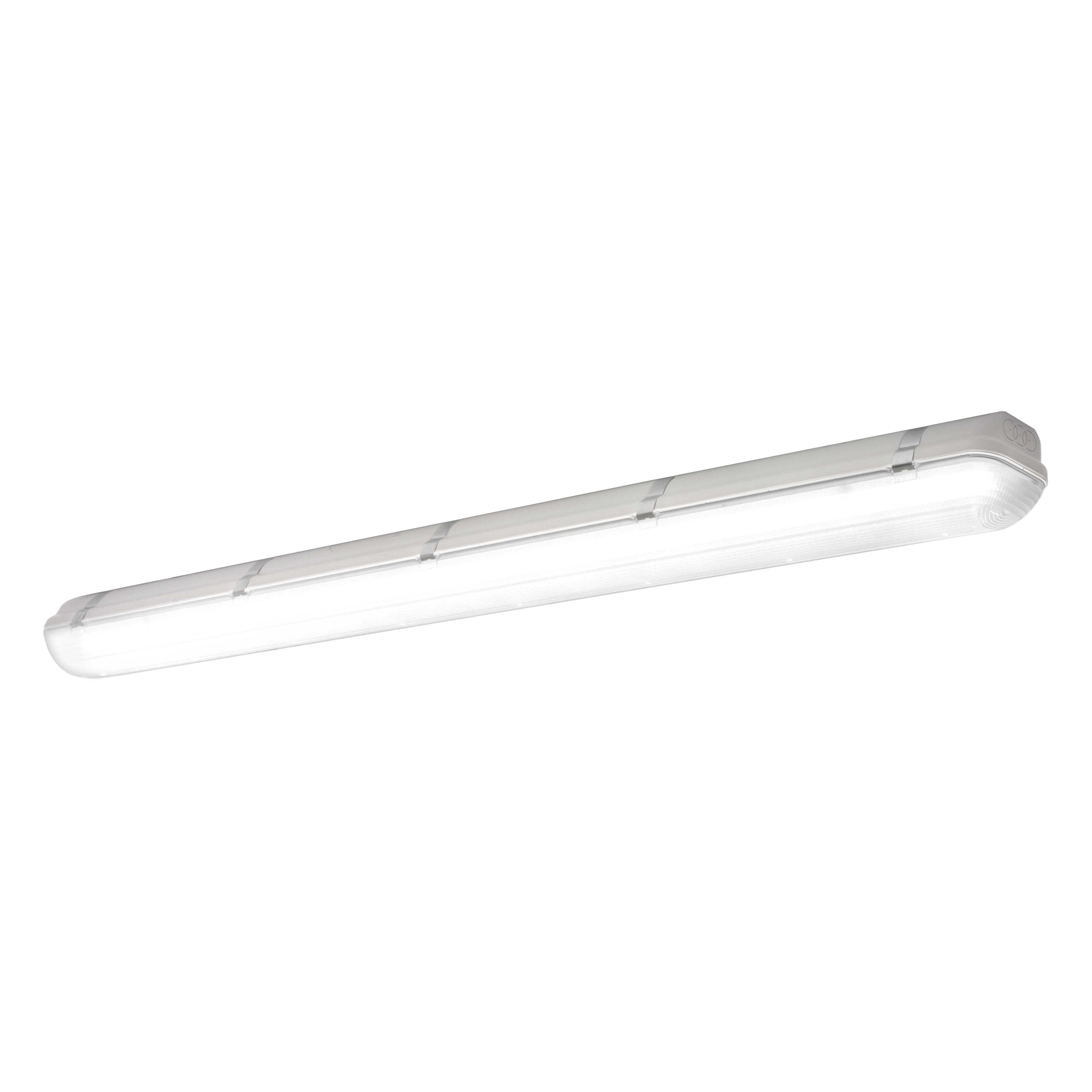
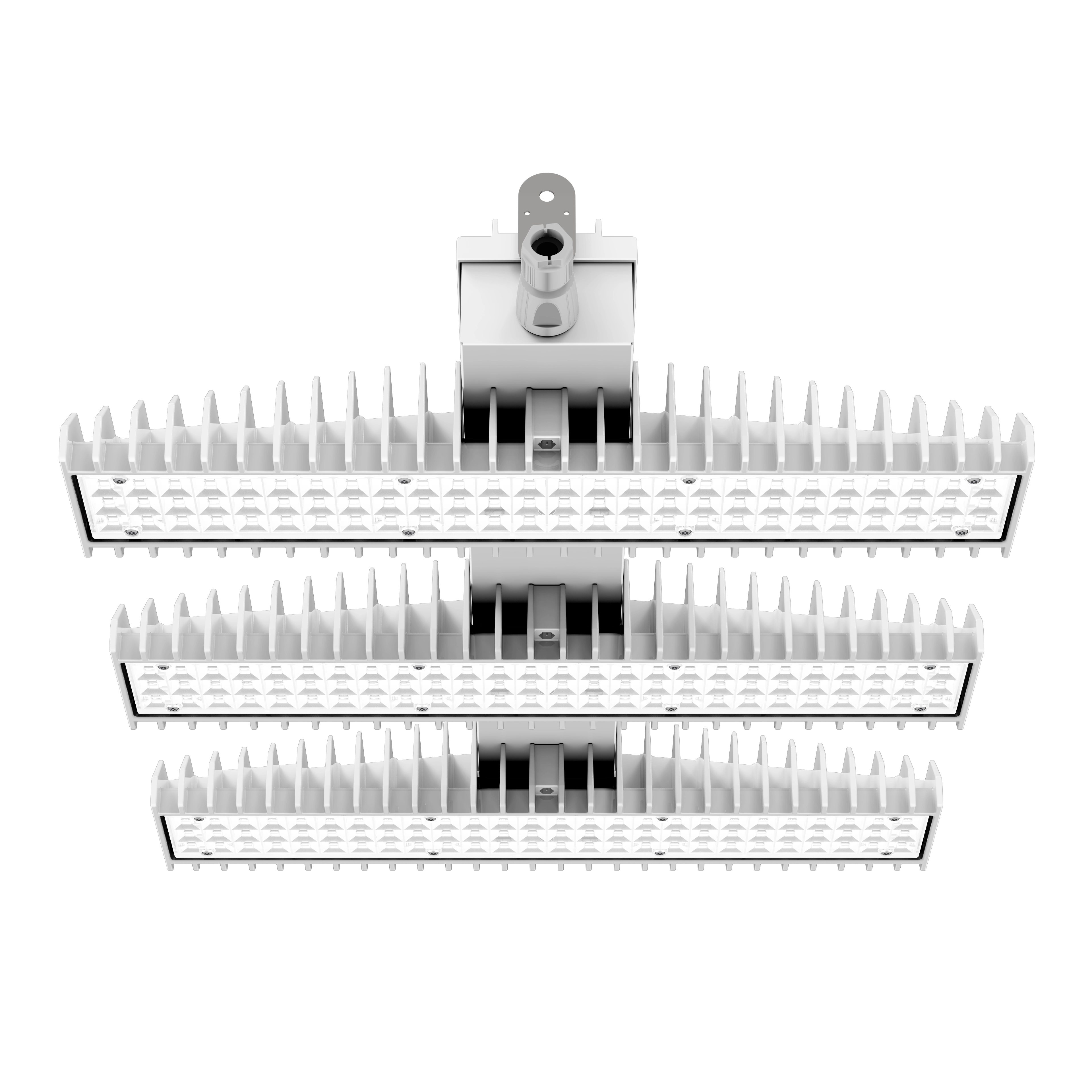
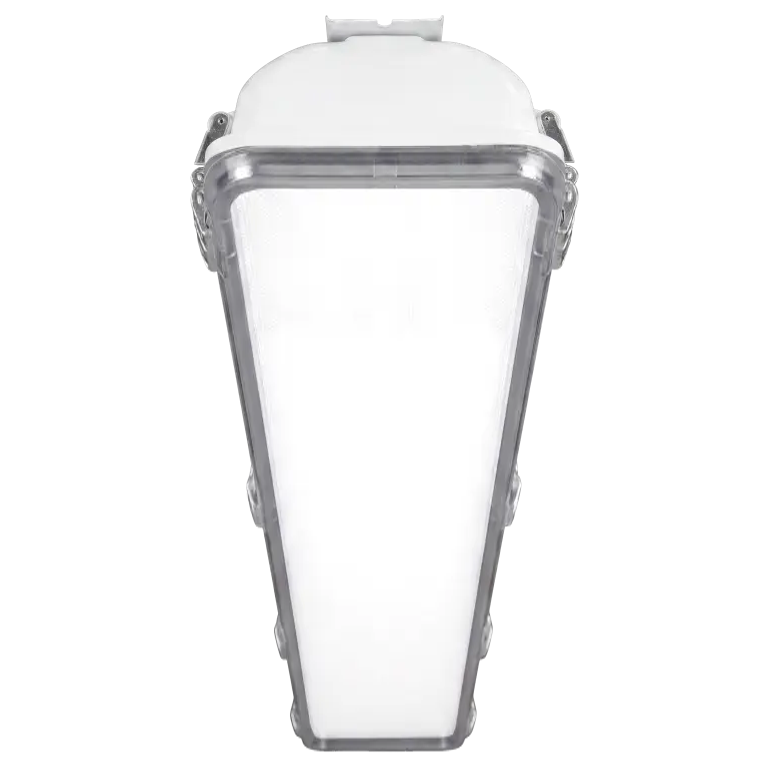
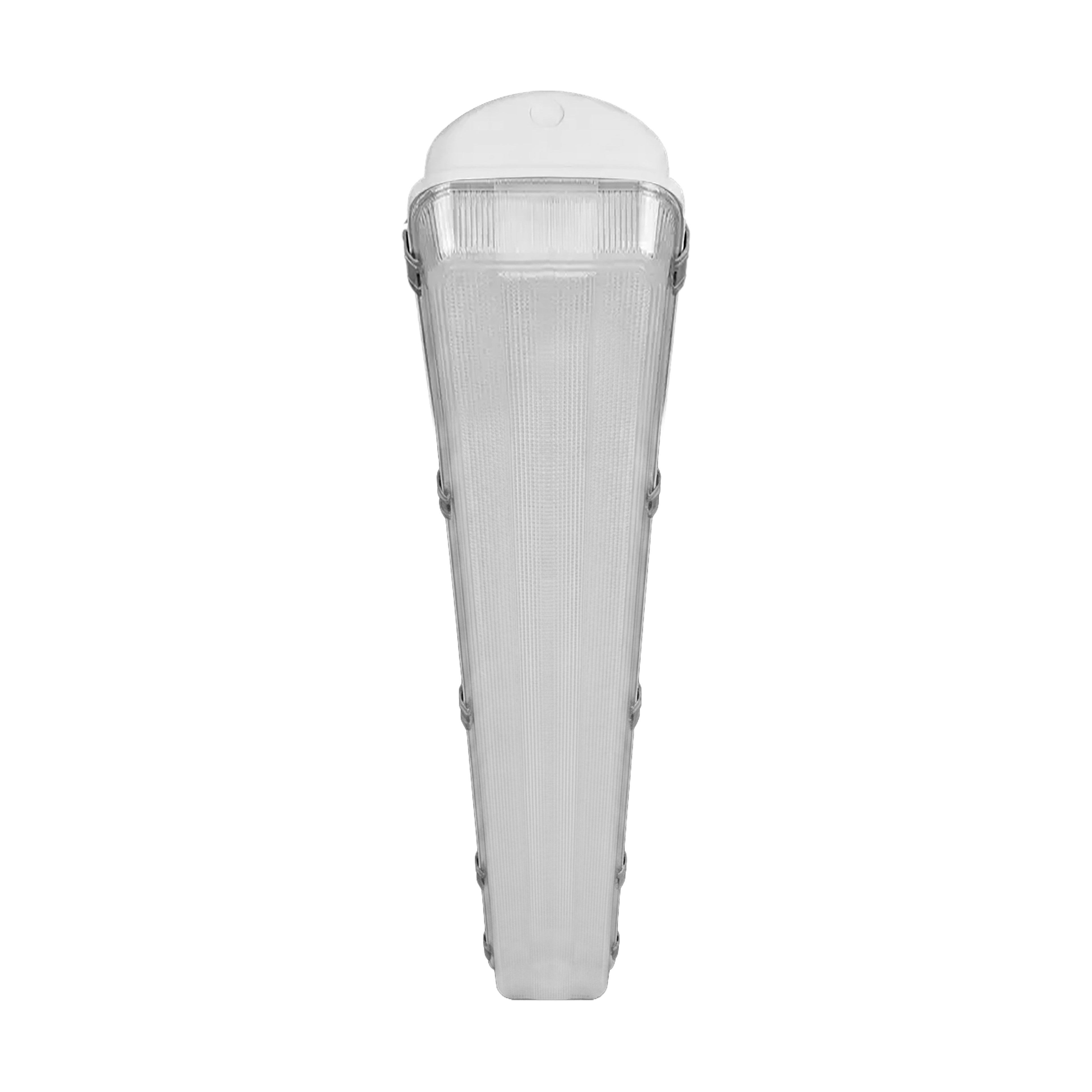
Weatherproof luminaires for docks and transit routes, linear fittings for high bays with aisle optics, industrial suspensions for sorting and staging, retrofit families for one-to-one replacement. Each range page lists IP/IK ratings, operating temperatures, photometric distributions and calculation files.
Other ranges suited to logistics areas: 3F Cub, Retrofit Beta A3F-i3F, Retrofit Beta 430, Retrofit 3F Cub, Retrofit 3F Linda.
Two production sites where the flow of goods, from receiving to dispatch, was lit stretch by stretch.
Uniform light on transit routes and handling areas, specialised optics for each stretch of the flow — aisles, docks, sorting — high energy efficiency, resistance to dust, impacts and vibration from vehicles, and compliance with EN 12464-1 and the standards for operator safety. Unlike a production department, in a hub the light must follow a route rather than a workstation: that is why it is designed area by area.
Yes, and in logistics more than anywhere else, because installations run up to 8,000 hours a year. LED cuts consumption by up to 70% against discharge and fluorescent lamps, needs no periodic replacement and tolerates frequent switching: that makes it possible to add sensors on variable-rhythm areas and take the overall saving beyond 80%. On a 24/7 hub payback often falls below two years.
Certainly. 3F Filippi solutions support per-aisle and per-zone presence sensors, daylight-linked dimming where there are rooflights and centralised management platforms via DALI, with energy monitoring and per-shift scenes. Integration with the warehouse management system allows areas to be switched on according to the work plan rather than fixed schedules — details on the smart lighting for industry page.
As a transition zone. Someone entering from a sunlit yard needs a few seconds to adapt: the standard provides for higher levels in the first bays near the doors and a gradual reduction inwards, so the driver does not enter what they perceive as darkness. Luminaires must be chosen with optics that do not glare downwards, with IK10 protection because they are the most exposed to impacts, and with an IP rating suited to the moisture and dust of an open dock. Outside, on the yard, sensor or dusk-switched lighting completes the continuity.
EN 12464-1 indicates 300 lux for picking, packing and dispatch, with uniformity ≥ 0.60; on packing, labelling and weighing benches, where documents are read and code readers are used, it is worth going up to 500 lux with UGR ≤ 22. The light must be brought onto the bench plane, not the floor, and without reflections on monitors and readers: linear luminaires above the stations with controlled optics are the typical solution.
If they are chosen for it, yes. 3F Filippi luminaires for logistics have die-cast aluminium or powder-coated steel bodies, IP65–IP66 protection against dust raised by vehicles and dock moisture, and impact resistance up to IK10 for positions within reach of forks and tailgates. The choice is made zone by zone: IK10 in the first dock bays and along transit routes, IK08 in sorting areas, lower ratings in offices and zones vehicles cannot reach.
With the flow plan, the heights and the working hours our technical department calculates the illuminance for each area, the choice of optics and protection ratings and the saving with sensors and DALI. No obligation.