Category

Lighting for warehouses

In a warehouse the light is needed on the shelves, not on the floor. 3F Filippi LED luminaires with narrow-aisle optics, outputs for heights up to 12 metres and beyond, sensors that switch an aisle on only when a forklift enters it.

Request a lighting calculation

The warehouse problem: the light goes where nobody measures it

Conventional lighting calculations measure lux on the floor. In a racked warehouse the floor is the one place where nobody has to read anything: labels, codes and cartons sit on the shelves, from the first level up to nine or ten metres, and the operator on the forklift looks at them sideways and upwards. That is why a warehouse with 200 «compliant» lux on the floor can have 40 lux on the top shelf and operators using their phone torch.

The right quantity is the vertical illuminance on the face of the racking, and the geometry that determines it is precise: luminaires mounted on the aisle centreline, elongated-beam optics that send light onto both rack faces without wasting it above the racks, spacing calculated from the height. A well-lit warehouse almost always has fewer luminaires than a badly lit one — but placed in the right spot.

This page explains how warehouse lighting is designed aisle by aisle. The fundamentals — heights, protection ratings, LED technology — are on the industrial lighting page; for docks, picking and handling see the guide to lighting for logistics; for cold stores the one on harsh environments.
Design values for warehouse zones

EN 12464-1 distinguishes between manned and unmanned warehouses, and for racking requires illuminance to be verified on the vertical surface of the shelves. These are the references, with the optical and control choices that follow from them.

Warehouse zone Ēm (lux) Optic and position Recommended control
Warehouse not continuously manned 100 Wide beam, regular grid Presence sensor per zone
Continuously manned warehouse 200 Wide or medium beam by height Daylight harvesting if there are rooflights
Aisles between racks (on the shelf face) 200 vertical Elongated beam on the aisle centreline Sensor per aisle, switch-on as the forklift enters
Narrow VNA aisles (< 2 m) with turret trucks 200 vertical Double-asymmetric optic, continuous linear luminaires Sensor at the start and end of the aisle
Automated warehouses / stacker cranes 20–50 (maintenance) Access and service routes only Manual or system-controlled switch-on
Picking and order-preparation area 300 Medium beam, uniformity ≥ 0.60 Constant illuminance
Warehouse offices and checking stations 500 UGR ≤ 19 Presence + daylight
Transit zones with forklifts 150 Uniformity ≥ 0.40, no upward glare Always on during operating hours

Three recurring errors the lighting calculation catches. Luminaires above the racks: if the grid is not aligned with the aisles, half the light falls on the cartons on top of the rack and never reaches the lower shelves. Wide beam in a narrow aisle: at 10 metres it spreads the light onto the rack ends and leaves the middle of the shelf dark. Neglected uniformity: an aisle with 300 lux under the luminaire and 60 between luminaires is more tiring than one at a constant 150 lux, because the operator's eye re-adapts every metre.

What a warehouse luminaire needs

Three requirements that set a racking luminaire apart from a generic industrial one.

Aisle optics and high mounting

Elongated-beam optics (often called «aisle» optics) concentrate light along the aisle centreline and towards the two rack faces: that is what brings 200 vertical lux onto the top shelf without wasting any on the ceiling. In VNA aisles below 2 metres, double-asymmetric optics on continuous linear luminaires are used.

Outputs up to 65,000 lumens for 12–15 metre installations, PMMA or polycarbonate lenses and aluminium reflectors in the 3F Filippi high-bay ranges, with IES and Eulumdat files for aisle-by-aisle calculation.

Materials, protection and safety

Die-cast aluminium or powder-coated steel bodies, IP65 protection against carton and pallet dust, impact resistance up to IK10 for luminaires within reach of the forks. Cold-store versions with components qualified down to −30 °C.

Compliance with EN 12464-1, EN 60598-1 and EN 60598-2-22 for emergency lighting along the aisles, which in a warehouse are long, narrow escape routes. CE and ENEC marking.

Per-aisle sensors and management

A warehouse aisle is occupied for a fraction of the day: per-aisle presence detection — sensors at the start and end of the aisle, range tuned to the height — switches the row on when the forklift enters and brings it back to a standby level when it leaves. It is the fastest-payback strategy in all industrial smart lighting, and in 3F Filippi luminaires with integrated sensor it needs no additional wiring.

DALI versions for integration with the warehouse management system and per-zone energy monitoring: details on the smart lighting for industry page.

What changes in a warehouse lit aisle by aisle

The four results the warehouse manager measures after the intervention.

200 lx on the rack face, where labels are read
12 m mounting height covered by the high-bay optics
IP65 protection rating against carton and pallet dust
−30% less energy from per-aisle presence detection alone

Visibility and operator safety

Uniform light on both rack faces, labels legible from the first to the top shelf, no glare for whoever looks up from the forklift: fewer picking errors, fewer collisions with the structures, fewer accidents in the aisles. It is the benefit the standard requires and the insurer appreciates.

Energy cut where light was useless

To LED's 70% saving over discharge lamps, add per-aisle presence detection, which in a medium-turnover warehouse is worth a further 30% and more: the empty aisles — most of them, at any given moment — sit at a standby level instead of full power.

Reliability in dusty and cold environments

Robust materials, IP65–IP66 and high IK protection: the luminaires withstand dust, impacts from vehicles and the low temperatures of cold rooms. The declared service life covers the typical horizon of a logistics contract without work at height.

Reduced maintenance, even at 12 metres

Long-life LEDs, drivers replaceable in place and no lamps to change: the lift job between the racks — the most expensive and the most dangerous — becomes rare. And the relamping of an existing warehouse is done aisle by aisle, without stopping picking.

The zones of a warehouse, one by one

  • Conventional pallet racking — luminaires on the aisle centreline, elongated optic, 200 vertical lux up to the top shelf.
  • Narrow aisles and VNA — continuous lines with double-asymmetric optic, sensors at the start and end of the aisle, uniformity on both faces.
  • Automated warehouses and stacker cranes — reduced lighting for maintenance only, system-controlled switch-on, luminaires clear of the machine envelope.
  • Block stacking and floor storage — wide beam, regular grid, cylindrical illuminance to see people and vehicles.
  • Cold stores and temperature-controlled warehouses — low-temperature versions, instant switch-on, IP66 against condensation.
  • Picking and order-preparation areas — 300 uniform lux, constant illuminance, colour rendering for recognising cartons.
  • Transit zones and main aisles — 150 lux always on during operating hours, no glare towards drivers.
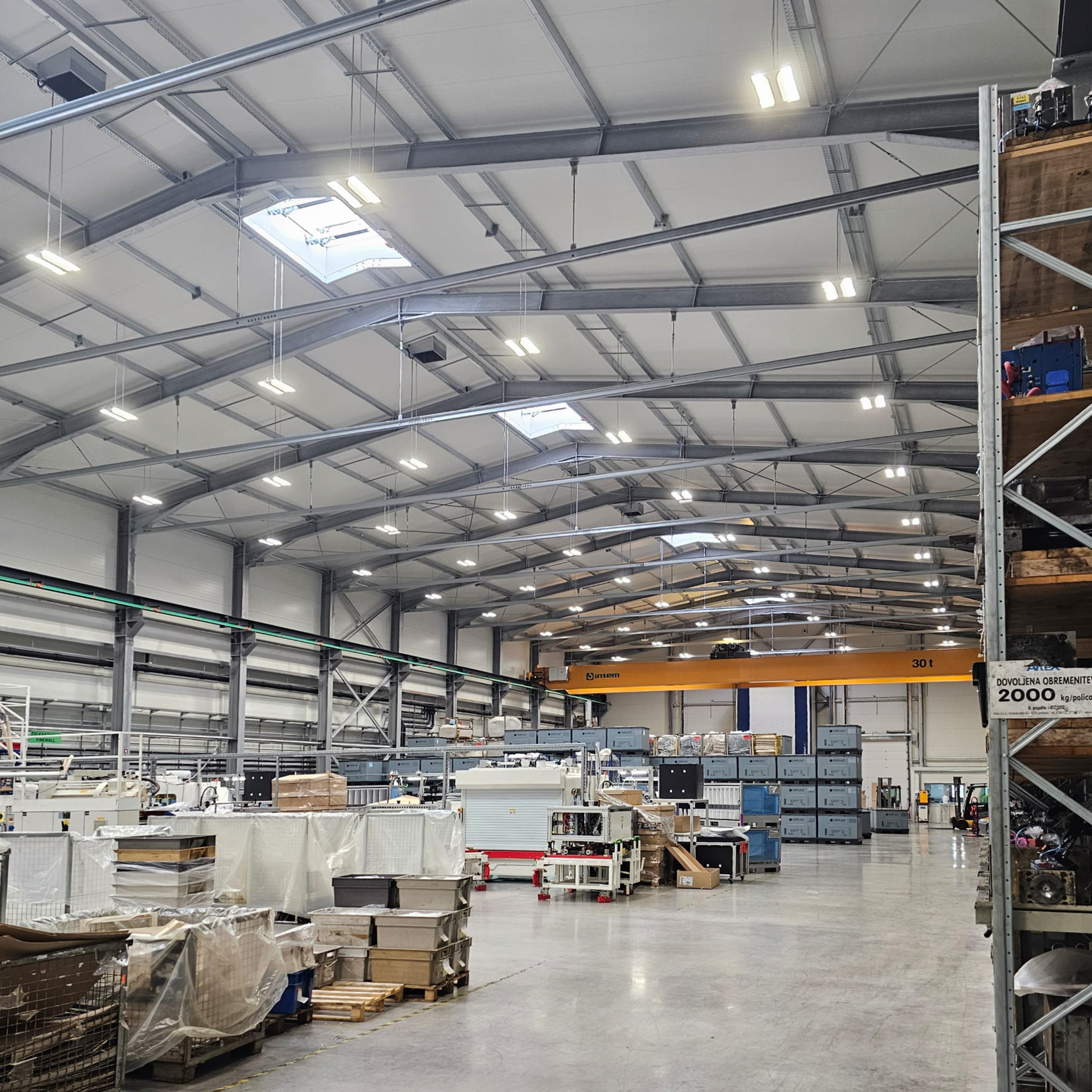
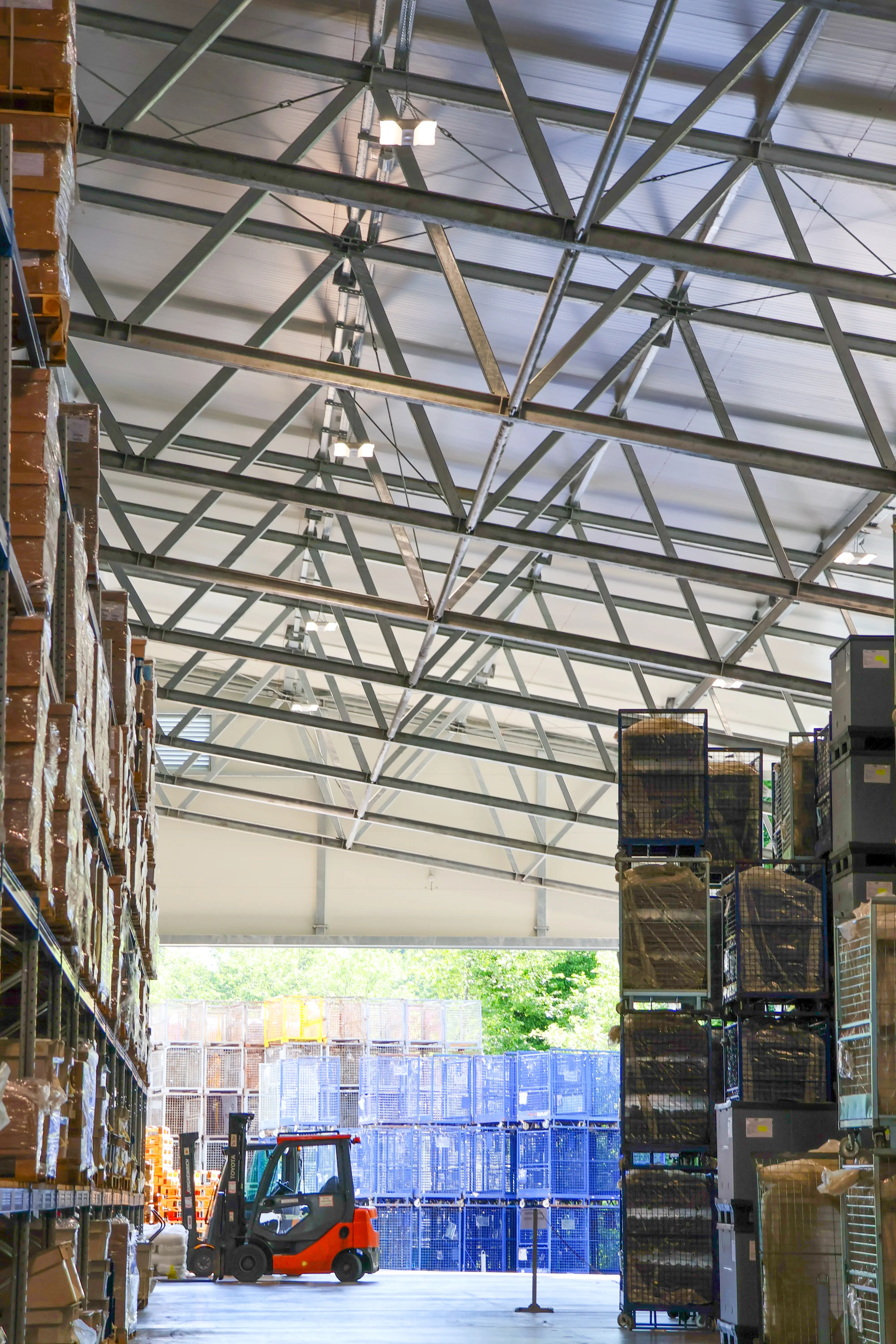
Industrial warehouse with high racking lit by linear LED luminaires aligned with the aisles
Linear luminaires on the aisle centreline: the light reaches the shelves, not the top of the racks.

3F Filippi ranges for warehouses

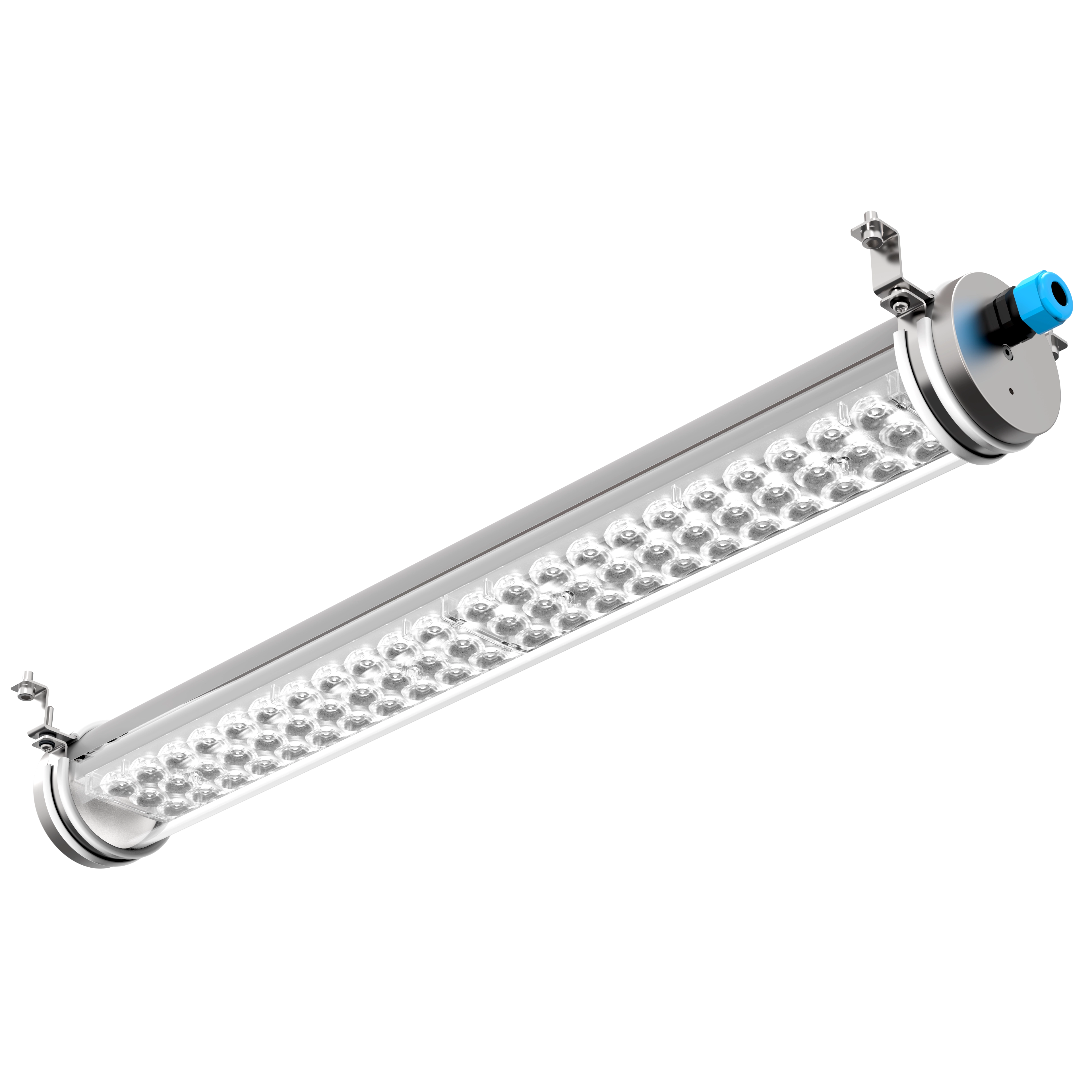
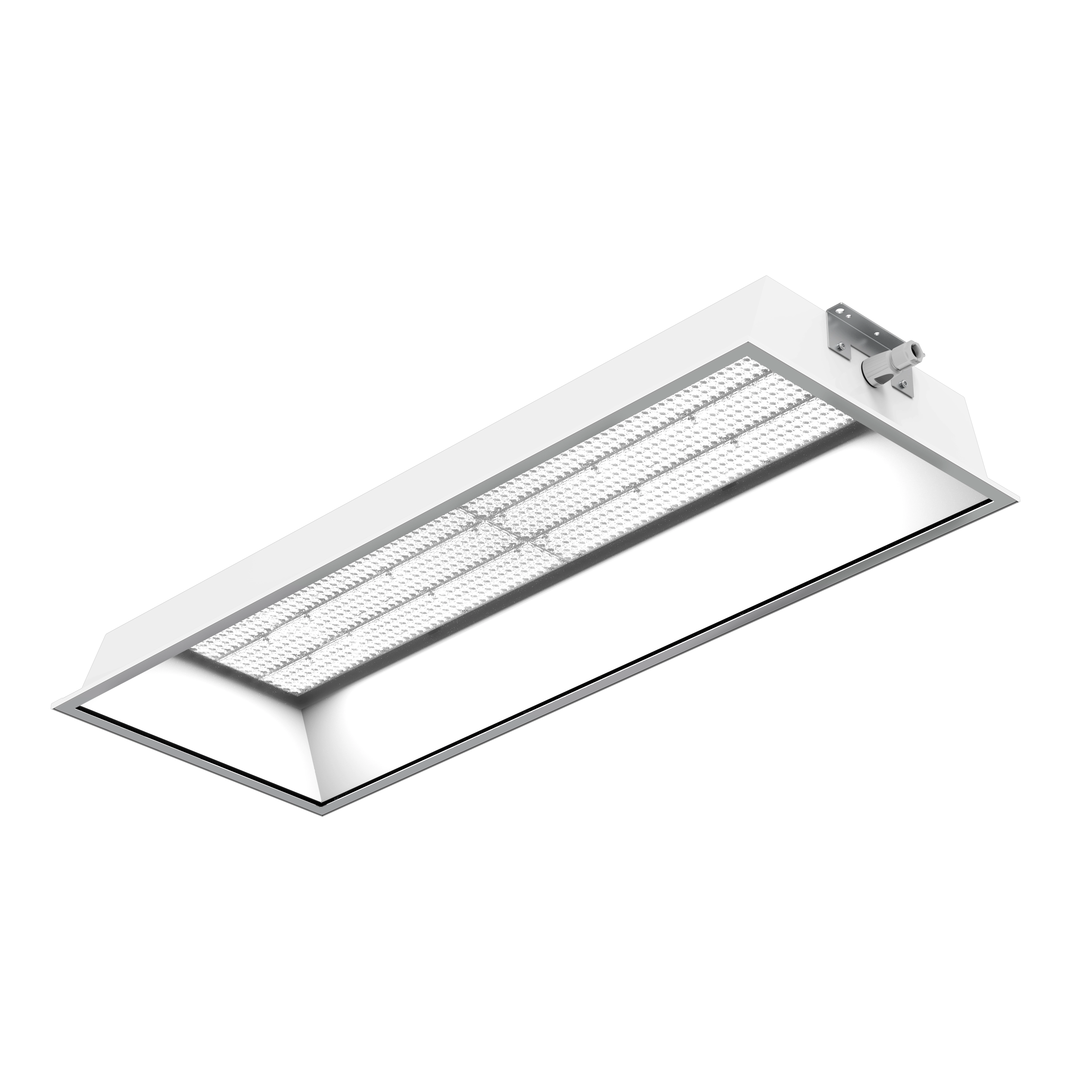
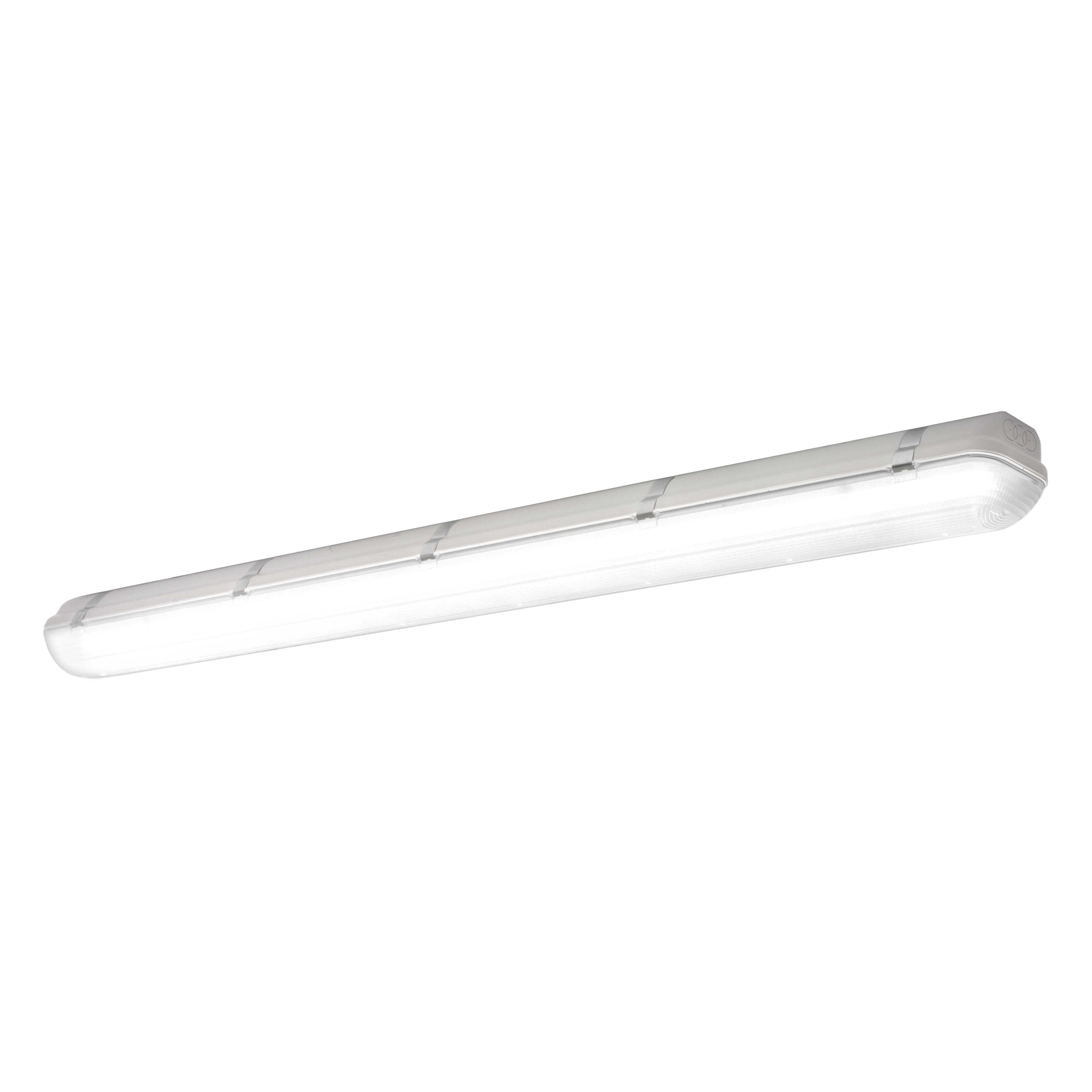
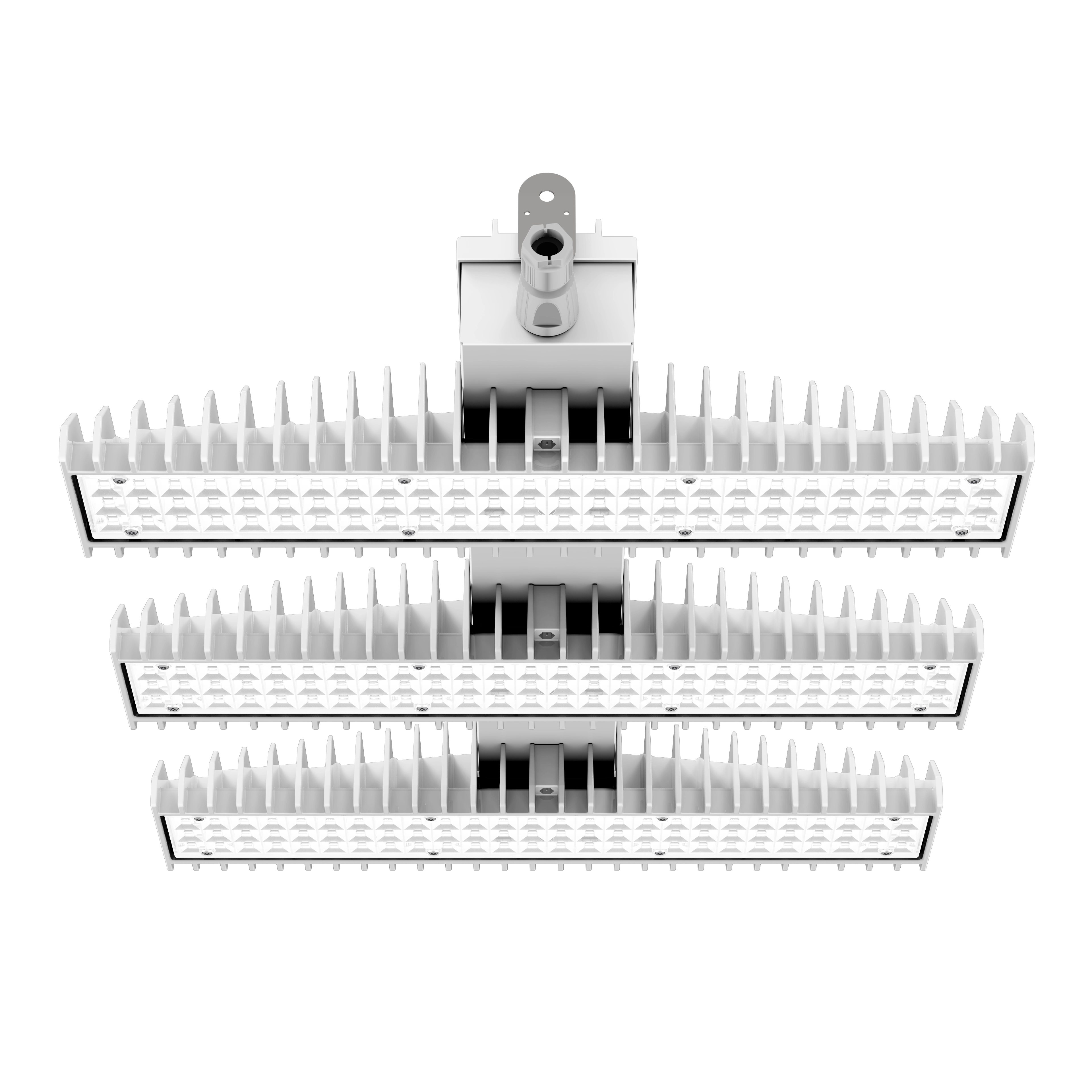
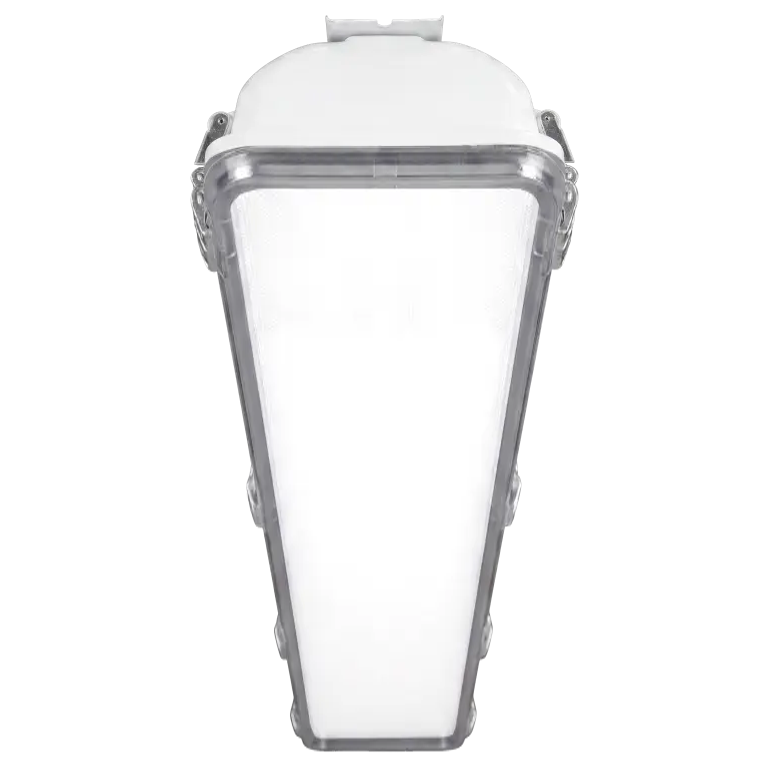
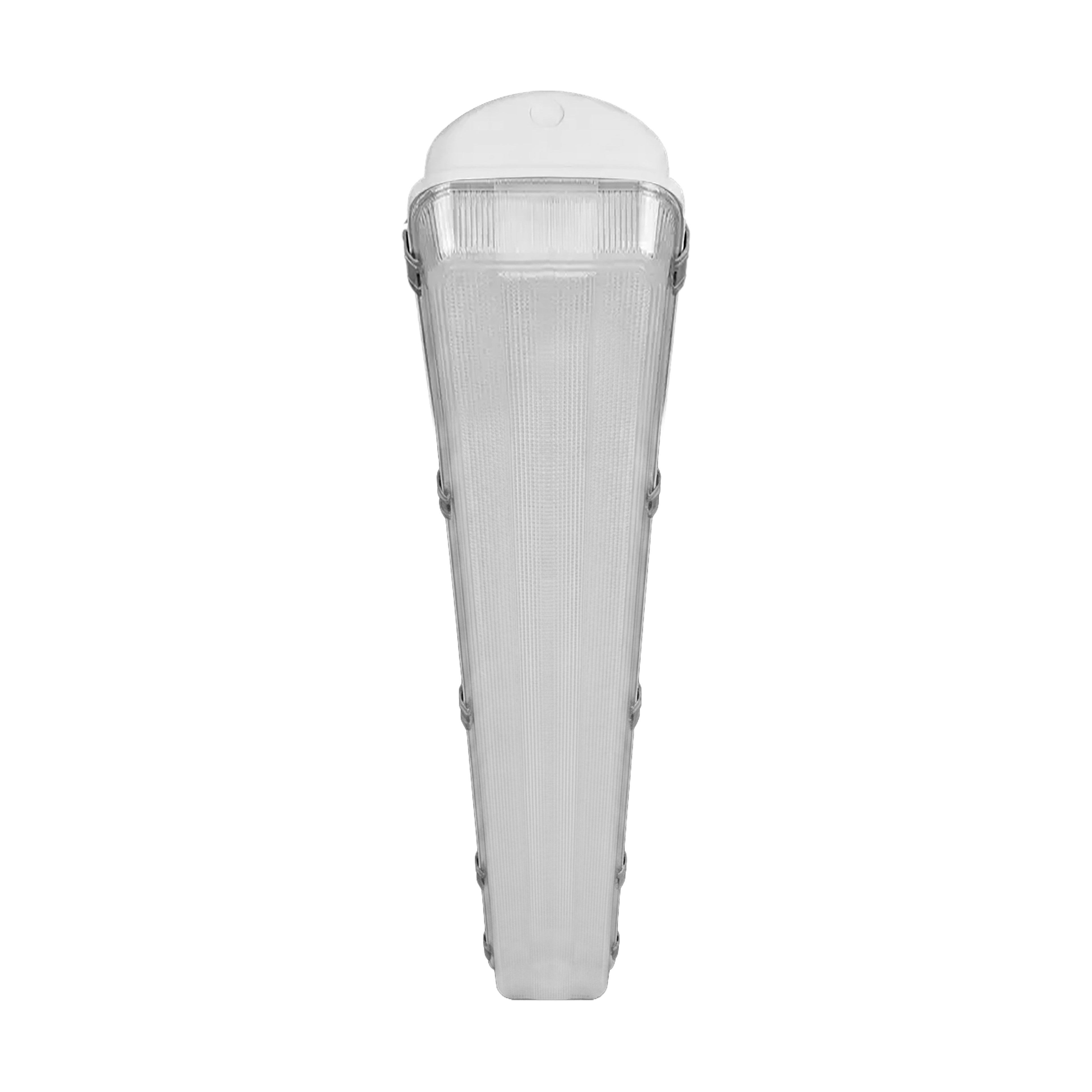
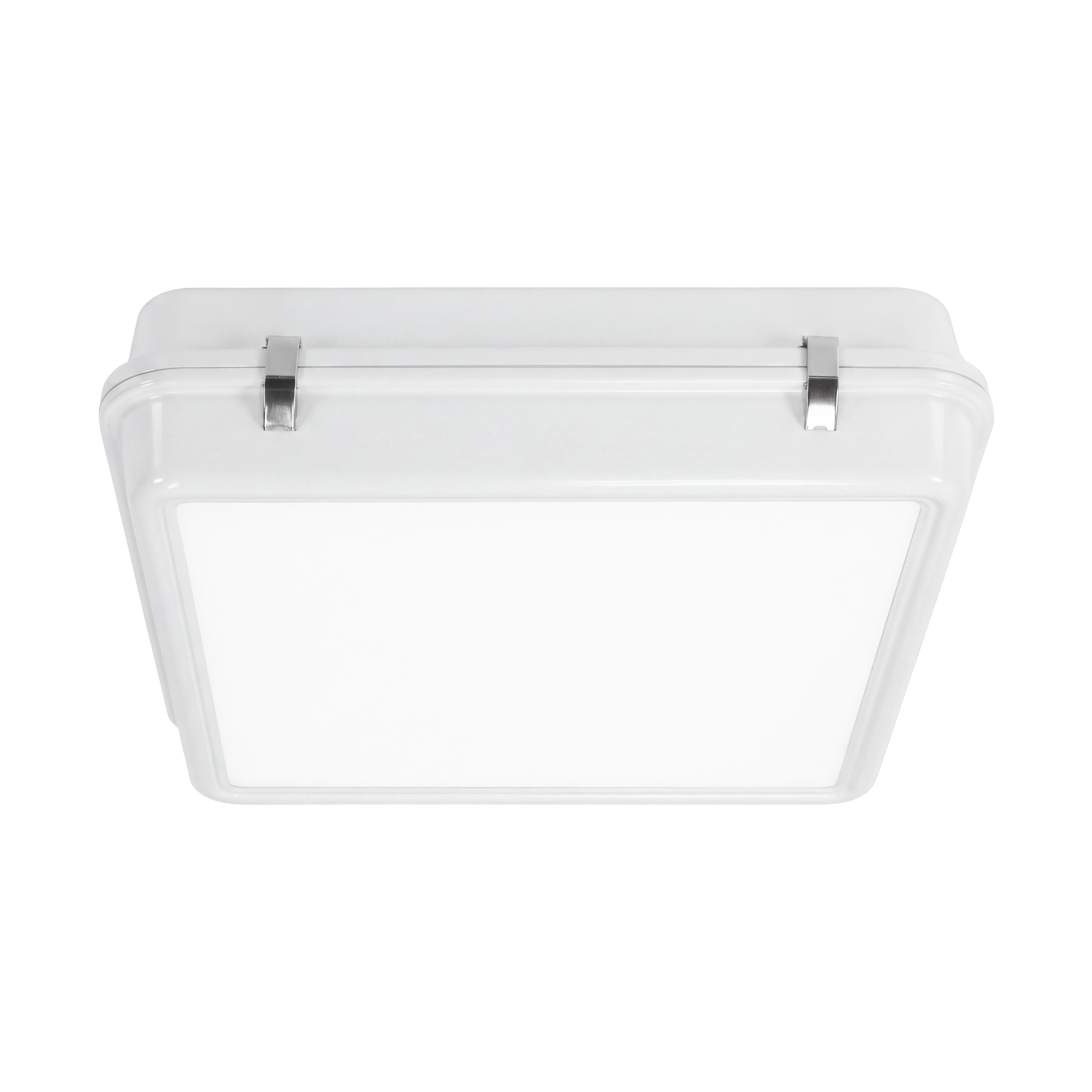
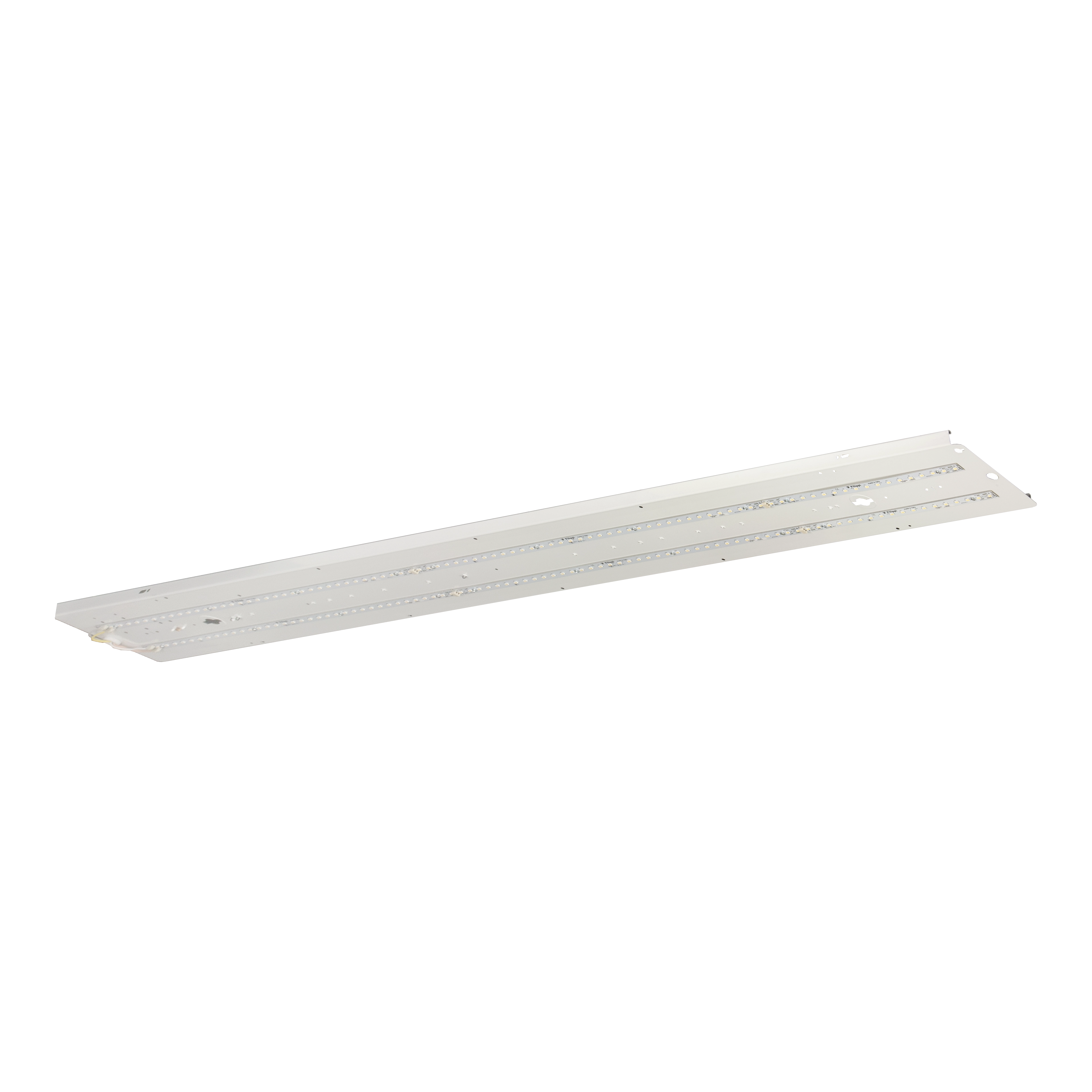
Continuous linear fittings and weatherproof high-bay luminaires with aisle optics, versions with integrated sensor and retrofit families for replacement on the same lighting points. Each range page lists the available photometric distributions, IP/IK ratings, operating temperatures and calculation files.

Other ranges suited to warehouses: Retrofit Beta 430, Retrofit 3F Cub, Retrofit 3F Linda.

Browse all ranges

Warehouses and plants lit by 3F Filippi

Two production sites where storage was lit with the same care as the departments.

Frequently asked questions about warehouse lighting

What characteristics should good warehouse lighting have?

It must ensure uniform light on both rack faces, dedicated optics that bring light onto the shelves rather than above the racks, high efficiency, resistance to dust and impacts and compliance with the standards for operator safety. Verification must be done on the vertical illuminance of the rack face, not on the floor: that is the difference between a warehouse compliant on paper and one where the labels can actually be read.

Does LED lighting reduce energy consumption in warehouses?

Yes, on two levels. LED alone uses up to 70% less than the discharge and fluorescent lamps still found in warehouses, and — unlike them — tolerates frequent switching. That enables the second level: per-aisle presence detection, which in round-the-clock facilities with intermittent occupancy is worth a further 30% and more. Add the avoided maintenance costs, which at 10–12 metres between the racks are the heaviest item.

Can sensors or smart systems be integrated in warehouses?

Certainly. 3F Filippi solutions support per-aisle presence sensors, daylight harvesting where there are rooflights and centralised management via DALI, improving efficiency and automation of the installation. Luminaires with integrated sensor need no control wiring: the aisle switches on as the forklift enters and returns to standby when it leaves. Integration with the warehouse management system also allows per-zone energy monitoring.

Where should luminaires be mounted in a racked warehouse?

On the aisle centreline, never above the racks. A luminaire above the racking lights the cartons on top and leaves the lower shelves in shadow; one in the middle of the aisle with an elongated optic sends light symmetrically onto both faces. The spacing along the aisle depends on height and optic and must be calculated: as a starting rule, at 10 metres with an aisle optic you are around 1–1.5 times the height, then the lighting calculation checks vertical uniformity on the lowest shelf.

How is a narrow aisle for turret trucks lit?

With continuous linear luminaires mounted on the aisle centreline and a double-asymmetric optic, which pushes light onto the two rack faces at close range. In VNA aisles below 2 metres a symmetrical beam would waste light on the rack ends; the continuous line instead guarantees uniformity along the whole aisle. Sensors go at the start and end of the aisle, so the row switches on before the truck enters and stays on until it leaves.

How much light does an automated warehouse need?

Little, and only where people go. In a stacker-crane warehouse no operator works between the racks: the standard requires lighting only for maintenance and inspection, typically 20–50 lux on the access routes, switched on manually or by the system when a technician enters the area. Luminaires must be positioned clear of the machine envelope and reachable from the service walkways; the goods-in and goods-out zones, where people return, follow the values for picking and transit areas.

Let us design your warehouse lighting, aisle by aisle

With the racking plan, the heights and the type of forklifts our technical department calculates the vertical illuminance on the shelves, the luminaire positions and the saving with per-aisle sensors. No obligation.