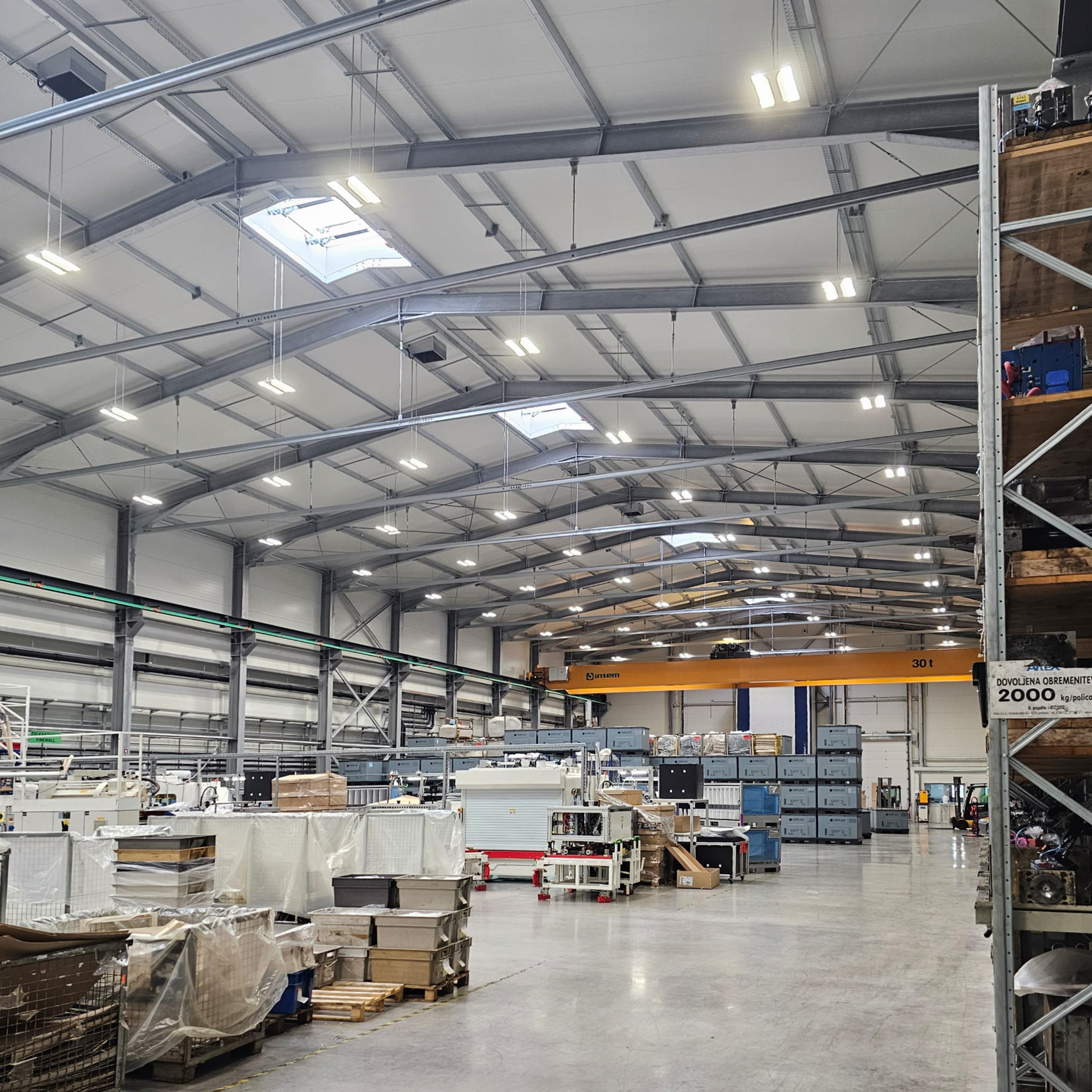
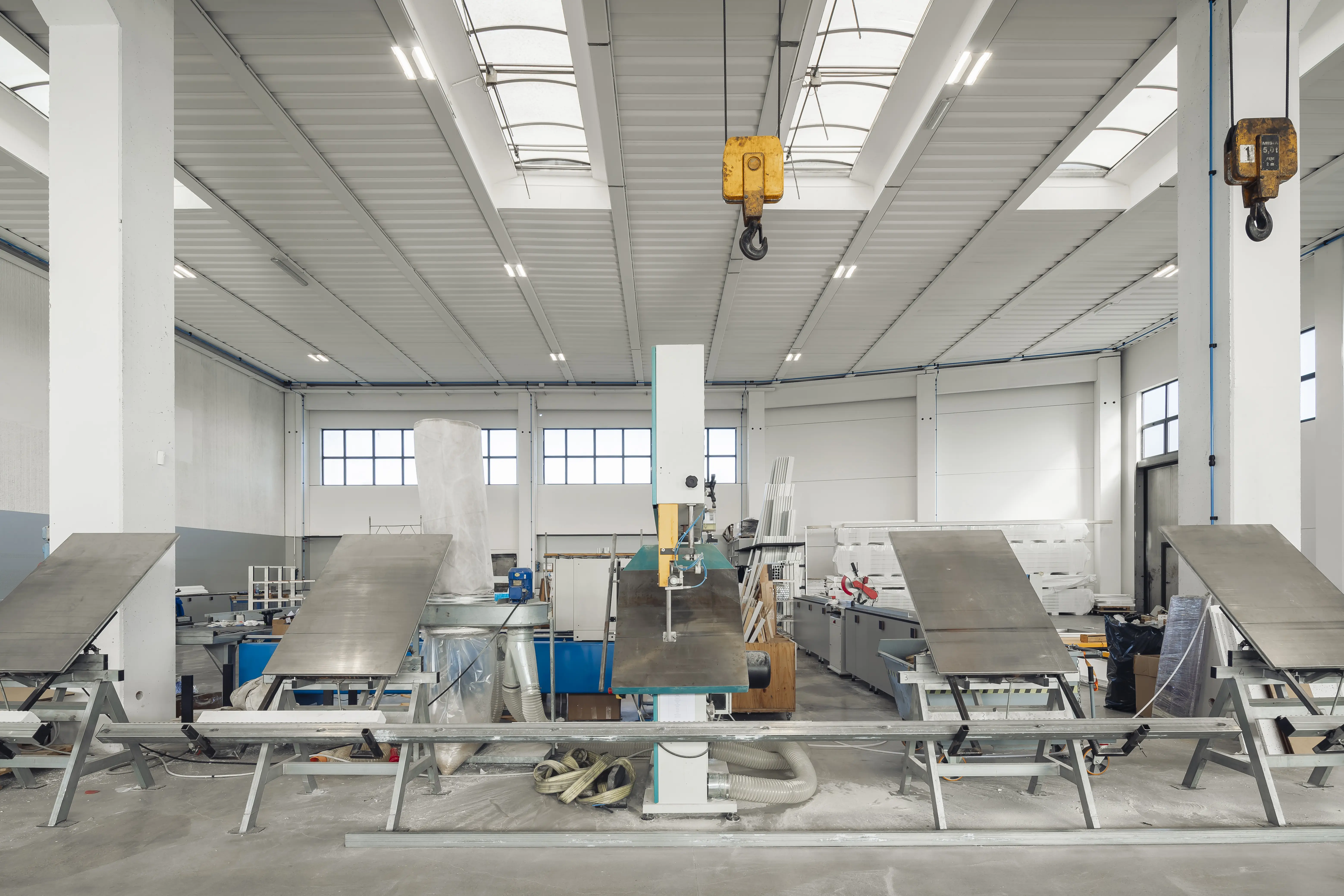
Industrial relamping is the replacement of existing lighting fixtures — discharge high bays, fluorescent luminaires, metal halide floodlights, first-generation LED — with high-efficiency LED luminaires, keeping the lighting points, the wiring and, where possible, the housings themselves. It is the energy-efficiency measure with the fastest payback a manufacturing company can make: lighting accounts for 10–20% of a hall's electricity bill, and a discharge or fluorescent installation uses three times the energy of an LED installation producing the same light, often better.
Three facts make relamping worthwhile today. T8 and T5 fluorescent lamps and many discharge lamps are phased out in Europe under RoHS and the ecodesign directive: stocks run out and spares keep getting dearer. Energy prices turn a 60–70% saving into a figure that shows up in the first year's accounts. And energy-efficiency incentives — white certificates, tax credits, regional schemes — shorten a payback that, even without them, sits between two and three years.
This page explains how a relamping is designed in a production site: the equivalence table between existing fixtures and LED replacements, what to check before intervening, the Retrofit kits that let you keep the housings of 3F Filippi fixtures already installed, and the questions facility managers ask us most often. For the general criteria of hall lighting see the page on lighting for industry; to bring controls in together with LED, see smart lighting for industry.
The question before every quotation is "what do I replace what I have with". The table gives typical equivalences between the fixtures we find in industrial halls and the 3F Filippi LED ranges that replace them on the same lighting point. LED wattages are indicative: the right one depends on mounting height, on the illuminance EN 12464-1 requires for the visual task, and on the condition of reflectors and diffusers in the current installation, which often delivers less than its nameplate says.
| Existing fixture | Power drawn | 3F Filippi LED replacement | Indicative LED wattage | Saving |
|---|---|---|---|---|
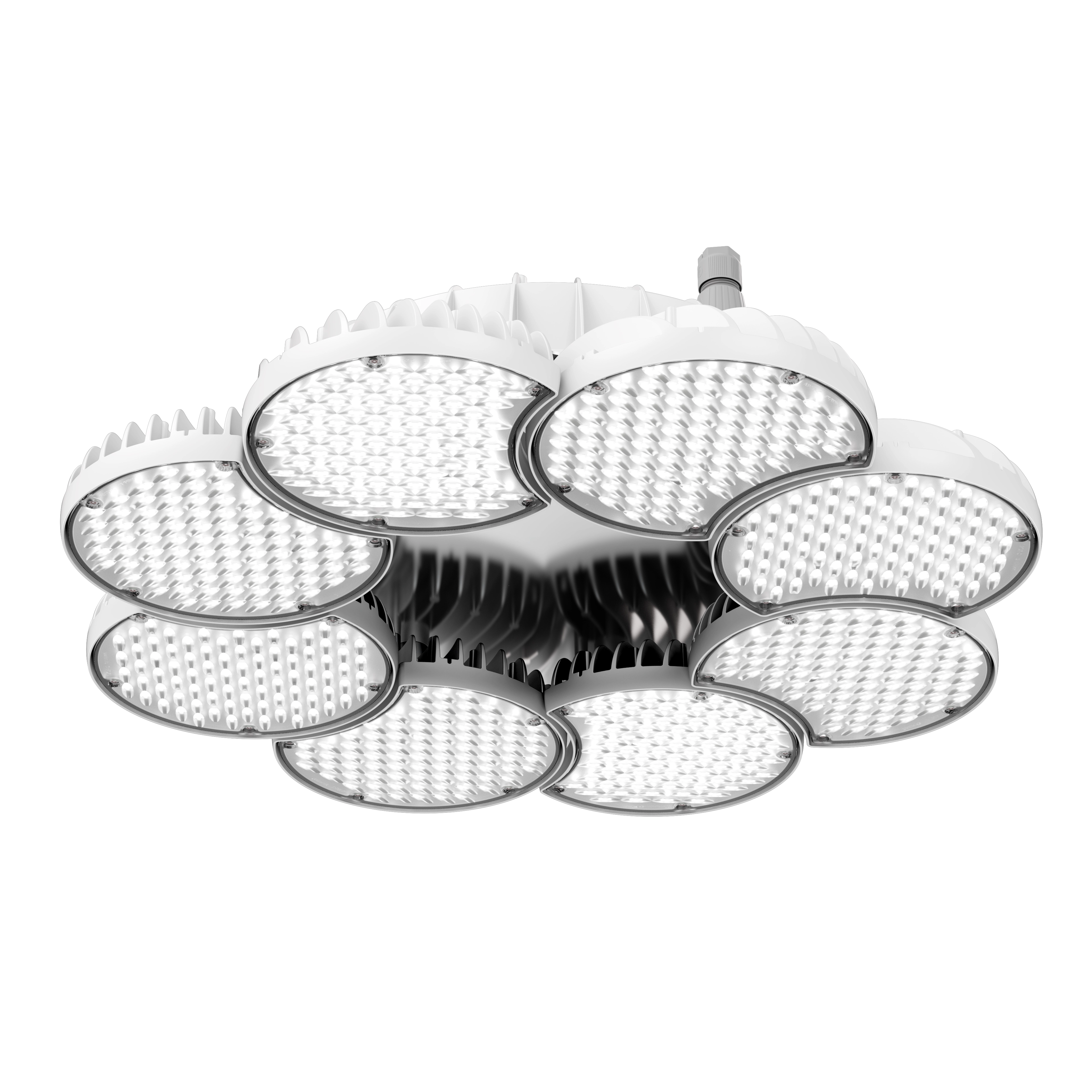
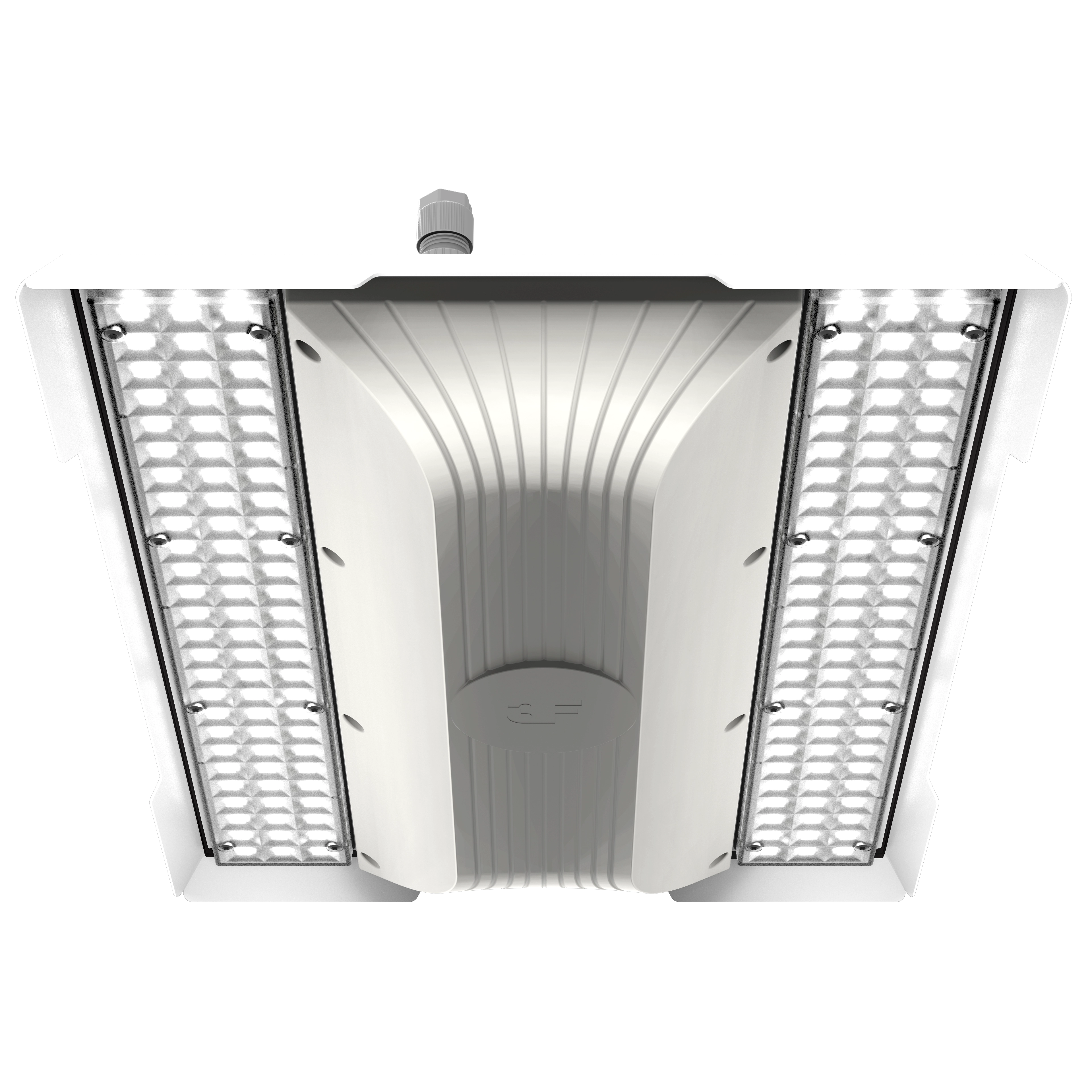
| 400 W metal halide high bay, 10–14 m | ≈ 440 W incl. ballast | 3F Rio High Output, 3F LEM High Output, 3F Six | 150–200 W | −55/−65% |
| 250 W high-pressure sodium high bay | ≈ 280 W | 3F Rio, 3F LEM, 3F Rover | 90–130 W | −55/−65% |
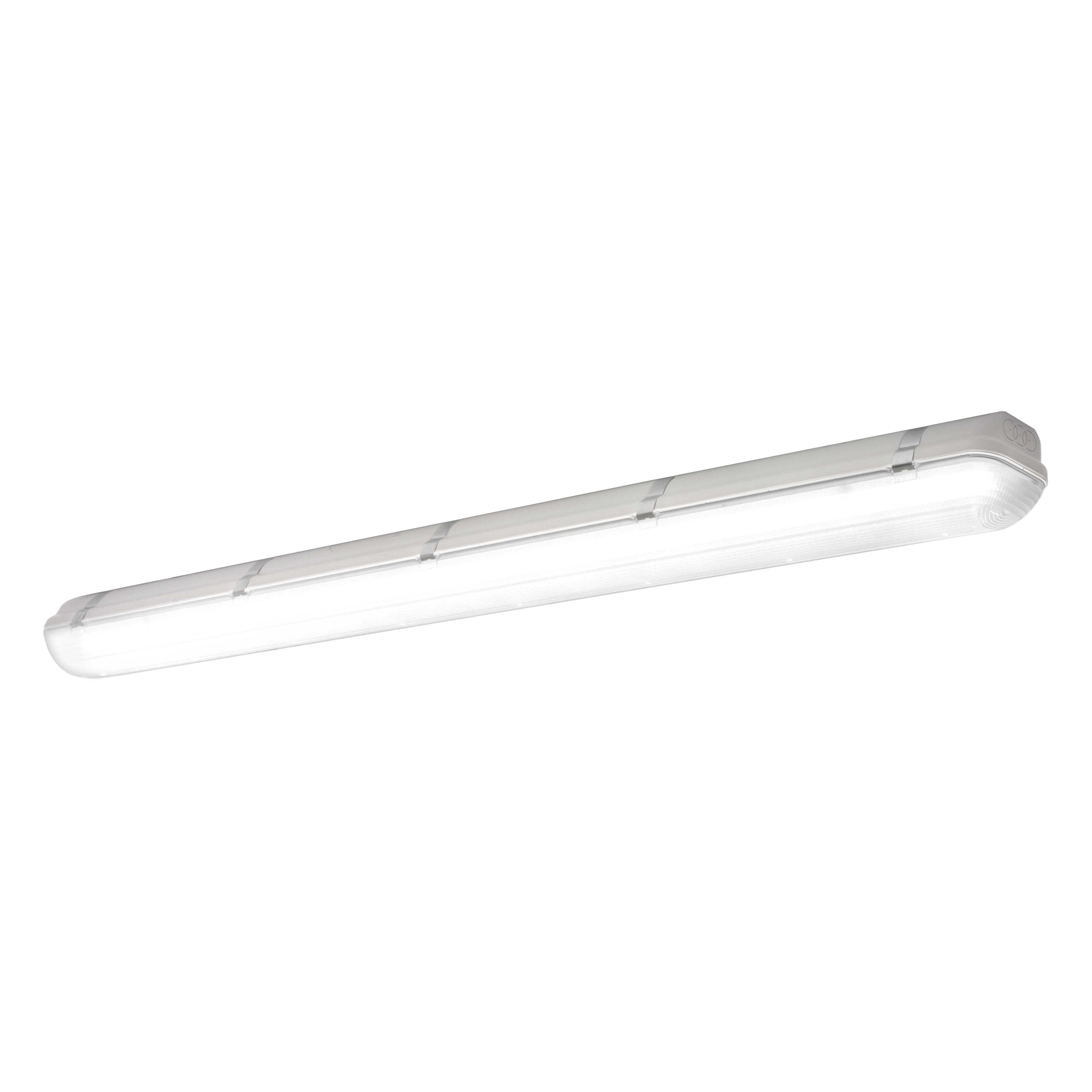
| 2×58 W T8 fluorescent waterproof fixture, magnetic ballast | ≈ 135 W | 3F Linda, 3F Zeta, 3F Cub | 40–60 W | −60/−70% |
| 2×36 W T8 fluorescent waterproof fixture | ≈ 85 W | 3F Petra, 3F Linda, 3F Zeta | 25–35 W | −60/−70% |
| 4×54 W T5 industrial fixture, 7–9 m | ≈ 240 W | 3F Linux L, Beta 500, Beta i3F | 100–140 W | −45/−55% |
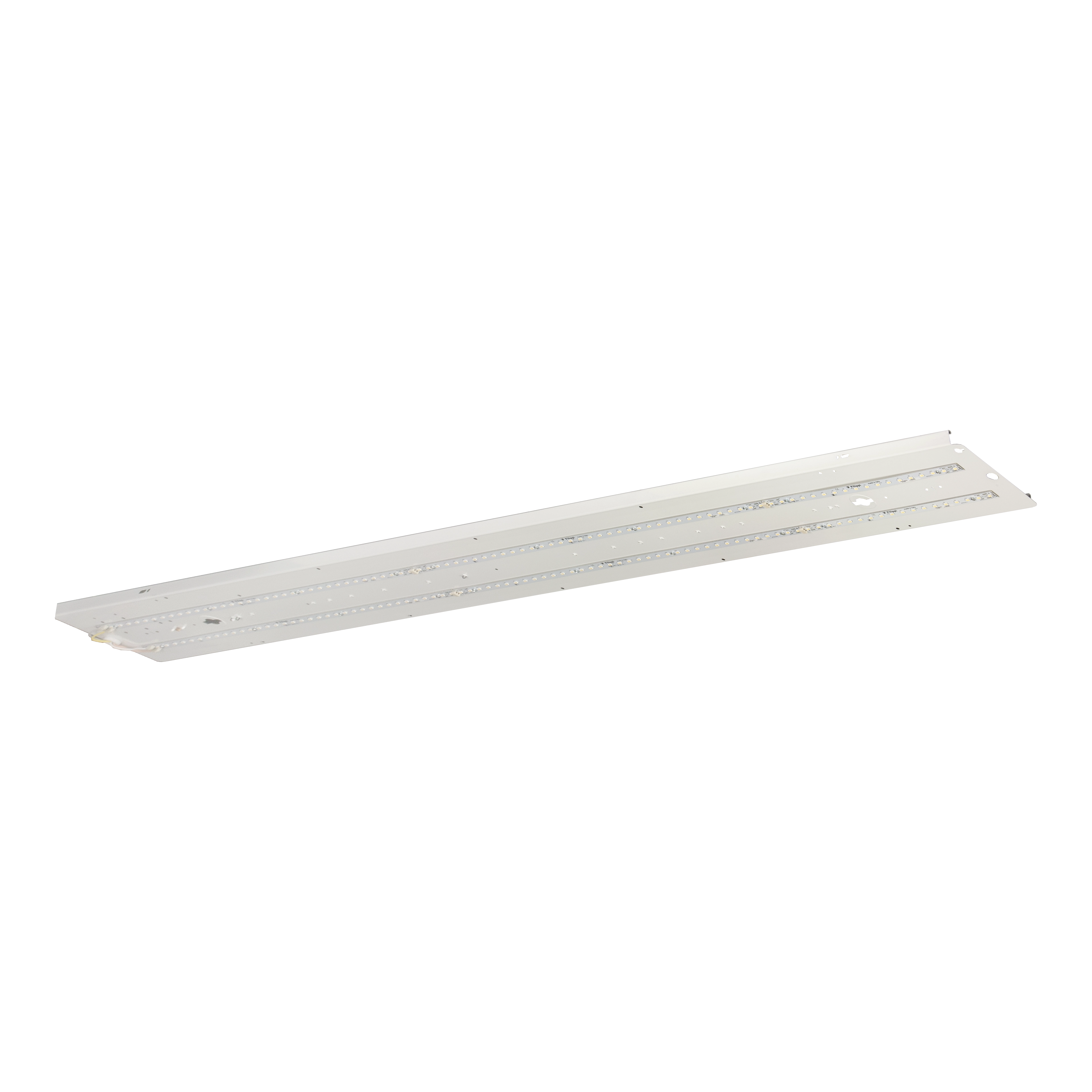
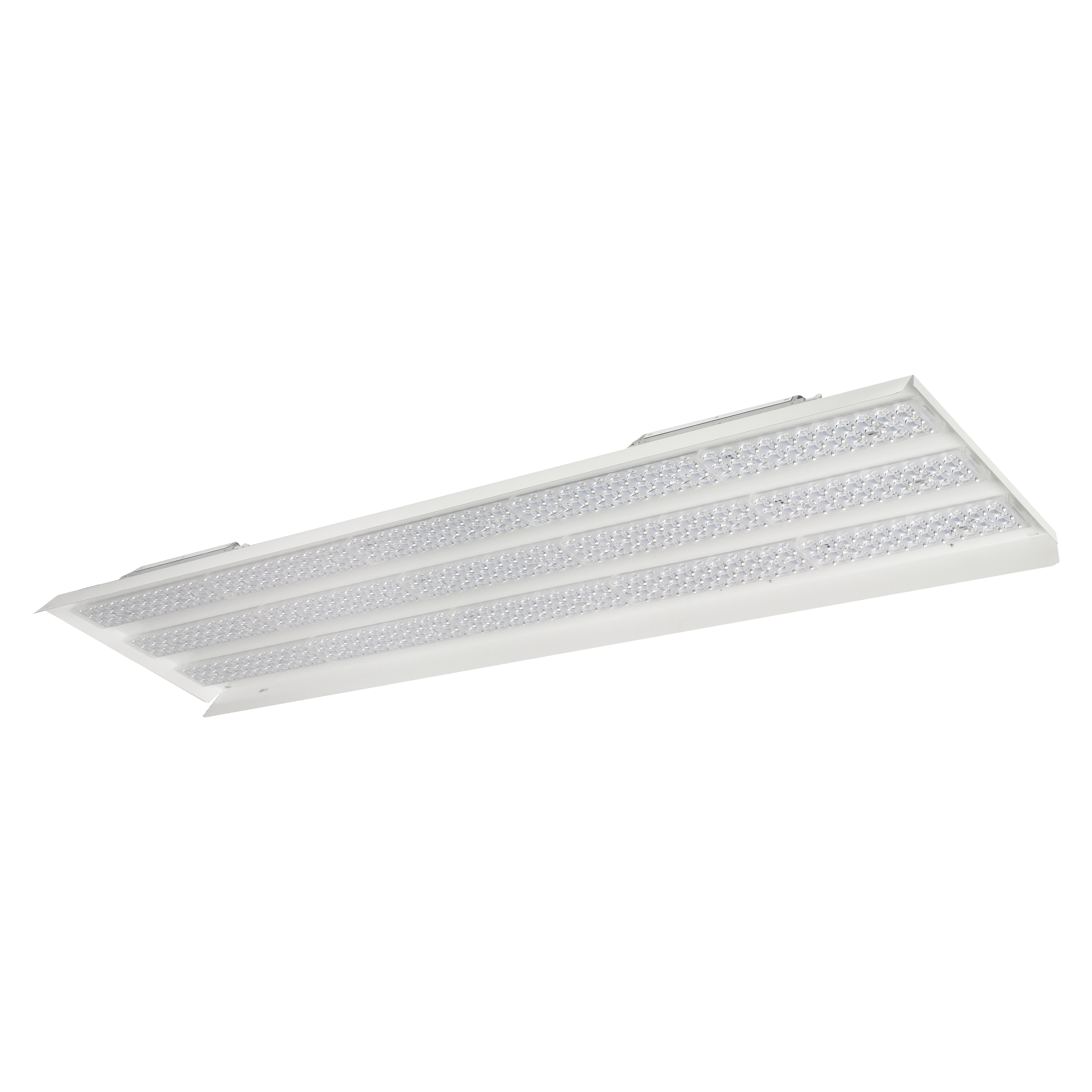
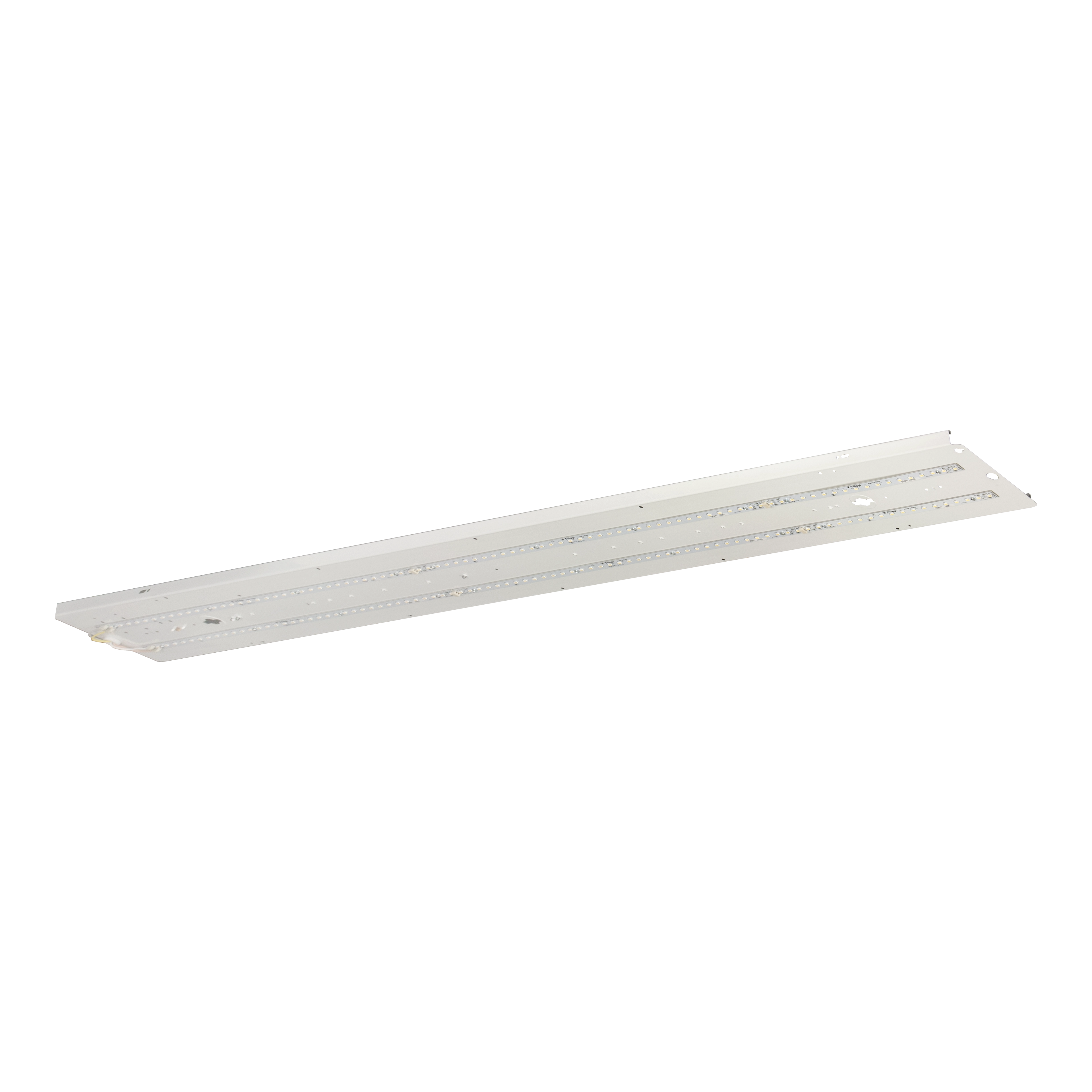
| Fluorescent Beta A3F / i3F or Beta 430 already installed | ≈ 85–135 W | Retrofit Beta A3F-i3F or Retrofit Beta 430 kit: only the gear tray is replaced | 30–60 W | −55/−65% |
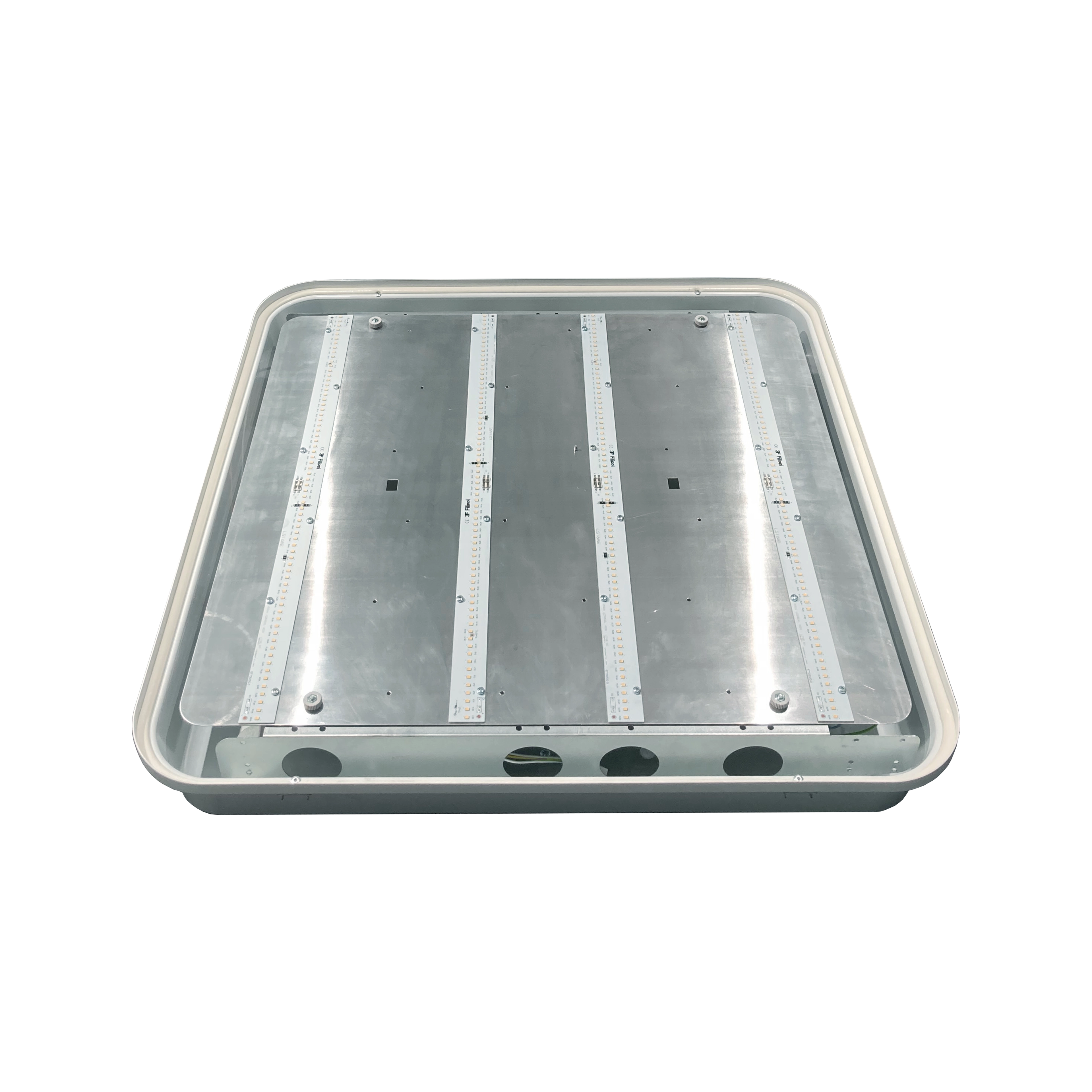
| Fluorescent 3F Linda or 3F Cub already installed | ≈ 85–135 W | Retrofit 3F Linda or Retrofit 3F Cub IP64 kit: housing and diffuser stay | 30–60 W | −55/−65% |
The power drawn by discharge and fluorescent lamps includes ballast losses, which reach 15–20% with magnetic ballasts: one reason why the real saving of a relamping is often higher than the one calculated on nominal wattages. The second reason is depreciation: a metal halide high bay at end of life gives 60% of its initial light, and the LED installation is sized on the design illuminance, not on what the old installation had been delivering for years.
A successful relamping is decided on the site survey, not in the catalogue. Three groups of parameters our technical department checks before proposing a range.
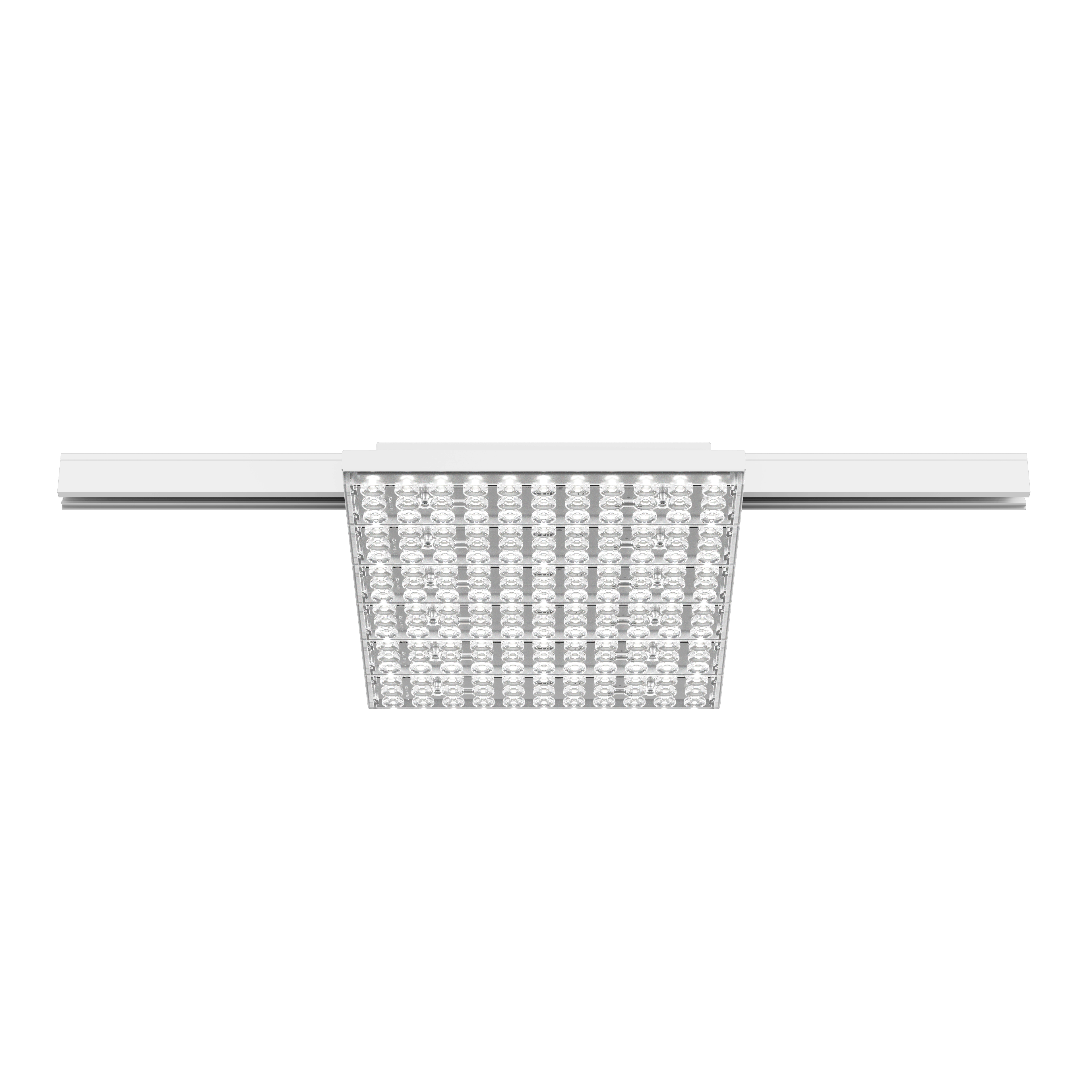
3F Filippi industrial luminaires reach 40,000 lumens with optics designed for high mounting — narrow, medium or wide beam methacrylate lenses, reflectors — so that a high bay at 12 metres is replaced by a luminaire that concentrates light where it is needed rather than scattering it on the walls. Colour rendering CRI ≥ 80, or ≥ 90 where colour is inspected, colour temperatures 4000–6500 K, initial colour tolerance SDCM 3 so that two adjacent luminaires cannot be told apart.
The sizing rule: start from the illuminance required for the visual task, calculate with the maintenance factor and pick the nearest lumen package — not the "equivalent wattage" printed on off-the-shelf boxes.
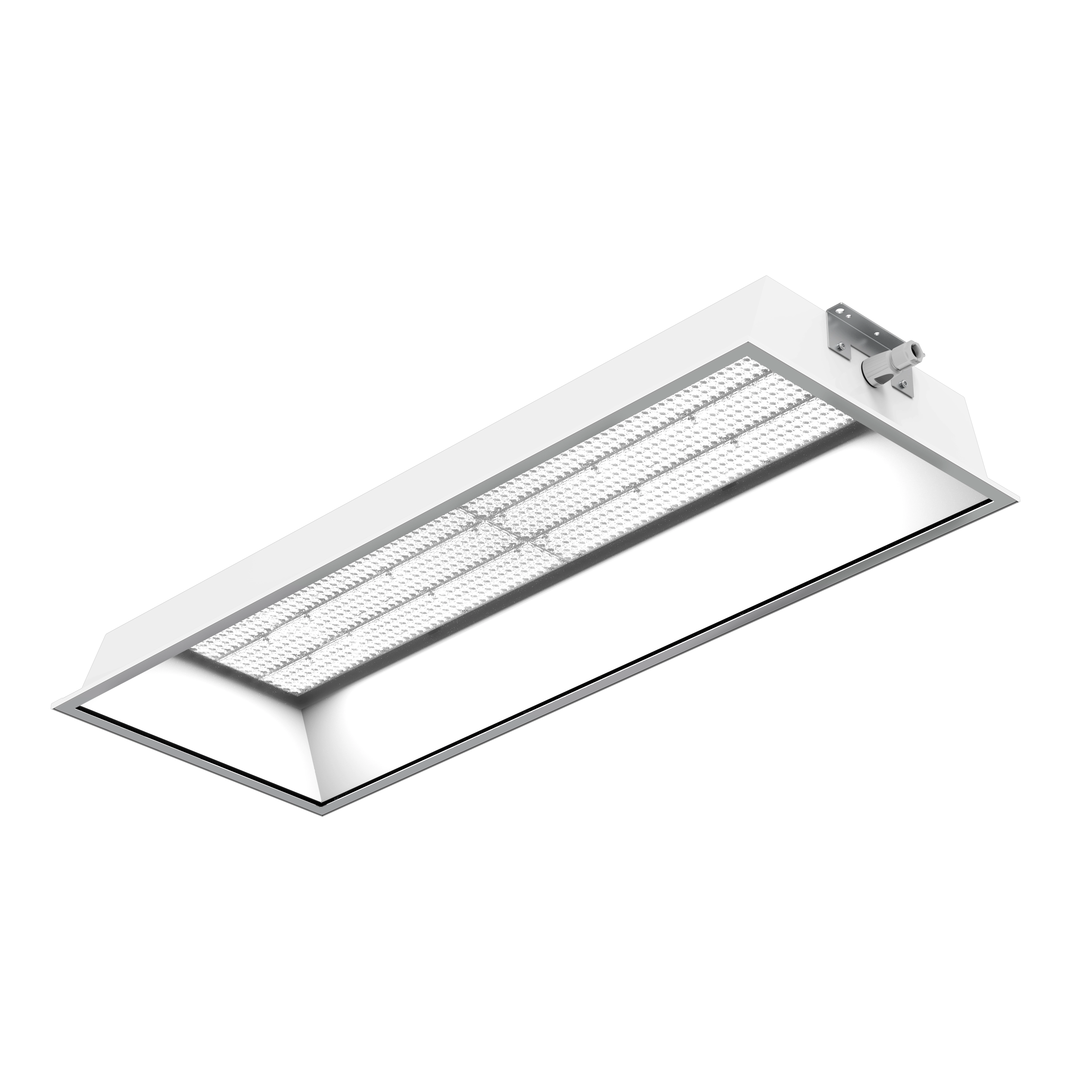
Housings in powder-coated sheet steel or aluminium, flux reflectors in mirror or painted aluminium, diffusers in tempered glass, polycarbonate or methacrylate according to the environment: impacts, temperatures, wash-downs. Suspension, ceiling, busbar and track fixings, with spacings that follow those of the fixtures being removed: the electrical installation stays, the luminaires change.
For 3F Filippi fixtures already installed there are the Retrofit kits: LED gear trays in galvanised steel or aluminium that slot into the existing housing in place of the fluorescent plate, with the same closures — the "Ribloc" devices of the Beta A3F-i3F, the anti-vandal clips of the 3F Cub — and no new holes in the ceiling.
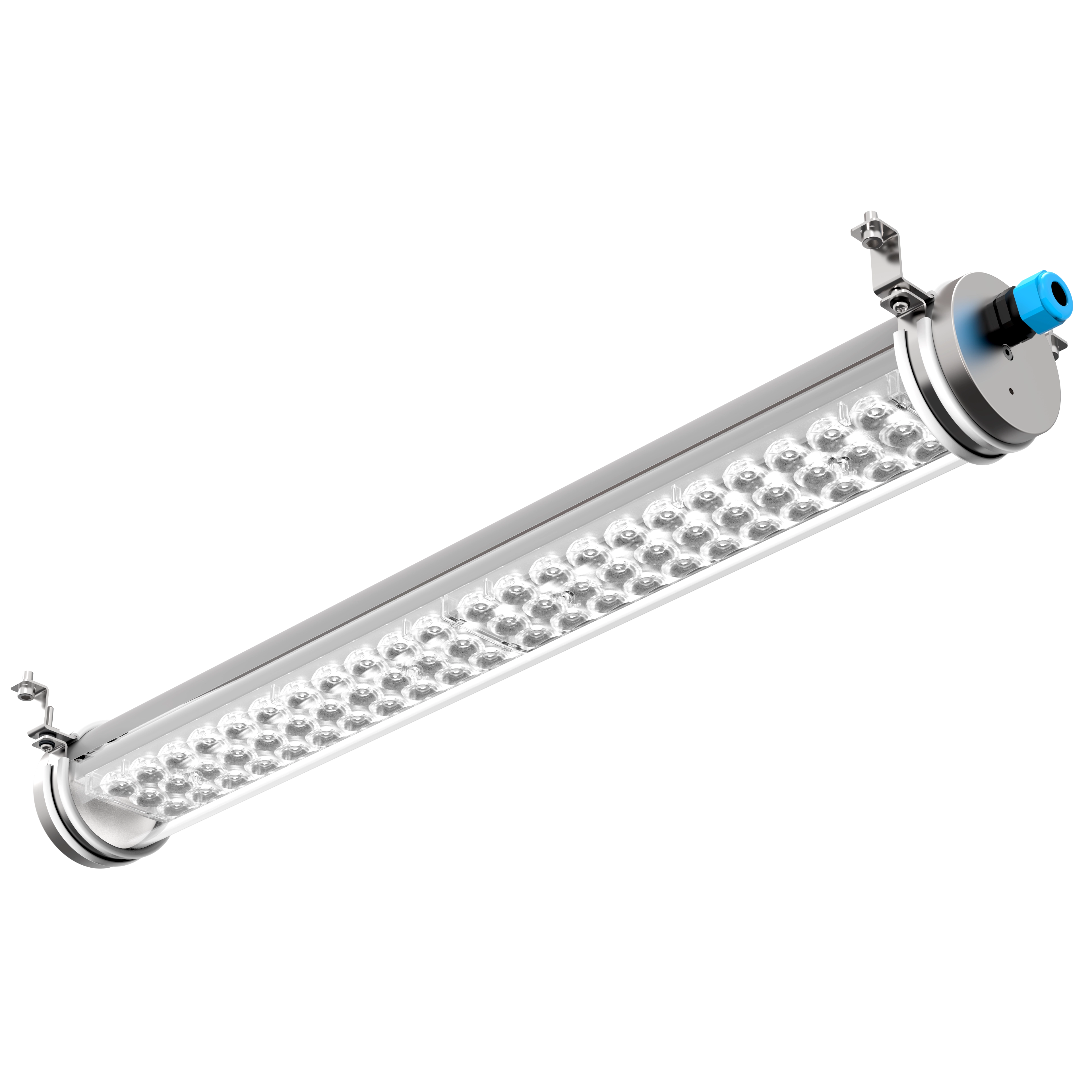
Luminaires compliant with EN 60598-1 and designed for the EN 12464-1 levels for indoor workplaces; versions with integrated emergency to EN 60598-2-22 to keep escape routes lit during and after the relamping; ATEX versions for dust or gas zones, IP65/IP66 and −30 to +70 °C ratings for the lines where the old installation was already a compromise.
Relamping is also the chance to bring back to standard what has changed over time: new layouts, new workstations, illuminance levels the old arrangement no longer covers.
Four measurable effects in the twelve months after the intervention, for whoever runs the plant and whoever pays its bills.
Replacing obsolete technologies with high-efficiency LED cuts lighting consumption by 55–70% for the same light; with the sensors and dimming described on the smart lighting page, savings exceed 80%. On a 5,000 m² hall running two shifts, that is tens of thousands of kilowatt-hours a year.
More uniform illuminance, wattages and light distributions chosen for each department instead of one fixture for the whole hall, colour rendering that shows materials and wiring in their true colours. Many relampings find the old installation below the standard levels and bring it back to design.
The long life of LEDs and the mechanical reliability of 3F Filippi industrial luminaires do away with the cycle of lamps to replace at 12 metres: no lifts, no department stoppages for a dead tube, no stocks of discontinued lamps to chase.
Better visibility on workstations, forklift routes and loading areas, fewer shadows between racks, instant restrike after a power interruption — where discharge lamps took minutes to come back up, leaving the department in the dark.
First the four Retrofit kits for existing 3F Filippi fixtures — Beta A3F-i3F, Beta 430, 3F Cub, 3F Linda — then the high-mounting, waterproof and harsh-environment ranges that replace high bays and fluorescent fixtures of any brand. The range pages give lumen packages, optics, photometry and calculation files.
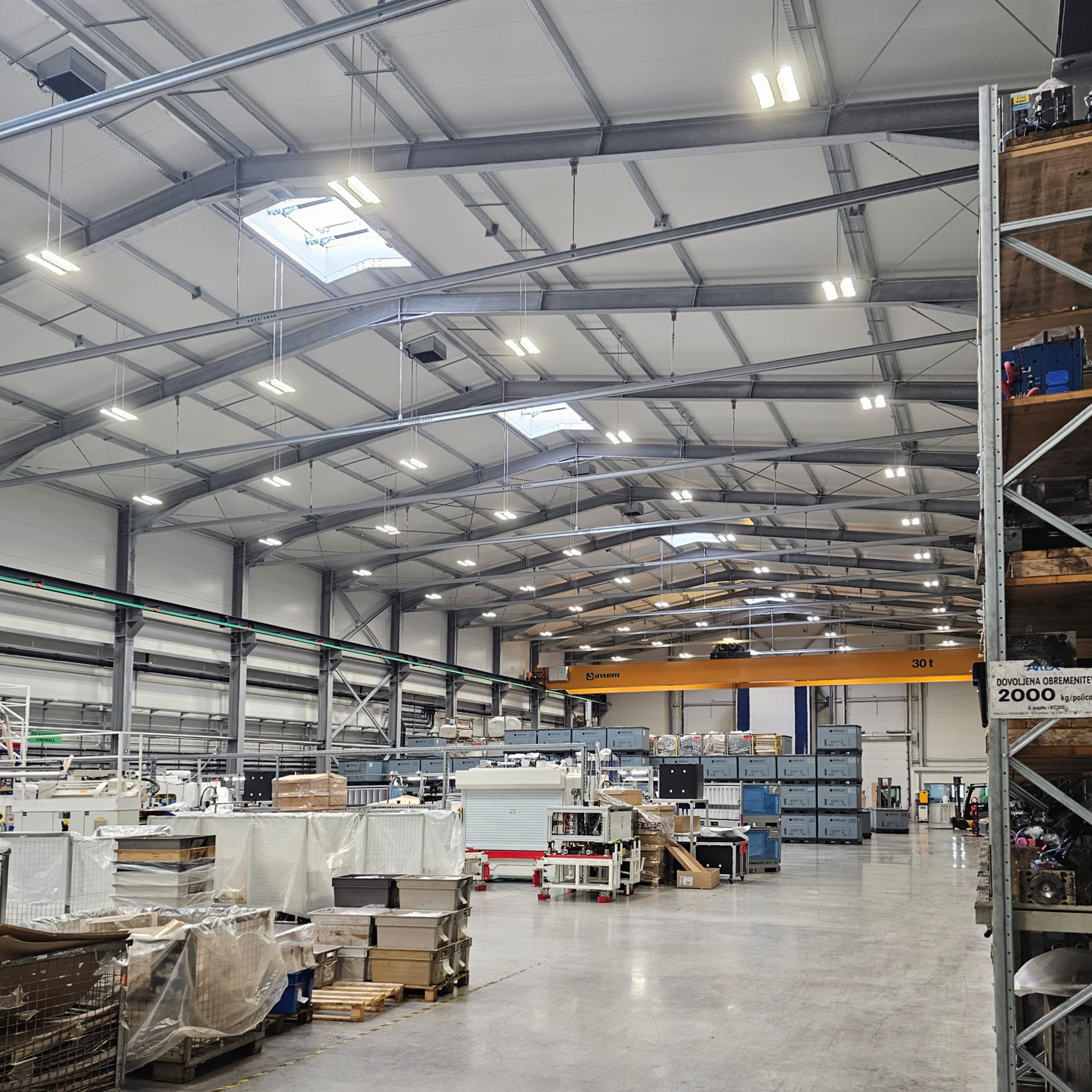
Two plants where the installation was renewed fixture by fixture, without stopping production.
LED relamping improves light quality, reduces energy and maintenance costs and improves operational safety, with a short payback on the investment. In practice: from the first bill after the intervention, lighting consumption drops by 55–70%, departments return to design illuminance, and the lamp replacement plan — with lifts, stoppages and stocks — disappears for years. Typical payback is two to three years, less with incentives.
Yes. 3F Filippi luminaires are designed for simple, direct retrofits: the new fixture is installed on the same lighting points as the old one, with suspension, ceiling, busbar or track fixings and compatible spacings, cutting installation time and cost and plant downtime. Wiring, panels and switches stay; if you want to add controls, the wireless versions do so without bus cables. For 3F fixtures already installed there are the Retrofit kits, which replace the gear tray only.
Before relamping it is important to analyse the existing installation, the mounting heights, the illuminance levels required by the standards — EN 12464-1 for each department's visual task — and the environmental conditions: dust, humidity, temperature, chemicals, impacts. This assessment allows the most suitable 3F Filippi LED luminaires to be chosen for performance, safety and maximum energy efficiency. During the survey we measure current illuminance, check the condition of fixings and wiring and produce a lighting calculation with a consumption comparison.
They are LED gear trays designed to fit the housing of four historic 3F Filippi fixture families still widespread in industrial halls: Retrofit Beta A3F-i3F and Retrofit Beta 430 (galvanised steel gear tray with methacrylate lenses), Retrofit 3F Linda (hot-dip galvanised, white-painted reflector gear tray) and Retrofit 3F Cub IP64 (aluminium gear tray with anti-vandal closing clips). The fluorescent plate is removed, the kit slotted in, the fixture closed with the same devices: housing, diffuser and ceiling fixing stay. They pay off when housings are in good condition and a fast intervention with less material to dispose of is wanted; where housings are damaged or illuminance must be revised, a new luminaire is the better choice.
Usually yes, through schemes that change over time and by country. In Italy white certificates (TEE) reward measured energy savings, tax credits for capital goods have covered interconnected installations, and regions publish energy-efficiency calls for SMEs; other European countries — the UK, Germany, France, the Netherlands — have analogous schemes. What all of them require is documented savings: our technical department provides the before/after calculation and the necessary data sheets; eligibility should be checked with your own adviser or an ESCo.
Emergency lighting cannot be interrupted: work proceeds zone by zone, keeping the existing system active until the new one — luminaires with integrated emergency kit to EN 60598-2-22 or dedicated fixtures — has been commissioned. In ATEX-classified zones, replacement is with luminaires certified for the same zone and category (gas or dust), such as the ATEX versions of 3F Linda and 3F Tank, and the work is planned with the site safety manager. The relamping plan we prepare sets out sequence, fixtures and continuity constraints for each zone.
Send us the floor plan, the list of installed fixtures with wattages and operating hours: our technical department prepares the lighting calculation, the equivalence table and the consumption comparison with payback time. No obligation.