Category

Lighting for hospitals

In a hospital, light serves the doctor examining, the surgeon operating, the patient in bed and the nurse passing at night: four different needs in the same corridor. 3F Filippi LED luminaires with CRI ≥ 90, UGR < 19, Tunable White, dedicated night lighting and materials that withstand daily disinfection.

Request a design for your facility

Light that must support diagnosis and let people sleep

A hospital is the building where light has the most contradictory tasks. The doctor examining needs high colour rendering to read the colour of skin and mucous membranes; the patient lying down looks at the ceiling and must not be dazzled by the luminaire above the bed; the nurse passing at three in the morning must see without waking anyone; the surgeon works at 1,000 lux without shadows; the cleaning staff come every day with disinfectants that would corrode an office luminaire. Hospital lighting is the design of all these needs, ward by ward and hour by hour.

3F Filippi solutions for healthcare facilities guarantee safety, visual comfort and maximum reliability in the wards: professional LED luminaires designed for critical environments, with specific optics, colour rendering CRI ≥ 90, glare UGR < 19 in ward and consulting areas, Tunable White versions to follow the circadian rhythms of patients and staff, dedicated night lighting, and materials and finishes designed for frequent disinfection — up to IP65 and IK10 where needed.

This is the reference page of the healthcare group. Care facilities have dedicated pages: assisted living facilities for residences with nursing care and nursing homes for residences for self-sufficient elderly people; the renewal of existing installations is on the hospital relamping page.

Illuminance, glare and colour rendering for every clinical area

EN 12464-1 devotes one of its most detailed sections to healthcare premises: for every room it sets maintained average illuminance, UGR limit, uniformity and minimum colour rendering, and for patient rooms it distinguishes four situations — general lighting, reading, simple examination and examination, night lighting. The table summarises the values we use as the design basis and the typical 3F Filippi solution for each area.

Area Illuminance (EN 12464-1) Max UGR CRI and colour temperature Typical 3F Filippi solution
Reception, waiting areas and admissions 200–300 lx 22 CRI ≥ 80, 3000–4000 K, welcoming light 3F Hal, 3F Solo, 3F Reno, Mira Parete
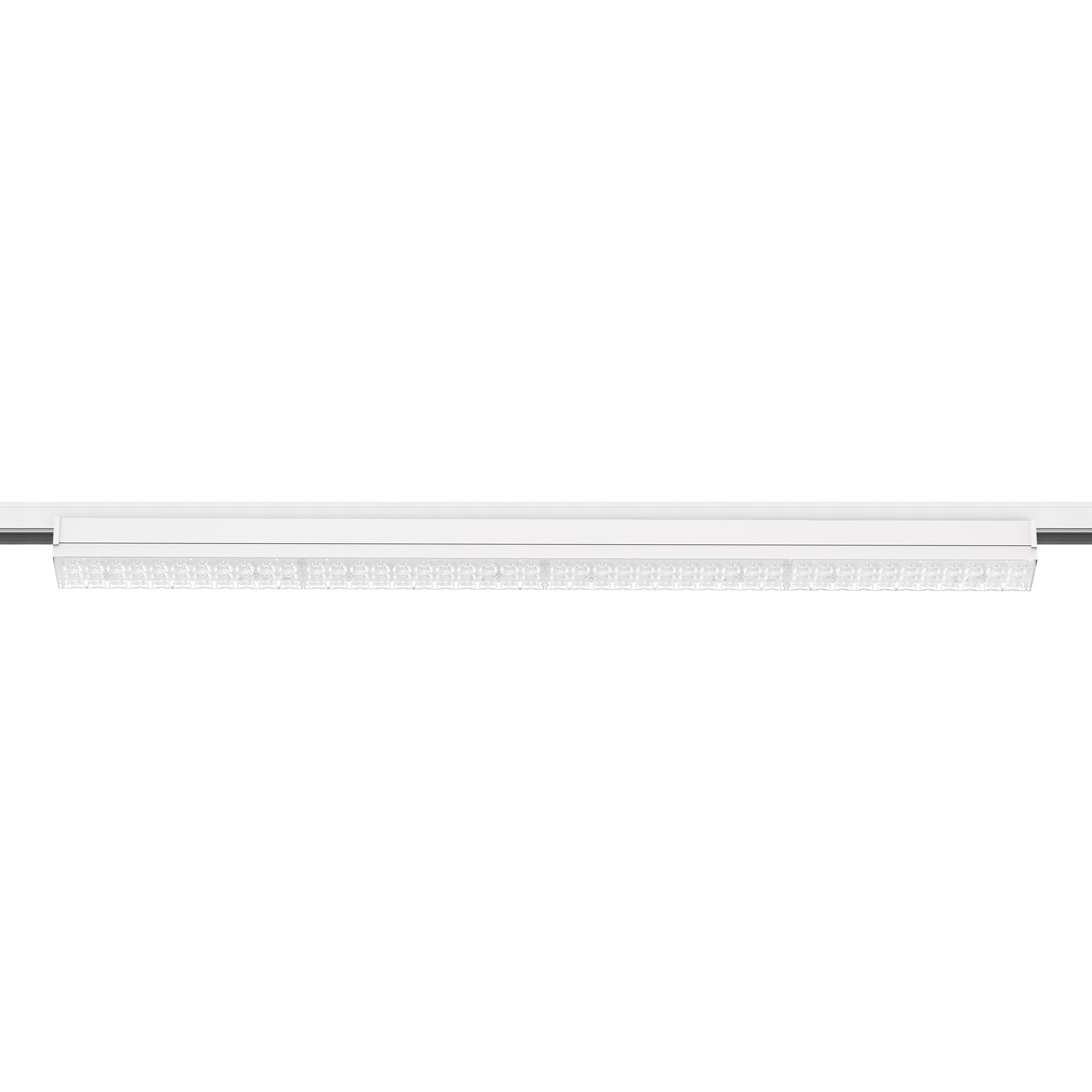
Ward corridors: day / night 100–200 lx by day, 50 lx at night 22 CRI ≥ 80, 4000 K by day, warm reduced night light Zero 3F, 3F Linux, 3F Travetta with DALI dimming and night scene
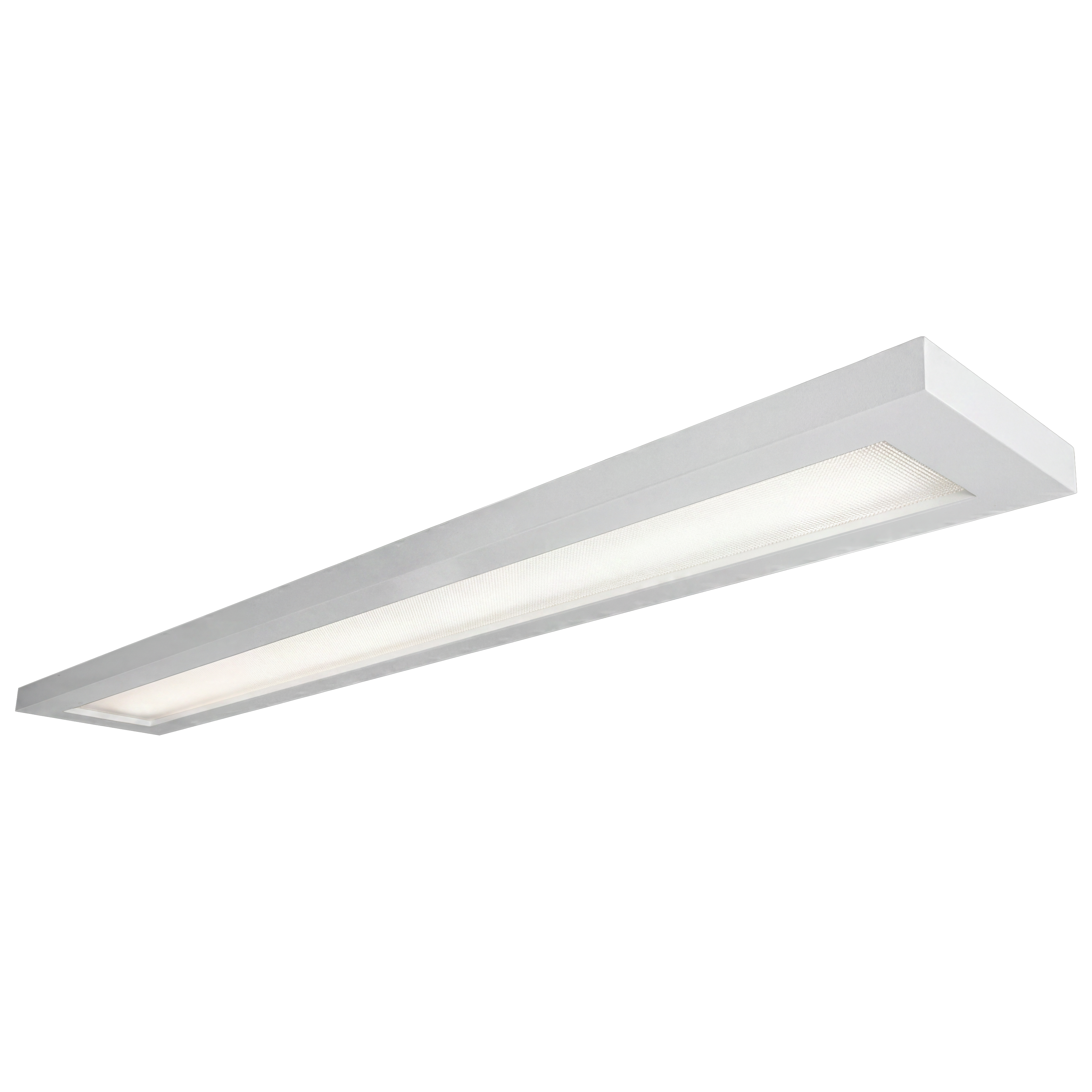
Consulting and examination rooms 500 lx general, 1,000 lx on the couch 19 CRI ≥ 90, 4000–5000 K for diagnosis 3F Dìagon P, L 600, 3F LED Panel, 3F Eldorado
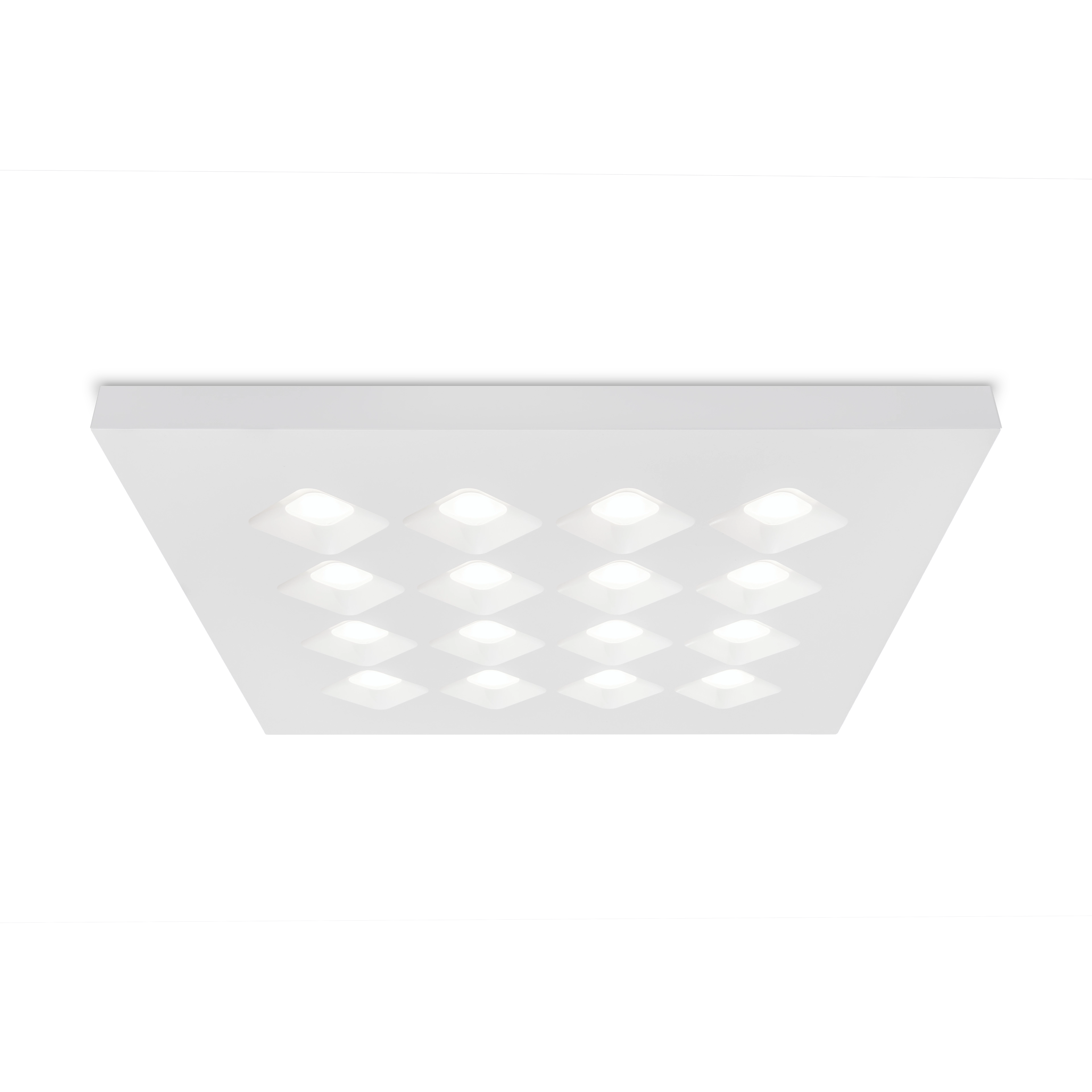
Patient rooms: general / reading / examination / night 100 lx / 300 lx / 1,000 lx / 5 lx 19 CRI ≥ 90, Tunable White 2700–6500 K, dedicated night light 3F Dìagon P Tunable White, L 340 Tunable White, Mira Parete, Zero 3F
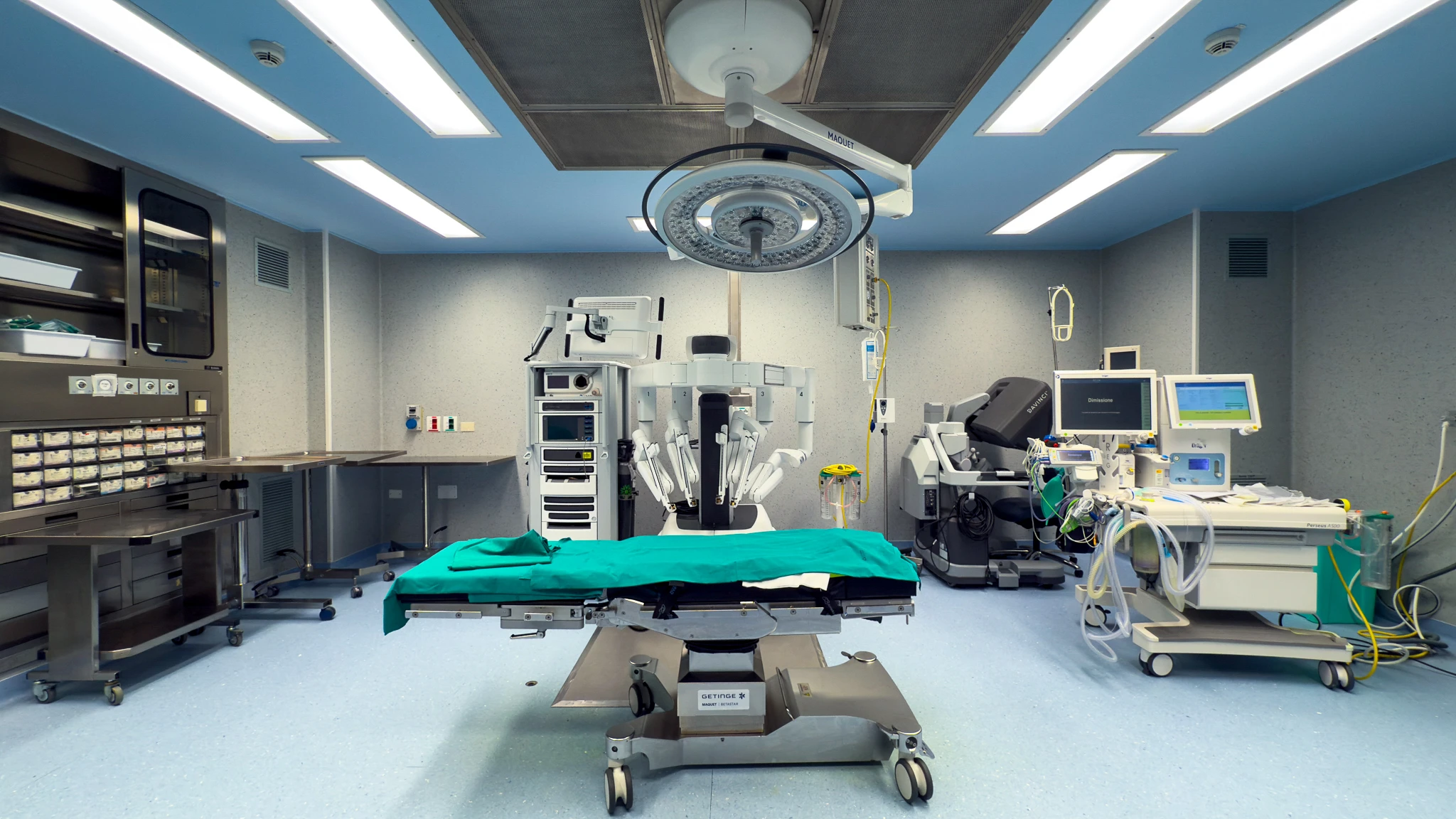
Operating theatres: general / pre-op 1,000 lx / 500 lx 19 CRI ≥ 90, 4000–5000 K, no shadows on the field L 650 and L 600 with VSS laminated glass, IP65, emergency versions
Intensive care and resuscitation 100 lx general, 1,000 lx for examination 19 CRI ≥ 90, Tunable White, night light L 600, 3F Dìagon P Tunable White, Mira Parete
Analysis laboratories and diagnostic areas 500 lx, 1,000 lx on colour inspection benches 19 CRI ≥ 90, 5000–6500 K on the benches L 600, 3F LED Panel, 3F Eldorado
Hospital pharmacy, stores and logistics areas 300–500 lx 19–25 CRI ≥ 80, 4000 K 3F Petra, P 200, 3F Zeta, 3F Linux
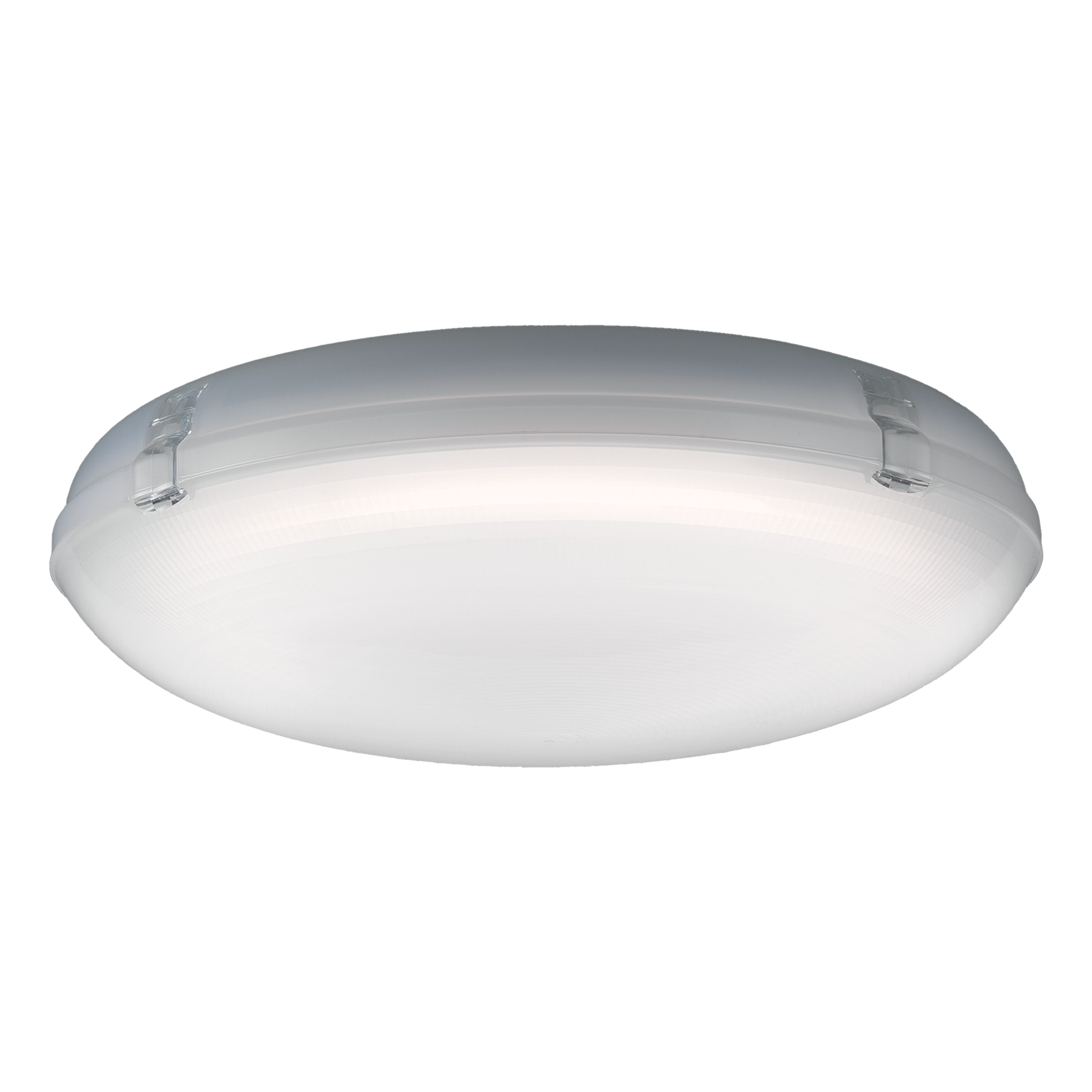
Toilets, changing rooms and decontamination rooms 200 lx 25 CRI ≥ 80, 4000 K, IP65 3F Petra, P 200

Night lighting in patient rooms (5 lx at floor level according to the standard) is not dimmed general lighting: it is a dedicated luminaire or line, with low luminance, that lets staff check the patient and the patient find their way without interrupting sleep. In ward corridors the night scene lowers levels and colour temperature; Tunable White versions bring to rooms and intensive care units a light that is cool and activating by day and warm in the evening, with measurable effects on the sleep-wake rhythm of those hospitalised for weeks.

What makes a luminaire fit for a healthcare environment

Three requirements a hospital specification must contain, which 3F Filippi luminaires meet as standard.

Source: colour rendering, comfort and dynamic light

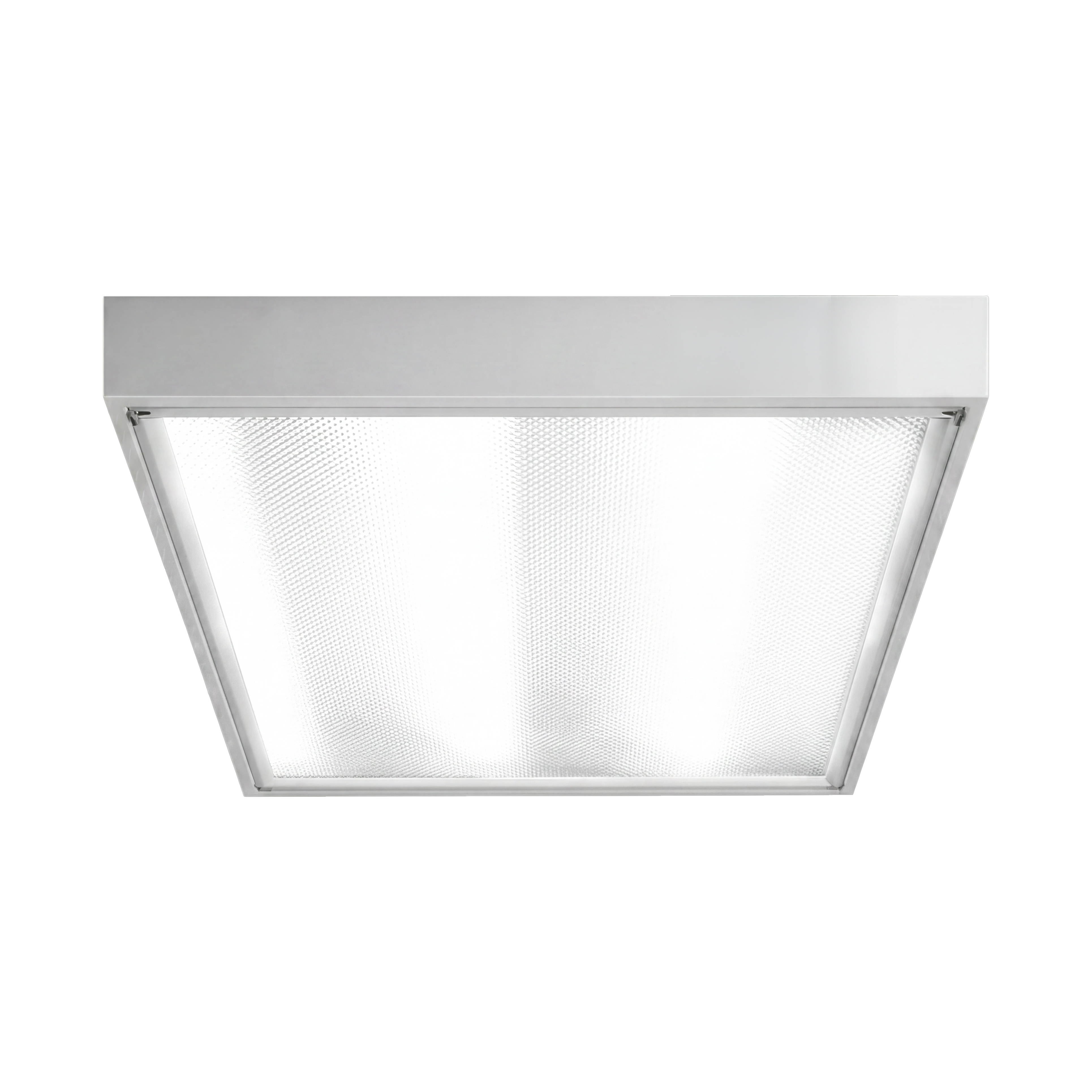
High-efficiency LEDs with CRI ≥ 90 and colour temperatures from 3000 K to 6500 K, available in Tunable White versions to support the circadian rhythms of patients and staff. UGR < 19 for wards, consulting rooms and clinical offices, achieved with LGS low-luminance microprismatic screens and honeycomb optical systems that the patient lying down can look at without discomfort. Initial colour tolerance SDCM 3, because in a corridor of fifty luminaires every difference in tint shows.

Materials and cleanability

Housings in painted steel or extruded aluminium, diffusers in opal polycarbonate or tempered and laminated glass — 4 mm VS and 7 mm VSS — for hygienically sensitive areas, where glass does not yellow, does not retain dirt and withstands chlorine- and alcohol-based disinfectants. Versions with protection from IP40 to IP65, sealed frames with gasket, smooth surfaces without gaps: the luminaires are cleaned with the same protocols as the walls, without dismantling anything.

Safety, standards and integration

Luminaires compliant with EN 60598-1 and the requirements of EN 12464-1 for healthcare premises; IK08–IK10 vandal-resistant versions for public areas, emergency departments and psychiatric wards; IP65 for rooms with high hygiene requirements; versions with integrated emergency to EN 60598-2-22 for escape routes and critical areas. Ready for smart systems — DALI, presence and light sensors, night scenes — and integration with the facility's building management.

What changes in a well-lit healthcare facility

The four benefits that medical directors, technical departments and ward staff report with 3F Filippi luminaires.

1.000 lx illuminance for patient examination and the operating field
UGR 19 glare limit in ward, consulting and clinical work areas
CRI 90 colour rendering for diagnosis, laboratories and operating theatres
IP65 protection for rooms with high hygiene requirements

Light quality for diagnosis and operations

Optimal light quality to support diagnosis, monitoring and the work of healthcare staff: skin colour, cyanosis, jaundice, the contents of a bag are read under CRI ≥ 90 as they are not under a fluorescent tube. On laboratory benches and in operating theatres, levels and colour temperatures are those the task requires.

Visual comfort and wellbeing, day and night

Professional low-luminance optics for those looking at the ceiling, dynamic staff/patient lighting that gives each their own light, dedicated night lighting to assist patients safely without interrupting sleep. Tunable White follows the circadian rhythm of those hospitalised for long periods.

Maximum cleanability

Materials and finishes designed to withstand intensive cleaning and disinfectant products: laminated glass, polycarbonate, sealed frames, IP65 in critical rooms. The luminaires enter the ward's disinfection protocol without exceptions and without dismantling.

Lower consumption in a building lit 24 hours a day

High-efficiency LEDs and readiness for smart systems — sensors in service corridors, night scenes, DALI in common areas — cut consumption by 60% compared with fluorescent installations and by over 80% with controls, in a facility that never switches off.

The areas of the healthcare facility we design for

  • Reception, waiting areas and admissions — welcoming, uniform light, IK10 luminaires in public areas and emergency departments.
  • Corridors and circulation areas — continuous lines with DALI dimming and night scene, integrated emergency on escape routes.
  • Consulting and examination rooms — 500 lx general and 1,000 lx on the couch, CRI ≥ 90, UGR < 19 for those lying down.
  • Wards — four scenes per room, Tunable White, dedicated night lighting, cleanable wall and ceiling luminaires.
  • Operating theatres — IP65 laminated glass recessed luminaires, 1,000 lx without shadows, integrated emergency.
  • Analysis laboratories and diagnostic areas — CRI ≥ 90 and 5000–6500 K on colour inspection benches, low-luminance screens for monitors.
  • Hospital pharmacies and logistics areas — IP65 waterproof luminaires, presence sensors, uniform light on medicine shelves.
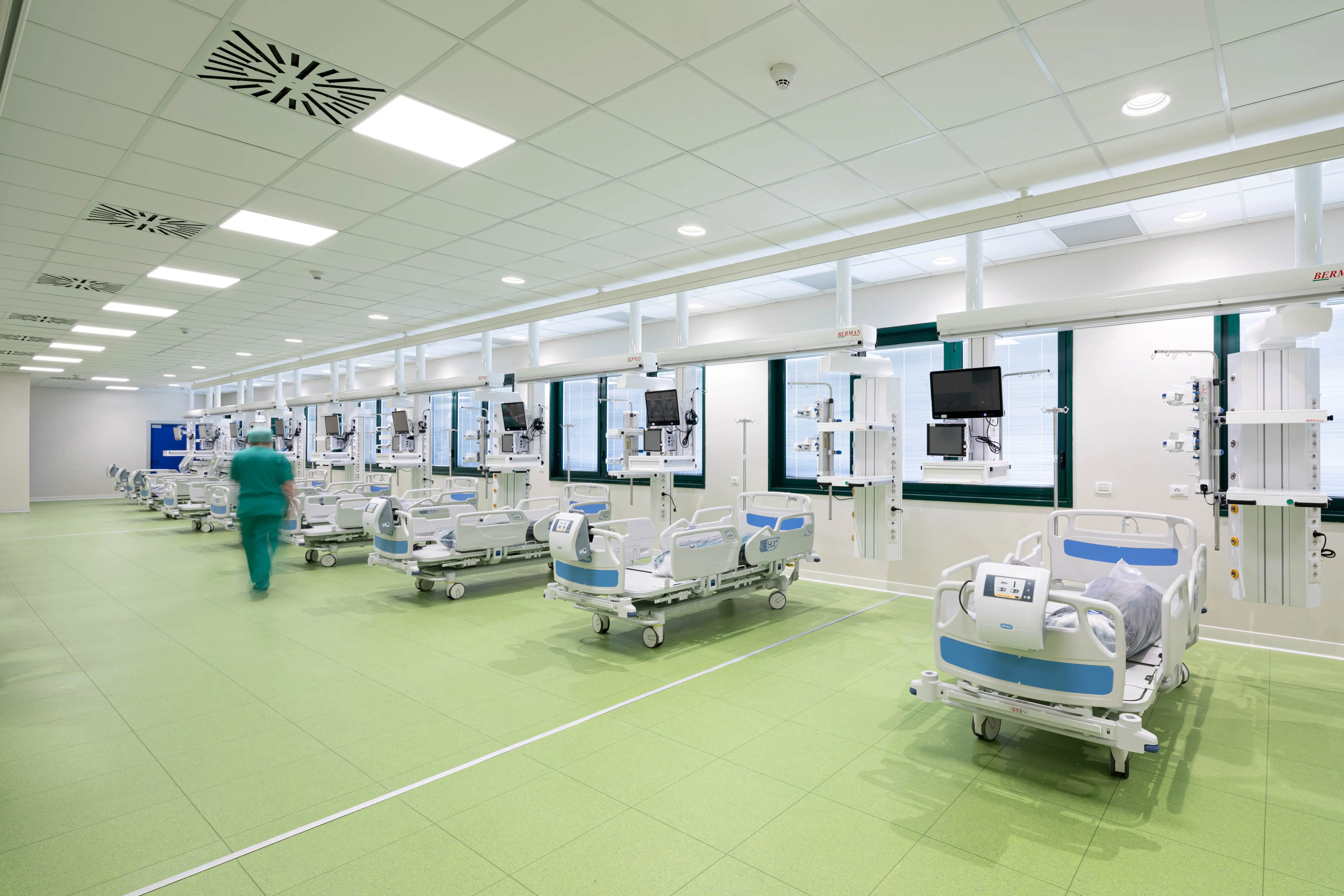
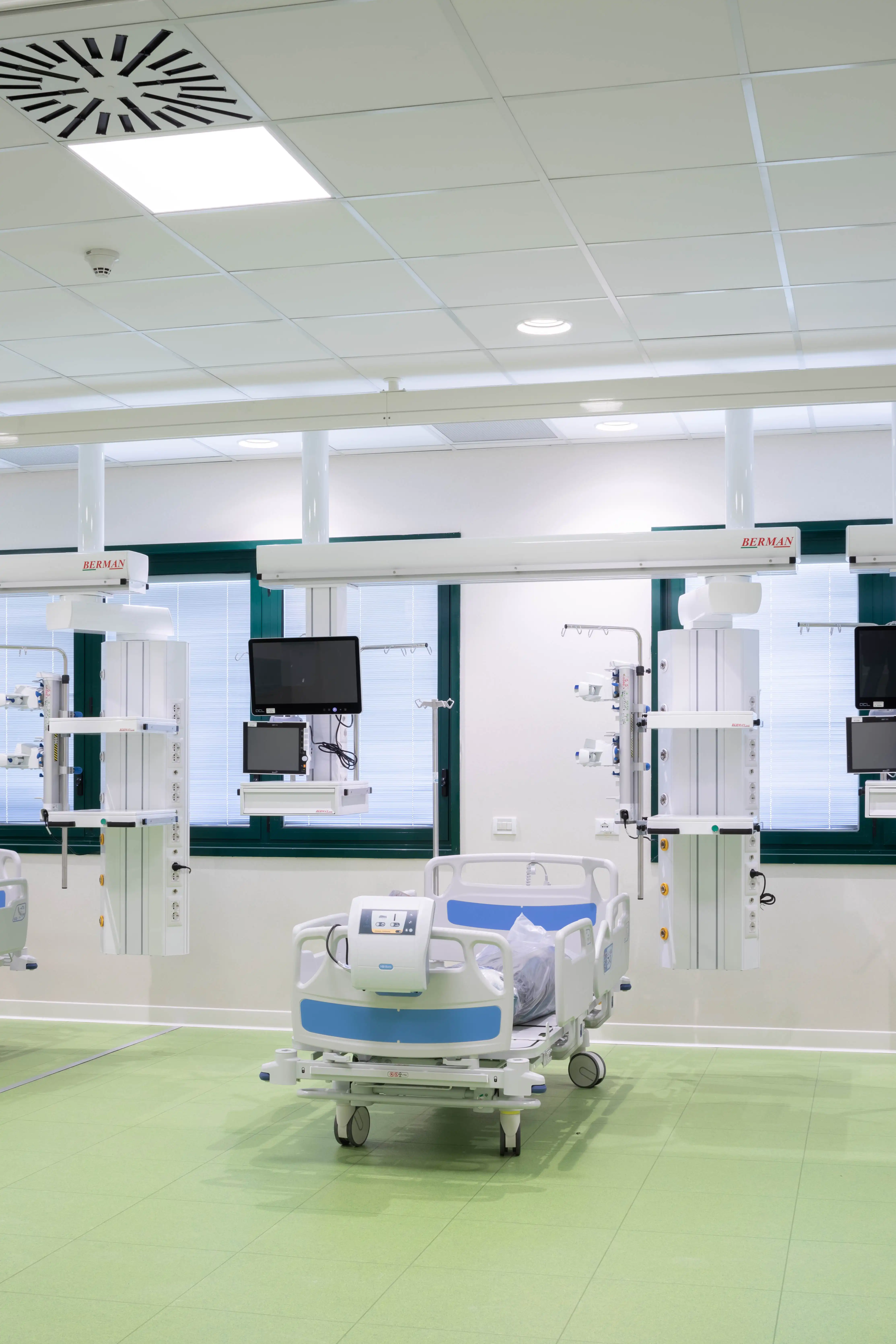
Corridor and clinical area of the Ospedale Maggiore in Bologna with low-luminance 3F Filippi LED luminaires
Ospedale Maggiore, Bologna: 3F Filippi LED luminaires in the clinical areas, with uniform light, controlled glare and cleanable surfaces.

3F Filippi ranges for healthcare facilities

Laminated glass recessed luminaires for critical areas, low-luminance ceiling and suspended luminaires for wards and consulting rooms, light lines for corridors, waterproof luminaires for technical rooms and wall luminaires for night lighting: the range pages give Tunable White versions, IP and IK ratings, diffuser materials and files for lighting calculation.

Browse all ranges

Hospitals lit by 3F Filippi

Two hospitals where the light accompanies care in every ward, from the corridors to the critical areas.

Frequently asked questions about hospital lighting

What should adequate lighting for healthcare environments provide?

It must guarantee high colour rendering, uniform light, glare control, electrical safety and cleanable materials. In practice: CRI ≥ 90 where examinations and diagnoses are made, UGR < 19 where patients lie down and staff work, levels compliant with EN 12464-1 for every room — from the 5 lx of night lighting to the 1,000 lx of the operating field — and luminaires that are disinfected with the ward's protocols. 3F Filippi luminaires meet all the requirements for wards, corridors, consulting rooms and critical areas.

Is dynamic lighting useful in hospitals or outpatient clinics?

Yes. Tunable White solutions allow the colour temperature to be varied to support patient wellbeing and improve staff concentration, adapting the light to circadian rhythms: cool, intense light in the morning, which helps people stay awake and active, warm, reduced light in the evening, which prepares for sleep. For those hospitalised for weeks without seeing daylight — intensive care, long stays — it is a documented recovery factor; for night-shift staff it supports alertness.

Do LED solutions really reduce the operating costs of healthcare facilities?

Yes. High-efficiency LEDs require less energy and less maintenance, with significant long-term savings, particularly important for environments in continuous use such as hospitals and outpatient clinics. An installation lit 24 hours a day pays back the switch from fluorescent to LED (−60% consumption) in two to three years, and maintenance — which in a ward means scheduled access, disinfection and taking the room out of service — is reduced to rare, plannable interventions.

How is a patient room lit?

With four distinct levels, as EN 12464-1 requires: general lighting at 100 lx for moving around and receiving visitors; reading light at 300 lx on the bed plane, directed and low-luminance for the room-mate; examination light at 1,000 lx for the medical visit, recalled when needed; night light at 5 lx on the floor for nursing checks and orientation. Typical luminaires are a low-luminance ceiling or suspended luminaire for general and examination light — in Tunable White where the circadian rhythm is to be followed — and a wall luminaire for reading and night. All with cleanable surfaces and controls accessible to patient and staff.

Which luminaires are used in operating theatres and rooms with high hygiene requirements?

Sealed recessed luminaires with laminated safety glass diffuser (7 mm VSS), gasketed frame and IP65 protection: they are disinfected with the operating block's products, do not yellow and retain fragments in case of breakage. 3F Filippi's L 650 and L 600 ranges are designed for this, with general illuminance of 1,000 lx at CRI ≥ 90, uniform light that does not create shadows around the surgical lamp, and versions with integrated emergency. The same criteria apply to intensive care units, delivery rooms, laboratories and drug preparation rooms.

How are emergency lighting and continuity handled in a facility that never switches off?

With emergency lighting integrated into the ordinary luminaires to EN 60598-2-22 — on escape routes, in critical areas and where staff must be able to keep working — and with a design that distinguishes safety lighting from the standby lighting of medical locations, where sector standards require continuity of supply. 3F Filippi luminaires are available with emergency kits and versions compatible with the uninterruptible supplies of group 1 and group 2 medical locations; the lighting design sets out levels, duration and response times for every room.

Let us design the light for your healthcare facility

Ward floor plans, room uses and hygiene requirements: our technical department prepares the lighting design with levels, UGR, colour rendering, night scenes and Tunable White, and the luminaire schedule. No obligation.