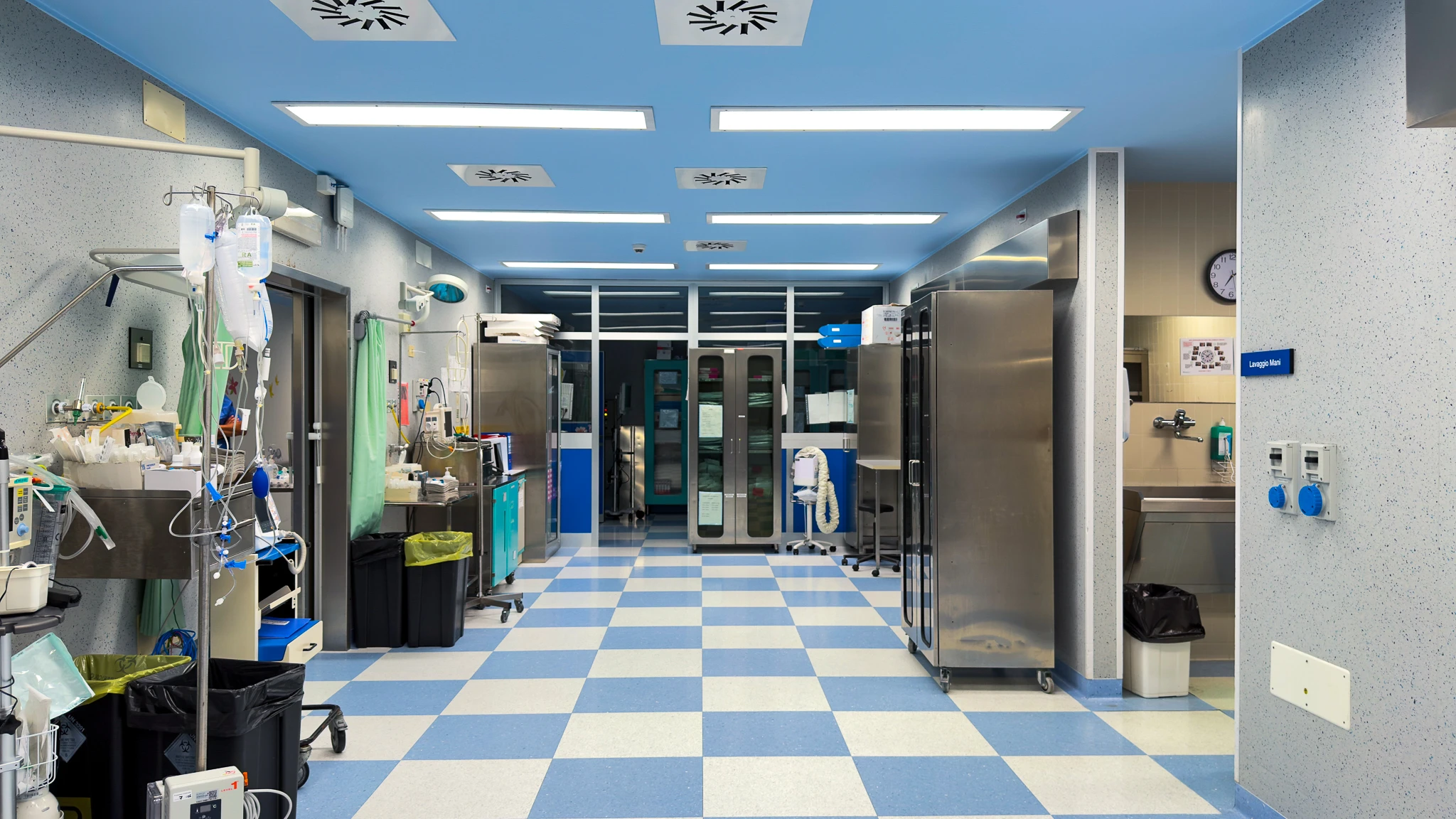
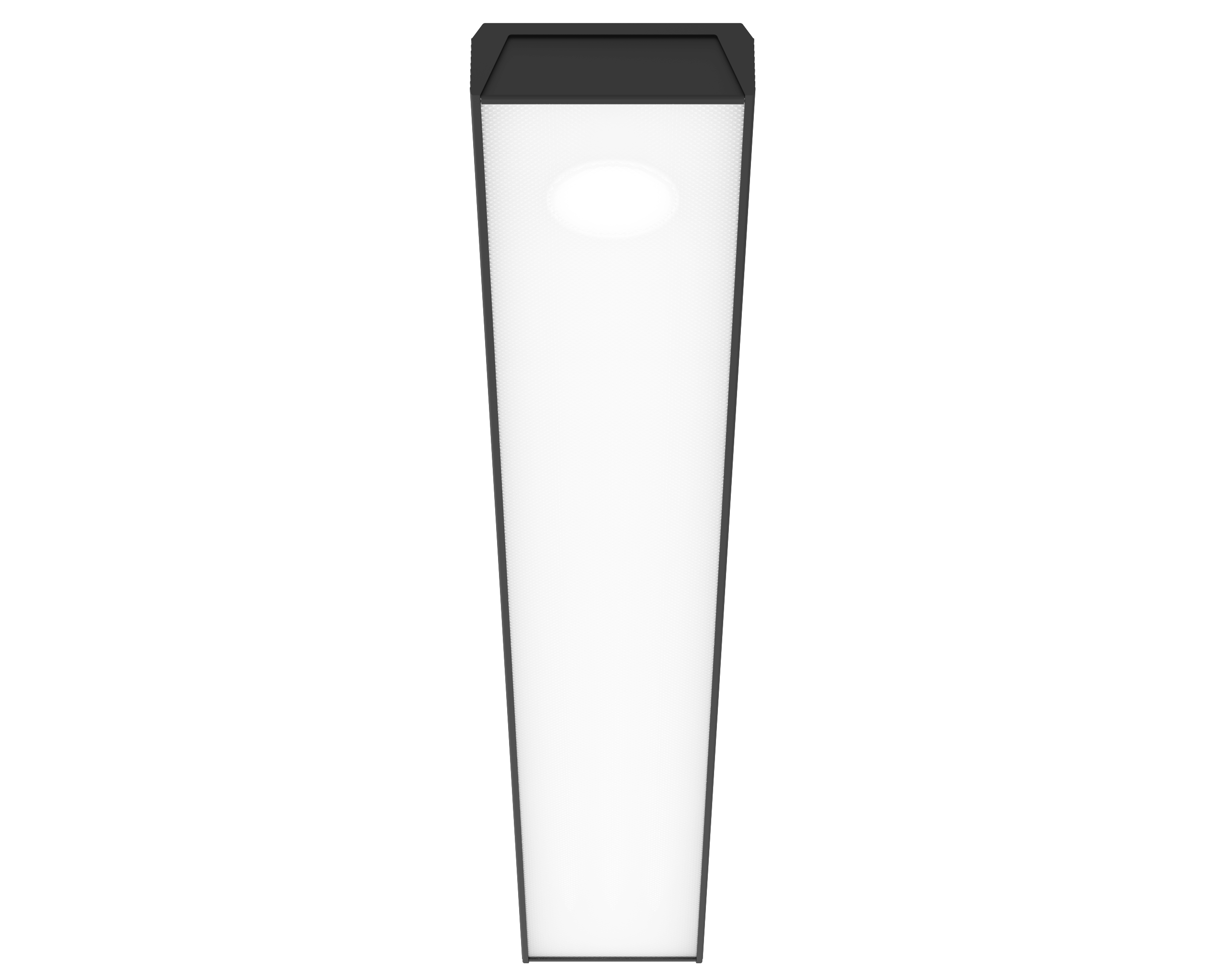
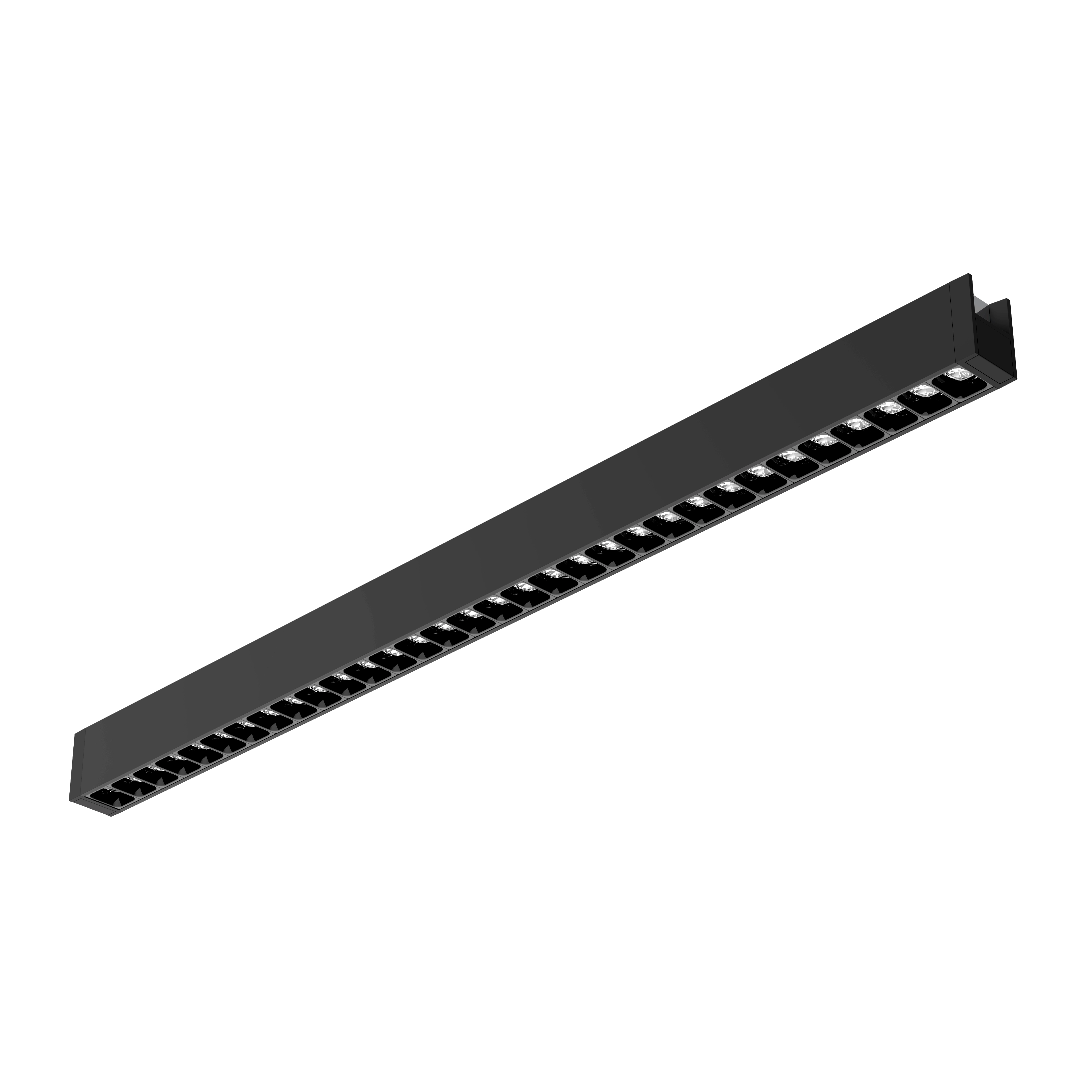
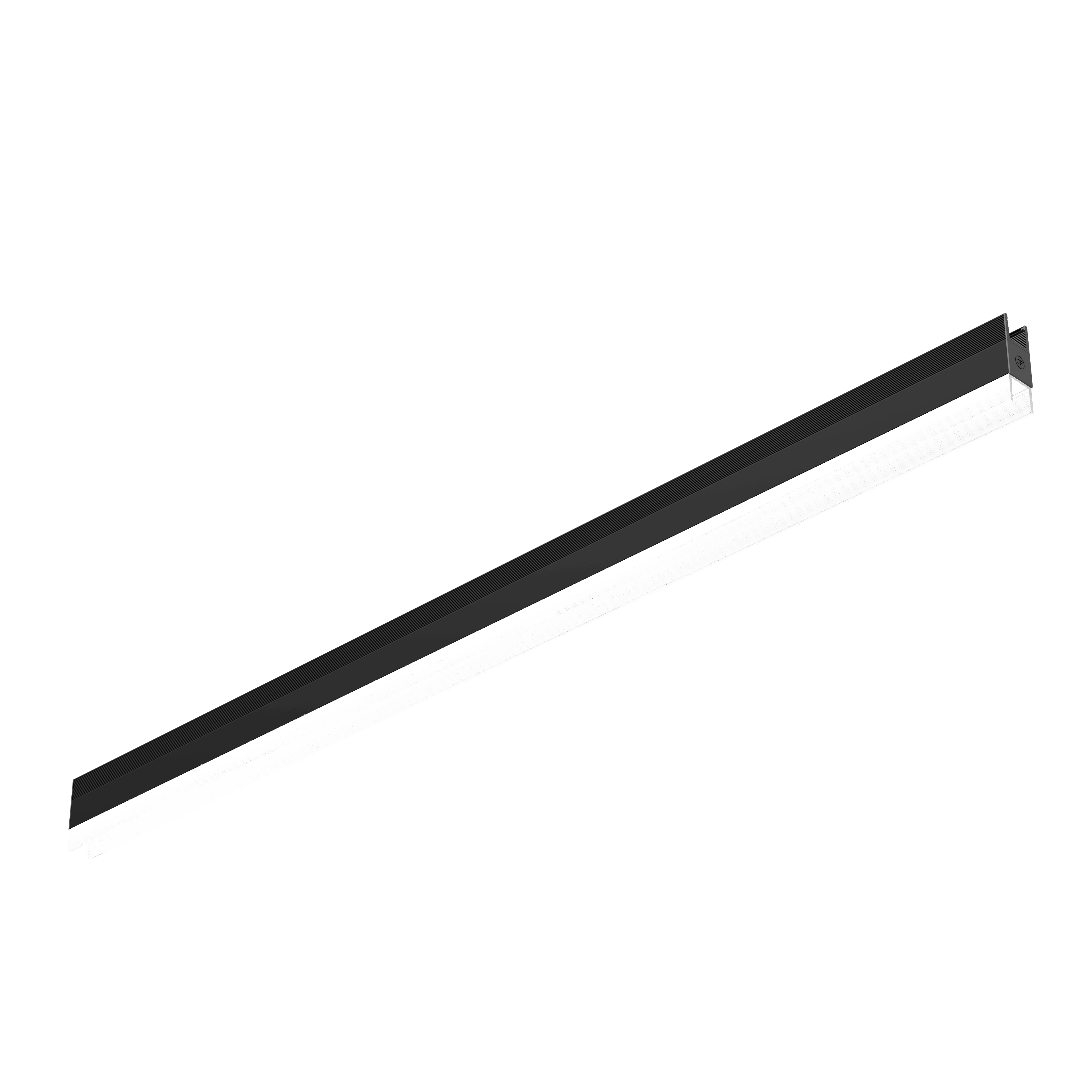
Those who move into a nursing home are self-sufficient, read the newspaper, play cards, dine in company and want their room to feel like their room. But they see differently from the people who design the building: at eighty the pupil lets in a third of the light it did at twenty, the yellowed lens scatters every light source into a halo, glare sensitivity is tripled, adaptation between light and dark takes minutes instead of seconds, and weak contrasts — a step, the edge of a rug — disappear. Lighting for elderly care residences starts here: more light, better distributed, without a single dazzling source, as warm as in a home.
3F Filippi solutions for elderly care residences are designed to improve residents' comfort, safety and wellbeing: reliable LED luminaires with uniform light and cleanable materials, ideal for rooms, corridors, common areas and staff areas. Warm 3000 K light, colour rendering CRI ≥ 90 where people eat and read, glare UGR < 19 in every place of stay, Tunable White versions to accompany the rhythm of the day, night lighting on the routes between room and bathroom.
This page covers residences for self-sufficient elderly people, with a residential approach. Facilities with nursing care — dementia units, nurses' stations, assisted bathrooms — are on the assisted living facilities page; the clinical criteria on the hospitals page.
EN 12464-1 sets the minimums for workplaces and healthcare premises, but it is calibrated on a forty-year-old observer: for a residence for the elderly, designers double the levels, keep uniformity high and lower the luminance of the luminaires. The table summarises the values we use as the design basis, what to avoid in each room and the typical 3F Filippi solution.
| Room | Recommended illuminance for elderly residents | What to avoid | Typical 3F Filippi solution |
|---|---|---|---|
| Residents' rooms | 300 lx general, 500–750 lx for reading in bed and in the armchair, 5–10 lx night light | Bare ceiling fixture in the middle of the ceiling, switch far from the bed, total darkness at night | 3F Dìagon P, L 340 Tunable White, Mira Parete for reading and night |
| Corridors and circulation areas | Uniform 200–300 lx, 20–50 lx at night | Alternating light and dark zones, sources in the field of view, glossy reflecting floors | Zero 3F, 3F Travetta, 3F Linux with night scene, Mira Parete |
| Lounge and activity areas | 300–500 lx, 750 lx on games and reading tables | Cool office light, dazzling panels above the armchairs | 3F Hal, 3F Solo direct/indirect, 3F Eldorado |
| Dining room and canteen | 300–500 lx on the tables, CRI ≥ 90 | Shadows on the plates, flat light that dulls the food, glare for those seated | 3F Hal, 3F Solo, 3F Reno |
| Reception and waiting areas | 300 lx, light on the walls and the signage | Backlight from the windows, desk in shadow | 3F HD, 3F Reno, Mira Parete |
| Stairs and ramps | 150–200 lx, well-contrasted step | Light from above that hides the riser, self-shadows on the steps | Mira Parete, 3F Petra, luminaires with emergency |
| Room bathrooms | 200 lx, 500 lx on the face at the mirror | Downlight above the mirror that hollows the face, reflections on the tiles | 3F Petra, Mira Parete, P 200 |
| Chapel, gym, multipurpose room | 300 lx, dimmable for projections and activities | Single non-dimmable light | 3F Dìagon P, L 340, 3F Hal with DALI |
| Kitchen, laundry, offices and technical rooms | 300–500 lx | Non-washable luminaires in the kitchen, toilets without sensors | 3F Petra, P 200, 3F LED Panel, 3F Petra Sensor |
The most useful rule in a residence for the elderly is to light the walls: a bright wall makes the room look larger and lighter, makes doors, handrails and signage legible, and gives the elderly eye the vertical references the floor does not. The second is continuity: no abrupt transition between a lit corridor and a dim room, because slow adaptation is the most frequent cause of falls on the first step beyond a threshold.
Three technical requirements a specification for nursing homes must contain, which 3F Filippi luminaires meet.
High-efficiency LEDs with CRI ≥ 80 or CRI ≥ 90, colour temperatures of 3000–4000 K for comfortable environments — the warm white of homes in rooms and lounges, neutral in work rooms — and Tunable White versions to support residents' circadian rhythms with a curve that follows the day. UGR < 19 for areas of prolonged stay: LGS microprismatic screens, honeycomb optics and indirect light reduce luminaire luminance, because for an elderly eye a bare source is a halo that erases everything around it. Initial colour tolerance SDCM 3.
Housings in painted steel or extruded aluminium, diffusers in high-uniformity opal polycarbonate or tempered glass for hygienically sensitive areas. Surfaces resistant to frequent cleaning and disinfection, versions with IP40 or IP65 protection according to hygiene needs — bathrooms, kitchen, laundry. White or coloured finishes and shapes that fit into a domestic environment: pendants over the tables, wall luminaires in the rooms, discreet recessed luminaires in the corridors.
Luminaires compliant with EN 60598-1 and EN 12464-1 for workplaces and healthcare areas; versions with integrated emergency to EN 60598-2-22 on corridors, stairs and escape routes, where evacuation is slow. DALI controls for Tunable White curves and the night scene of the corridors, presence sensors in bathrooms, changing rooms and service rooms, and in the rooms controls that are large, few and reachable from the bed and the door: the technology is there, but the resident does not have to learn it.
The four benefits that managers, staff and families report with 3F Filippi luminaires.
Soft, uniform light designed to reduce residents' visual fatigue even in old age: levels double the standard minimums, but distributed on the walls and work surfaces rather than blasted from the ceiling, with the warm white and the shapes of a home. Residents read, play and talk for longer.
Constant, optimised illuminance levels to prevent disorientation and reduce the risk of falls: continuity between rooms, contrasted steps, lit handrails and dedicated night lighting that leads from bed to bathroom without switching on the general light and without fully waking.
Controlled-spectrum light and Tunable White options to regulate the perception of space and circadian rhythms: for those who rarely go out, a light that is cool and intense in the morning and warms and dims in the evening is the most reliable signal of the time of day, and helps them sleep at night and stay active by day.
High LED efficiency and long luminaire life reduce the frequency of maintenance work — coming into the rooms with a ladder disturbs those who live there — and cut by 60% the consumption of a building lit day and night, by over 80% with sensors and scenes.
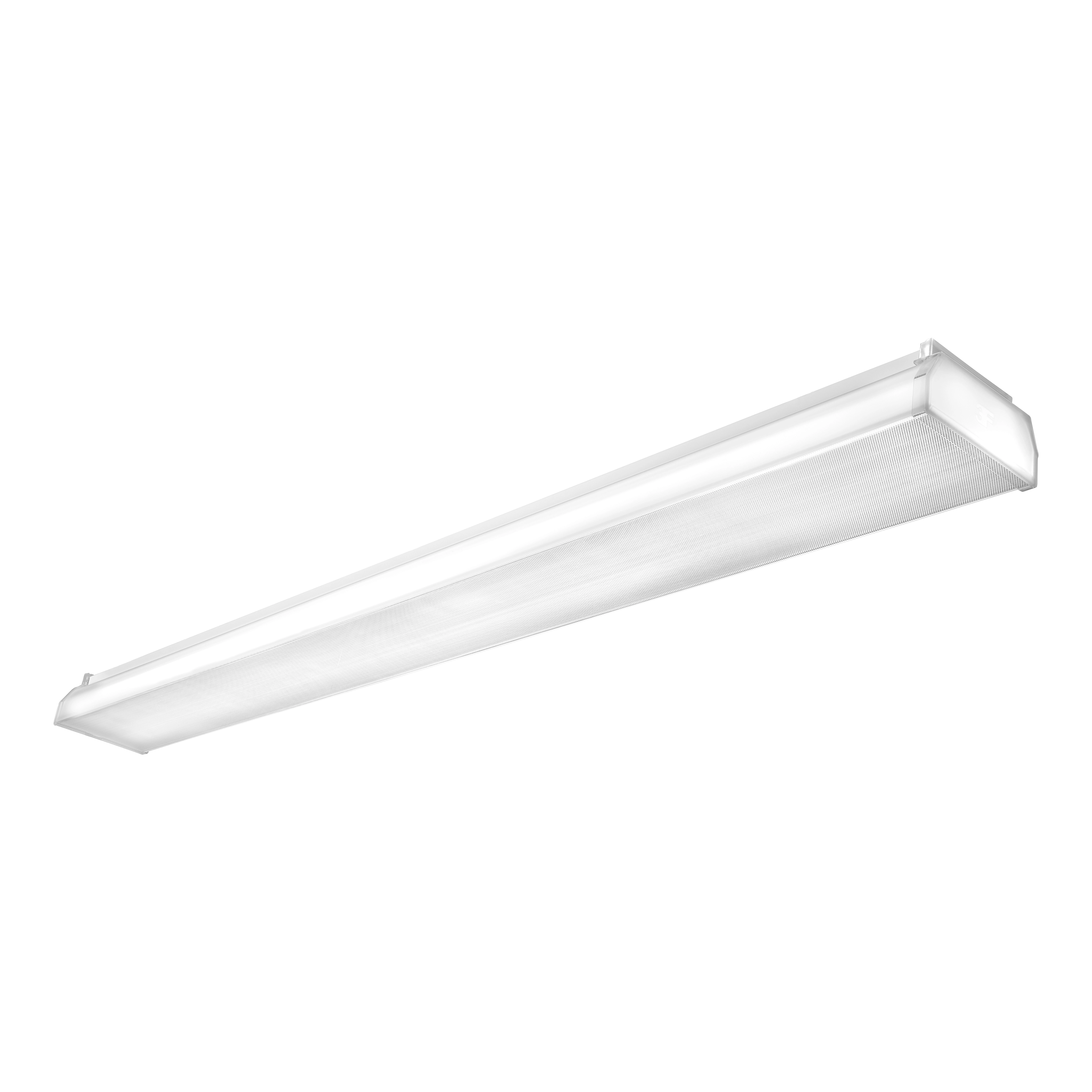
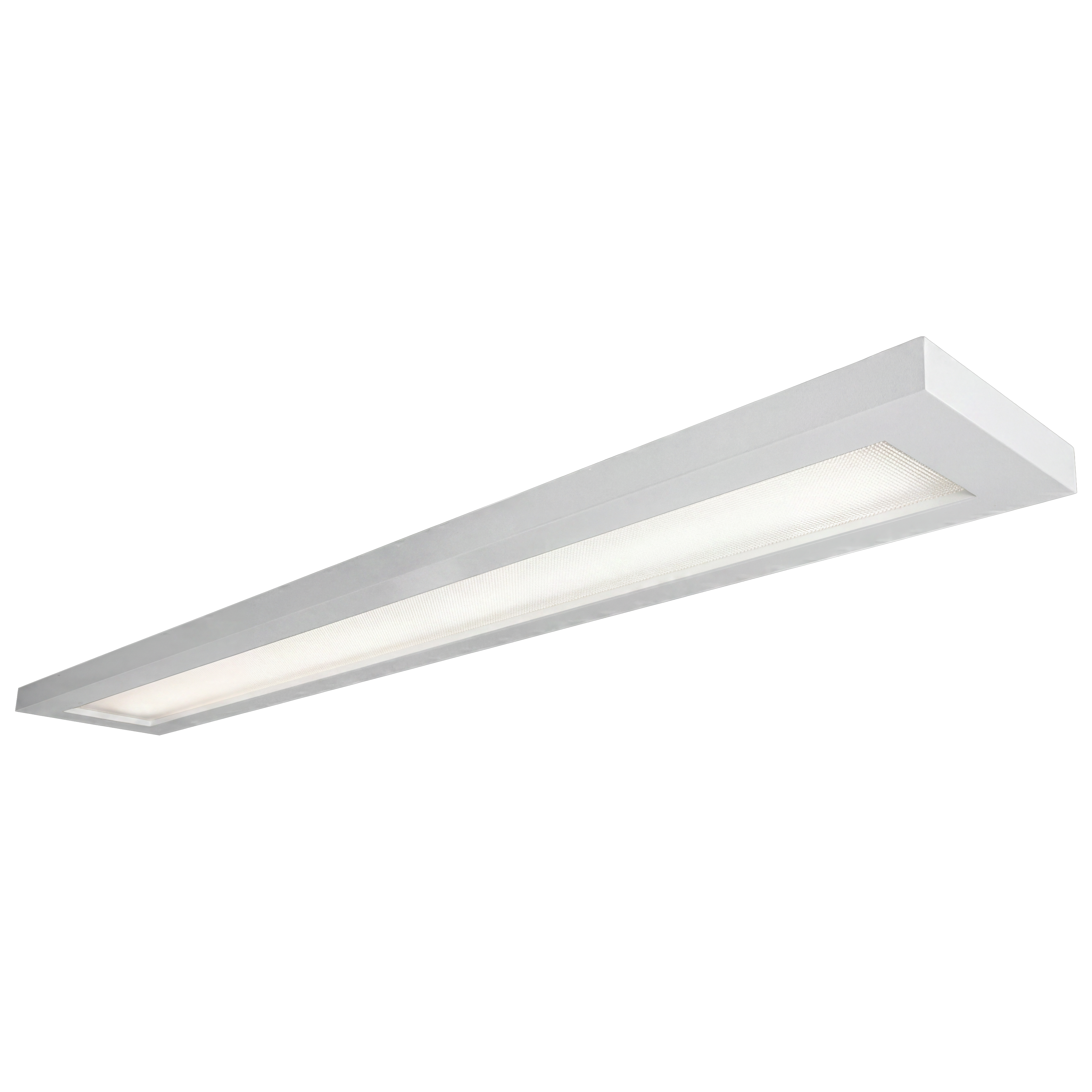
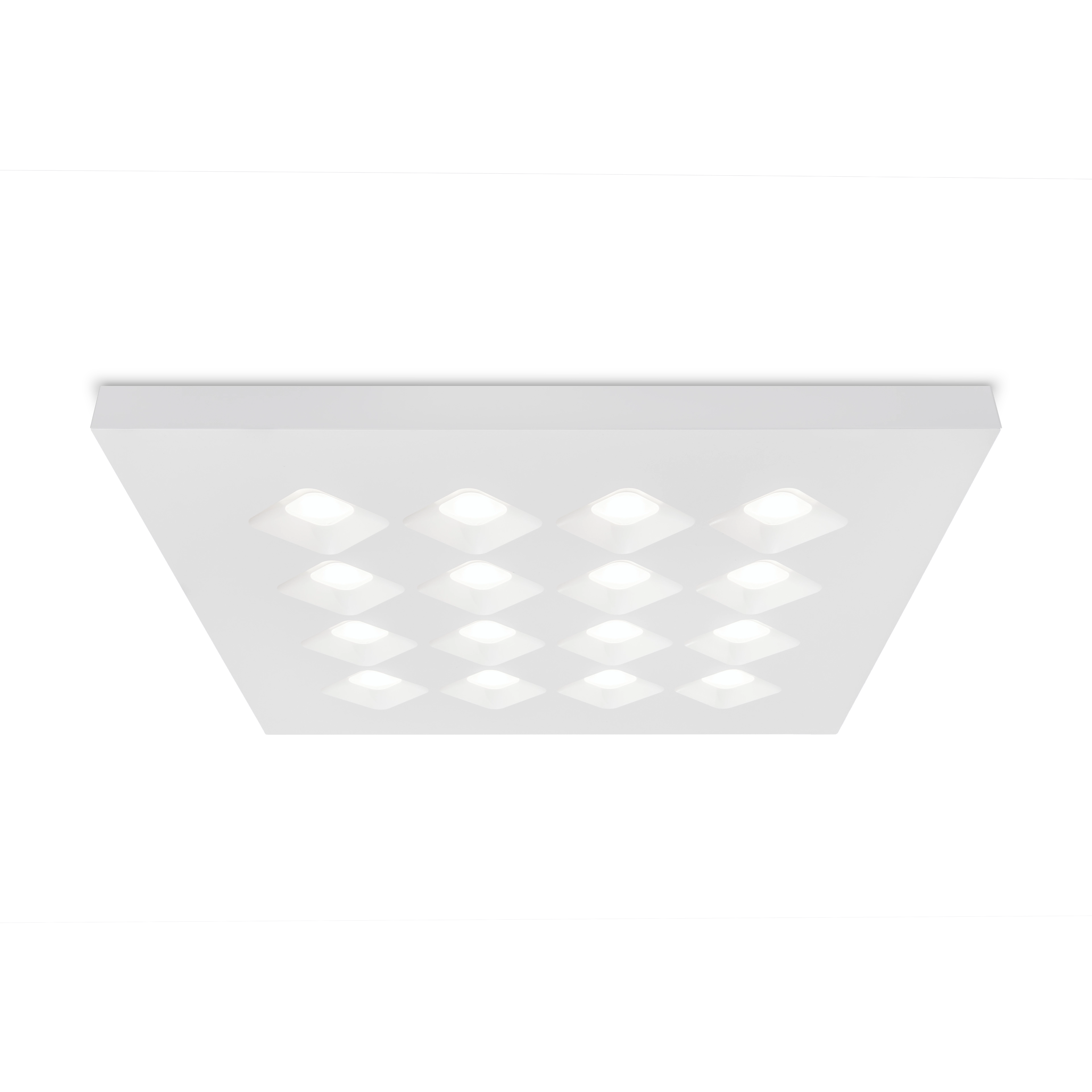
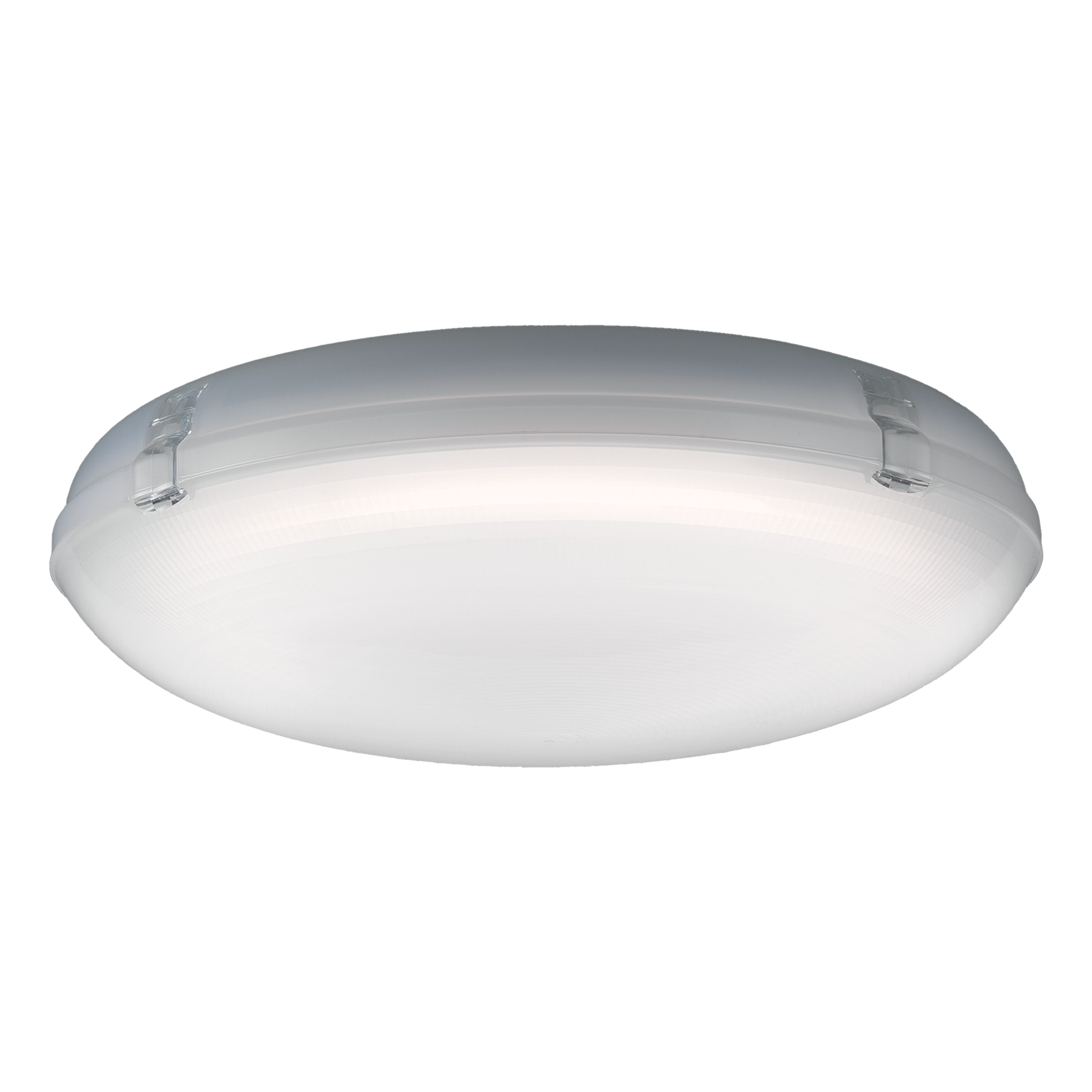
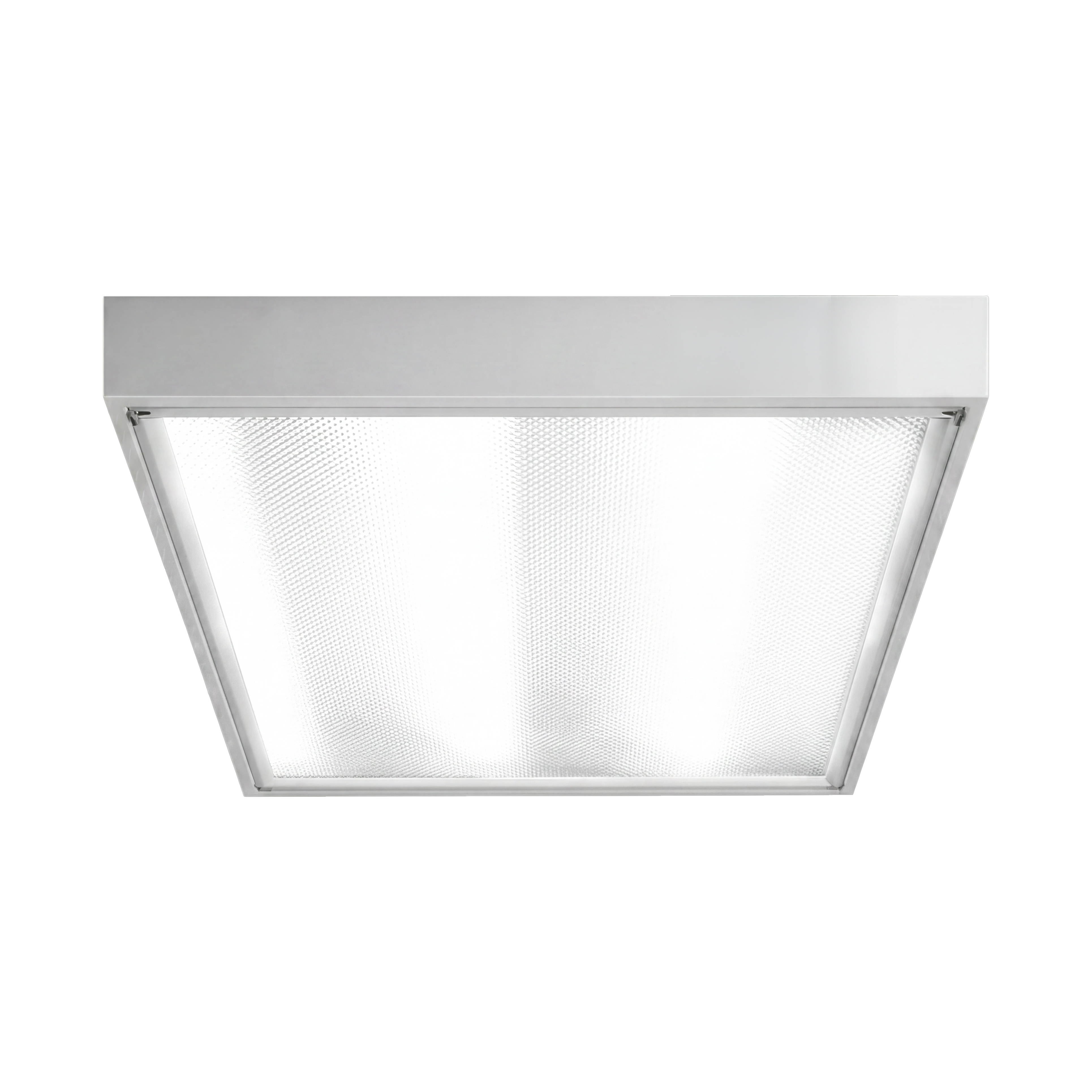
Direct/indirect pendants for lounges and dining rooms, low-luminance ceiling and recessed luminaires, also Tunable White, for rooms and corridors, wall luminaires for reading and night light, downlights for receptions and bathrooms, waterproof luminaires for kitchens and service rooms. The range pages give versions, IP and IK ratings, finishes and files for lighting calculation.
Other ranges used in residences for the elderly: Mira, 3F Eldorado, 3F LED Panel, 3F Dìagon, L 320, L 340, L 600, L 650, 3F Reno, 3F Linux, 3F Six, Binario 3F, 3F Mirella, 3F C8, P 250, Lucequadro.
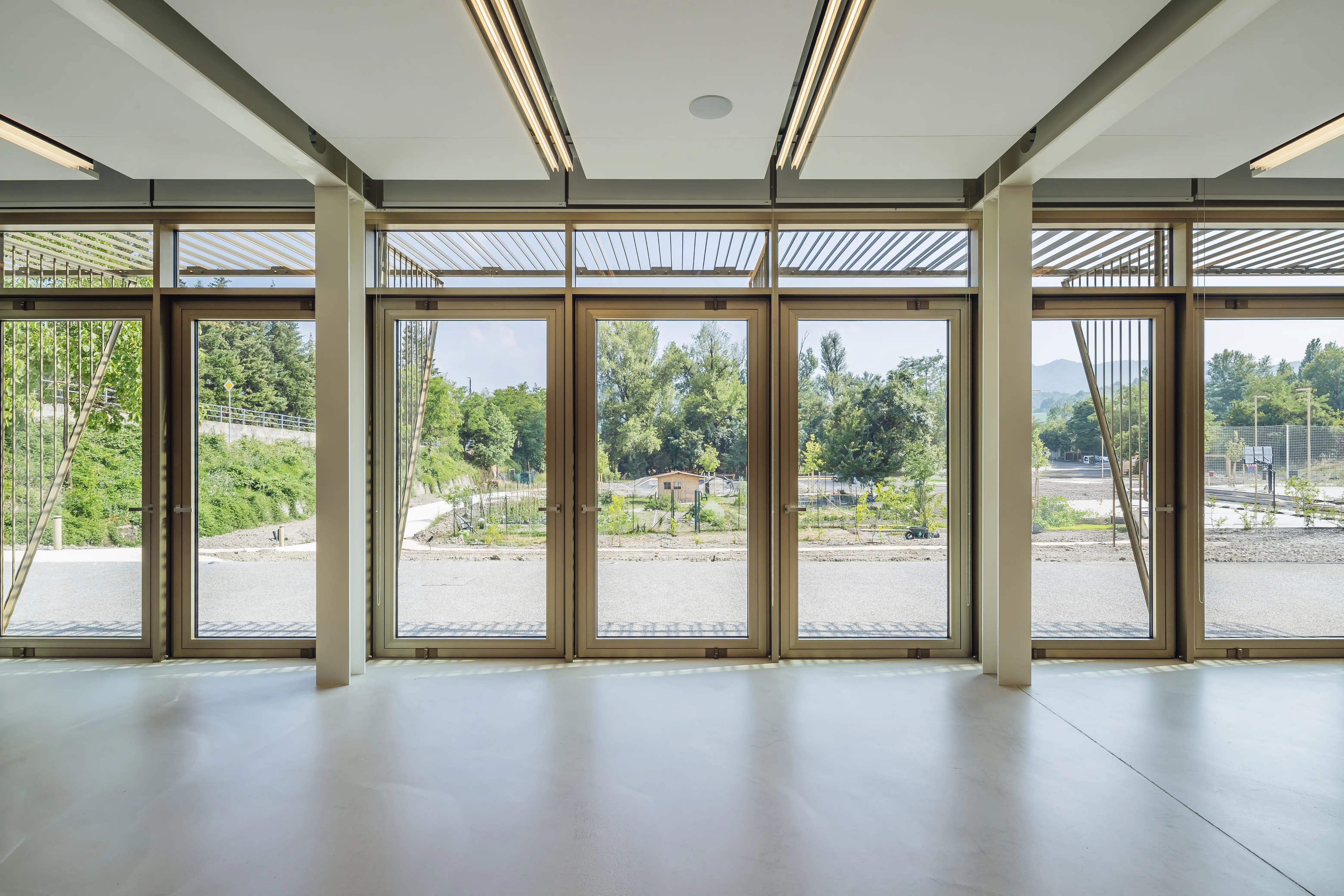
A foundation dedicated to inclusion and a hospital: two places where the light accompanies daily life and care.
It must guarantee visual comfort, uniform light, adequate colour rendering and no glare, improving residents' perception of space, safety and wellbeing. In practice: levels doubled compared with the standard minimums, because an elderly eye receives a third of the light; light on the walls and continuity between rooms, to find one's way and not fall; no bare source in the field of view; warm 3000 K white in rooms and lounges; CRI ≥ 90 where people eat and read; and dedicated night lighting on the routes. All with the look of a home, not a ward.
Yes. Uniform light, with adequate colour rendering and colour temperature control, helps reduce stress, disorientation and agitation. 3F Filippi Tunable White solutions favour a calmer, more comfortable environment, improving the quality of the stay and the perception of space: in the morning the light is cooler and more intense and supports activity, in the evening it warms and dims and prepares for sleep. For those who rarely go out it is the most reliable signal of the time of day, and it improves night-time sleep more than any other non-pharmacological measure.
With three choices that keep performance high but change the atmosphere. Warm light, 2700–3000 K in bedrooms, lounges and the dining room, leaving 4000 K to the kitchen, offices and service rooms. Light on walls and ceiling too, with direct/indirect luminaires and wall lights, instead of the grid of panels that immediately looks like a hospital ward. More low-luminance light points instead of a few powerful luminaires: levels stay roughly double those of a home, because residents' eyesight requires it, but no source dazzles someone sitting in an armchair. In the evening, dimming lowers and warms the light, as in a home. Domestic finishes, yes, but with smooth, washable surfaces: frequent cleaning remains the rule.
About twice as much, and for some tasks three times. At eighty the pupil is smaller and the lens more opaque: a third of the light reaches the retina compared with twenty. To read a newspaper with the same comfort as a forty-year-old at 500 lx, an eighty-year-old resident needs 750–1,000 on the reading plane. But increasing the output is not enough: it must be done without increasing glare, with low-luminance luminaires, indirect light and light-coloured walls that reflect the light. The right design raises the lux on work surfaces and walls, not the luminance of the ceiling.
Like a room at home, with three levels. General light at 300 lx, warm and uniform, from a low-luminance ceiling or recessed luminaire — not a single point in the middle of the ceiling. Reading light at 500–750 lx on the wall above the bed and beside the armchair, adjustable and with a switch within reach. Night light at 5–10 lx on the floor between bed and bathroom, always on or sensor-activated, which allows getting up without switching everything on. The Tunable White version of the main luminaire follows the day; the controls are large and few, and the one for the general light is also next to the bed.
Light that whets the appetite. Appetite declines with age, and in an elderly care residence eating well is part of care: CRI ≥ 90 and 3000 K give food its true colours back, while cold, flat light makes it look grey. Tables need a uniform 300–500 lx, with no shadows on the plates, and good contrast between plate and tablecloth helps residents with poor eyesight find food and cutlery. Above the tables, low-luminance luminaires such as 3F Hal, 3F Solo and 3F Reno: nobody sitting down should have a glaring source in their field of view. With dimming, the same room can host activities after meals.
Floor plans, room uses and type of residents: our technical department prepares the lighting design with levels calibrated for eyesight in old age, light on the walls, Tunable White, night lighting and the luminaire schedule. No obligation.