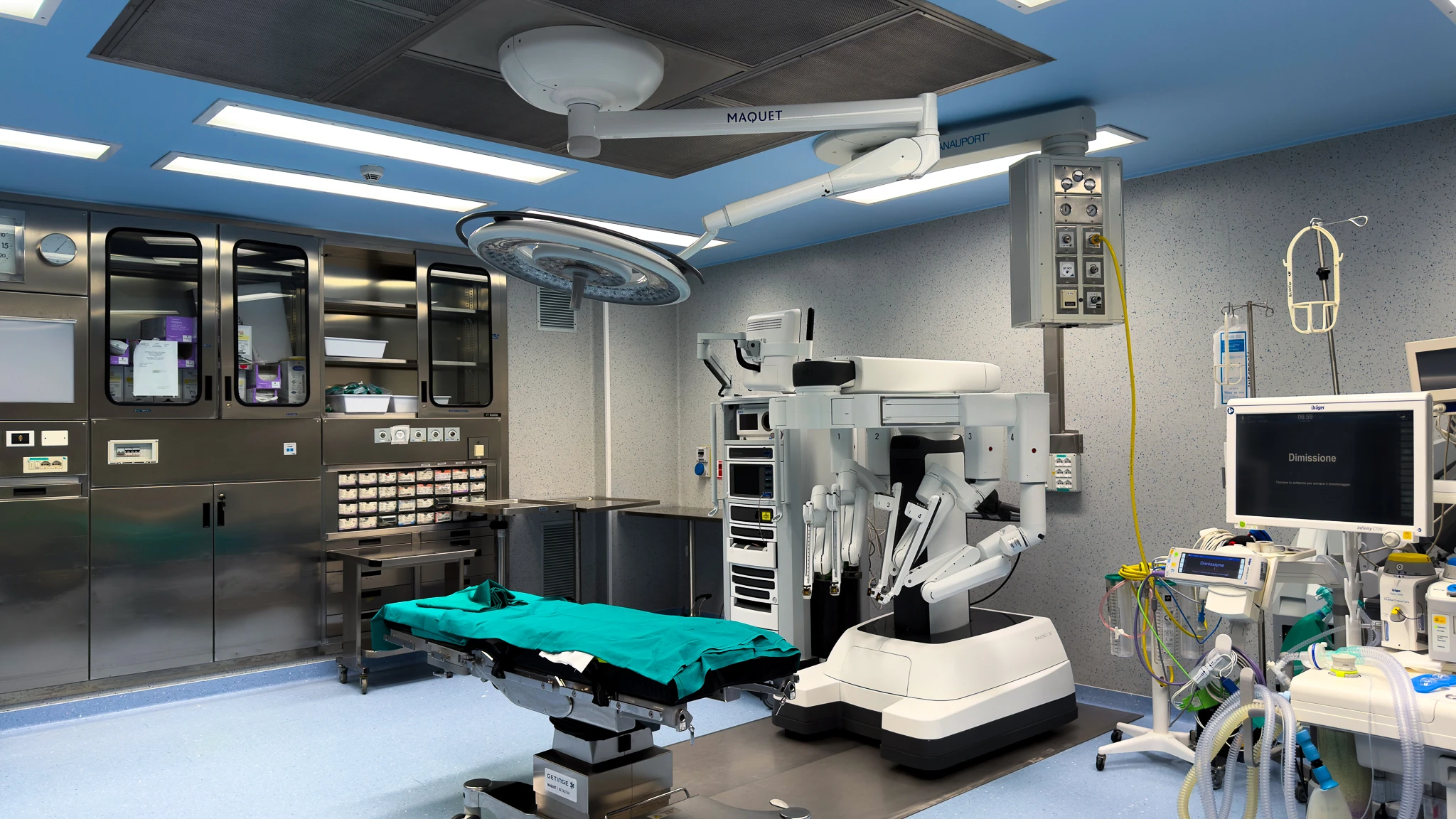
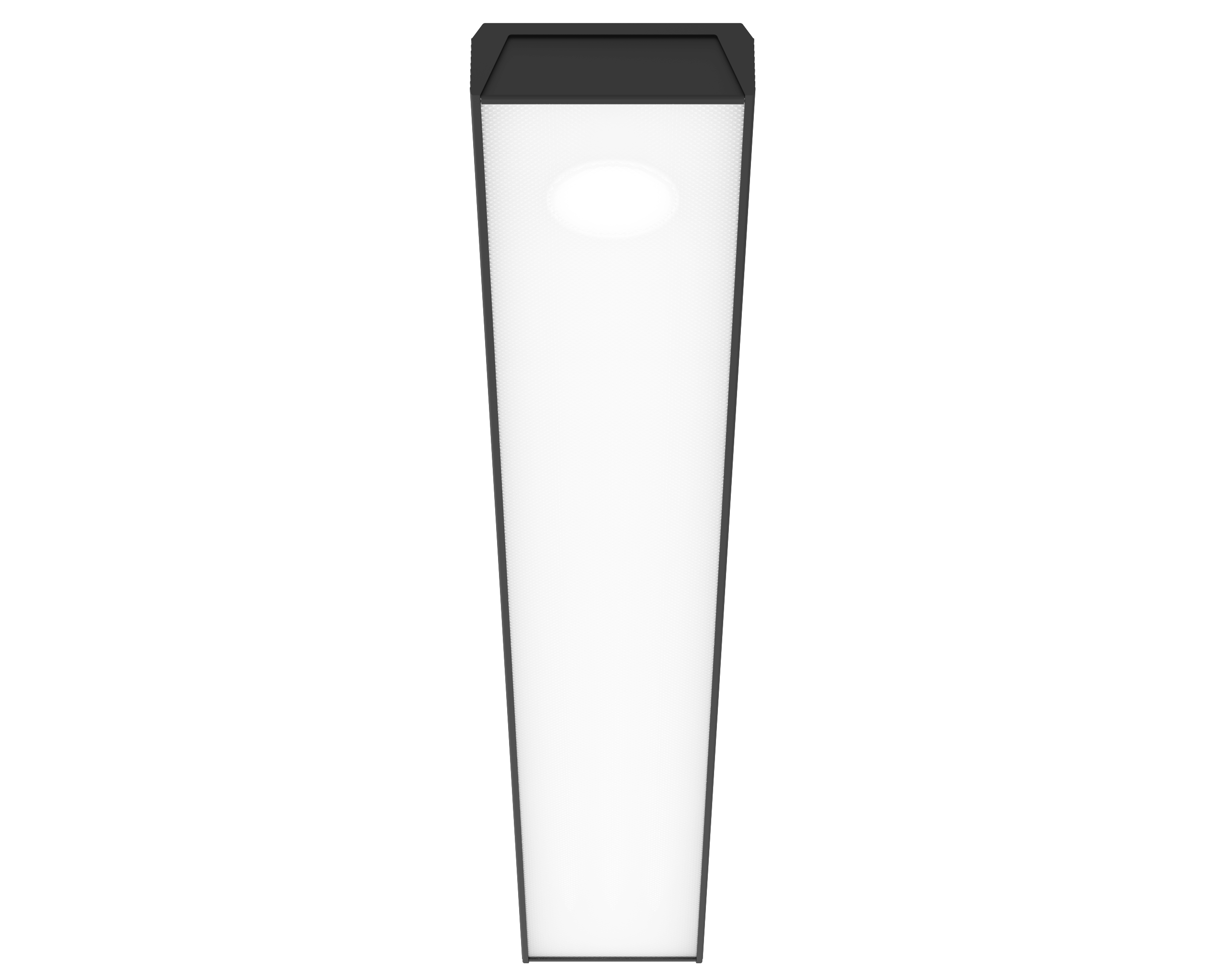
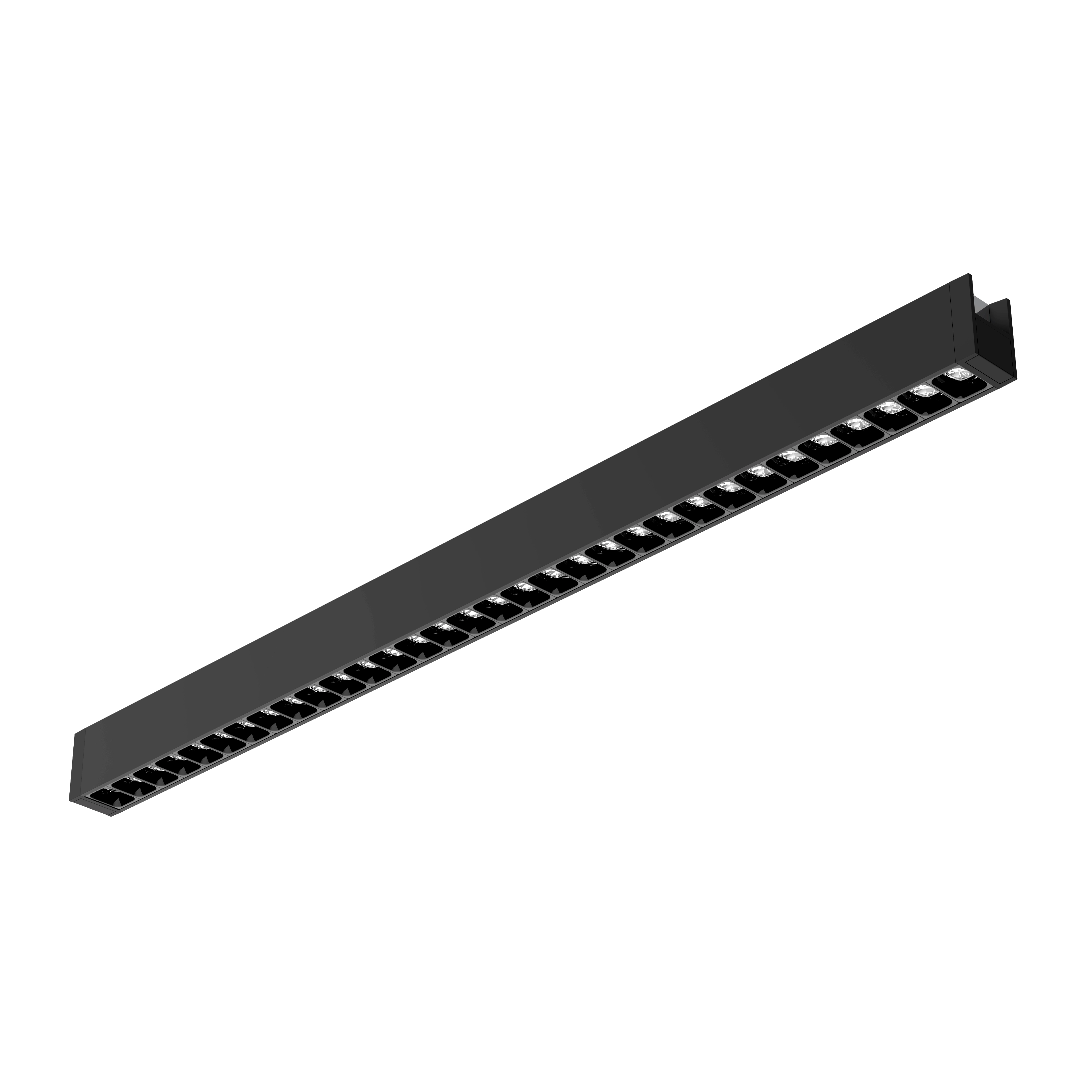
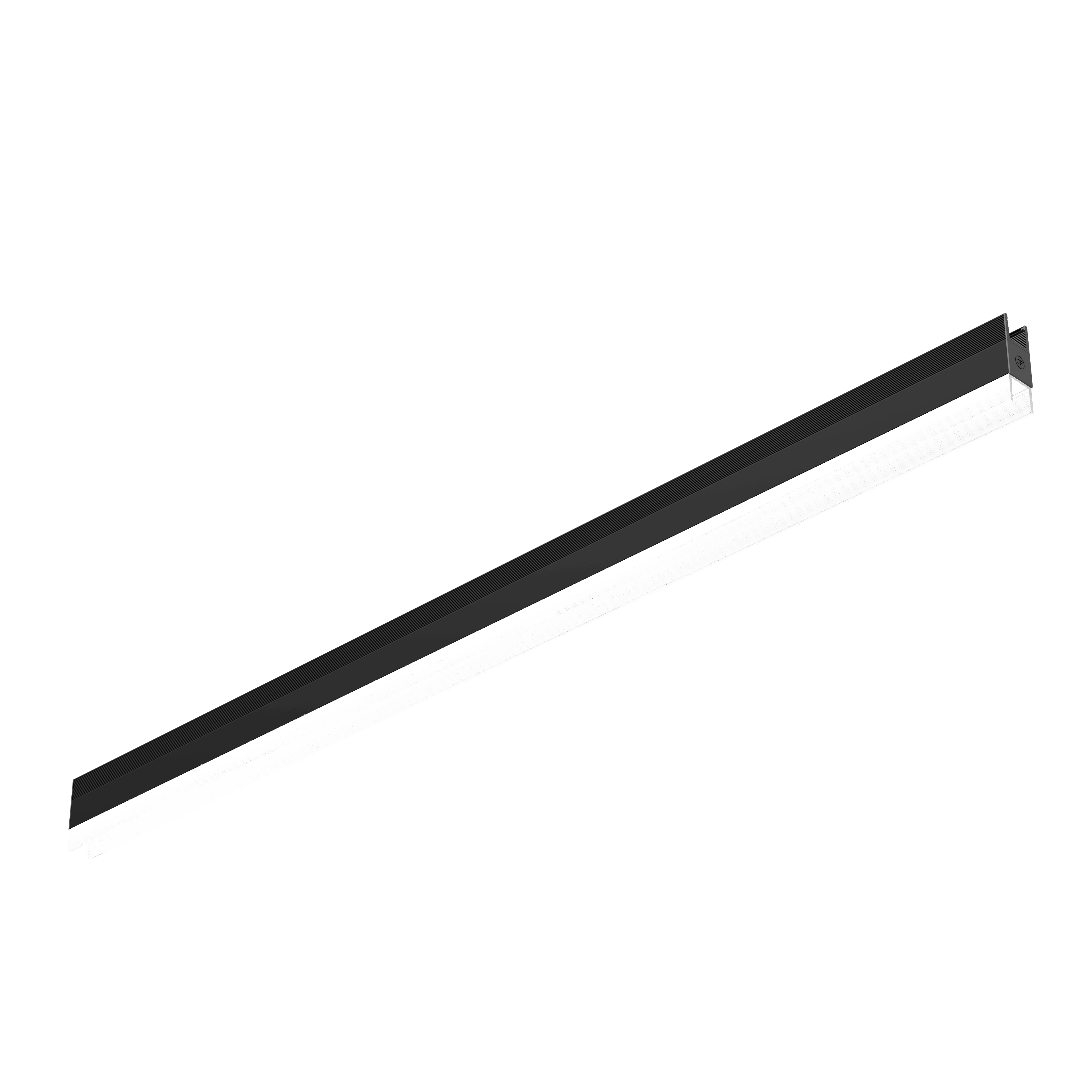
An assisted living facility with nursing care has the requirements of a hospital ward — medical visits, therapies, 24-hour nursing, disinfection protocols — and at the same time those of a home, because residents live there for months or years. And residents see differently from us: at eighty the pupil lets through a third of the light, the lens yellows and scatters, glare sensitivity triples, contrast is read poorly. They need more light, better distributed, without reflections — and at night they need a light that lets them get up without falling and without waking completely.
3F Filippi solutions for assisted living facilities are designed to improve residents' comfort, safety and wellbeing and to support the staff's work: reliable LED luminaires with uniform light and CRI ≥ 90, glare UGR < 19 in areas of prolonged stay, Tunable White versions that follow the circadian rhythm — decisive for residents with dementia —, dedicated night lighting in rooms and corridors, cleanable materials and IP65 versions for assisted bathrooms, nurses' stations and service rooms.
This page covers residences with nursing care: dependent residents, dementia units, nurses' stations and assisted bathrooms. For residences for self-sufficient elderly people, with a more residential approach, there is the nursing homes page; the general clinical criteria are on the hospital lighting page.
EN 12464-1 covers care facilities in its healthcare section — patient rooms, corridors, examination rooms — but for elderly residents designers raise the levels by 50–100% above the minimums, because the standard is written for a forty-year-old eye. The table summarises the values we use as the design basis for an assisted living facility and the typical 3F Filippi solution for each area.
| Area | Design illuminance | Requirements | Typical 3F Filippi solution |
|---|---|---|---|
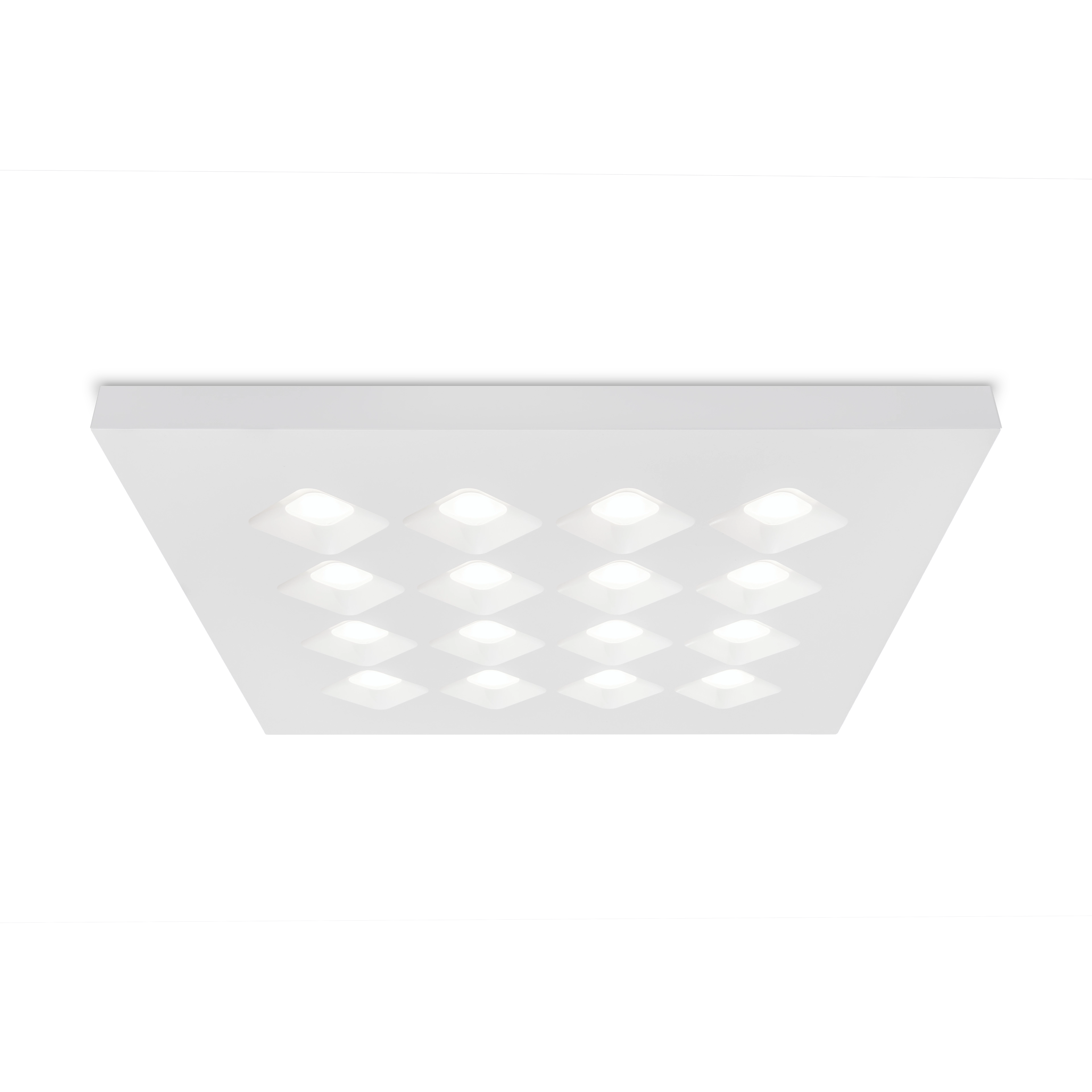
| Residents' rooms: general / reading / examination / night | 200 lx / 500 lx / 1,000 lx / 5–10 lx | UGR < 19, CRI ≥ 90, Tunable White, bedside controls, wall night light | 3F Dìagon P Tunable White, L 340 Tunable White, Mira Parete |
| Dementia and Alzheimer units | Uniform 300–500 lx, no sharp shadows | Tunable White with automatic circadian curve, no strong contrasts on the floor, indirect light | 3F Dìagon P Tunable White, 3F Solo direct/indirect, Mira Parete |
| Corridors: day / night | 200–300 lx by day, 20–50 lx at night | Uniformity ≥ 0.6, light on the walls for orientation, warm 2700 K night scene | Zero 3F, 3F Travetta, 3F Linux with DALI, Mira Parete |
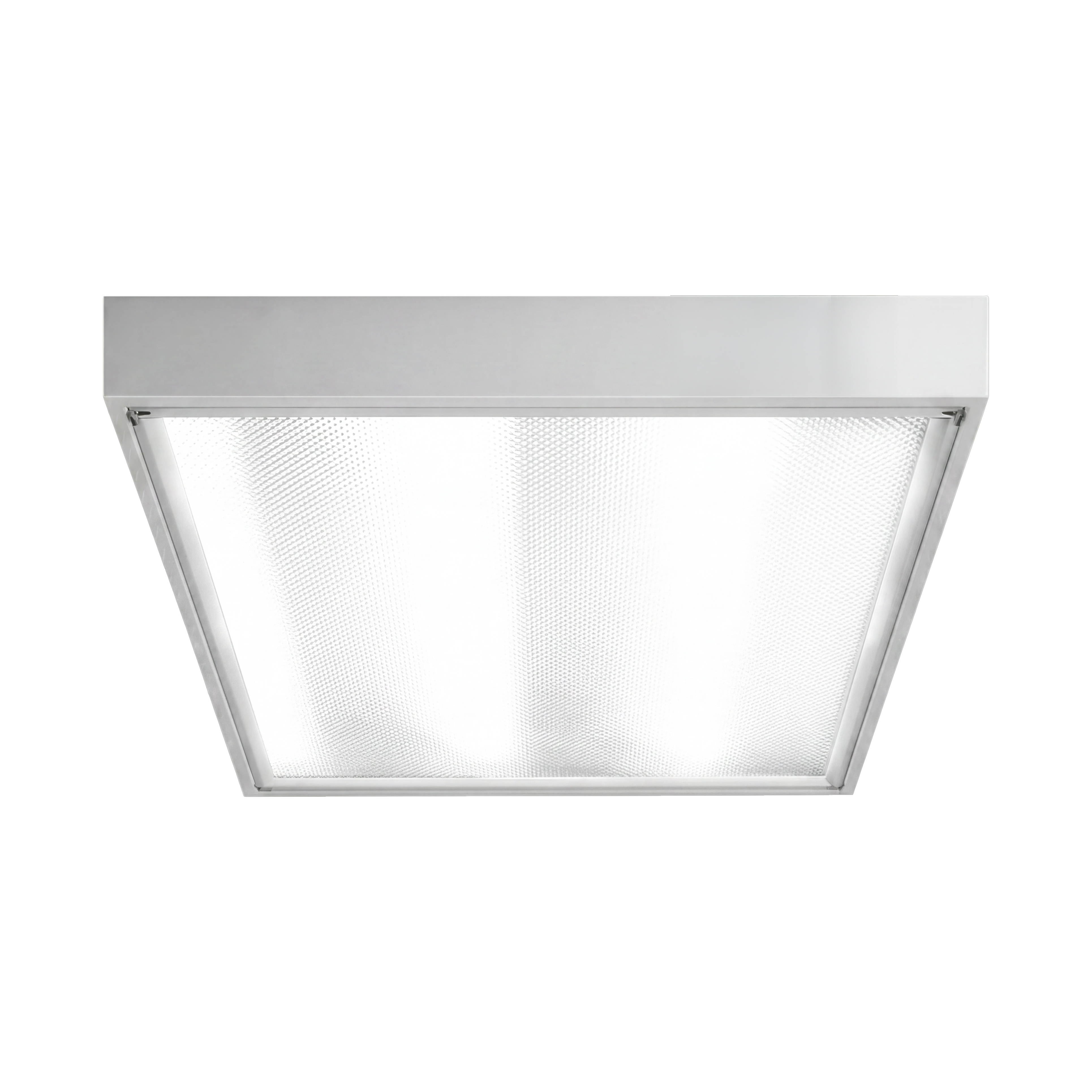
| Nurses' station and examination rooms | 500 lx, 1,000 lx on the couch | CRI ≥ 90, UGR < 19, cleanable surfaces | L 600, 3F Dìagon P, 3F LED Panel |
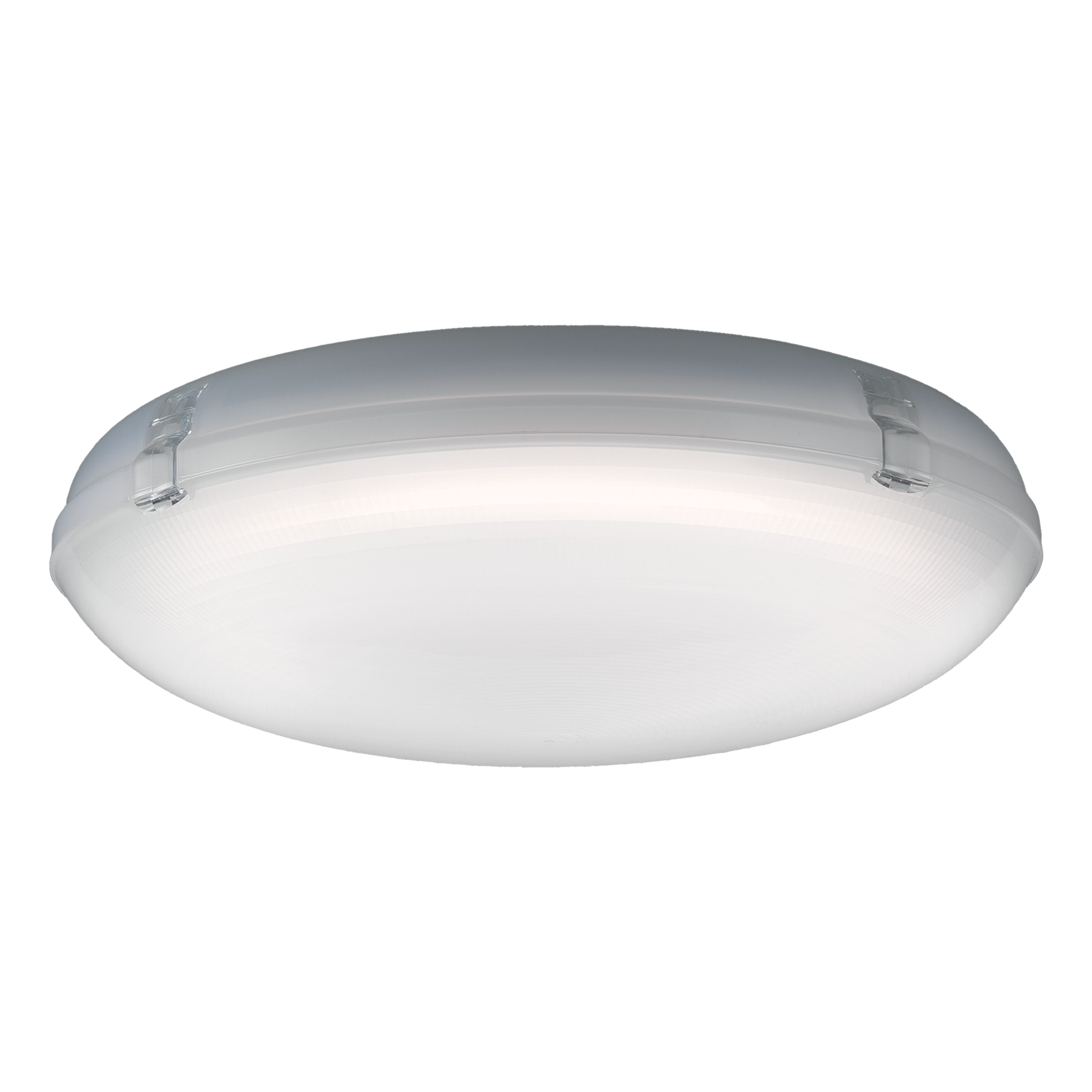
| Assisted bathrooms and showers | 300 lx, 500 lx at the mirror | IP65, CRI ≥ 90, vertical light on the face, no reflections on wet surfaces | 3F Petra, P 200, Mira Parete |
| Lounges, activity rooms and physiotherapy | 300–500 lx | UGR < 19, 3000–4000 K, Tunable White for morning activities | 3F Hal, 3F Solo, 3F Eldorado, L 340 |
| Dining room | 300–500 lx on the tables | CRI ≥ 90 for food, warm 3000 K light, no glare for those seated | 3F Hal, 3F Solo, 3F Reno |
| Reception, offices and staff areas | 300–500 lx | UGR < 19, 4000 K working light, sensors in changing rooms | 3F LED Panel, L 340, 3F Dìagon P, 3F Petra Sensor |
| Kitchen, laundry, disinfection and technical rooms | 300–500 lx | IP65, HACCP in the kitchen, resistance to steam and detergents | 3F Petra, P 200, 3F Zeta |
Night lighting is the most underrated requirement of a care facility and the one with the most consequences: most falls happen at night, on the way from bed to bathroom. A dedicated wall light, low, warm and always on — 5–10 lx on the floor — lets the resident get up without switching on the general light and without waking completely, and lets staff do their rounds without torches. In dementia units light does even more: high, uniform levels by day and a Tunable White curve that falls towards evening reduce, according to the clinical literature, evening agitation and night waking.
Three requirements a specification for an assisted living facility must contain, which 3F Filippi luminaires meet.
High-efficiency LEDs with CRI ≥ 80 or CRI ≥ 90, colour temperatures of 3000–4000 K for comfortable environments and Tunable White versions from 2700 to 6500 K to support residents' circadian rhythms: cool, intense light in the morning, warm and dimmed in the evening, with an automatic clock-driven curve. UGR < 19 for areas of prolonged stay, with LGS microprismatic screens and low-luminance honeycomb optical systems, because the elderly eye is three times more sensitive to glare. Initial colour tolerance SDCM 3.
Housings in painted steel or extruded aluminium, diffusers in high-uniformity opal polycarbonate or tempered glass for hygienically sensitive areas — nurses' stations, assisted bathrooms, disinfection rooms. Smooth surfaces resistant to frequent cleaning and disinfection, versions with IP40 or IP65 protection according to hygiene needs, wall luminaires without sharp edges and without accessible hot parts in the rooms.
Luminaires compliant with EN 60598-1 and EN 12464-1 for workplaces and healthcare areas; versions with integrated emergency to EN 60598-2-22 for corridors and escape routes of a building where evacuation is slow; IK08–IK10 versions in common areas. DALI control for Tunable White curves and night scenes, presence sensors in bathrooms, changing rooms and service rooms, simplified bedside controls and integration with the nurse call system where required.
The four benefits that medical directors, nursing coordinators and families report with 3F Filippi luminaires.
Soft, uniform light designed to reduce residents' visual fatigue even in old age: levels above the standard minimums, distributed without shadows and without dazzling sources in the field of view of those seated or lying down. The room stays a room, not a ward.
Constant, optimised illuminance levels to prevent disorientation and reduce the risk of falls, with light on the walls that makes doors and handrails legible and dedicated night lighting that accompanies the resident from bed to bathroom and the staff on their rounds.
Controlled-spectrum light and Tunable White options to regulate the perception of space and circadian rhythms: for residents who rarely go out, artificial light is the only signal telling the body what time it is. In dementia units the automatic circadian curve is part of the care protocol.
High LED efficiency and long luminaire life reduce the frequency of maintenance work — which in a care facility means entering residents' rooms — and cut by 60% the consumption of a building lit 24 hours a day, by over 80% with sensors and scenes.
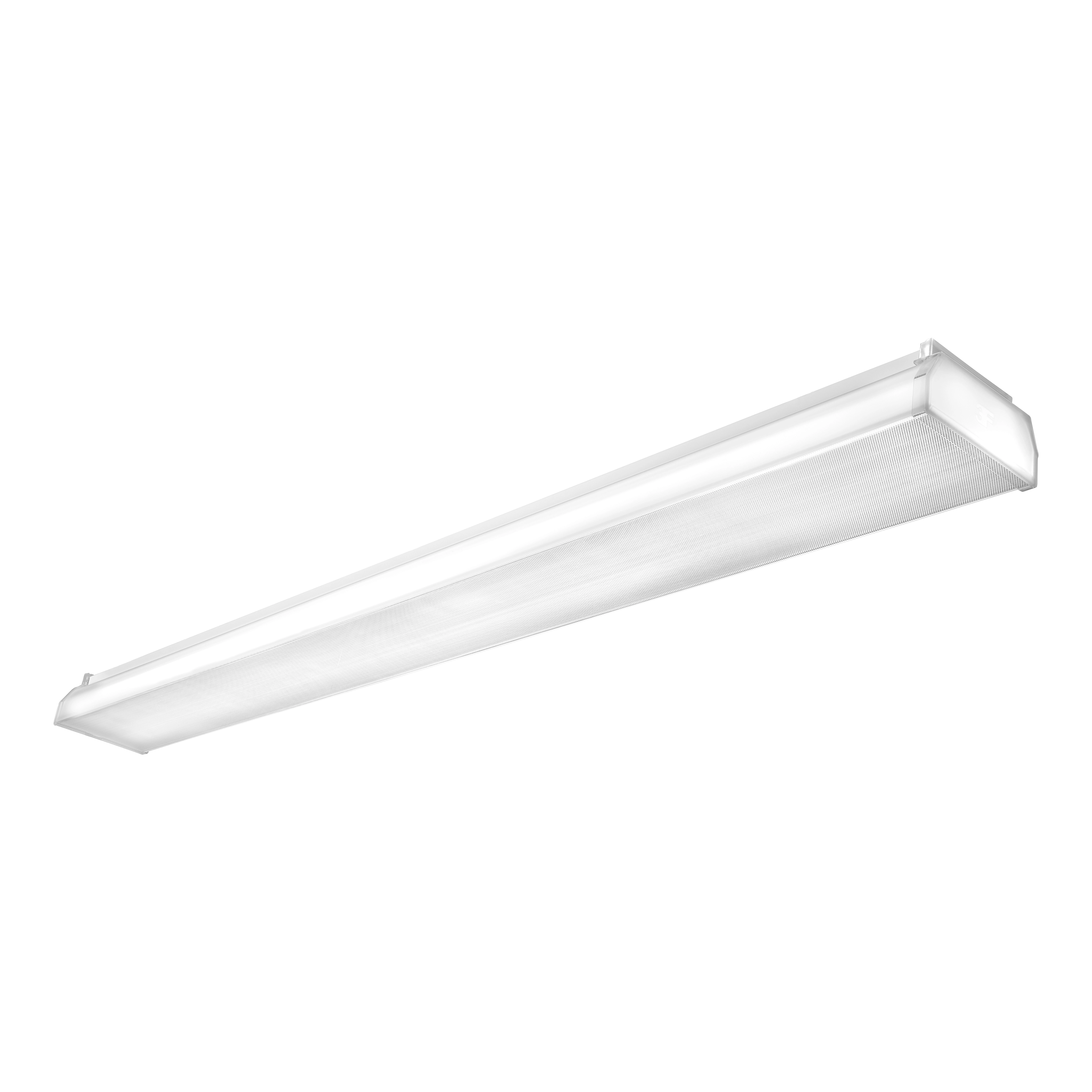
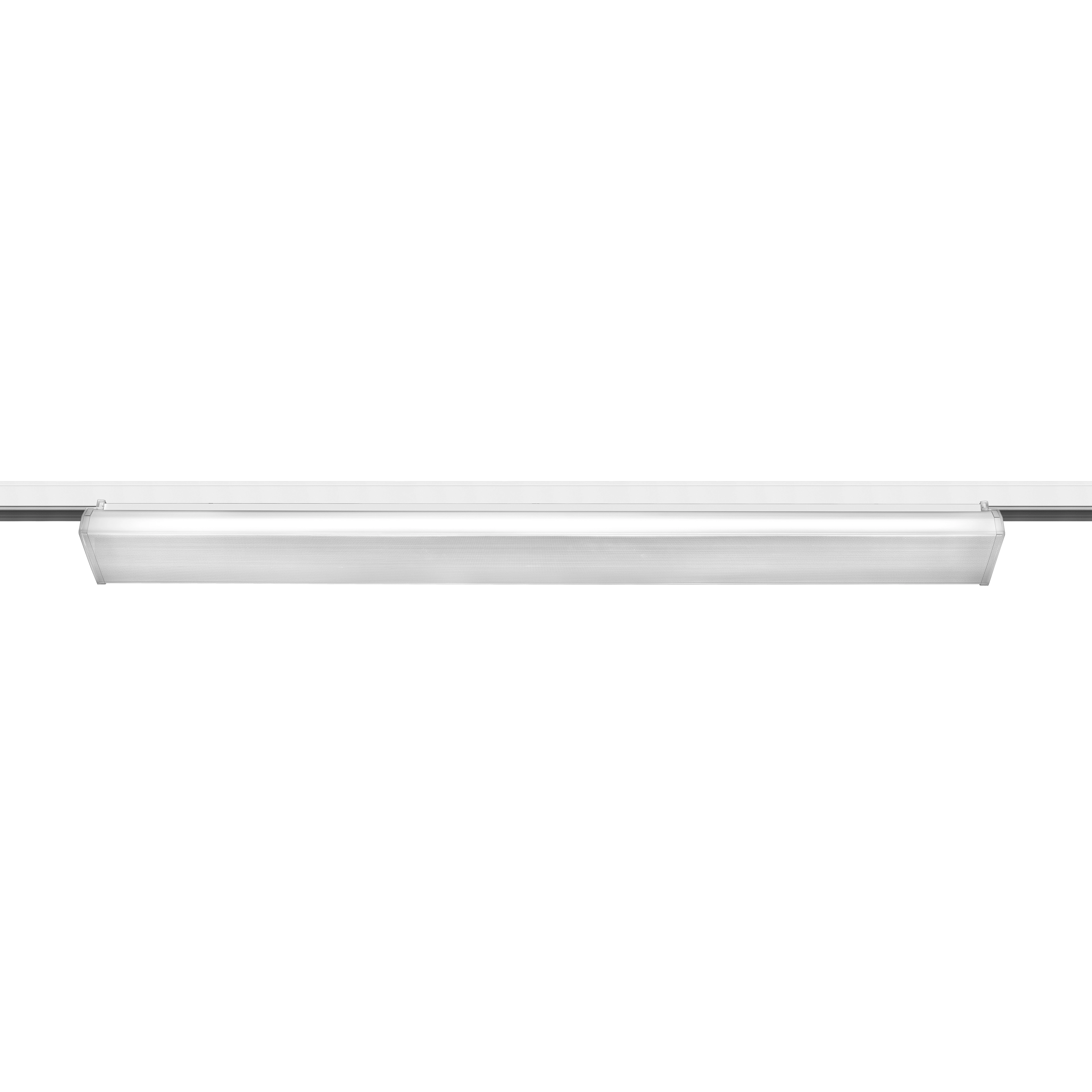
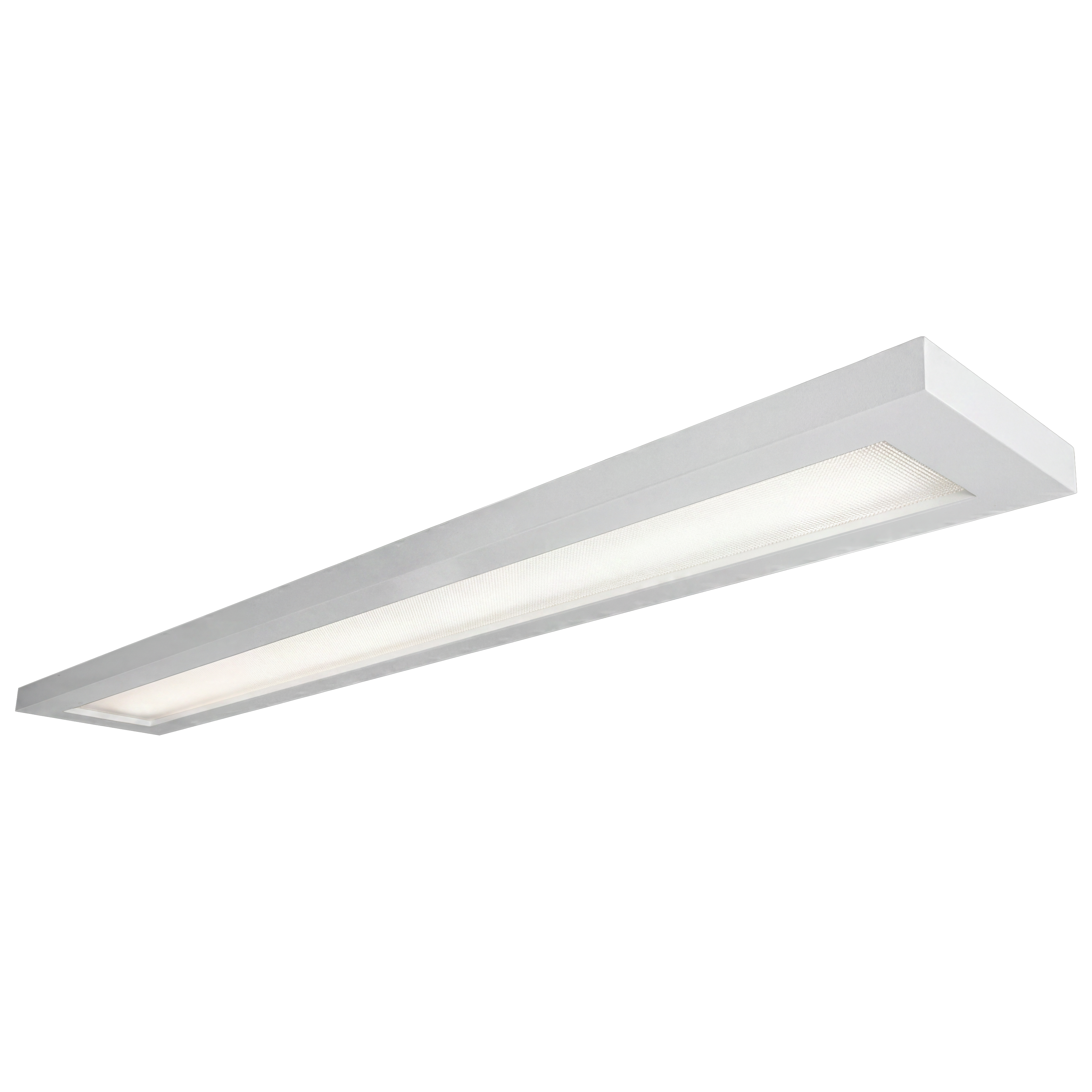
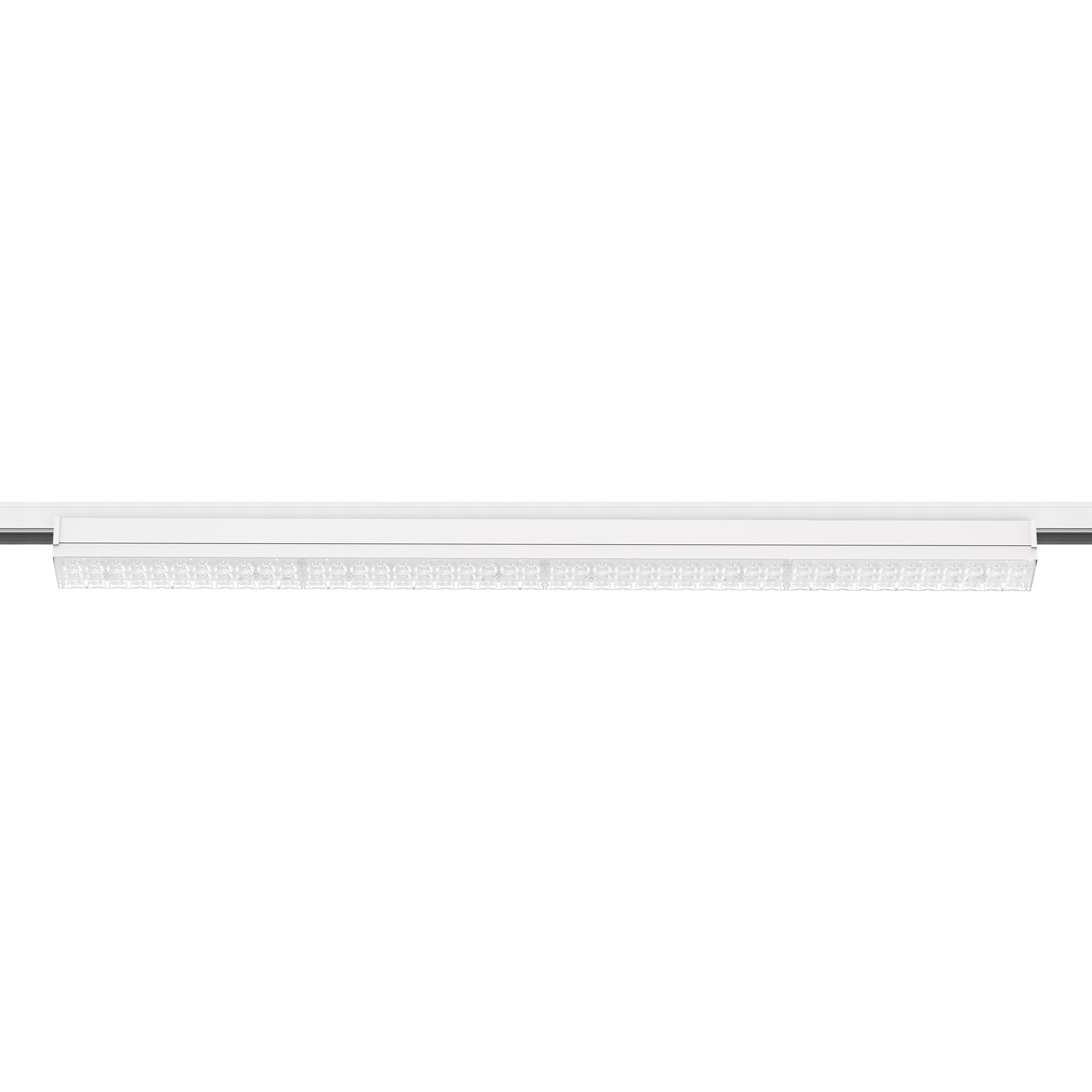
Low-luminance ceiling and suspended luminaires, also Tunable White, for rooms and common areas; wall luminaires for reading and night light; glass recessed luminaires for nurses' stations and examination rooms; IP65 waterproof luminaires for assisted bathrooms, kitchens and service rooms; light lines for corridors. The range pages give versions, IP and IK ratings, materials and files for lighting calculation.
Other ranges used in care facilities: Mira, 3F Eldorado, 3F LED Panel, 3F Dìagon, L 320, L 340, L 600, L 650, 3F Reno, 3F Linux, 3F Six, Binario 3F, 3F Mirella, 3F C8, P 250, Lucequadro.
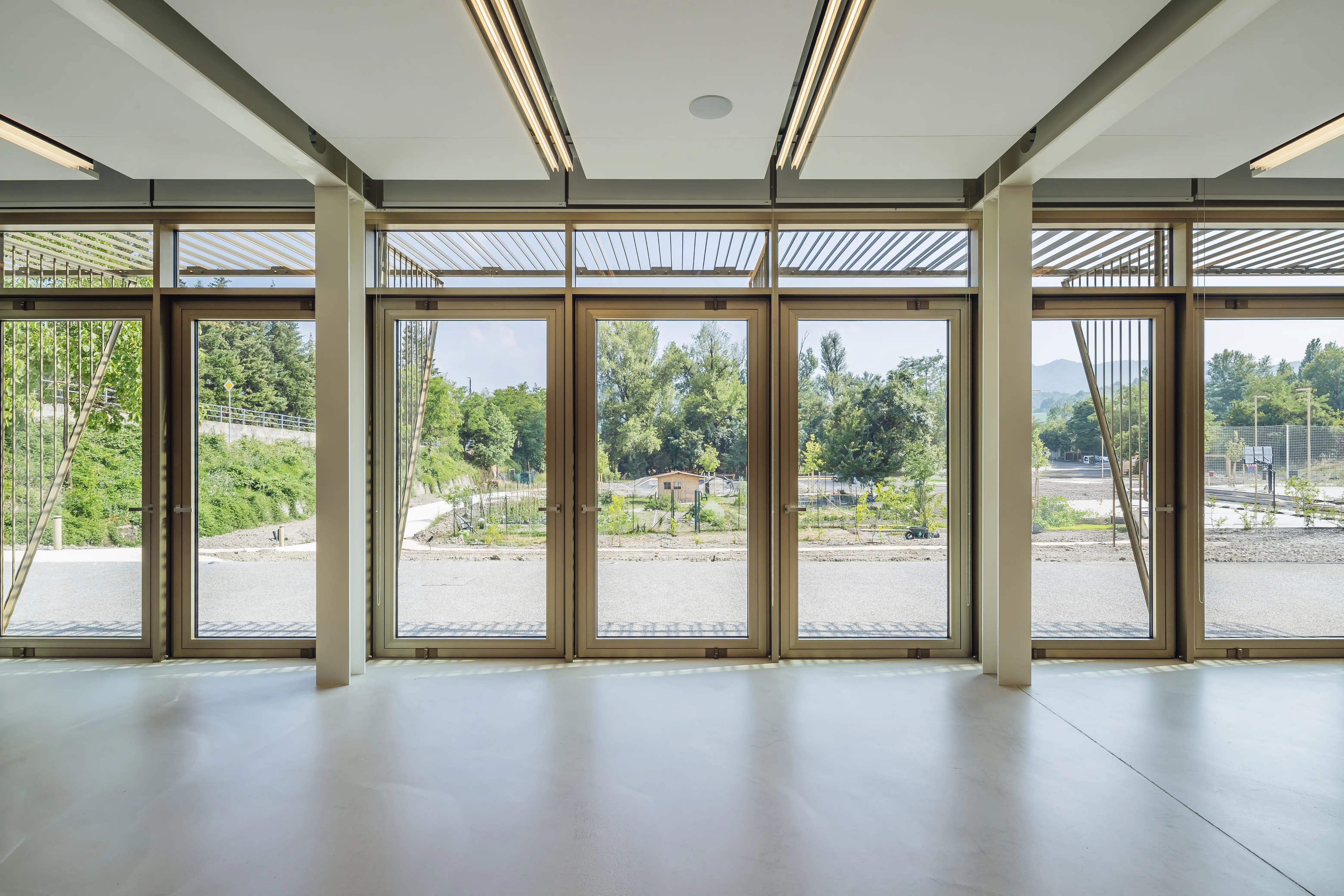
A hospital and a foundation dedicated to inclusion: two places where the light accompanies care and daily life.
It must guarantee visual comfort, uniform light, adequate colour rendering and no glare, improving residents' perception of space, safety and wellbeing. In a facility with nursing care the clinical requirements are added: 1,000 lx for bedside and nurses' station examinations, CRI ≥ 90, cleanable materials and IP65 in assisted bathrooms, dedicated night lighting in rooms and corridors, Tunable White for the circadian rhythm. And levels must be raised above the standard minimums, because an eighty-year-old eye receives a third of the light of a twenty-year-old one.
Healthcare-grade light, even though an assisted living facility is not a hospital. 500 lx on the infirmary work surface, where medication is prepared and small-print labels and dosages are read; 1,000 lx on the examination couch, with a dedicated luminaire that is switched on only when needed. Colour rendering CRI ≥ 90 is the requirement that matters most: doctors and nurses assess pallor, cyanosis, jaundice, redness and pressure ulcers by looking at skin colour, and CRI 80 light distorts it. UGR < 19 completes the picture, because a person lying down looks at the ceiling, together with smooth, sanitisable luminaires such as L 600, 3F Dìagon P and 3F LED Panel.
Yes. 3F Filippi LED luminaires are made with materials resistant to disinfection and intensive cleaning cycles. Versions with sealed diffusers and high IP ratings guarantee reliability and hygiene, and are ideal for care facilities, care areas and healthcare zones: glass recessed luminaires in nurses' stations, IP65 waterproof luminaires in assisted bathrooms and disinfection rooms, smooth wall luminaires without sharp edges in the rooms, all cleaned with the facility's products and protocols without dismantling anything.
With the same four levels as a hospital room, but calibrated for an elderly person: general light at 200 lx instead of the standard 100, uniform and low-luminance for those looking at the ceiling; reading light at 500 lx on the wall, adjustable and controllable from the bed; examination light at 1,000 lx with CRI ≥ 90 for the doctor and the nurse; night light at 5–10 lx on the floor, always on, leading to the bathroom. The Tunable White version of the main luminaire follows the circadian curve; the controls are large, few and reachable from the bed and the door.
Three things. Daytime levels are high and uniform — 300–500 lx everywhere, with no shaded areas — because a person with dementia may read a sharp shadow on the floor as a hole or a step and stop or fall. The colour temperature follows an automatic circadian curve, with cool, intense light in the morning and warm, low light in the evening, which helps contain evening agitation and night waking. And night lighting is more widespread and present than elsewhere, because residents get up more often: corridors never dark, bathrooms with sensors, rooms with permanent wall light.
With four design measures. Uniformity: no abrupt transitions between light and dark areas, because the elderly eye adapts slowly. Light on vertical surfaces: lit walls, doors and handrails make the space legible more than a bright floor does. No glare: low-luminance luminaires and no bare source in the field of view, especially of those getting up from bed or chair. Dedicated night lighting: 5–10 lx on the floor between bed and bathroom, corridors never switched off, sensors in bathrooms that switch on before the resident enters. Stairs, where present, require 150 lx with the step clearly marked.
Unit floor plans, type of residents and hygiene requirements: our technical department prepares the lighting design with levels, UGR, Tunable White curves, night lighting and the luminaire schedule. No obligation.