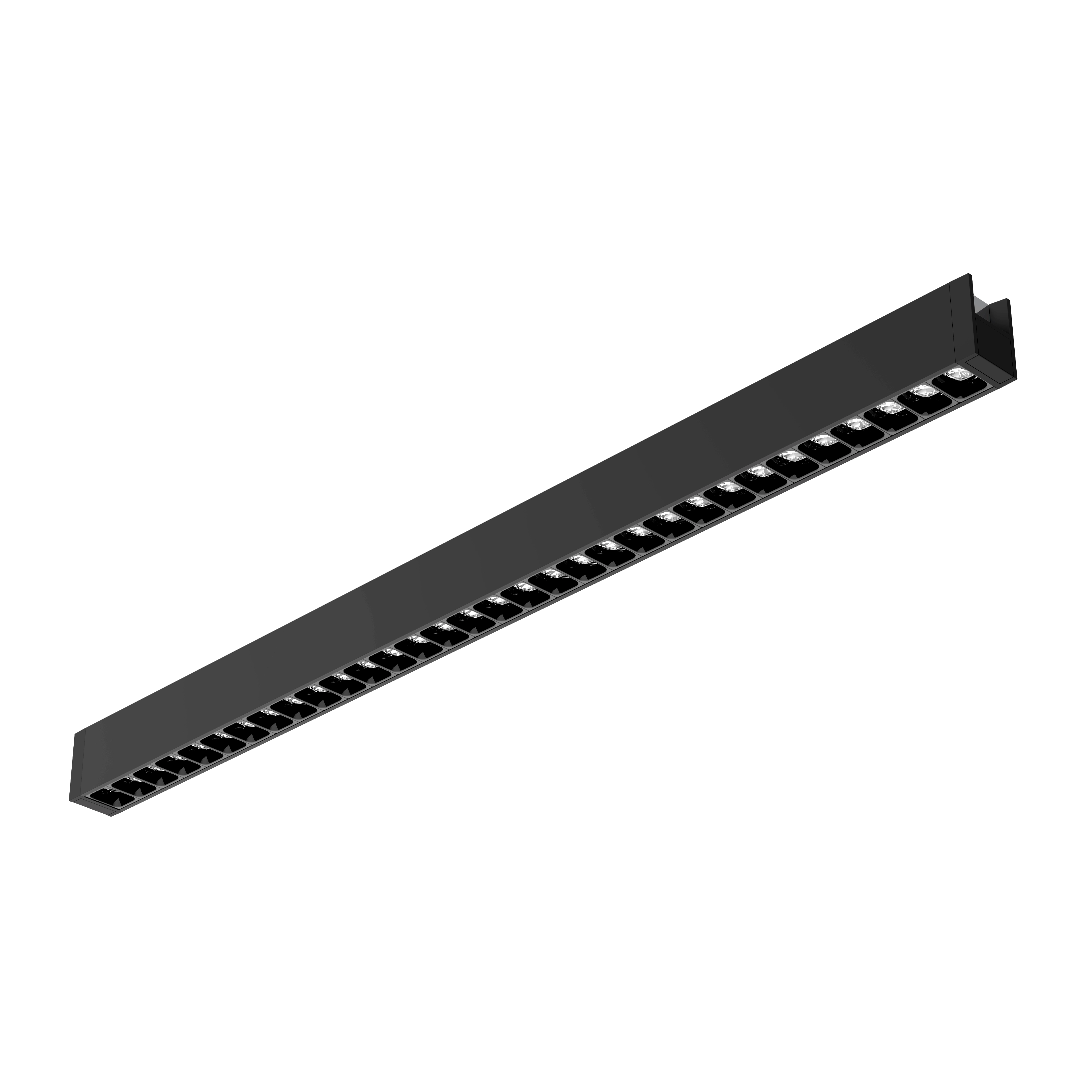
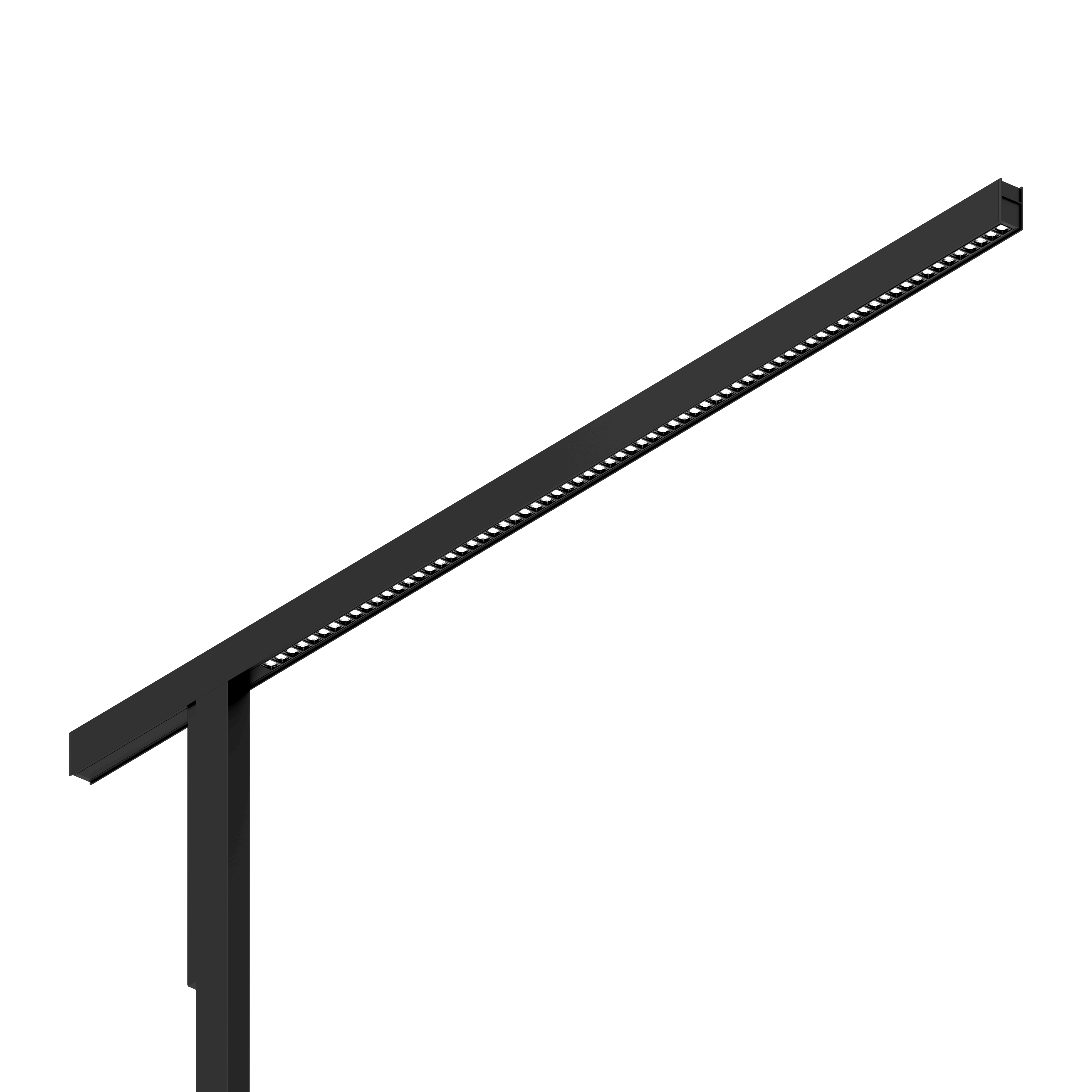
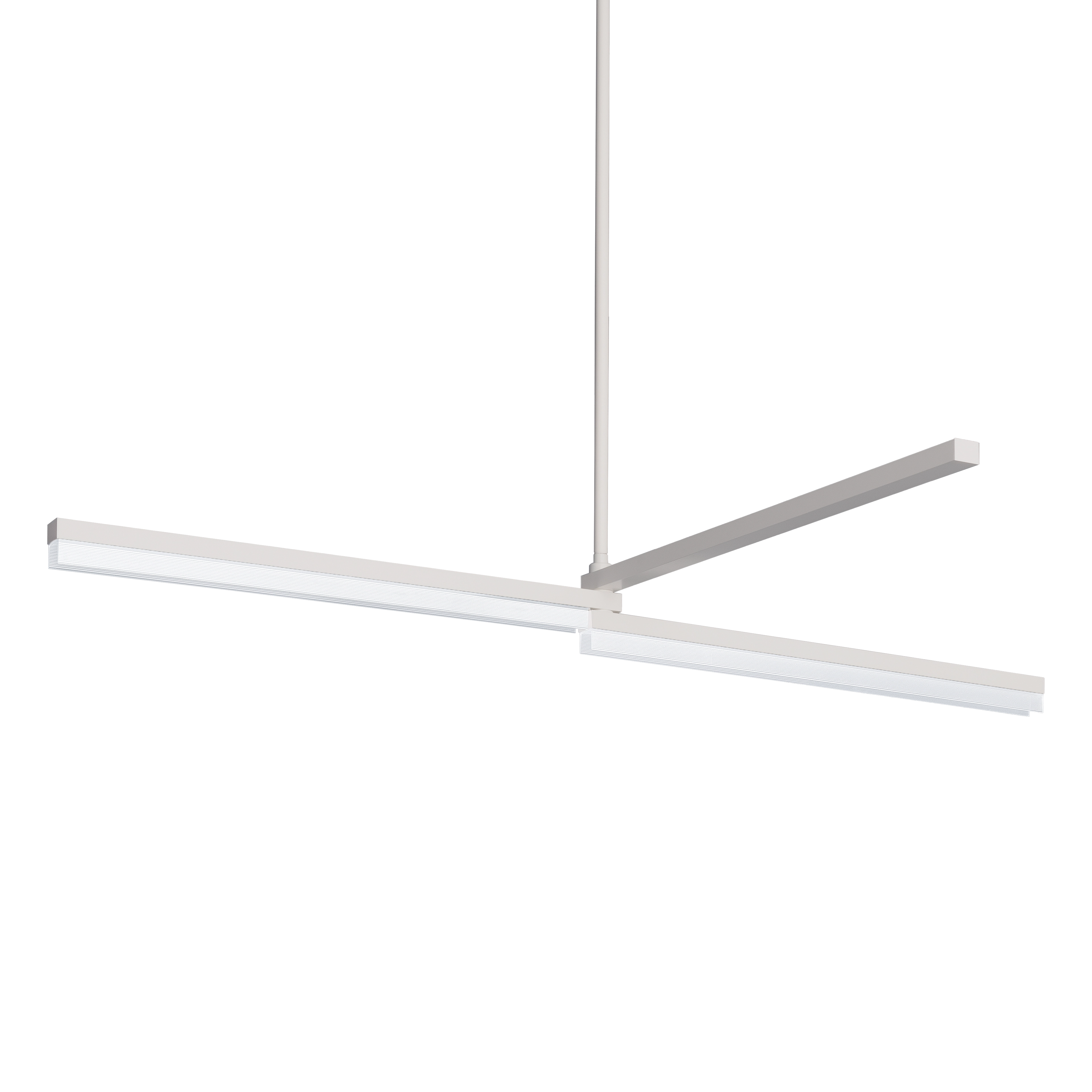
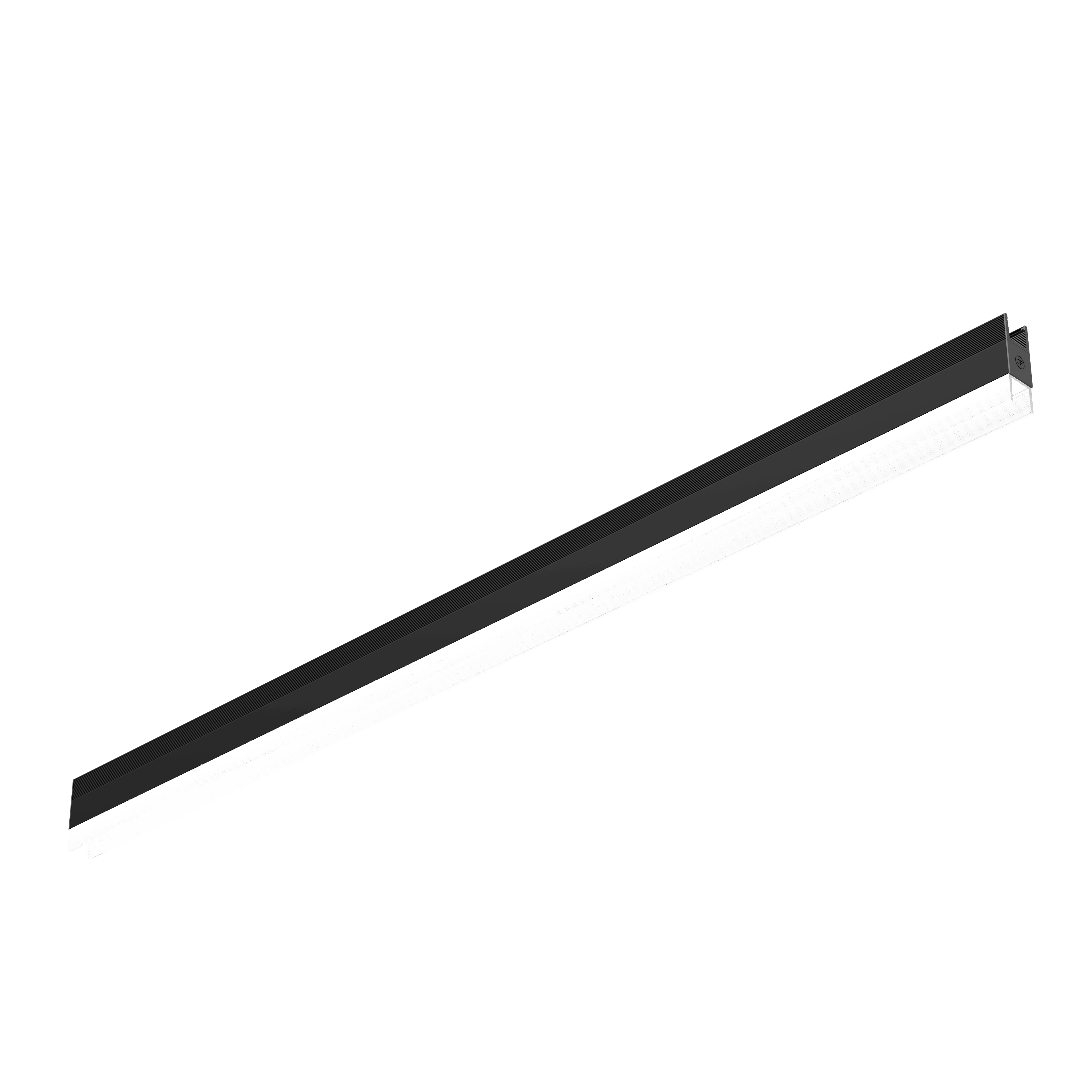
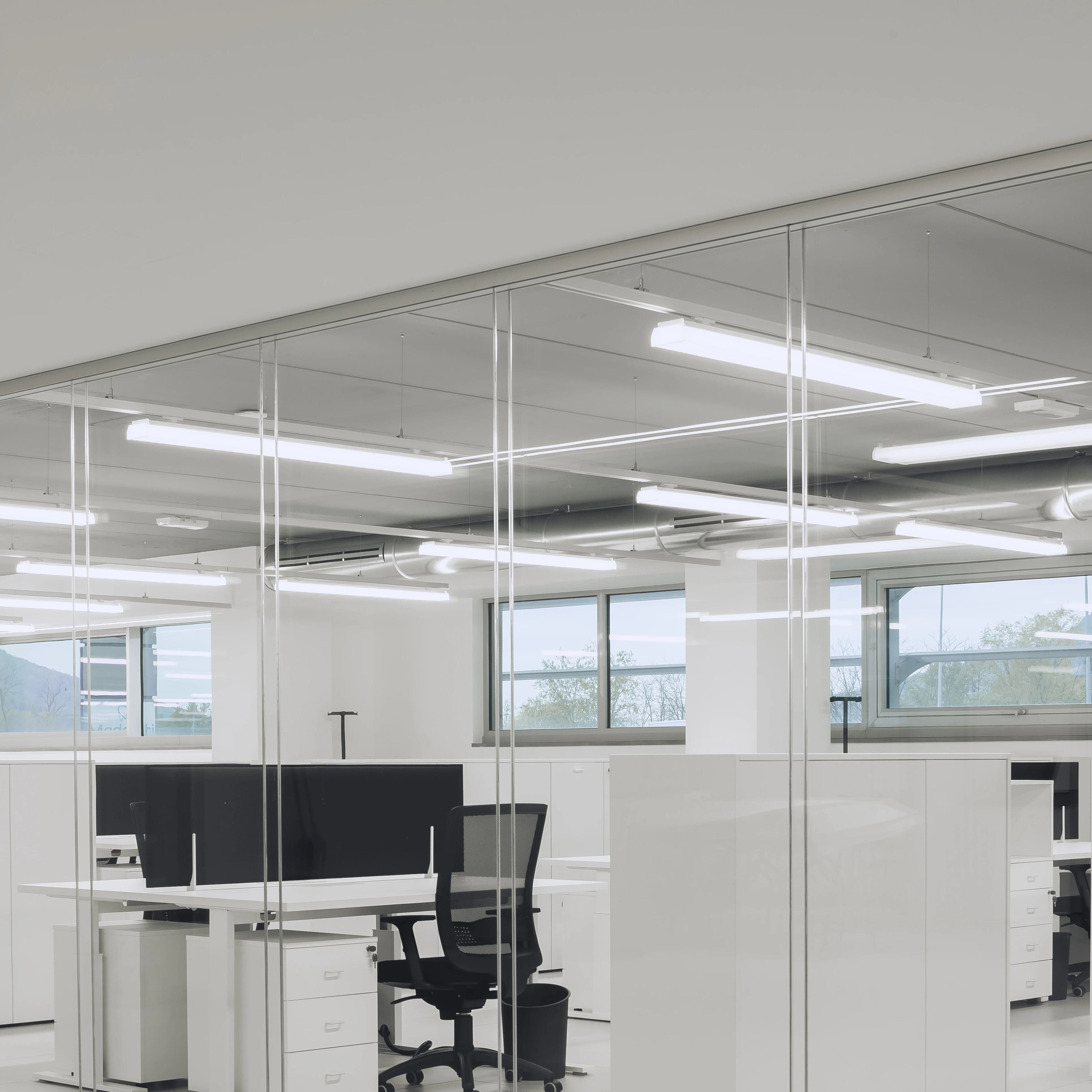
A well-designed LED installation uses 70% less energy than a fluorescent one. But it is still an installation that switches on at eight and off at seven, at the same intensity on a sunny day and a rainy one, in the empty meeting room and the crowded open space. Smart office lighting is what removes that residual waste: each luminaire receives information — is anyone there, how much daylight is coming in, what time is it — and responds on its own.
The difference from the past is not the sensor, which has existed for decades, but the fact that control now sits inside the luminaire: individually addressable DALI-2 drivers, sensors built into the body, Bluetooth mesh modules that need no control wiring at all. That brings installation cost down to a level where automation pays off in a five-hundred-square-metre office, not just in a tower.
This page explains how much each strategy yields, how to choose between protocols and how the installation talks to the rest of the building. The basic lighting requirements — 500 lux, UGR <19, colour rendering — are covered on the office lighting page; if the installation you want to make intelligent is the old one, start from office relamping.
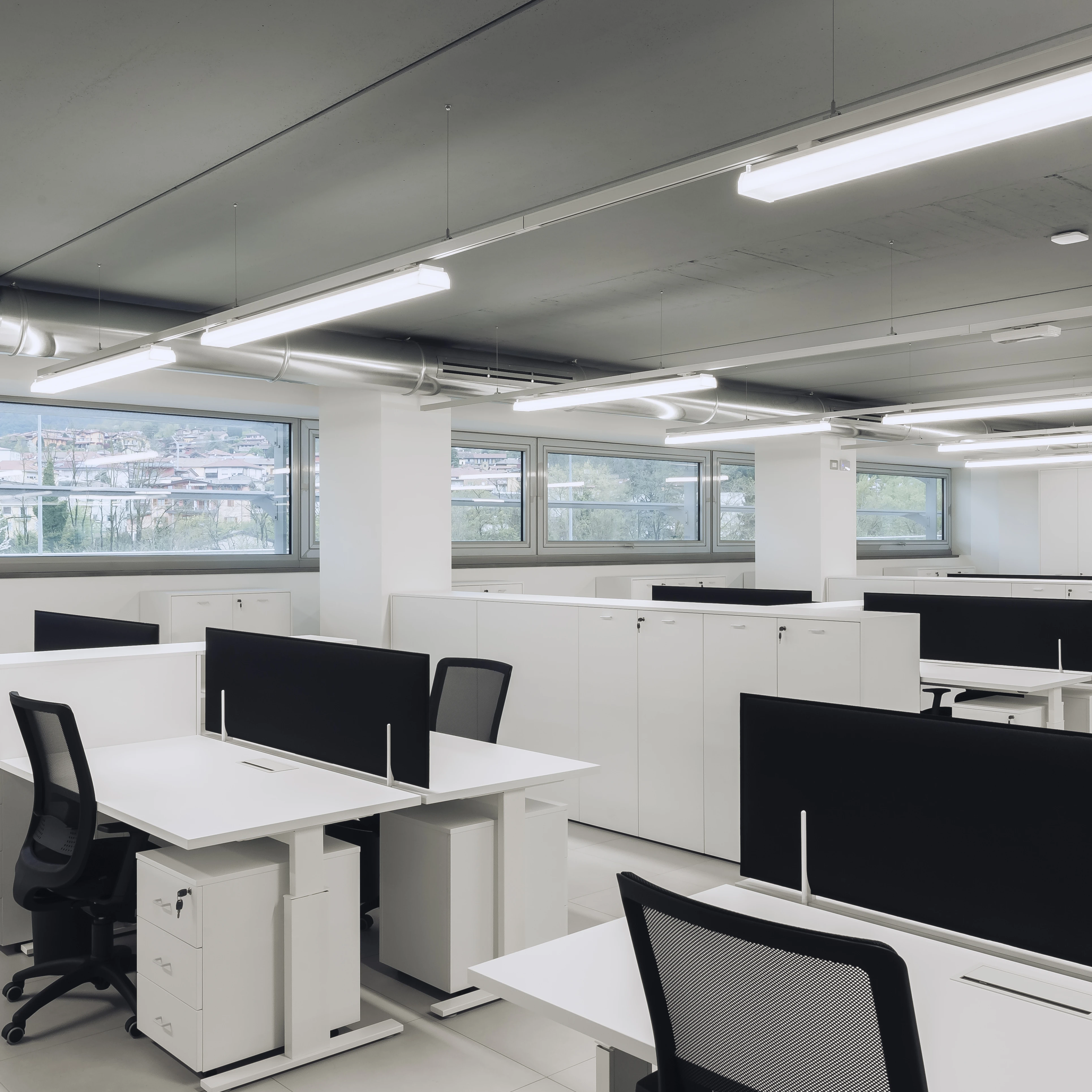
Smart lighting savings are not a single number: they are the sum of different strategies, each with its own field of application. The figures below are orders of magnitude from technical literature and site experience, relative to an already efficient LED installation; they need checking against the building's real usage profile.
| Strategy | Typical saving | Where it pays most | What it needs |
|---|---|---|---|
| Presence / absence detection | 20–30% | Cellular offices, meeting rooms, toilets, archives | PIR or ultrasonic sensor per room, tuned switch-off delay |
| Daylight harvesting | 20–40% | Workstations within 4–5 m of windows, glazed open spaces | Photocell, DALI dimmable luminaires, zones parallel to the windows |
| Constant illuminance (depreciation compensation) | 10–15% | All rooms | Dimmable driver and initial commissioning below 100% |
| Scenes and time scheduling | 5–10% | Meeting rooms, reception, common areas, evening cleaning | Control system with clock and stored scenes |
| Tunable White / HCL | Well-being, not savings | Open spaces, meeting rooms, rooms without daylight | Dual-white luminaires and a programmed daily curve |
| Energy monitoring (D4i) | Decisions, not direct savings | Multi-tenant buildings, certifications, EPC contracts | D4i drivers, gateway, data collection platform |
Strategies add up but do not multiply: an open space with presence detection and daylight harvesting together usually lands between 40 and 50% below the uncontrolled LED installation, which in turn used 70% less than fluorescent. Put in a row, LED plus controls reaches −80% against the starting point. EN 15232-1 classifies exactly this: an installation with occupancy detection and daylight-linked dimming per room falls into automation class A, the one that carries most weight in the building's energy certification.
Three layers, from the single luminaire to the building. Each can exist without the next, which is why you can start small.
DALI-2 is the open standard (IEC 62386) for wired control: every luminaire has an address, dims from 0.1 to 100% without flicker, reports faults and running hours. With the D4i extension the driver also exposes real-time energy data. It is the choice for new installations, where the bus cable is laid together with the power line.
Bluetooth mesh removes the bus: luminaires talk to each other by radio and are commissioned from a smartphone. It is the choice for retrofits in occupied offices and for spaces that change layout often, because moving a desk requires no rewiring. 3F Filippi luminaires are available in both versions.
A presence sensor switches on when it detects someone; an absence sensor only switches off after a period without movement, leaving switch-on to the person. In offices the second is almost always preferable: nobody finds the light switched on by a colleague walking down the corridor.
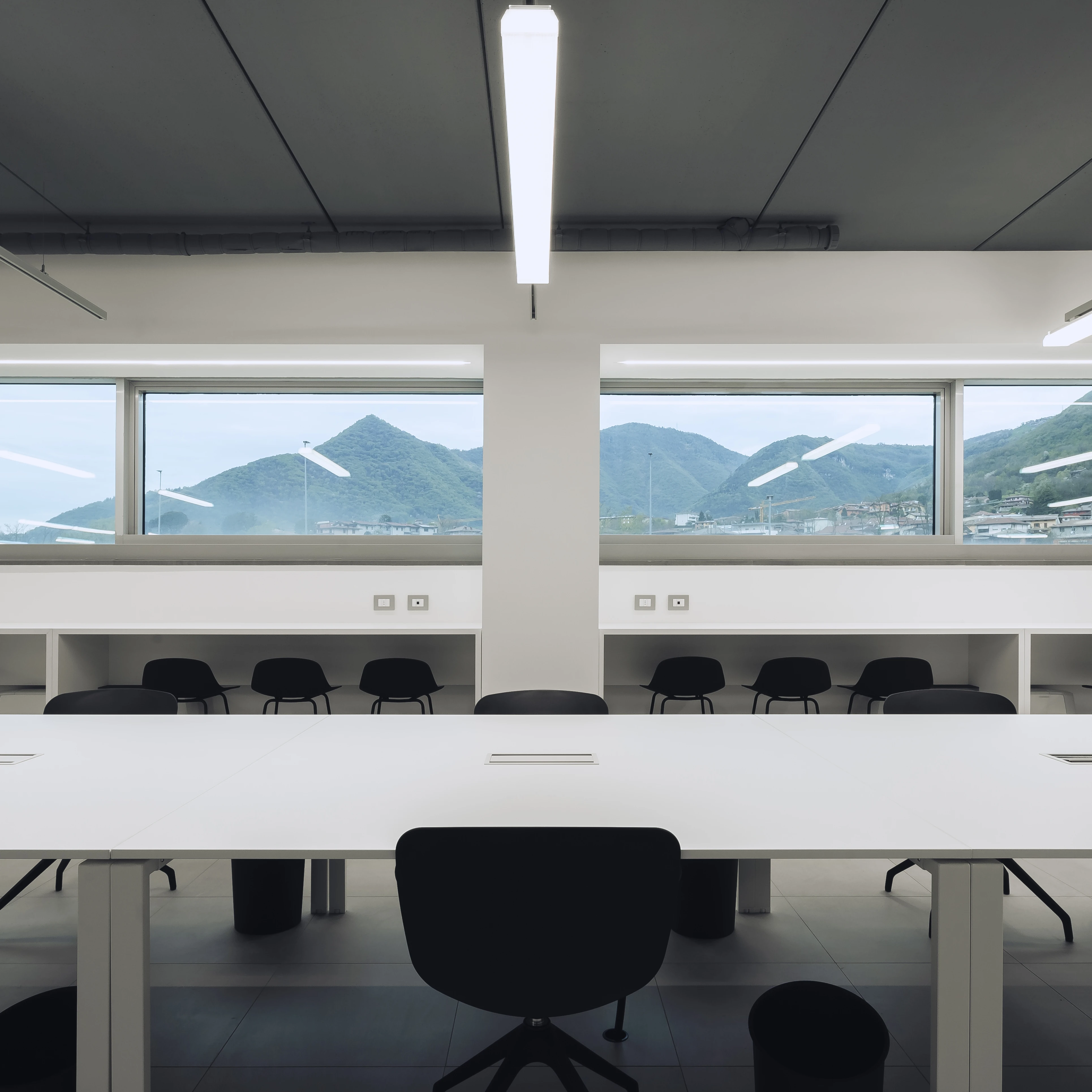
The photocell measures the light reflected from the work surface and reduces the luminaire output just enough to hold 500 lux. The sensors built into 3F Filippi luminaires cover presence and daylight together, with a detection range tuned to typical office mounting heights.
A gateway brings the DALI or Bluetooth installation onto the building management system (BACnet, KNX, Modbus): same schedules as the HVAC, shared sensors for lighting and ventilation, general switch-off when the last badge leaves. D4i driver data feeds the energy reporting required by LEED, BREEAM and WELL, and by energy performance contracts.
Tunable White versions follow a daily curve: cooler and brighter white in the morning, warmer in the afternoon, supporting the circadian rhythm of people who spend the day indoors.
The four results a smart installation delivers and a conventional one cannot.
Constant illuminance on the work surface, continuously dimmed against daylight: the desk by the window and the one at the back of the room receive the same 500 lux, and still receive them in ten years, when the LEDs have lost part of their initial output.
LED delivers the 70%, controls deliver the rest: in an office with good daylight the smart installation uses less than a fifth of the fluorescent one you started from. And the bill can be read luminaire by luminaire, which tells you where to act next.
With Bluetooth mesh a new control zone is created from a phone; with DALI-2 you simply reassign addresses. Hybrid working, with different headcounts every day, is exactly the case where an installation that adapts on its own is worth more than one designed for maximum occupancy.
Drivers report faults, over-temperature and running hours: maintenance becomes scheduled instead of on-call, and a luminaire about to fail is replaced on the next maintenance round, not when it leaves a meeting room in the dark.
The office ranges are available in DALI versions and, for many, with integrated sensor or Bluetooth module. Each range page lists the control variants, photometry and files for calculation software.
Other ranges available with DALI or wireless control: Mira Wall, 3F HD R, 3F Eldorado, 3F Six R, 3F LED Panel, L 320, L 340, L 350, L 360, L 490, 3F Reno, Zero 3F Track, 3F Zeta Track, 3F Linux, Binario 3F, 3F Mirella, 3F Mirella Floor, 3F Filoluce, 3F C8, Lucequadro.
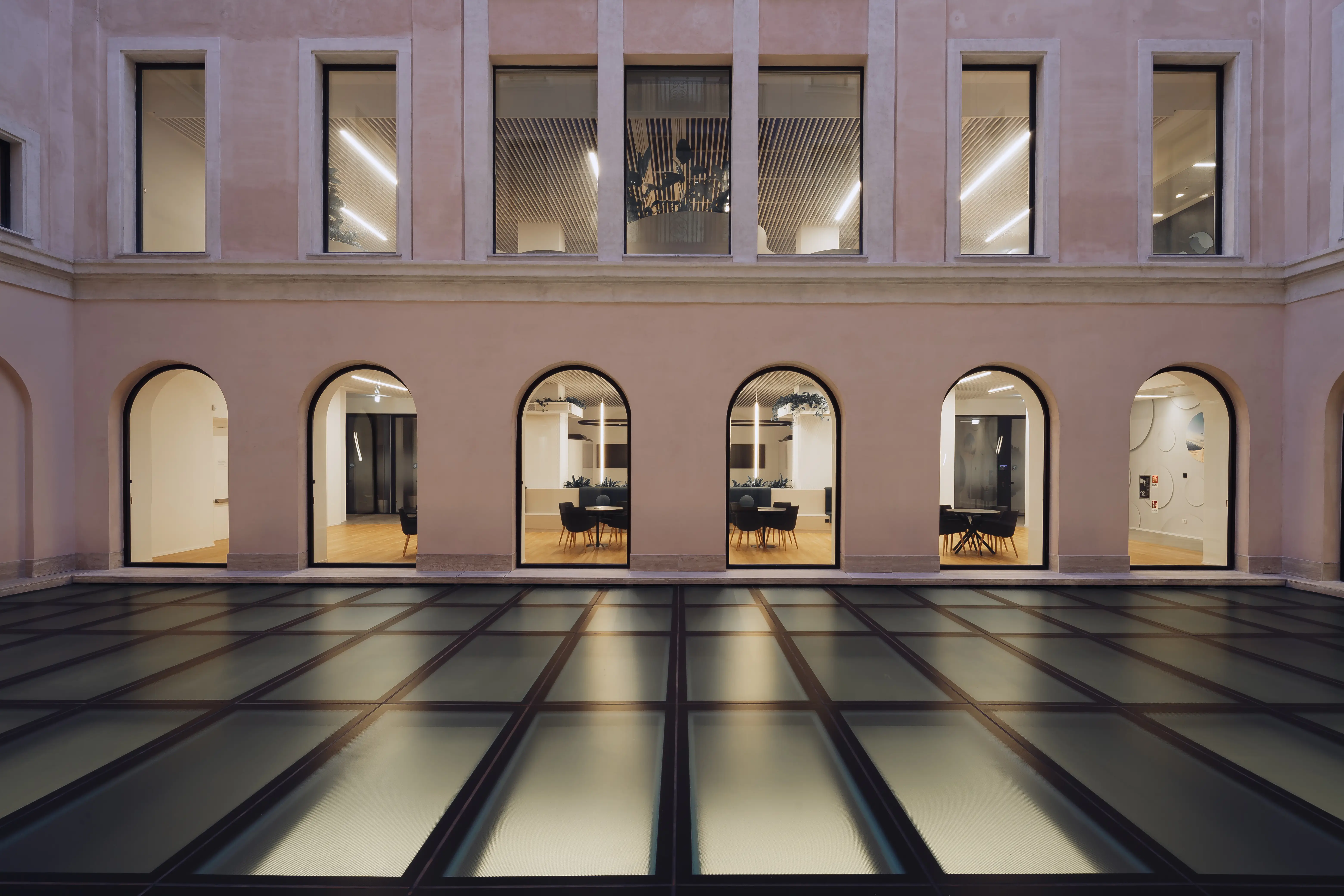
Two projects where lighting control was part of the design from day one.
Automatic dimming according to presence and daylight, constant illuminance over time, reduced consumption and centralised management of the installation. The result is a more comfortable working environment — the light is always right without anyone touching it — and a more flexible one, because control zones follow layout changes without works.
Yes. 3F Filippi solutions are compatible with DALI systems, Bluetooth protocols and building automation platforms: through a gateway the installation integrates with HVAC, security and access control, sharing sensors and schedules. D4i drivers provide consumption data for energy reporting.
No. 3F Filippi sensor luminaires are designed to run for years with minimal maintenance. On the contrary, monitoring systems allow remote diagnosis and predictive maintenance: faults show up on the platform before anyone reports them, and interventions are scheduled, cutting cost and downtime.
DALI-2 is the certified, interoperable version of the DALI standard: devices from different manufacturers genuinely understand each other, and the D4i extension adds energy data. It is the natural choice for a new installation, where the bus cable costs almost nothing to lay. Bluetooth mesh has no control wiring and is commissioned from a smartphone: it wins in retrofits of occupied offices and in spaces that change often. The two worlds can coexist through gateways, so the choice is not final.
With sensors built into the luminaires the premium over a conventional LED installation is modest, because the most expensive item disappears: wiring and installing separate sensors. Payback depends on the usage profile — in an open space with good daylight and variable occupancy it is typically two to three years on the delta over uncontrolled LED alone. Our technical department calculates it precisely from real operating hours.
It is light that follows the circadian rhythm: colour temperature and intensity change through the day, cooler and brighter in the morning, warmer towards evening, as daylight does. It makes most sense where daylight is missing or scarce — basements, deep open spaces, night shifts — and where people stay for many hours. 3F Filippi Tunable White luminaires deliver it through a curve programmed on the control system, with no one having to intervene.
With the floor plan, window orientation and working hours our technical department estimates the saving of each control strategy and proposes the level of automation that genuinely pays back. No obligation.